Moving On

As soon as I carefully took the kids artwork down, picking at the bits of scotch tape holding self-portraits to doors, and taking care not to rip the large piece of paper my son drew a pipe system on, the house felt different. Moving changed from this half-serious idea that has held space in our heads for two years to this real, tactile change involving paper cuts from handling cardboard boxes and sore backs from lifting just a little too much. 

Official-looking family portraits have come down, replaced by blank walls or a photo of a nondescript hillside most passers by would not recognize as Scotland. Old carpet has been torn up and tossed out and now the house smells like Carpet Exchange. The amount of furniture in the house has been trimmed down, making some rooms feel nice, but not lived in. 

Load by load to the storage unit—the first I have ever rented—the home becomes a house, the house becomes a structure. Yet, still there are memories being made, even today, that will forever be associated with this house, which I have called home for ten years, the longest I have lived in one place.

Open house after open house I begin to appreciate our house a little more. The painted walls, the shiplap entryway, the exposed I-beam in the basement so I could attach a pull-up bar, and the immaculate basement bathroom. All projects that we completed ourselves or hovered nearby acting like an overbearing super on a construction site while others did the work. 

The furniture we are keeping in the house has been moved, cleaned, and flipped around like Lego pieces, indeed, revealing long-lost Lego pieces, a vintage Fisher Price puzzle piece that has been missing since my son was four-years-old, and more of those Checkers pieces that I thought we had successfully rounded up. 

The last evidence of our family in the house are some of the most treasured items. No stager will get me to take them down and no storage unit is secure enough for them. It’s my daughter’s framed one-month handprint that is barely bigger than my thumb, resting on my desk. A polaroid of Kate and I taken by an old friend. Two pictures of the family on the beach in Mexico. A kid’s first hand-drawn family portrait. And a large picture of my namesake, Bryce Neff, pictured with his bombing group in the Korean War. All these items and more will find a new structure that will become a house that will, with time, become a home, and God-willing, lives lived in that home will produce an equally wide swath of life as we have seen on 5th Ave.

God-willing.

Welcome to the Pump House: Adventures in Fatherhood and Breast Milk Management

A version of this post appeared on my blog years ago when London wasn’t even a year old. But I just tweaked it a bit, slimmed it down , and added here and there. I think it’s better now. Here it is…

Never in my wildest dreams, as I prepared for fatherhood, did I think I was going to spend so much time with lactation nurses, reviewing the intricacies of hand expressing (including motions), analyzing breast milk volumes, discussing engorgement, and just how much breast milk one could fit in a chest freezer.

A few hours prior to my meeting with lactation consultants, thinking there were three more months to learn these things, I didn’t even know lactation nurses existed. I knew that some babies were born prematurely, but I didn’t know my wife’s breast milk would still come in just as early as our daughter wanted out at 26 weeks gestation.

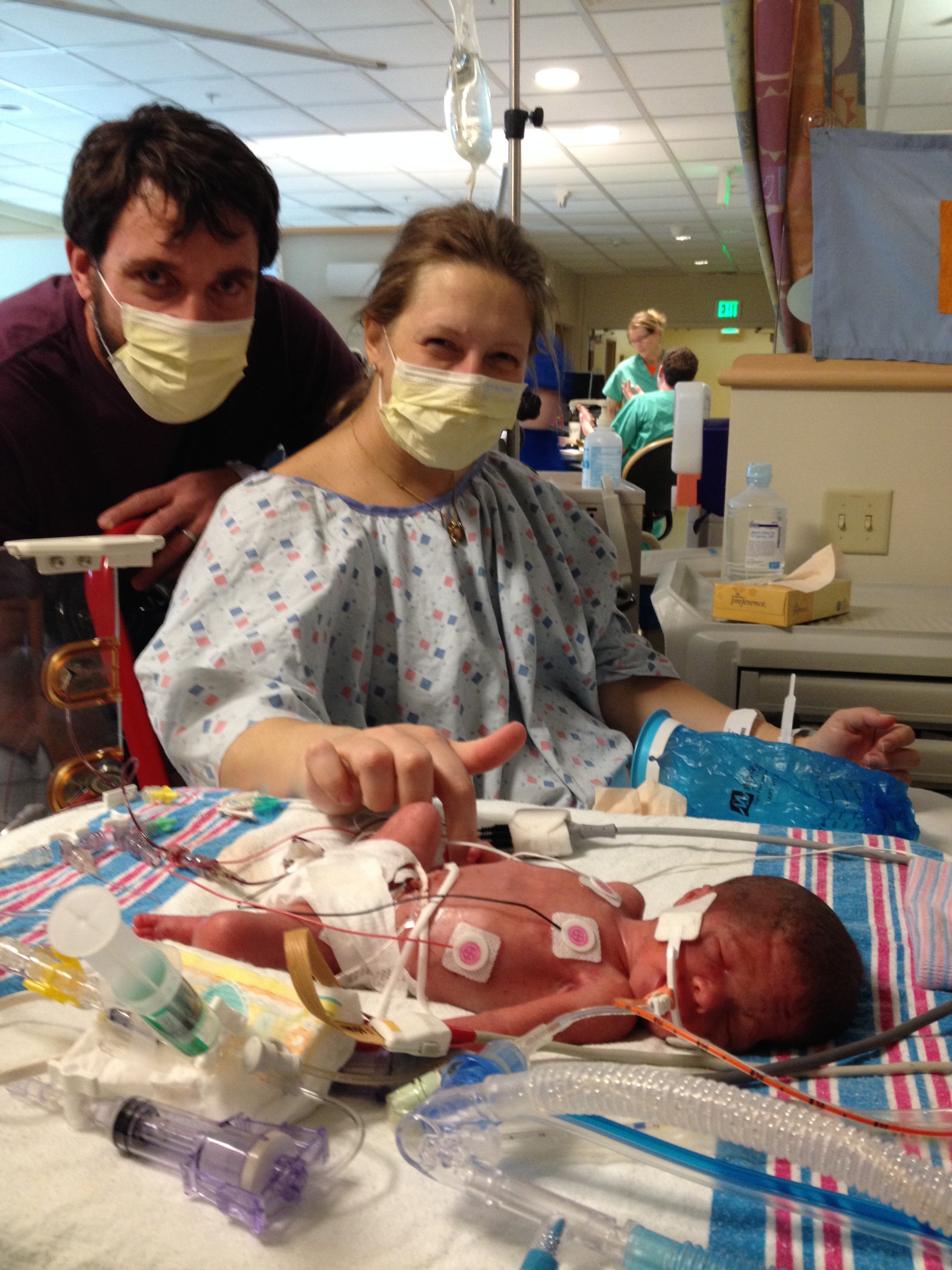
So it was that our 109-day stay in the neonatal intensive care unit (NICU) started with a crash course in breast milk. Within those first days of life for my daughter (London), my wife (Kate) and I spoke at great length with not just one lactation nurse, but several of them about breast milk and breasts, starting with a nurse asking my wife if she was going to pump breastmilk. Partly due to the trauma of the last 24 hours, and partly due to my complete lack of knowledge about breastfeeding, I had not thought a bit about breast milk or pumping. Kate was of a similar mindset at that particular moment, but we were both satisfied to know that there was a good chance Kate’s milk would come in. The early drops of colostrum, the nutrient-dense milk first released by the mammary glands, often come in shortly after the placenta detaches from the uterine wall, no matter the gestational age.

A couple of hours later a lactation nurse wheeled into our room something that looked like a medieval torture device. They were calling it the Symphony. They hooked Kate up to it and it hummed and sucked for 18 minutes. At the end of that first session, we could just barely make out two milliliters of colostrum. A few hours later Kate produced 2.6ml and then later that night 3.8ml. The next day, January 31, marked Kate’s first 24 hours of pumping. She produced 32.6ml that day, or 1.1 ounce. The lactation team handed us a log with the direction that we were to write down when Kate pumped, for how long, and the total volume.

We then received a DVD to watch, which would apparently help Kate get more milk by hand expressing and provide tips to alleviate the pain of engorgement. We were to watch it and return it to the NICU team afterwards. That same day, we popped the DVD into my laptop to watch some before going to bed. One minute into this educational video, the biggest breast and nipple either of us had seen appeared on screen. Kate laughed so hard she began to worry she might injure herself being only two days clear of a C-section. Everything hurt. If we continued watching, we put Kate’s health at risk. I slammed the laptop shut. Tears ran down our cheeks from laughing so hard.

Who knows who is responsible for making this particular lactation video, but may I make one small suggestion on behalf of my wife and all women who have recently had C-sections? Great. Do not make the first breasts on the video also be the largest breasts known to mankind. They should not be comically large, needing 3-4 hands to get them under control. In fact, this video is a danger to new mothers everywhere, they might literally bust open their gut laughing from it, like we almost did.

Thus, it fell on me to watch the lactation video alone, gleaning from it any helpful tips and then sharing them with Kate. She was impressed. It wasn’t like Kate’s breast milk volumes needed any help. Not long after London was born, I was spending part of everyday rearranging containers of breast milk in the chest freezer in the basement—the chest freezer we needed to buy solely to store breast milk. Kate and I would joke that I knew more about hand expressing breast milk than she did so I should print up some business cards and walk around the NICU offering my services to anyone who needed them. Hand Expressions by Bryce. Simple and to the point.

By day of life 57 for our little girl, Kate was producing 1,863ml a day, or 63oz of breast milk. To put that in perspective, London was fed a total of 800ml on day 57, the most she had ever consumed in one day. In fact, it took London a long time to drink as much milk in one day as Kate got from one 20-minute pump. A point was reached where no amount of rearranging the breast milk in the freezer would make room for more. I picked up a second chest freezer at Costco and Kate started to fill that, too.

For the months London was in the NICU we rented a Symphony pump, which at the time retailed for $1500-2500, and kept it in our bedroom. We started to call it the pump house. When at home, Kate disappeared every three to four hours to spend some quality time with the Symphony. As all moms know that schedule wreaks havoc on sleep and work responsibilities, but Kate did an excellent job. I did what I could by waking with her every time throughout the night, assisting in bottling of the milk, labeling and recording volumes, washing pump parts, and then delivering milk to the freezers in the basement. So, at our house, at least two times a night, Netflix and chill was swapped out for Netflix and pump.

As Kate tapered off the pump, we were just filling up the second chest freezer and the lactation nurses understood why Kate was putting an end to pumping. She had developed a reputation in the NICU as a super producer. At London’s discharge, on May 19th, 109 days after she was born, the NICU staff wrote messages to us. One of our favorites from the lactation team wrote, “Your mom was a rock star with pumping. She could have fed three babies in the NICU!”

Next week, London will be six-months-old and I can thaw breast milk from three months back. And right now it’s lunch time for the little girl, to the chest freezer I go.

At 3

I look at London and whisper, “You weren’t supposed to be three yet.” It is just like last year when I whispered to her, “You weren’t supposed to be two yet.” And the year before that when at 1 she was 9 months old to me.

We were robbed. At least that’s how it felt for a long time after London arrived. Robbed of that anticipation. Robbed of what this pregnancy thing was supposed to be like, especially for Kate. I have written about it before.

But as time has passed, healing has come. More and more I think of London’s premature birth at 26 weeks not as robbery, but as getting to receive the greatest gift I will ever receive three months early.

Though her birth and the following three and a half months in the hospital have left Kate and I with scars and, at times, profound distress, the experience is slowly shaping into a larger blessing as we watch London meet and exceed our expectations and the expectations of every healthcare professional she has seen over these three years.

London is less and less defined by the story of her birth, but for her mom and I, as we move further and further from that night, we are made more aware of how that night has shaped us into the parents, friends, and professionals we are today. We are aware that the passage of time will not completely fade that night in the minds of others, but throws it into sharp relief for us.

Emails and Poetry

I rely on my parents to send me inspirational emails every so often. Yesterday, on my 33rd birthday, I received such an email. My mom encouraged me to go to a blog she regularly reads, to read a specific poem, and to listen to a hymn.

The blog is Barnstorming.

The poem found in this post is “Sure On This Shining Night” by James Agee

Sure on this shining night
Of star made shadows round,
Kindness must watch for me
This side the ground. 
The late year lies down the north.
All is healed, all is health.
High summer holds the earth. 
Hearts all whole.
Sure on this shining night I weep for wonder wand’ring far alone
Of shadows on the stars.

Parents on the NICU and their PTSD

Over a month ago, I read and posted about an article in the New York Times about 22 weeks gestational age being the new definition of viability (for some doctors). In the sidebar I noticed another article under “related.” Its title: For Parents on NICU, Trauma May Last. As soon as I was done reading about the viability of 22 weekers I clicked over and read about PTSD in NICU parents, which I had blogged about once already.

I have not read a more accurate article about parents dealing with the NICU. The first parent’s story is more stressful and scary than ours was. For example, I never got to the point where I was sleeping with my shoes on, but on more than one occasion I expected the hospital to call with horrible news. And I was and can still be easy to anger as a direct result from our NICU experience. I mentioned that back in October as well.

This NY Times article was first published in 2009, citing a new (for then) study about PTSD in NICU parents:

A new study from Stanford University School of Medicine, published in the journal Psychosomatics, followed 18 such parents, both men and women. After four months, three had diagnoses of P.T.S.D. and seven were considered at high risk for the disorder.

In another study, researchers from Duke University interviewed parents six months after their baby’s due date and scored them on three post-traumatic stress symptoms: avoidance, hyperarousal, and flashbacks or nightmares. Of the 30 parents, 29 had two or three of the symptoms, and 16 had all three.

One of the NICU parents quoted in the article hits the nail on the head:

“The NICU was very much like a war zone, with the alarms, the noises, and death and sickness,” Ms. Roscoe said. “You don’t know who’s going to die and who will go home healthy.”

I haven’t said it better myself. As a parent, even after months in the NICU, I would find myself wondering if we were ever going to make it out whole, meaning all three of us. Perhaps the most revealing statistic shared in the article is this:

The Stanford study found that although none of the fathers experienced acute stress symptoms while their child was in the NICU, they actually had higher rates of post-traumatic stress than the mothers when they were followed up later. “At four months, 33 percent of fathers and 9 percent of mothers had P.T.S.D.,” Dr. Shaw said.

It’s easy to picture stoic fathers in the NICU, but what most of them are really doing is repressing so much intense fear and anguish that once the drawn-out trauma of their child’s NICU stay is over they burst. I was stoic from time to time, but I certainly was not afraid to show emotion during London’s stay in the hospital. Crying in front of nurses was not something I was above. This helped.

One NICU survivor shares this in the NYT article:

In her book, Ms. Forman wrote: “From the moment my twins were born, I saw potential for tragedy wherever I turned. It would be years before I stopped thinking that way.”

This is probably what I struggle with the most now. It’s beyond worrying, it’s an all-consuming conviction that something horrible is going to happen. Prior to my trip to DC, I had a really hard time shaking the feeling that I wasn’t going to see my family again, I wasn’t going to make it back from DC, or maybe I was never going to make it there in the first place. Before the NICU, I was not wired to think this way, but now a part of me is. The other part is fighting for balance. Like Ms. Forman, maybe it will be years before hope and the safety I knew become my heading once again.

One Year Ago Today, We Left the NICU

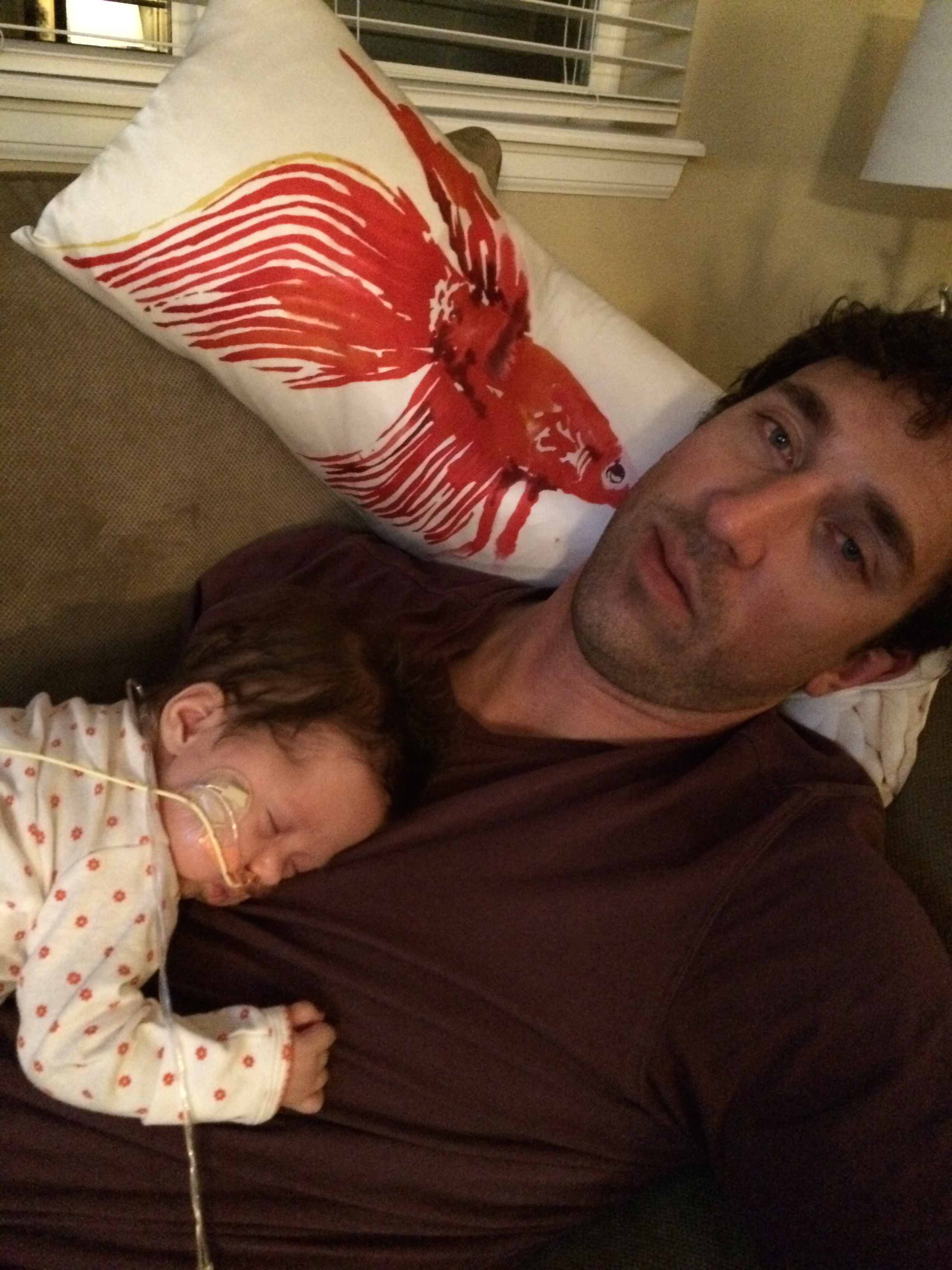
IMG_4165

London’s first night home. I already look horrible.

Today is the one-year anniversary of London’s big move from the NICU to her new home. Reflecting on that day a year later, I think I made the right choice by not overthinking what a big change it was going to be for London and for us.

I knew it would be an exhausting transition, but my thinking was that I would roll with the punches, get knocked down a few times (which I did), adapt my style (easy, give up sleep), and then hang on for dear life and at some point in the future I would come out a practiced and knowledgable parent (still looking to the future on that one, at least in some regards). To me, going through that process seemed easier than trying to be ahead of the curve. Plus, that would take time to read and figure out what I was doing wrong. After 109 days in the NICU and then starting parenthood all over again when London came home, we did not have time for that.

Learning London’s cues taught me nearly everything I needed to know about taking care of her this last year. A few cues are exclusive to taking care of a preemie, like knowing when to stop the bottle feed and move forward with the tube feed, or knowing when 1/8th liter flow was not enough or if it was just right. I relied on London’s pediatrician, her nurses, her physical therapist, her occupational therapist, and both sets of grandparents to fill in the gaps in my knowledge.

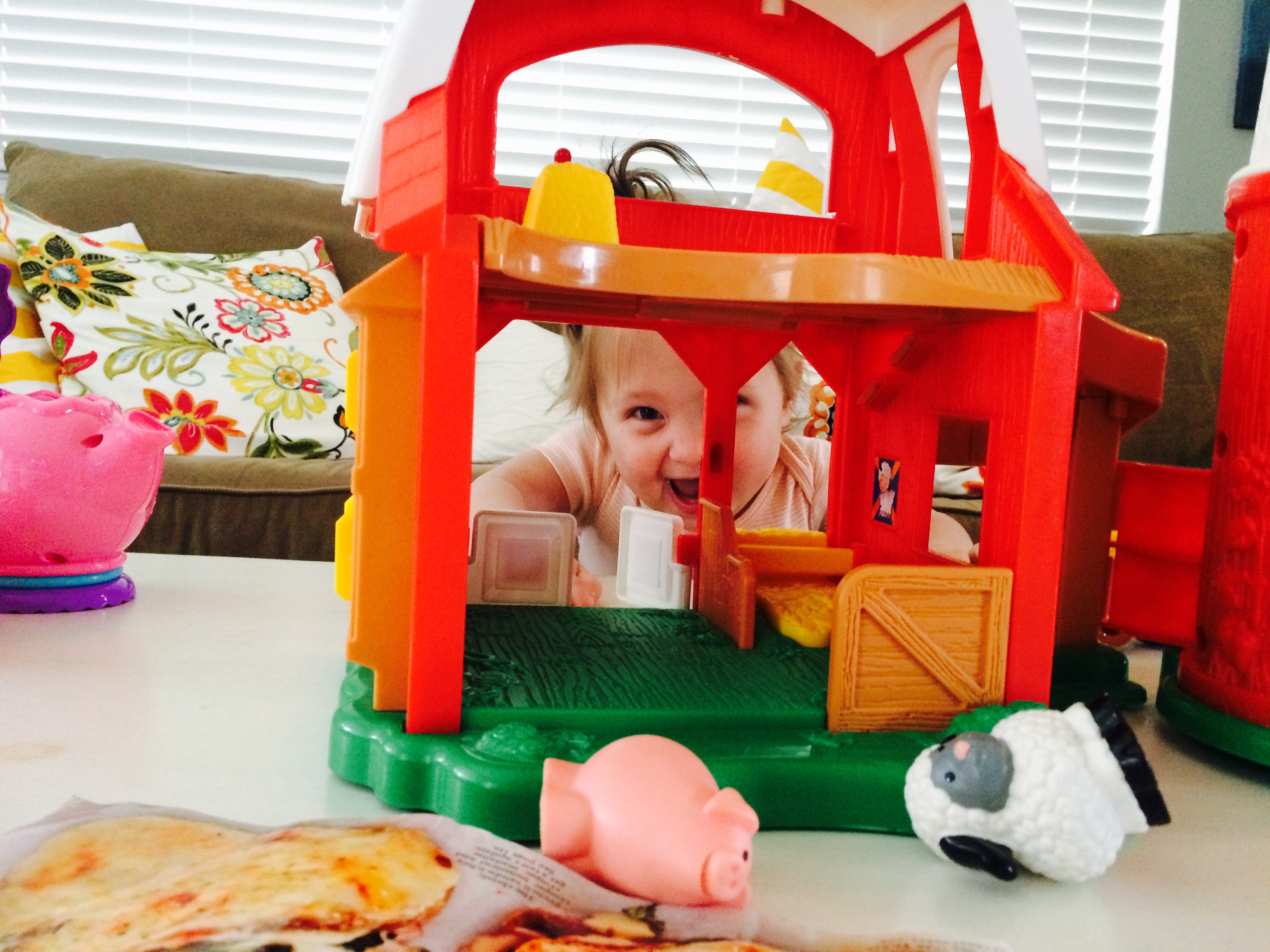
FullSizeRender-3

Today. Playing with her Little People farm.

A year later, London is far easier to take care of than she was with all the accessories she came home with. And, I am far more rested than those first days and weeks she was home. I am still tired most of the time, but I have coffee for that.

London’s first year home bears the mark of many a preemie: daily doctor’s appointments at first, then weekly, and then gradually monthly, with some major scares along the way. I hope and pray her second year at home will be smoother than that, that it will bear more marks of hope and promise than it will remnants of her harrowing beginning.

Surviving at 22 Weeks

“Do you want us to save your baby?”

_BKP2261

London at one-day old.

That’s a question you may have to answer if your baby is born earlier than 24 weeks, the current gestational age of viability. In fact, you may not get that question at all. Quite a few NICUs do not have the means to even attempt to save a 22 weeker. And, from the sound of an article I read in the NY Times yesterday, some doctors will not try to save a 22 weeker if they aren’t breathing on their own. And the chances of such a preemie breathing on their own, if the mother didn’t receive corticosteroids, is extremely slim, if it’s possible at all.

Yet, there are some 22 weekers who have made it, as detailed in a recent study, from The New England Journal of Medicine, mentioned in the aforementioned article.

The study, one of the largest and most systematic examinations of care for very premature infants, found that hospitals with sophisticated neonatal units varied widely in their approach to 22-week-olds, ranging from a few that offer no active medical treatment to a handful that assertively treat most cases with measures like ventilation, intubation and surfactant to improve the functioning of babies’ lungs.

The study involved very premature babies, those born at 22-27 weeks. Among the 22 weekers, there were 78 cases:

18 survived, and by the time they were young toddlers, seven of those did not have moderate or severe impairments. Six had serious problems such as blindnessdeafness or severe cerebral palsy.

7 out of 78. So at 22 weeks, there’s less than a 10% chance of surviving without any severe, lasting impairments. Survival rate at 23 weeks was about 33%.

The article detailed the varying strategies used by hospitals around the country. Some hospitals are very ambitious and with the parental approval, go after all 22 weekers. But, understandably, some hospitals stick to the 24 week line as the viability tipping point. A doctor describes his hospital’s strategy this way:

At his hospital, “we go after the 24-weekers,” he said. “If it’s 23, we will talk to the family and explain to them that for us it’s an unknown pathway. At 22 weeks, in my opinion, the outcomes are so dismal that I don’t recommend any interventions.”

At 22 and 23 weeks, I am glad that parents are asked the question I opened this blog post with. After having experienced the emergency delivery of my daughter at 26 weeks and then the following 109 days in the NICU, I would hesitate to answer yes in a 22 week or 23 week situation. My gut tells me at 22 weeks, I would say no. At 23, I’d have to think about it a lot more. It would depend on whether or not my wife received steroids. There was no time for steroids in London’s case, and that set her back significantly even at 26 weeks, nearly a month older than the earliest babies in this study.

It was a fascinating article to read. Here is the link again. I am amazed that 22 weekers can survive, but blindness, deafness, and severe CP are not minor complications. And those are the 22 weekers who make it out of the hospital.


The Story of London’s Birth

IMG_0109

This picture…because it’s Cinco de Mayo!

A few months ago I wrote a post linking back to the story of London’s birth, the first posts on this blog. It had been a while since I had mentioned them and wanted to make sure people were aware of them, especially since they were now buried in the archives.

I have finally done something I should have done months ago. I have posted links to London’s birth story in the About the Author tab of this blog. I encourage you to read those posts if you have not.

In the meantime, happy Cinco de Mayo! I made a margarita last night following this recipe. It was delicious, but to make more tonight I had to raid the limes at the grocery store today. You will need a lot of limes. Enjoy!

Turning One Again

May 4th. May the Fourth Be With You. It’s Star Wars day.

And it’s also one year from London’s due date. It’s her one-year birthday (developmentally). It is a significant milestone, but I think May 19th will be more of a celebratory day because that will be the one-year anniversary of London’s homecoming.

This time last year we were going through a stressful stage of London’s NICU stay. We were hoping to have her home by now, but we were hitting really big snags regarding London’s energy. The journal entry from May 4, 2014 reads:

IMG_2319

May 4, 2014.

Eileen and Megan (nurses) are very uncertain about why you are so tired all the time. Will ask questions with docs tomorrow. For now, starting 24 hours of all tube feeds.

I remember crying after being told of London’s lack of progress and of a new battery of tests to be performed on her in the coming days. My chair was backed up against the window in London’s pod and I numbly stared out into the rest of the NICU as Megan explained what the next steps were going to be. Kate held London. I let the tears drop out of my eyes without blinking. I was in a dark, sad place, and so surprised that we were still in the NICU with no set discharge date.

So much can change in a year. As today’s afternoon thunderstorm rolls across Denver, I am reminded of the first couple of weeks London was home. There were storms every afternoon, including several tornado warnings. London would fall asleep in the middle of the living room while hailstones hit the windows. I’d try to fall asleep wherever I could too, but couldn’t pull it off quite like London. Kate and I lost massive amounts of sleep all over again for the same baby, but we eventually found our groove. And London did too. She’s right where she should be for a one-year old.

Happy Birthday again, London!

London’s First Cry

London was on a ventilator for the first three weeks of her life. This meant that we didn’t hear a peep from her all that time. We could see from time to time that she was crying, but there was no noise to accompany the cry. It looked so odd, different than any other baby cry I have ever seen. Finally, when London promptly freed herself of the ventilator we could hear her cry. This time it was unlike any baby cry I had ever heard. Intubation can damage the vocal cords of preemies. The damage, in London’s case, was only temporary, but for a while her cry sounded like this. I described it to someone as sounding like a goat. It’s heart-wrenching to hear, then and now, because I just want to pick her up, cuddle, and rock her, but back then that was never an option. And now that it is, London doesn’t cry. Decent trade off.

The Complicated Age of Preemies

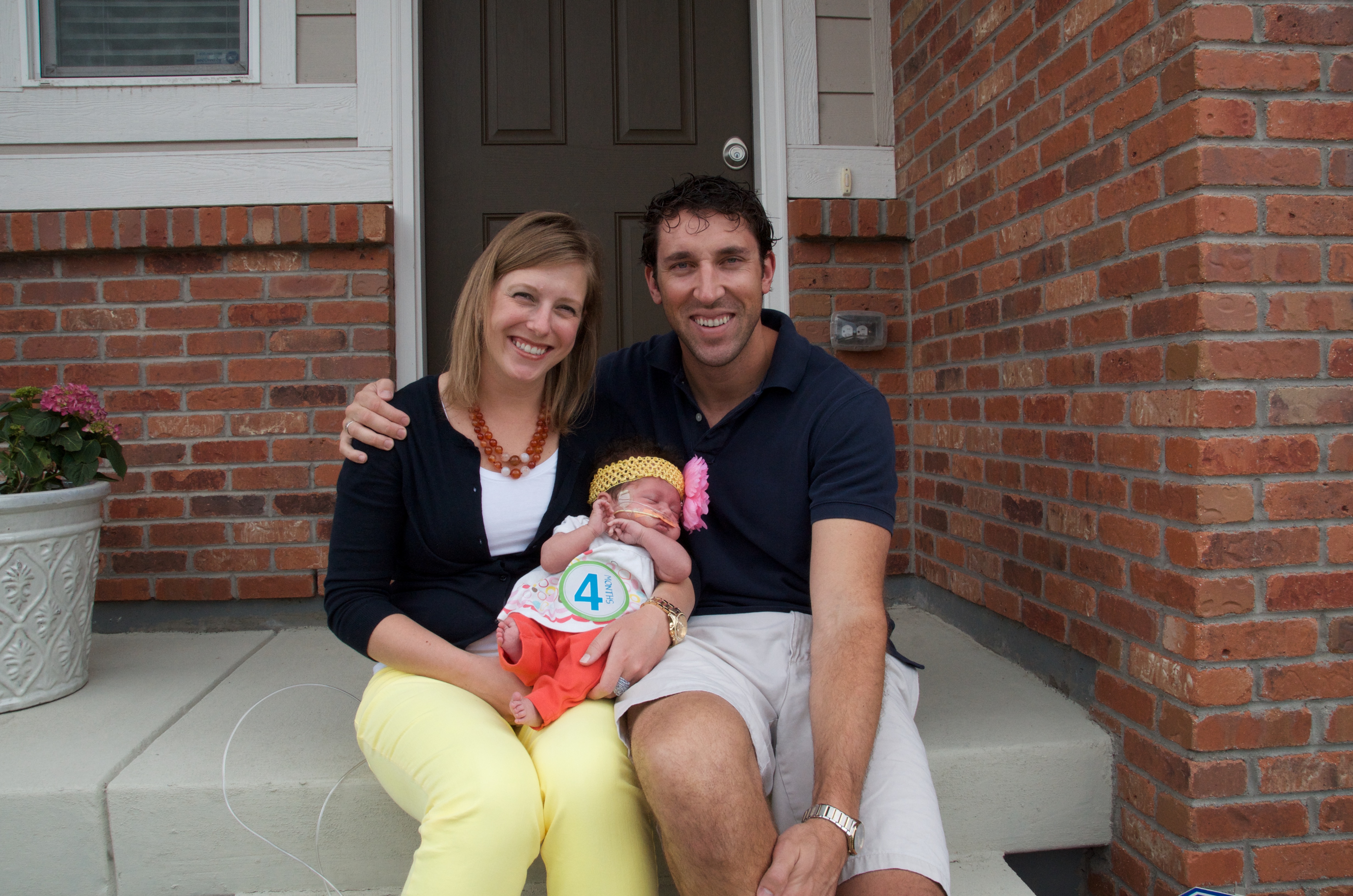
_BKP2827

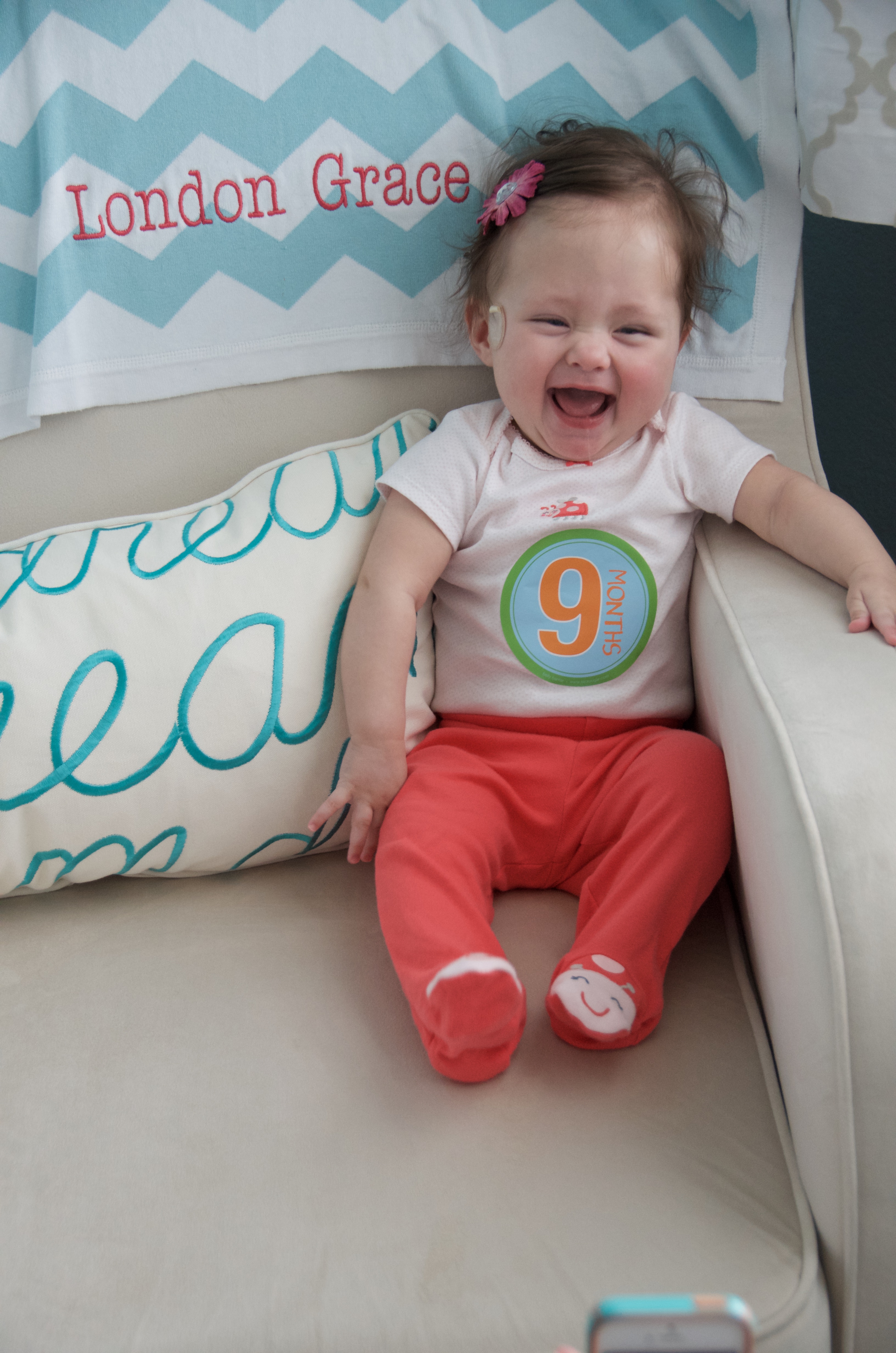
Home at last. London’s 4-month and 1-month birthday.

“How old is she?” The simplest of questions for parents of full-term babies to answer, but not so for parents of preemies because there are two answers for this one question.

At some point, a baby arrives so early that their actual age is going to be different from their developmental age. For example, my daughter, London, was born at 26 weeks gestational age, three months early. Her birthday is January 30, 2014. Her developmental birthday is May 4, 2014. This means London’s adjusted age is 11.5 months, even though she’s been with us for 14.5 months.

So how do I answer the question, “How old is she?” Well, sometimes I lie. If the person asking is asking because they are wondering why London is not walking and or talking because she’s the size of some two-year-olds, I lie and give them the adjusted age. By doing so, I direct the conversation toward the obvious and usually hear something like this: “My God, what a big baby.” I would much rather talk about how big my baby girl is than tell the person the truth and then have the conversation inevitably slide toward how London is, developmentally speaking, three months behind.

That said, I think most of the time I tell the truth and answer, “Almost 15 months,” because most people, whether they dwell on my answer or not, just aren’t going to say anything else. But I know, because I’ve seen it in their eyes, that when I say London’s real age some people look a little confused. I don’t know what they are thinking exactly, but it’s something along the lines of:

“Shouldn’t she look older?”

“She should be crawling by now.”

“She should be walking by now.”

“She should be talking more by now.”

IMG_2714

At seven and four-months old.

When I feel this reaction in people I know I could take the time and explain London’s two ages, but somehow just saying, “She was born three months early,” sounds cheap because I’m taking this huge, scary part of our lives and trivializing it in six words. Plus, the majority of people will not be able to comprehend what those six words truly mean. Getting stranger after stranger to comprehend that over and over again can be exhausting. I know, because I would make a casual effort to explain London’s prematurity to nearly everyone that asked. This was right after she came home from the NICU. Still on oxygen. Still rocking cheek patches. NG tube still snaking across her face. Understandably, those people who asked how old she was back then knew they were probably going to get something more than, “3 months.” But after a while, parents of preemies tire of going into the explanation thing. So, like parents of full-term babies we get back to basics with a simple, short answer, “Fourteen and a half months.”

Or am I going to say, “Eleven and a half months,” this time?

Oh hell, maybe I’ll just split the difference.

“Thirteen months.”

Nana Remembers London’s Birth

I’ve been meaning to share this comment since it was left on January 29th, when I wrote this post. The comment is from my mom, recalling the night and early morning of January 30, 2014.

I have been thinking all day about the phone ringing this night a year ago when we were sound asleep. Groggy and confused we listened to you tell us Kate was in distress, the docs were monitoring her and you would keep us posted. We hung up the phone, prayed through our tears thinking how can a baby live at 26 weeks? And we called her Grace not knowing you’d give her that moniker as her middle name. Your next call came to say Kate was about to undergo an emergency C-section. More tears and ongoing prayer. I remember my heart was beating so hard for what seemed like hours but you called again less than two hours later to say “London Grace” was here. Dozens of doctors and nurses were looking after her and Kate was in recovery. Then you asked, “Do you want to see a picture of her?” And so it began.

Still, I can’t read this without fighting back some tears. I had sort of forgotten that I asked my parents if they wanted to see a picture of their granddaughter. Such a question seems a little odd, but in the moment it was not an unusual precaution. The one picture I had of London at that point was graphic, for lack of a better word. She was vulnerable and the picture succeeded in showing that. I must have thought that maybe they would not want to see a picture of her until she stabilized some. Had they felt that way it would not have bothered me. Obviously, I was still protecting myself, but I also thought about protecting others and this was a way I tried.

I have known for a long time now that there was no protecting me or anyone else if things had gone horribly wrong during those first days. I was in shock and still under the illusion that I had any control over what happened next.

Generous Ventricles

The hardest day to get through was Wednesday, the day after we got the news that London would need an MRI and a neurosurgery consult. Though we knew that the challenges of having a preemie were not over, we did not expect to encounter an obstacle quite as scary as this. But, with some prayer and time we reacquainted ourselves with the frame of mind necessary to get through the NICU days. That frame of mind is a place where you never forget that you’re not in control. The NICU does not allow for you to believe you are in control of anything. It is like you have been dropped into a boxing ring and all you can do is roll with the punches, no telling how awfully painful the next one is going to be, nor from where it will be coming. We got pretty good at that last winter and by Thursday I think we both felt better in a way. I even made a joke about it. After Kate asked me what I had decided to give up for Lent I said, “Hope.”

_BKP3714

London at 9 months.

We waited until the following Tuesday for the MRI. We were told it was a rapid MRI, a brain shunt series, which would take about five minutes and London would not have to be sedated for it. The consult would follow right afterward so there would be instant results.

At Children’s we were taken to an MRI waiting room. There were no small gowns for London to wear so she wore pants half a foot longer than her legs and a top that looked like a Snuggie. Kate and I chose to be in the room for the MRI so we had to get rid of all metal we had on. Zippers were okay. After a few minutes we were ushered down a very long hallway into the MRI room, where the door was lined with a metal detector, ready to catch any metal on or in our bodies that we forgot to mention in the screening process.

This MRI room was out of a Sci-Fi movie. It would have looked right at home in Stanley Kubrick’s 2001: A Space Odyssey. The walls were of white gloss and the lighting made the room glow an interesting mix of blue and white. London was placed on the MRI bed, which had a blue pad on it that the nurses kept calling a “blue snuggly.” They warned us that once London was on the bed, they would fold up the sides, buckle them together, and suck all the air out of the snuggly to vacuum pack London. They added, kids don’t like this very much and they start to squirm and cry.

We folded up the sides of the snuggly, snapped the four buckles up from London’s feet to her upper chest. Her head was braced with many cushions, but first earplugs were added to protect her from the noises of the MRI. And then a nice lady sucked all the air out of the blue snuggly. By all measures London seemed to enjoy the whole experience. She did not make a peep and was even smiley. The bed slid into the MRI and the scanning began. London could look toward her feet and see us standing there waving and smiling back. She made two noises of distress, but quickly calmed down when she saw us. Five minutes later, she was done, and free from the blue snuggly.

We then had to go upstairs and check in for the neurosurgery consult. Within ten minutes we were sitting with a very nice lady who did not cut to the chase right away, but by the way she spoke and by the words she chose, I had a good feeling. She gave us a complete rundown on hydrocephalus and brain shunts. We looked at images of London’s head. In one image we got to see all of her teeth, although she only has three that have broken through. The rest of them were floating at various heights above and below the mouth. We went over the symptoms of hydrocephalus. There was a lot of talk about the size of my head. This was not news, but to prove the point the lady measured my head to confirm. 63cm. She said anything above 59cm is huge. And hey, it turns out Kate’s head is sort of big too.

London, we were told, has generous ventricles, but shows no signs of hydrocephalus. Of course, we should still monitor her head size and maybe at age 2 another MRI. Apparently, the MRI images told the doctors that there was nothing to be “excited” about, an interesting choice of words. If there was an issue, excitement would not be the feeling I would have. I found myself excited because there was not an issue.

We spent a very long time talking about London’s head and why it looks like London has adjusted nicely to her generous ventricles. As soon as we were out, Kate returned to work and I called my parents who, I know, were anxiously waiting for news and probably not expecting to have waited this long.

I returned home with London, relieved to an extent I cannot describe. I spent a lot of that afternoon and evening looking at London even more than usual, admiring her strength and attitude, and imagining the day I would tell London about the first year of her life. What would I tell her about a day like today? And what about the days far scarier and more exhausting than this one? I don’t know, but I know she will love the ending.

On London’s 1st Birthday

London.

I am only human, so sometimes, when you are testing my patience, I may temporarily forget that taking care of you as a stay-at-home dad has been the most rewarding and exhilarating experience of my life.

These are the days that I will treasure for the rest of my time here. I cannot contain my excitement at the thought of you getting_BKP4139 older, taking your first steps, watching your personality blossom, and getting to try so many new things. But, there is something to be said about this time, right now. It’s a time when you need everything from me or mom. You are utterly dependent on us. You are also so content in our arms.

I believe your start to life somehow molded you into the tough and incredibly happy baby you are. I believe it means you will be a success in anything you put your mind to. You have a whole life ahead of you. I wish I could see it all, every minute. I wish I could always be by your side.

The reality is that I won’t be able to always be there. There will come a day when I will have to leave you. And I know one of the fondest memories I will have that day is to think back on the days I am living right now. The simplicity of them. The pure joy you exude. The joy you give me. The energy I draw from your wonder and curiosity in life.

The other day after finishing your bottle you were relaxing on me and sort of watching TV. Looking down at you, I had this image of you watching TV as an elderly woman. Weird, I know. I was picturing you toward the end of your life here on Earth and I got incredibly sad knowing that by then our days together in this world would have passed many years ago. It was such a sobering thought, which crystallized for me just how incredibly blessed I am to be with you as many days as I am.

In a year you have given me an abundance of moments that I have bottled up and plan on taking with me wherever I go. My love for you is at the brim. Good thing we have many, many more days together so I can make even more room in my soul to fill up with love because I don’t plan on losing one drop of the good stuff.

Love, Dad.

Did it go by fast?

Did it go by fast?

That’s what everyone asks when we tell them London is turning one this week.

Like all new parents we have been very busy this last year. That’s what happens when you have kids. Life speeds up as you nurture another life. Everything takes longer from getting out the door to eating a meal to loading a car full of stuff for just six hours away from the house.

Time goes by quickly when everything takes longer. Maybe that is why everyone seems to have that feeling that the first year flies by.

But the answer is no. This year did not go by fast.

We just visited the NICU on Tuesday. We saw a few nurses who took care of London. The front desk staff recognized us as we were walking up the hallway toward them. “You guys look familiar,” one of them said, motioning at my height. IMG_2912

Standing there while London smiled and giggled at everyone who stopped to say hi, I had this overwhelming feeling of gratefulness. To think of London’s days in the NICU I feel like I need to look much further back in time than one year. Sometimes it feels like two years ago. Sometimes it feels like it never happened because that time was so different than what our day-to-day routine is like now.

Walking those familiar hospital hallways, making that familiar request to get through to the NICU, seeing the nurses, and hearing the distant beeps and alarms from the monitors in the NICU pods reminded me of how routine the NICU became. I forget it, but this place was our home for 109 days. Our house was just where we slept, but our lives unfolded in this little corner of the hospital.

I don’t know if you have ever had to visit your baby in the NICU. If you haven’t, let me tell you those days don’t pass quickly by. Since we almost spent a third of London’s first year in the NICU, a third of that year dragged on with countless questions, tests, consultations, laughs, smiles, and tears.

When I woke up this morning I glanced at my iPhone like I always do. The little white icon for the calendar app displayed “29.” I froze and stared at the number. London was not born until the 30th, but the 29th, January 29th, is when her early arrival started. To me, January 29, 2014 was the beginning of a miracle, so it holds a very special place in my heart, second only to January 30, 2014.

One year ago tonight we exited the elevator on the 4th floor. Our hearts remained there until May 19th. The time in between felt more like a year, which also feels like it took place years ago.

No, it did not go by fast.

January 28, 2014

As London’s one-year birthday approaches, January 30th and the days preceding it are becoming clearer and clearer in my mind than at any point since.

Today, I am thinking of January 28, 2014.

I was in a bad state of mind that day, one day before Kate went into labor three months early. I had graduated with my master’s degree in International Studies six months earlier. I had spent summer, fall, and winter looking for meaningful employment in Denver and had found nothing.

On January 28th, I was at a coffee shop continuing my job search, but I was easily distracted and frustrated with so many things in my life. I was a few days shy of turning 31. I started to write my stream of consciousness down.

A wasted mind.

A wasted education.

Greatest accomplishment this year will be fatherhood.

Exciting that is, but I want something else.

Maybe staying home with the baby is the best.

But I’ll never know unless I get a job and can live the other side of things.

Since London was born, I have come back and read these lines a few times, but in a different mindset than when I put them down on paper. I no longer feel like my mind has been wasted. Of course, when I was in the middle of a fruitless job search it was easy to feel that way. It was easy to question my decision to go to grad school in a completely different field (IR) than my undergraduate studies (English). It was easy to get really depressed about having debt for the first time in my life, and all because of this damn master’s degree that I am not doing anything with.

A year later, the bit about the debt still angers me.

“Greatest accomplishment this year will be fatherhood.” On January 28th, I did not know a thing about what fatherhood would mean to me, thus thinking it would only be the greatest accomplishment that year. A day after writing this I was in fatherhood with no idea if my new duties would last a week, but I already knew that what I was doing during those days, what I was going to do in the days to come, would be the greatest accomplishment of not just the year, but of my lifetime.

In a way, I still want something else. I love my job. I am very happy with it. I know it will eventually change and I will be free to live the other side of things, but no matter what that other side is like, I will never get the sense of importance from it as I get from my current job. I did not know that on January 28th, but knowing it since has made all the difference during the seven months I have been a full-time SAHD.

The Redefining

I wanted to share something short today.

At some point during London’s NICU stay I was shuffling through some words in my head. The words were not new words to me, but rather old ones with new, real-life experience meaning.

Selfless.

Difficult.

Scary.

Challenging.

Beautiful.

Enduring.

Love.

The meaning of these words most often change with a full-term baby, but when you have a super early preemie almost no word or perspective is left unchanged. The story of London’s birth is many things to us, but to boil it down to a few sentences is this…

A shift of everything into high gear and high limits. Your life and your cares as you knew them were wiped away in an instant. It is the redefining moment of your lives. What you thought would break you passed and you emerged from it whole.

Remade.

And redefined.

World Prematurity Day

Right before falling asleep last night I was scanning Twitter and I learned that yesterday was World Prematurity Day. The March of Dimes Twitter account, which I follow, had shared images of city landmarks all across the world that were lit up purple, the color of support for preemies.

I don’t know how I missed this day, but today I read some articles about prematurity and found this one on NPR, the most interesting. Money quote:

Premature birth is now the single largest cause of death among babies and young children. Every year, 1.09 million children under age 5 die due to health complications that stem from being born before week 37 of pregnancy (a 40-week pregnancy is considered full-term).

I recommend reading  the whole article at NPR. It’s quite short. The editorial, titled “Preterm Birth: Now the Leading Cause of Child Death Worldwide,” mentioned in the NPR piece can be found here.

After reading the article and seeing the picture at the top of the NPR page, I am, again, so thankful for the treatment available to us here in Denver and that we were not traveling when London suddenly decided she wanted out.

To the Internet, Not So Fast

Back in 2007 I had a troubling sickness. It started with migraines, then it transitioned to the frightening Bell’s Palsy, and whatever I had did not stop there. I developed iritis (inflammation of the iris, which makes the whites of your eyes blood red and the photophobia can be unforgiving). I had partial hearing loss in one ear. Doctors ran me through a battery of tests. In a few months I had a CT, blood draws, many eye exams, an MRI with and without contrast, X-rays, and a flexibility test, where the doctor looked for signs of Ankylosing Spondylitis, a symptom of which can be stiffness and pain in the spine and neck.

The tests turned up nothing of concern, but the symptoms continued to give me plenty of reasons to worry. In between visits to the doctor I would sometimes have a lapse of judgment during which I logged onto the internet and did some self-diagnosing. What I found was terrifying. There was an encyclopedia of diseases and unheard of (to me) maladies that could, in theory, give me some of the symptoms I had. Brain tumors. Cancers. Crohn’s disease. Thinking about it all scared me. The doctors, I knew, were doing their best to give me an answer. For a time, I thought that their lack of explanation was a bad sign. When I was firmly convinced of this I went to the internet. Ultimately, what I found led to prolonged worry and who knows, maybe some of the symptoms would have gone away sooner if I was not giving them their unwarranted attention.

By 2008, all of my aches, pains, and inflammation were gone. Most likely a virus had attacked me and, my body, with some hiccups along the way, crushed it. However, if any of the symptoms had returned in the seven years since I would not have consulted the internet. I would have gone to a doctor.

To have this lesson in my back pocket heading into London’s bumpy start to life was an unexpected blessing. London’s actual and possible complications from prematurity were a tsunami of information compared to my sickness years ago. The first wave of preemie particulars and statistics hit even before London was born. While I was waiting outside the operating room a doctor came by and ran down a random list of possible complications. She told me 26-weekers have an 85% survival rate. This brief conversation introducing me to the challenges preemies face was similar to seeing the tip of an iceberg above water. The other 90% was below the surface, or in our case, through the OR’s double doors and on into the NICU. To borrow from The Lord of the Rings, it was “the deep breath before the plunge.”

*          *          *

Upon your family’s arrival in the NICU, you might feel like you’re drowning. There are more people taking care of your baby than you can keep track of. There is a new procedure every day. Thus, there are results every day, results that must be explained to you, sometimes three or four times. In addition to that, there are a lot of unknowns and, regardless of how talented the NICU staff may be, no one can accurately foresee the obstacles ahead for your baby. The internet is not going to be any different. There, you will find many question marks and new and more dangerous preemie complications to worry about, even if your baby is not suffering from them.

As parents with a baby in the NICU, Kate and I felt like there needed to be a sacred part of the day, during which we would try to not worry about the next results from London’s latest blood draw or echocardiogram. Of course, to not worry is impossible. It is more accurate to say we carved out time in each day during which we would purposefully not heighten our worry. This time became essential to getting us through every month our daughter was in the NICU.

Seeking information or support online seemed to only disrupt any sense of peace and hope we had regarding London’s course of treatment. If it was information we sought, then it was to go down the rabbit hole again, entering a world where one complication, like a brain hemorrhage, could lead to hydrocephalus and, almost certainly, cognitive disabilities. At least, that is what the internet would like you to believe at times. And if it was support we queried, we discovered far more troubling accounts than our own, which led to more worry.

Very early on in our NICU adventure we discovered the very poor predictive quality of the internet. Thus, the net never became a source of information for us. We much preferred getting answers straight from the trained professionals who were taking care of our daughter.

I have used the internet for queries about preemies many more times since starting this blog than I did while my daughter was in the NICU. When I am using the internet to find a definition of a certain malady, it can be helpful and I am grateful for that, but the internet will remain a horrible diagnostician and a font of worry for parents with a baby in the NICU.

Have A Preemie, It’s Such A Deal

I am here to be honest with you. Having a preemie is such a deal both in cost and effort. Think of all the deals you have come across in your life. Think of the deals you expect to encounter in the future. Let your imagination run wild. I really doubt the deal you have in mind will come even close to being as good a deal as I am about to share with you.

1. Delivery is really fast. You don’t even have time to anticipate it. One night, you’ll be at home watching TV (in our case, I was trying to watch the latest episode of True Detective on HBO), and you will be truly concerned about everyday tasks, leaning over to your spouse and saying, “Oh gosh, we still have to clean the kitchen.” Then the pain will come. You’ll make a smart decision to go to the hospital to get some drugs or something and be sent home. So, still, having a baby won’t even be on your radar. But then the water breaks and well, you know something is going to happen. You’re not quite sure what. And then a few hours later you have a kid. Very little pain. Lots of drugs. A lot of very nice people working to help you deliver this baby as quickly and as painlessly as possible. And it is. The scar will heal up very nicely.

2. No third trimester. “Wow, killer deal!” You might say. Well, you are spot on. From what I hear, that third trimester is just a pain in the ass, or more like the lower back. Fatigue? Ha, you won’t even get to the worst of it. Frequent urination? You’re safe. A two pound baby does not make you urinate more. Heartburn? Okay, you might still get this if you have a preemie, but it’s not what you think. It’s just because you had tacos with the hot salsa on them, not because you are growing a human being. Swelling? Nope. You’ll be able to wear your wedding ring right up to delivery. Weight gain? Are you freaking kidding me? As soon as you develop the slightest baby bump you’ll be hours away from delivery, saved from the expand-a-pants, saved from the waddle, the stretch marks, and the need to have a whole different wardrobe for that third trimester.

3. Best babysitting in the world. As soon as your baby arrives, NICU nurses, will be with your baby 24/7 until the baby leaves the NICU. The earlier the baby, the more days you’ll get this amazing babysitting at a relatively low cost. You can still go out for dinner. You can go home to sleep. In addition to the nurses there are many other professionals checking in on your baby, making sure she is comfortable and developing as expected. You might be a little stressed about leaving your baby in the NICU at first, but, oddly, you get used to it. You still need to enjoy your free time before you have a baby at home. You weren’t expecting to have a baby this soon. You had three more months. Take them. The NICU team has you covered.

4. The lighter your baby the better. Truly, if you have a really small baby, you just qualified for all sorts of assistance regardless of your income. You will learn about supplemental security income. You’ll get a check from the Feds once a month that has to be used on baby things. Easy enough. And then for some reason you’ll get a little bonus check when your baby leaves the hospital. Sort of like the Feds just saying, “Hey, congratulations! And thanks for paying all your taxes all those years. This is how we roll. We actually do some good stuff with the money you give us. Here’s some back.” Then, if you’re lucky enough to live in Colorado, your little, teeny, tiny baby qualifies for at home physical therapy and occupational therapy visits. Three times a month, they come to you, assess your baby, tell you what the baby needs to do better, tell you where the baby might be a little ahead, and, this is all at no extra cost to you. This time it is like the state saying, “Thanks for paying your taxes. You struck gold with this little girl and now we are going to pay people to help you with her development.”

5. People give in emergencies. The more traumatic the experience, the more people you will hear from, the more flowers you will receive, the more food will show up at your doorstep, the more aid in your mailbox, the more touching notes you will receive from people you’ve met once or have never met before, the more baby clothes you will receive, and the more diaper cakes you’ll be gifted. People will feel for you. They’ll fork over some really excellent gifts and meals. Truly, what a steal.

6. Having a preemie could very well be cheaper than having a full-term baby. When you have a preemie, she needs a place to stay. These places are called neonatal intensive care units or NICUs. A night at our NICU costs as much as the Peninsula Suite at the Peninsula, Chicago, or almost $9,000 a night. Multiplied by 109. No one is going to stick you with that bill. Trust me. In fact, when your bill arrives you could end up paying less than 1% of your total stay. I mean, if you have very solid insurance, you might just pay .007% of your total hospital bill. Double-O-Seven.

7. After hours visiting at the hospital. You know, typically when you show up at our hospital after 8 you have to sign in and say who you are going to visit. They give you a sticker that you immediately throw in the trash. What a waste. It’s a real hassle. You don’t want to stop and talk with anyone, you’re going to see your baby for crying out loud. Worry not. You’ll live at the hospital. After you’re stopped once or twice, you’ll just look over at the security desk when you next enter the hospital after hours and you’ll get in with the head nod you always see guys giving each other.

8. You get to write about it and people will read. And maybe, after you’ve gone through all this and cried a thousand times for your child’s life and watched her vital signs plummet to numbers that you just associate with death, you’ll be able to find some humor in the whole experience and put a spin on it like I just did.