Nana Remembers London’s Birth

I’ve been meaning to share this comment since it was left on January 29th, when I wrote this post. The comment is from my mom, recalling the night and early morning of January 30, 2014.

I have been thinking all day about the phone ringing this night a year ago when we were sound asleep. Groggy and confused we listened to you tell us Kate was in distress, the docs were monitoring her and you would keep us posted. We hung up the phone, prayed through our tears thinking how can a baby live at 26 weeks? And we called her Grace not knowing you’d give her that moniker as her middle name. Your next call came to say Kate was about to undergo an emergency C-section. More tears and ongoing prayer. I remember my heart was beating so hard for what seemed like hours but you called again less than two hours later to say “London Grace” was here. Dozens of doctors and nurses were looking after her and Kate was in recovery. Then you asked, “Do you want to see a picture of her?” And so it began.

Still, I can’t read this without fighting back some tears. I had sort of forgotten that I asked my parents if they wanted to see a picture of their granddaughter. Such a question seems a little odd, but in the moment it was not an unusual precaution. The one picture I had of London at that point was graphic, for lack of a better word. She was vulnerable and the picture succeeded in showing that. I must have thought that maybe they would not want to see a picture of her until she stabilized some. Had they felt that way it would not have bothered me. Obviously, I was still protecting myself, but I also thought about protecting others and this was a way I tried.

I have known for a long time now that there was no protecting me or anyone else if things had gone horribly wrong during those first days. I was in shock and still under the illusion that I had any control over what happened next.

Pictures: Leaving the NICU

_BKP2732


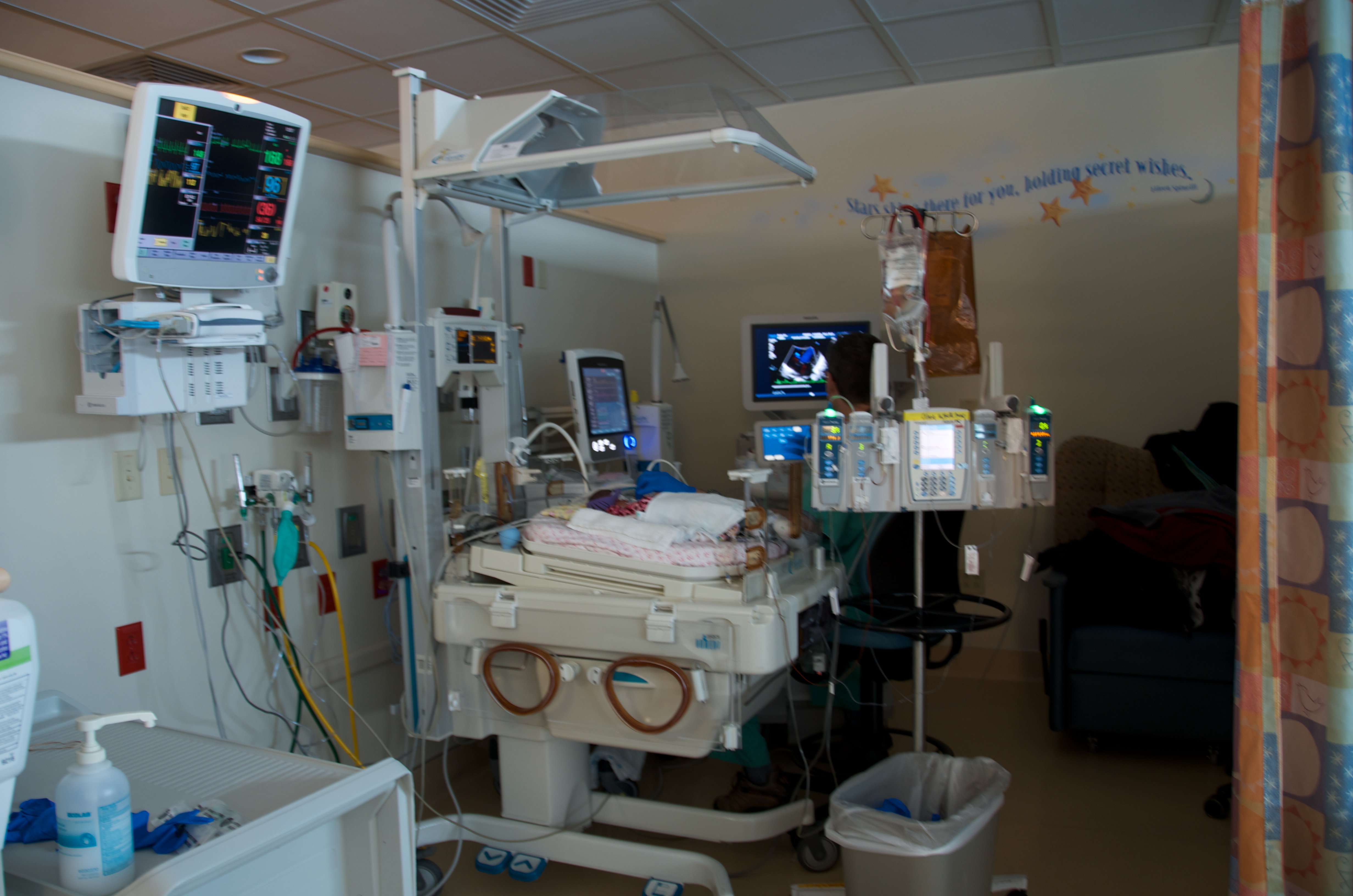
The day of London’s discharge from the NICU I brought the Nikon to take some higher res photos of her room and its surroundings. Although we never wanted a baby in the NICU, it did become a home for us after three and a half months. I suppose anywhere your baby has to stay will inevitably feel like a second home. I wanted to capture even the mundane things of the room, like the chairs we sat in everyday, or the closet doors displaying her footprints and growth progress. So, some of these shots will just not have much appeal to you, but I thought I would share them anyway because they mean so much to our little family.

_BKP2735

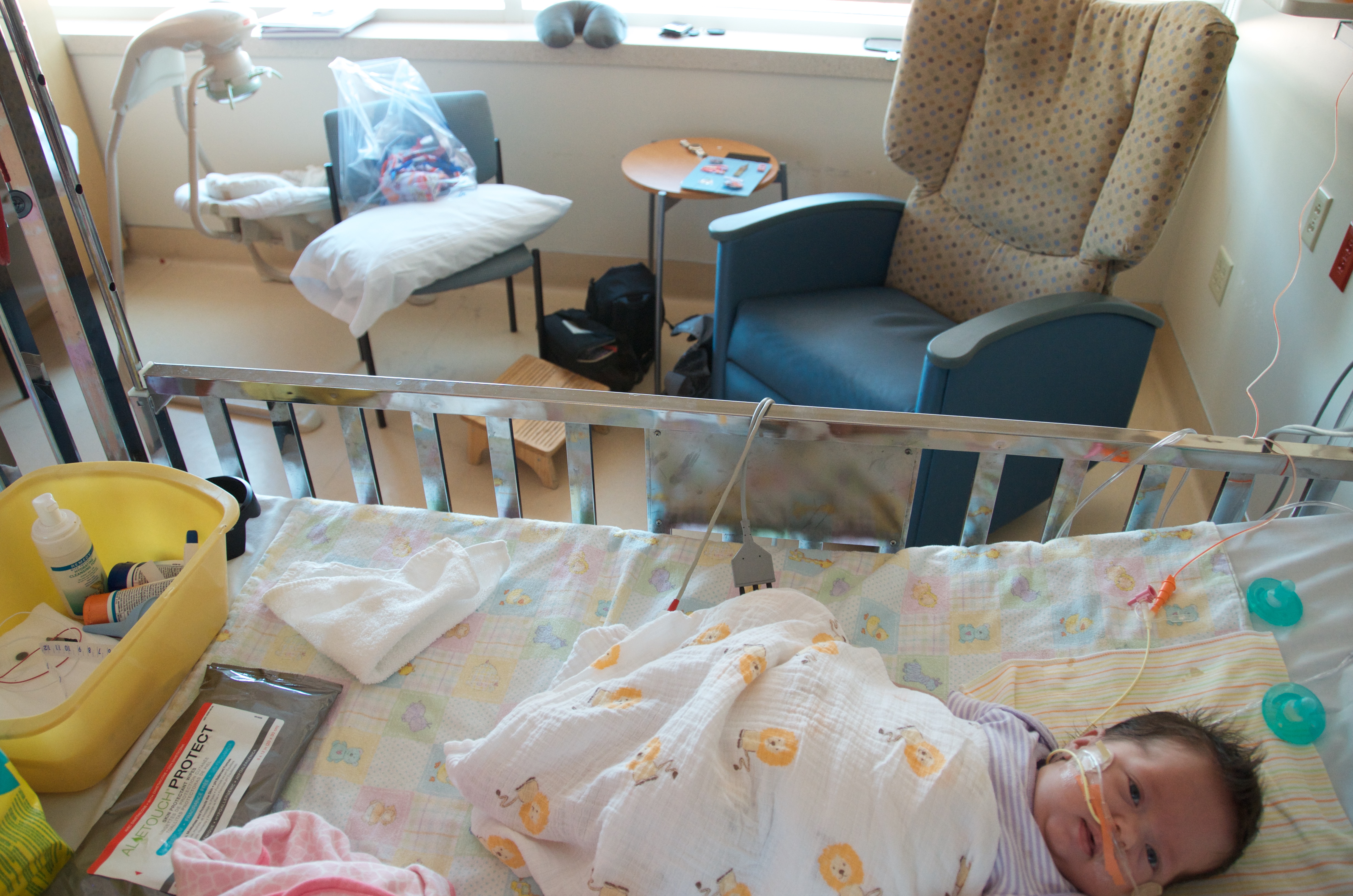
London resting in her NICU bed. For her, the day was not so monumental as it was for us. She had no idea what was in store. We did, and we could hardly contain our excitement and nervousness.

_BKP2741

This is one of those pictures that is more for our benefit than for yours. I wanted to capture what I saw from this side of the bed, where I actually rarely stood. I stood on the other side all the time. But at least from this angle you get a feel for what was in the rest of the room and the amazing windows we had in the room.

_BKP2745

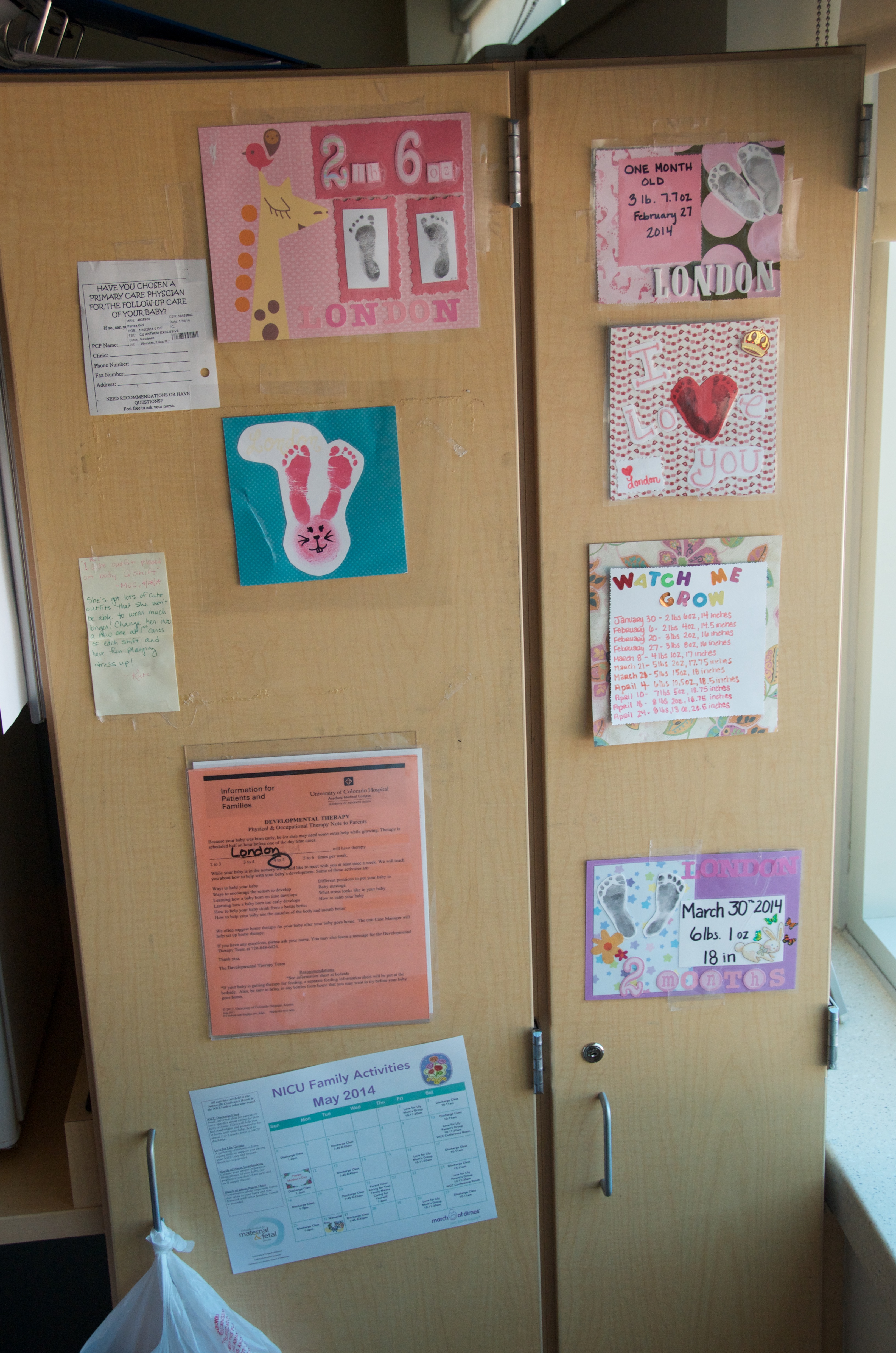
The closet in London’s room with several footprints, a growth chart, a physical therapy schedule, a note from Kate, and the top of a bag holding London’s dirty clothes. Again, just trying to capture it like it was before all this stuff came home with us.

_BKP2746

The million-dollar view. It doesn’t look like it, but it’s the only window this size in any of the NICU’s pods. We scored in a major way.

_BKP2748

I took all the stickers we had placed on things around the room and put them on the iPad. The outcast Leprechaun was a treat from our Irish primary nurse. When he was on the lamp for months, I had placed a Union Jack flag in his hand. Eileen was not amused.

_BKP2763

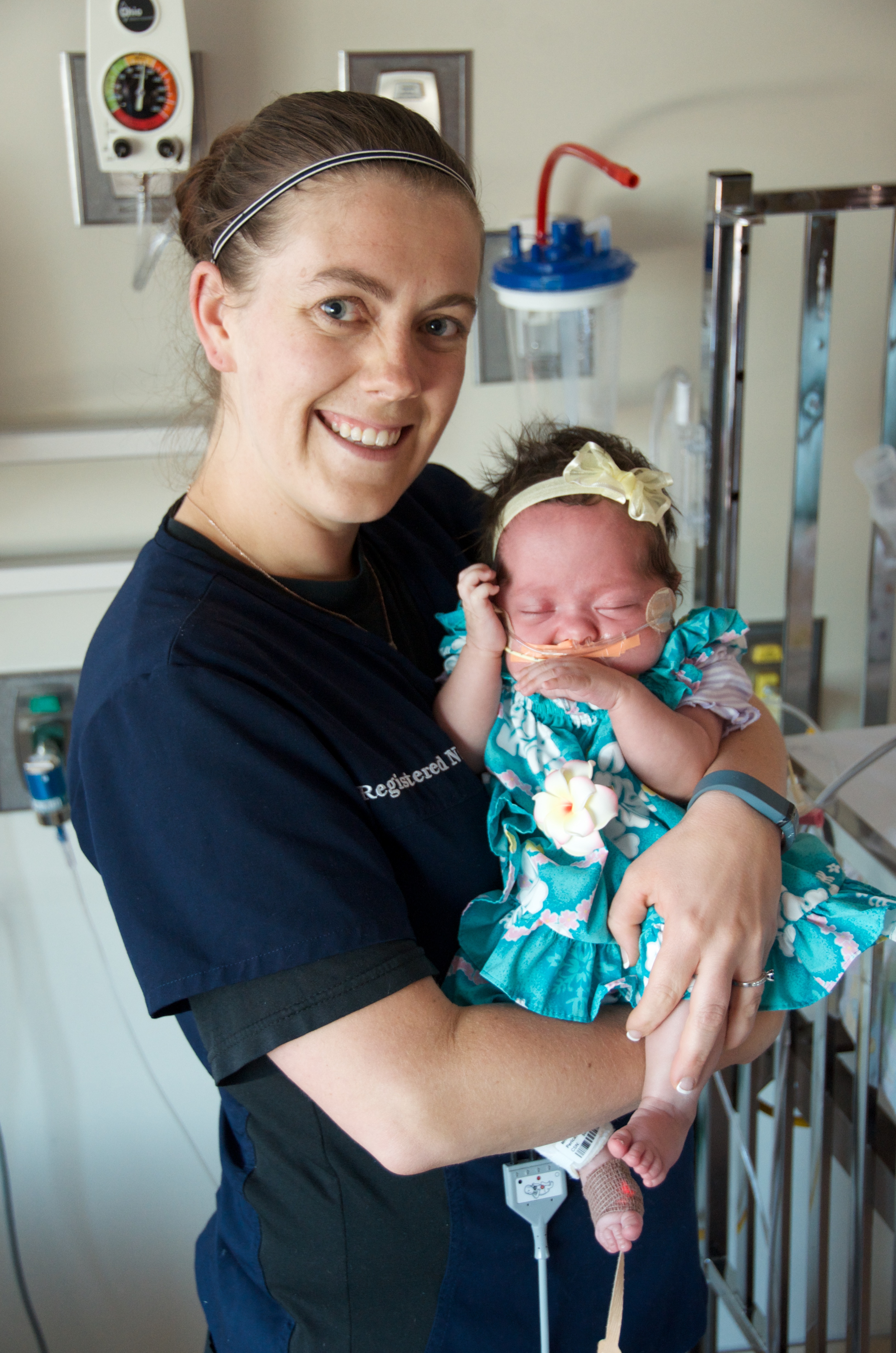
Dear Megan, London’s primary, on the last day she was responsible for taking care of London.

IMG_4148

Spent a lot of days in both of those chairs, usually with coffee on the side table and always with my Timbuk2 bag filled with magazines or books to read when, or if, I could get some time to do so.

IMG_4149

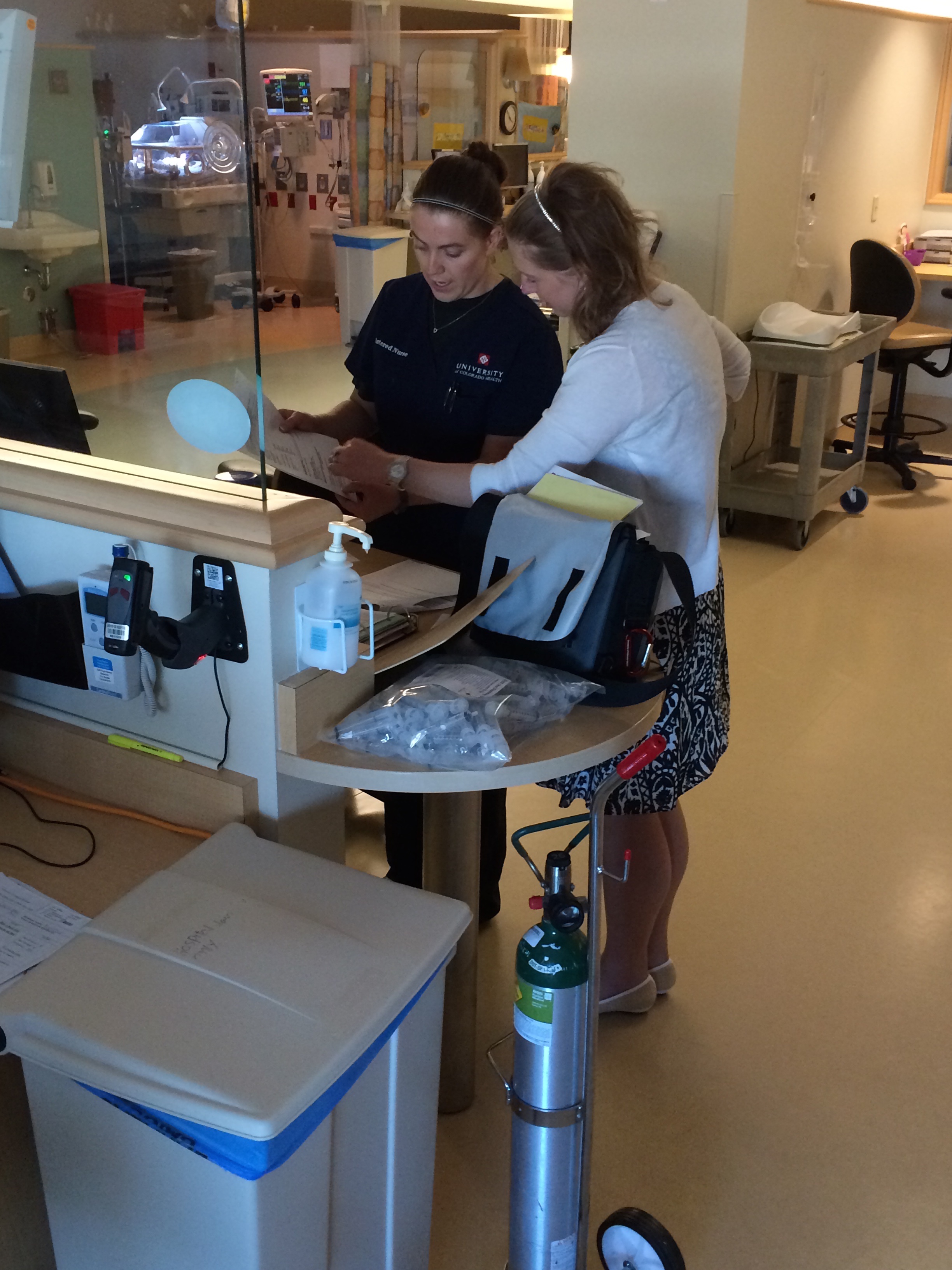
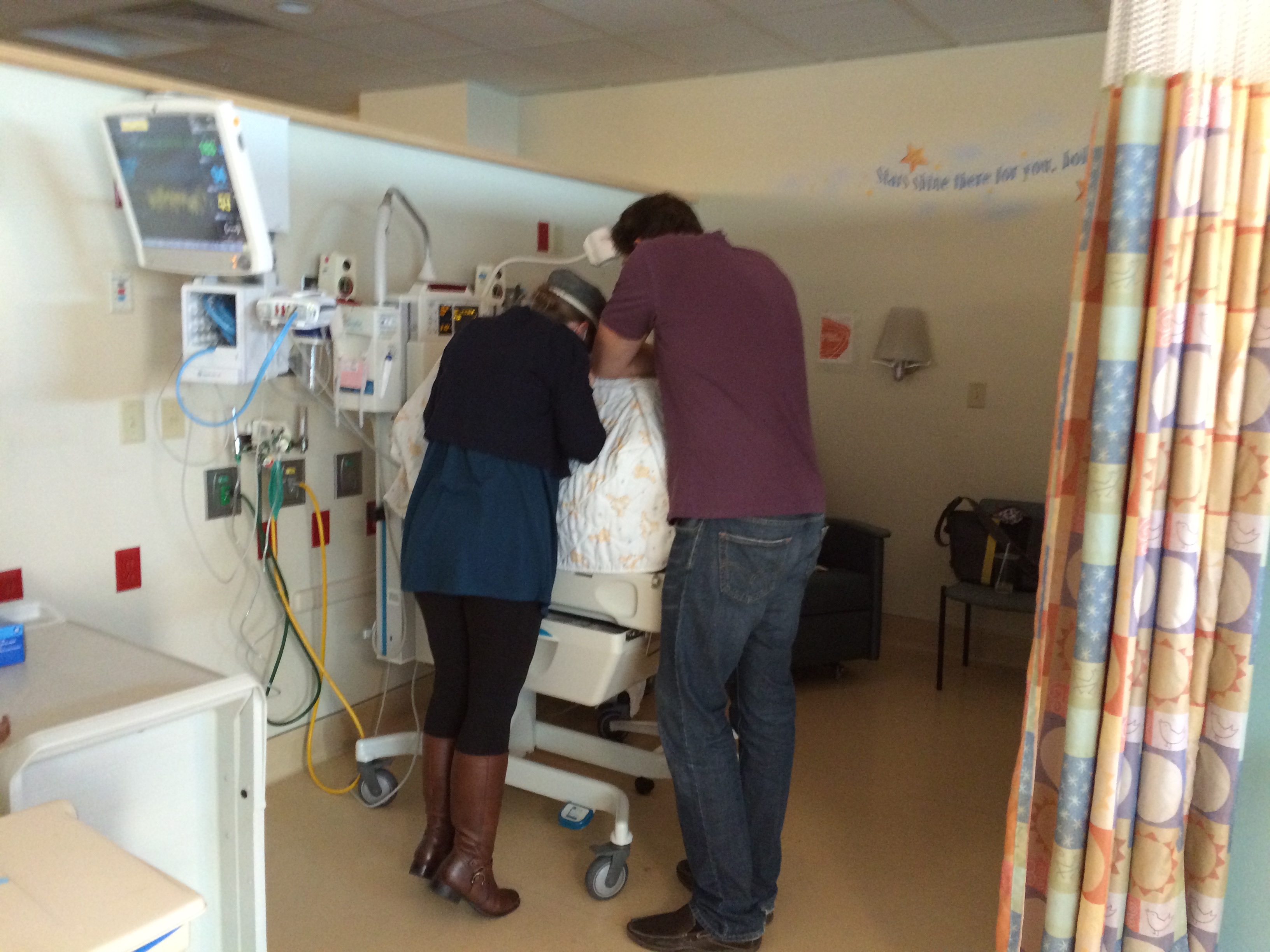
Megan and Kate going over some paperwork before we finish packing the room up and carry London out of there once and for all. There’s no way to explain just how nervous you feel about taking your daughter home from the hospital after she has been there for almost four months. You absolutely need to get everything right and you also need to know again and again what exactly needs to be done if there is a problem with something once you are home. In less than an hour there is not going to be a team of nurses and doctors on the other side of the curtain able to answer your every question.

IMG_2423

Moments after all three of us stepped outside the hospital, 109 days after we frantically arrived, thinking we’d spend just a few hours there.

IMG_4157

Home. The adventure begins anew.

World Prematurity Day

Right before falling asleep last night I was scanning Twitter and I learned that yesterday was World Prematurity Day. The March of Dimes Twitter account, which I follow, had shared images of city landmarks all across the world that were lit up purple, the color of support for preemies.

I don’t know how I missed this day, but today I read some articles about prematurity and found this one on NPR, the most interesting. Money quote:

Premature birth is now the single largest cause of death among babies and young children. Every year, 1.09 million children under age 5 die due to health complications that stem from being born before week 37 of pregnancy (a 40-week pregnancy is considered full-term).

I recommend reading  the whole article at NPR. It’s quite short. The editorial, titled “Preterm Birth: Now the Leading Cause of Child Death Worldwide,” mentioned in the NPR piece can be found here.

After reading the article and seeing the picture at the top of the NPR page, I am, again, so thankful for the treatment available to us here in Denver and that we were not traveling when London suddenly decided she wanted out.

Praise for Noradrenaline

A few nights ago London, who started sleeping through the night months ago, woke up at 2 am. Admittedly, I was a bit angry at first. Aren’t we over this part? The answer most nights is yes, but that did not make it any easier to get up and feed her.

After I put London back in her crib, turned the oxygen back on, put her nasal cannula in, and compulsively checked the flow of oxygen, I asked Kate, “How did we function that first month after London was born when we would both get up every three hours back when you were pumping breast milk?”

“We were in survival mode,” Kate answered.

I guess I hadn’t really thought of it that way. Survival mode is a term I think of in a similar way as I used to think about PTSD. I just thought it applied to different situations from ours, even though what we went through is the most intense situation of my life.

Survival mode is exactly what enabled us to carry on. It turns out, we owe Noradrenaline (norepinephrine) a big thanks.

Noradrenaline produces wide ranging effects on many areas of the body and is often referred to as a ‘fight or flight’ chemical, as it is responsible for the body’s reaction to stressful situations.

For a time we were able to survive on a few hours of uninterrupted sleep each night. If you asked me to do that right now, I would collapse midday.

Survival mode played a role in my curious ability during London’s NICU stay to forget about meals, mostly breakfast and lunch, if it was a particularly busy and stressful day at the hospital. Nowadays, I don’t forget about meals.

So, thanks noradrenaline for making the impossible possible. I will say, it would be nice to have higher concentrations of you around on those days I wish I could get by with just three hours of sleep, but I will forgive you for calming down and going away until I need you next.

Have A Preemie, It’s Such A Deal

I am here to be honest with you. Having a preemie is such a deal both in cost and effort. Think of all the deals you have come across in your life. Think of the deals you expect to encounter in the future. Let your imagination run wild. I really doubt the deal you have in mind will come even close to being as good a deal as I am about to share with you.

1. Delivery is really fast. You don’t even have time to anticipate it. One night, you’ll be at home watching TV (in our case, I was trying to watch the latest episode of True Detective on HBO), and you will be truly concerned about everyday tasks, leaning over to your spouse and saying, “Oh gosh, we still have to clean the kitchen.” Then the pain will come. You’ll make a smart decision to go to the hospital to get some drugs or something and be sent home. So, still, having a baby won’t even be on your radar. But then the water breaks and well, you know something is going to happen. You’re not quite sure what. And then a few hours later you have a kid. Very little pain. Lots of drugs. A lot of very nice people working to help you deliver this baby as quickly and as painlessly as possible. And it is. The scar will heal up very nicely.

2. No third trimester. “Wow, killer deal!” You might say. Well, you are spot on. From what I hear, that third trimester is just a pain in the ass, or more like the lower back. Fatigue? Ha, you won’t even get to the worst of it. Frequent urination? You’re safe. A two pound baby does not make you urinate more. Heartburn? Okay, you might still get this if you have a preemie, but it’s not what you think. It’s just because you had tacos with the hot salsa on them, not because you are growing a human being. Swelling? Nope. You’ll be able to wear your wedding ring right up to delivery. Weight gain? Are you freaking kidding me? As soon as you develop the slightest baby bump you’ll be hours away from delivery, saved from the expand-a-pants, saved from the waddle, the stretch marks, and the need to have a whole different wardrobe for that third trimester.

3. Best babysitting in the world. As soon as your baby arrives, NICU nurses, will be with your baby 24/7 until the baby leaves the NICU. The earlier the baby, the more days you’ll get this amazing babysitting at a relatively low cost. You can still go out for dinner. You can go home to sleep. In addition to the nurses there are many other professionals checking in on your baby, making sure she is comfortable and developing as expected. You might be a little stressed about leaving your baby in the NICU at first, but, oddly, you get used to it. You still need to enjoy your free time before you have a baby at home. You weren’t expecting to have a baby this soon. You had three more months. Take them. The NICU team has you covered.

4. The lighter your baby the better. Truly, if you have a really small baby, you just qualified for all sorts of assistance regardless of your income. You will learn about supplemental security income. You’ll get a check from the Feds once a month that has to be used on baby things. Easy enough. And then for some reason you’ll get a little bonus check when your baby leaves the hospital. Sort of like the Feds just saying, “Hey, congratulations! And thanks for paying all your taxes all those years. This is how we roll. We actually do some good stuff with the money you give us. Here’s some back.” Then, if you’re lucky enough to live in Colorado, your little, teeny, tiny baby qualifies for at home physical therapy and occupational therapy visits. Three times a month, they come to you, assess your baby, tell you what the baby needs to do better, tell you where the baby might be a little ahead, and, this is all at no extra cost to you. This time it is like the state saying, “Thanks for paying your taxes. You struck gold with this little girl and now we are going to pay people to help you with her development.”

5. People give in emergencies. The more traumatic the experience, the more people you will hear from, the more flowers you will receive, the more food will show up at your doorstep, the more aid in your mailbox, the more touching notes you will receive from people you’ve met once or have never met before, the more baby clothes you will receive, and the more diaper cakes you’ll be gifted. People will feel for you. They’ll fork over some really excellent gifts and meals. Truly, what a steal.

6. Having a preemie could very well be cheaper than having a full-term baby. When you have a preemie, she needs a place to stay. These places are called neonatal intensive care units or NICUs. A night at our NICU costs as much as the Peninsula Suite at the Peninsula, Chicago, or almost $9,000 a night. Multiplied by 109. No one is going to stick you with that bill. Trust me. In fact, when your bill arrives you could end up paying less than 1% of your total stay. I mean, if you have very solid insurance, you might just pay .007% of your total hospital bill. Double-O-Seven.

7. After hours visiting at the hospital. You know, typically when you show up at our hospital after 8 you have to sign in and say who you are going to visit. They give you a sticker that you immediately throw in the trash. What a waste. It’s a real hassle. You don’t want to stop and talk with anyone, you’re going to see your baby for crying out loud. Worry not. You’ll live at the hospital. After you’re stopped once or twice, you’ll just look over at the security desk when you next enter the hospital after hours and you’ll get in with the head nod you always see guys giving each other.

8. You get to write about it and people will read. And maybe, after you’ve gone through all this and cried a thousand times for your child’s life and watched her vital signs plummet to numbers that you just associate with death, you’ll be able to find some humor in the whole experience and put a spin on it like I just did.

Double Takes and Long Stares

IMG_2422

On the day we left the NICU for good.

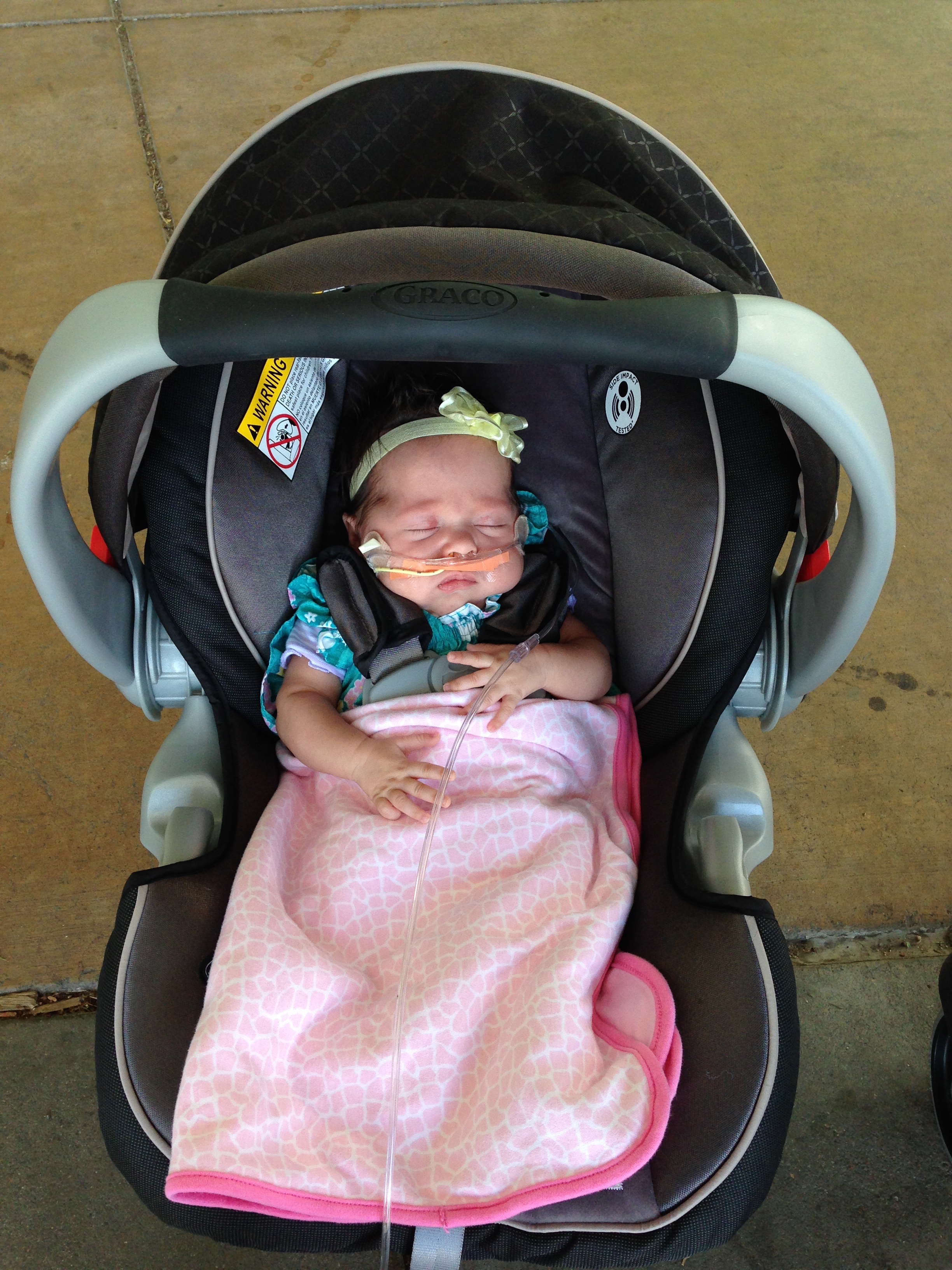
The day after London came home from the NICU we took her on a brief outing, a trip to Target. We were both quite scared. I had hand sanitizer in my pocket, in the diaper bag, and probably in the stroller. As most new parents move about, we were slow, paranoid about every baby carrying tool properly snapping into place, and just a little hesitant about our ability to accomplish an errand with London in tow.

I was scared most by the threat of germs. For over 100 days every single person who came to see London had washed their hands twice, even if they weren’t necessarily touching her. Taking her into a Target, where a nutter could potentially walk up to London and touch her foot freaked me out. Even the idea of her breathing the air in a Target sort of worried me. I know, that’s ridiculous, but that’s the stuff we thought about back then and we prepared for it.

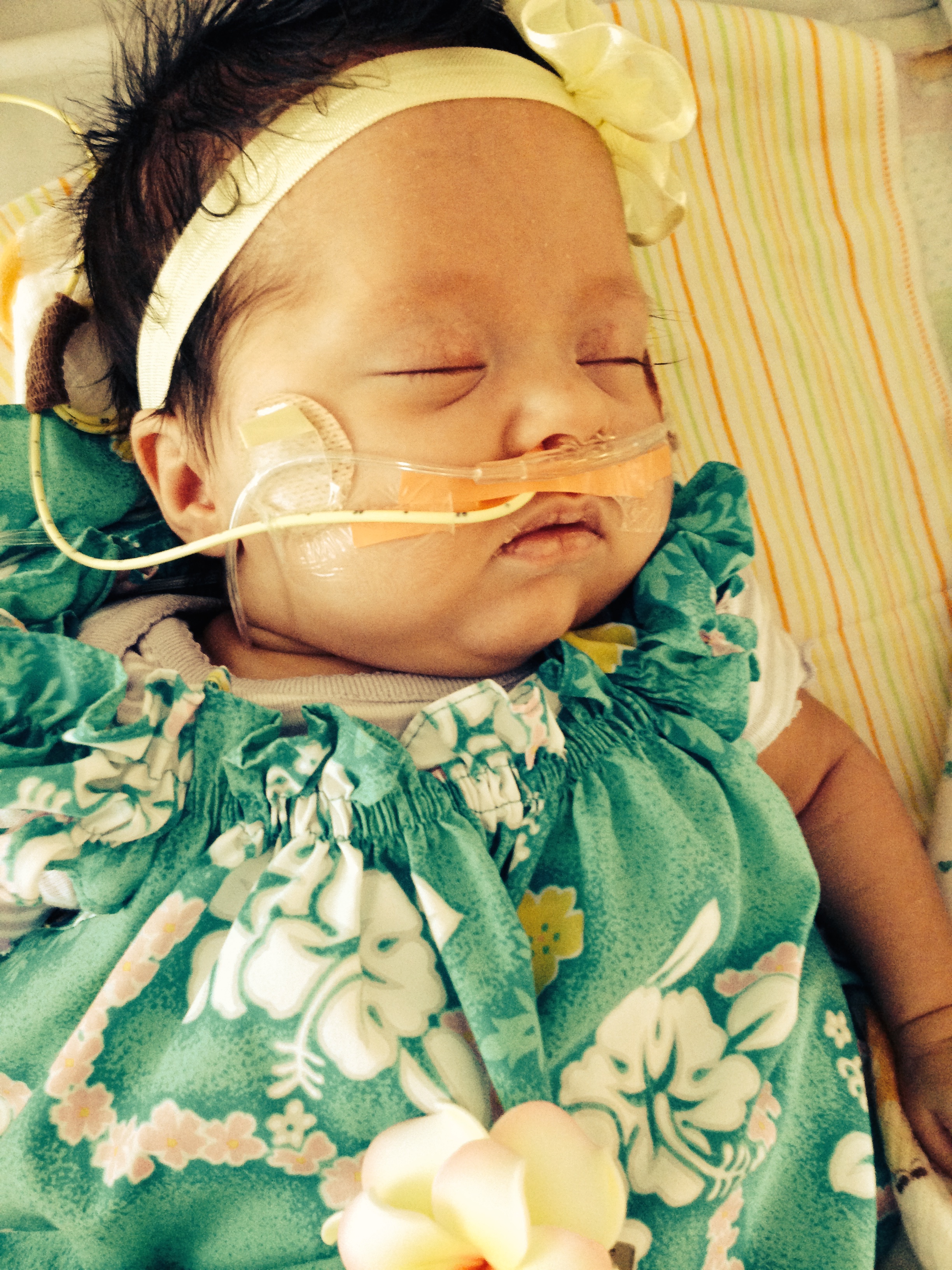
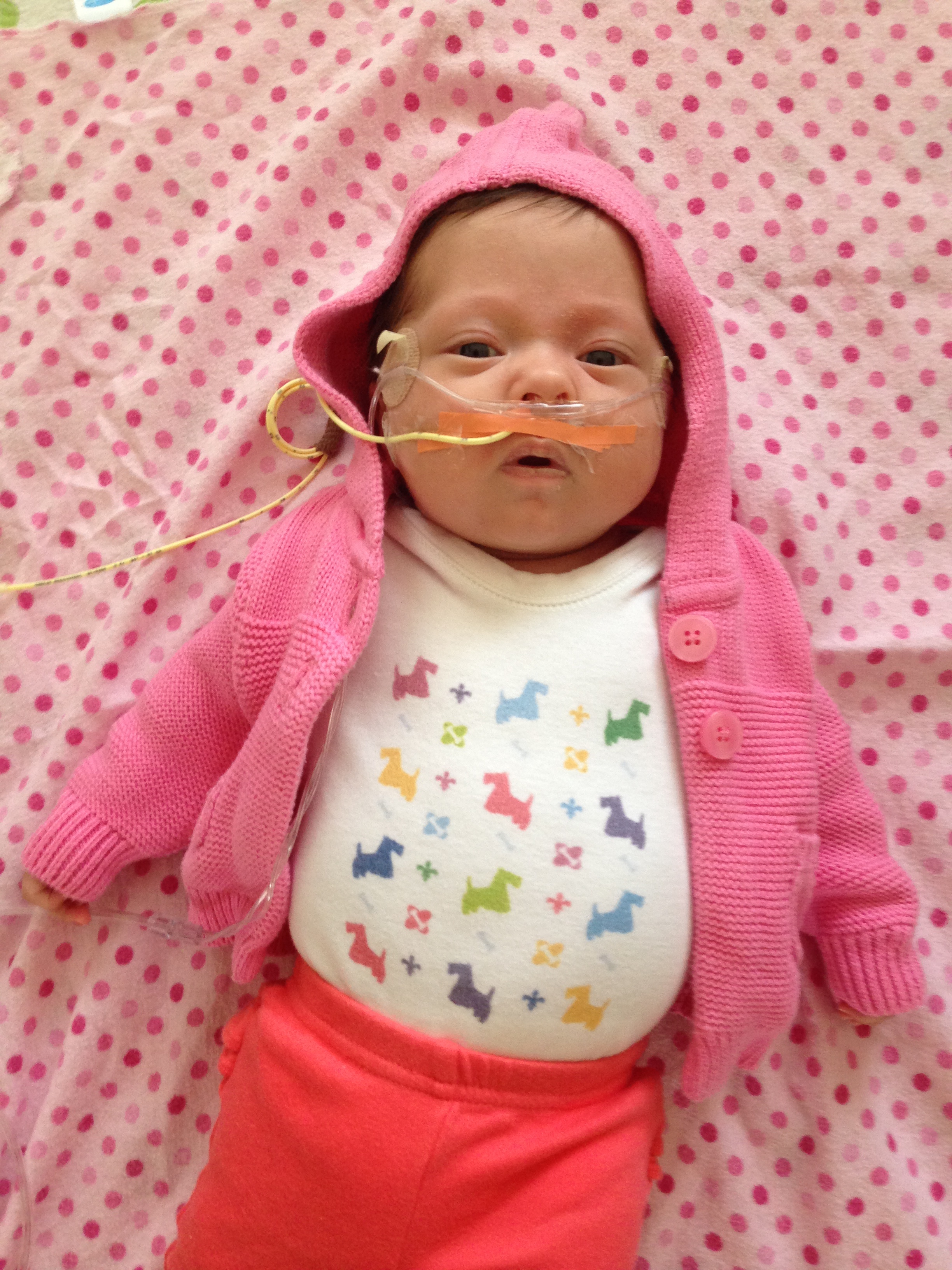
What I did not prepare myself for were the looks we were going to get from people who glanced at our baby. To put it more accurately, the looks our baby would get, the long stares and the double and triple takes. When you take a baby out in public people are inclined to look at him or her. What they do not really expect to see are tender grip cheek stickers holding a nasal cannula in place and an NG tube, held down by an orange strip of tape and wrinkly patches of tegaderm, snaking its way across the baby’s face.

I can still see the first person inside Target who saw all that on London’s face. A nice looking man who was clearly caught off guard by all those sticky accessories. He did a double take and by his second look at London I could see it in his face, he did not have a clue what any of that stuff was. He could very well have thought London’s situation was more serious than it really was. A part of me wanted to stop everything and explain to him what every little tube and piece of tape was doing and that London was a very strong little girl who had been through more scary days than many people my age have endured.

But I could not take the time to tell that man about all that stuff and all those scary days. It would feel like we were back in the NICU explaining to visitors what all the machines around London were doing and why she needed them. It would be an exhaustive way to transition into a life at home with London. So, I just nodded and smiled at the man and kept on walking, his inquisitive stare following us around the store. I had then such an instantaneous and deep appreciation for parents whose kids will never shed their special medical tools and/or physical and mental challenges. We were, for the moment, living that.

But after 109 days in the NICU, I also knew that we had an insanely determined little baby on our hands and, with time, people were going to lean over the stroller and see nothing that might hint at this little girl’s history, enough to fill a book, and that is what has brought a smile to my face every double take since.

PTSD from the NICU

IMG_3083

Another day down, but one last peek at London before we leave for the night.

When someone first suggested that I am suffering from Post-Traumatic Stress Disorder (PTSD) I stifled my disagreement and listened, doubtfully, to their explanation. A few minutes later, when they were done speaking, I was nearly in agreement with them.

Prior to this conversation, having PTSD was not something I thought I could get. Naively, I associated PTSD with war veterans and not many other people. But this is so wrong. The National Institute of Mental Health (NIMH) defines PTSD this way:

When in danger, it’s natural to feel afraid. This fear triggers many split-second changes in the body to prepare to defend against the danger or to avoid it. This “fight-or-flight” response is a healthy reaction meant to protect a person from harm. But in post-traumatic stress disorder (PTSD), this reaction is changed or damaged. People who have PTSD may feel stressed or frightened even when they’re no longer in danger.

PTSD develops after a terrifying ordeal that involved physical harm or the threat of physical harm. The person who develops PTSD may have been the one who was harmed, the harm may have happened to a loved one, or the person may have witnessed a harmful event that happened to loved ones or strangers.

Kate and I were afraid for months while London was in the NICU. We did not always realize it, but we were preparing ourselves for the worst outcomes in the NICU in an attempt to defend against them. Now that London is out, far removed from those most terrifying days, we still occasionally feel frightened and on edge. I first noticed a change when I was performing simple tasks, like preparing some milk for London. On a few occasions I spilled some of that milk and instantly my temper flared. And if anyone was around, I was mean to them. When I am like this I do not want to be near anyone. I was not crying over spilled milk. I was inconsolable over spilled milk. I was not sad. I was irate that something did not go my way. Everything sucked. I consider myself to be a patient person, so this new feeling of anger over something so unimportant was troubling. In fact, that realization made everything worse, bringing a snowball effect to my PTSD.

In addition to losing my temper, I can be anywhere doing anything and if I slip up and think about the scariest moments in the NICU or in the OR the night of London’s birth I am fighting back tears. These are not voluntary recalls. I do not want to think about the scary moments, but the trauma of London’s start is prolonged and fresh in my mind. To think back is to invite some of those moments into the present and once you do that it is hard to stop the flow.

The NIMH definition of PTSD continues:

PTSD was first brought to public attention in relation to war veterans, but it can result from a variety of traumatic incidents, such as mugging, rape, torture, being kidnapped or held captive, child abuse, car accidents, train wrecks, plane crashes, bombings, or natural disasters such as floods or earthquakes.

Or as someone recently put it, “You were not just in a single life-threatening accident with London. You were in one week after week after week and the person most precious to you in this world was the one always at the greatest risk.”

Truer words have not been shared with me. Having a baby at 26 weeks is exactly like that. Every time we drove to the hospital we braced ourselves for the accident. For a while, we got bad news every day. Sometimes it was just a trickle. And on the worst days it was a flood.

Even when the bad news did not come, we still braced for it. Do that day after day for 109 days and PTSD becomes a near certainty. For almost four months Kate and I did not just daydream about worst-case scenarios. On top of the worries every parent has concerning their newborn baby, we had to have real, hard discussions about our variety of worries stemming solely from London’s delicate start to life. At the end of most of these discussions one or both of us were crying and holding onto each other.

Until your child comes home from the NICU you live at a heightened state of anxiety. It becomes your new normal and when you plateau for that long coming down can do some really weird things to you. We are still adjusting.

The Fastest Year of My Life

_BKP1884

Taking in the sunrise from our room in Mexico.

Last year, Kate and I were in Playa del Carmen for a wedding during the first weekend in November. I was thinking of this trip just last week and I momentarily refused to believe it had almost been a year since Kate and I strolled along on the beach during a midday thunderstorm. That walk and the rest of that trip are so vivid and crisp in my mind, we could have been there last month. How could those memories be a year old?

Less than two weeks after we returned from Mexico we went under contract on our first home. The next 12 days I was busy with the purchase of the home and making sure we could move out of our apartment before the lease ended. Then we were off to Wyoming for Thanksgiving. Then we drove back. A few days later we flew to Orlando for a week. Then it was a week of last minute Christmas gatherings and preparations before we traveled to New Mexico. There for nearly a week, we drove back and closed on our house that Monday, December 30th. I started painting throughout the house that afternoon. We moved furniture on January 7th. The house was a mess and there was still more painting left to do. We then had a relatively calm three weeks (as calm and restful as settling into your first house can be).

Then the night of January 29th arrived and Kate had painful contractions at 26 weeks. The next significant date in my head is May 19th, the day London came home. And then a summer spent on edge as London slowly strengthened and we traveled to weddings. And then fall arrived. And now we’re almost back where we started.

From January 29th to May 19th, it did not matter what day of the week it was. It did not matter the month, the holiday, the weather, the time. It only mattered that London was doing okay and getting better. These days are curiously recalled in my mind. There is so much held within the borders of them that it will take years to process just how much we changed during that time and how it affected us. Yet, at times, those days seem like one really long fast day. And then it was summer and our girl was home. I recall pausing during my walk out of the hospital one day in April to take in the weather. “My God, it’s spring,” I mumbled to myself. Where had winter gone? I was actually dumbfounded. I can easily remember the cold night we arrived. That was the last day I cared about the weather.

Living on edge makes life go by very quickly. That is one thing I have learned in the last year.

IMG_4209

May 23, 2014. 4th day home.

London is home now. She is strong and happy beyond our wildest hopes and expectations. I do not call her a miracle baby because I never want “miracle” to be a term I casually use. But it is true. She is a miracle. And she is not the only miracle of the last year. It is a miracle all three of us made it through. At times it did not seem possible. It did not seem possible that time would slow. But it did. And I care about the weather once more.

If You’re Just Now Getting Here

I probably should have done this sooner, but if you’re just now finding this blog via a tweet, Facebook share, or web search, then you should know that it all started with a series of posts detailing London’s birth. These posts are the foundation of this blog and, for their author, the hardest to write and the hardest to reread.

Feel free to scroll down through the archives, but if you’re looking for square one, and for getting a better feeling of how this family got its start, follow the links below. A quick word about the original posts, there are thirteen of them, but they aren’t very long posts so reading all parts is not a big ask.

London’s Birth Part I. 

Part II.

Part III.

Part IV.

Part V.

Part VI.

Part VII.

Part VIII. 

Part IX.

Part X.

Part XI.

Part XII.

Part XIII.

The NICU Is A Fortress

IMG_3504

One of my favorites. Her 2-month birthday. “To infinity and beyond.”

As badly as I wanted London to leave the NICU I was also terrified of some of the things she would lose when we walked out of that hospital. 24/7 caretakers. A team of RNs, NPs, and MDs just feet away. The opportunity to talk to one of them whenever we wanted to and to ask the dumbest questions of.

As a parent, you do grow accustomed to having your baby in the hospital 24/7. It is comforting to know that your child has the best babysitters in the world.

While London was still in the hospital I wrote:

Right now I feel like taking her home will be bittersweet. I’ll be beside myself, in a good way, when we walk into our house holding London, but it’ll also be frightening to leave our NICU family.

Back then, the approaching discharge date meant exposing an already fragile baby to the terrors of this world like driving home with her! Or contact with the public, those creepy baby oglers who think they have the right to walk up and touch your child just because she is the cutest thing they have ever seen. Can’t stand these people! We would be responsible for a baby, yes, but also all the leashes that come with her: NG tube connected to a feeding pump, an oxygen cord, and a pulse ox connected to her foot. Monitoring all that could be overwhelming on top of normal baby duties.

But a baby has to leave the NICU eventually. We had our gambles and triumphs there in that pod, but the good stuff was to be found in life beyond those hospital walls. It is hard to think of leaving the NICU as anything but a tradeoff. An adventure was before us, filled with successes and failures, loss and gain, losses and victories. But behind us was London’s NICU pod, which, for her parents, became the safest place in the world.

NICU Bragging

I don’t know what else to call it, but NICU bragging. It’s an odd thing, something Kate and I became aware of while London was in the NICU, but something that really reared its ugly head once we were out and could take London to public places.

As emails went out to notify friends and family of London’s emergency birth and her condition, we started to hear back from all sorts of people. Those who had had preemies themselves did share some of the most useful information, but every once in a while there would be a line dropped in an email or spoken in conversation that, while perhaps not ill intentioned, would sound a little like bragging. Typically, these lines would be in response to us sharing London’s gestational age at birth (26 weeks, 4 days, but rounded down in the NICU to 26 weeks) or her birth weight (2 lbs, 6 oz).

IMG_4078

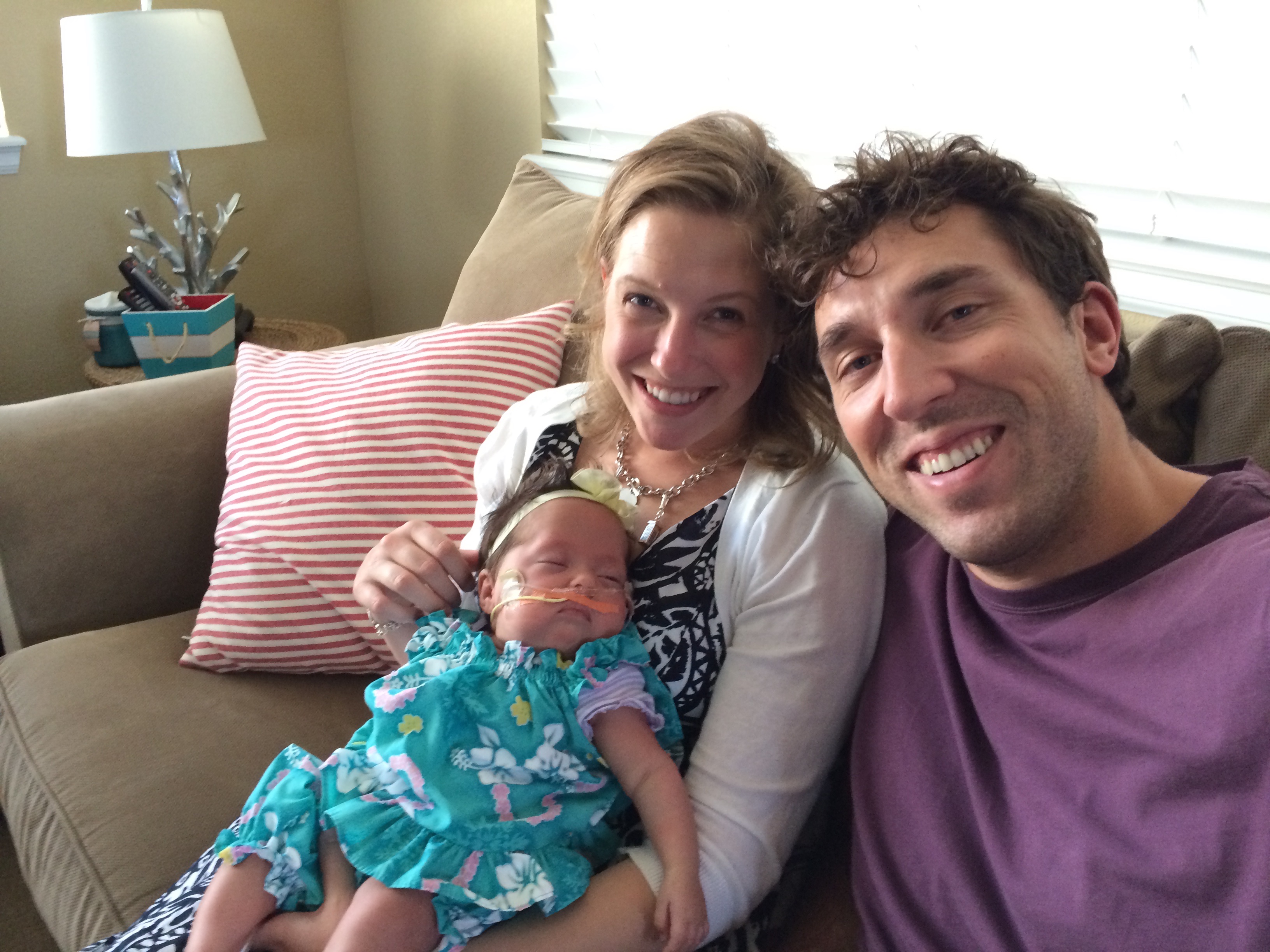
My girls.

In response to the gestational age, people were eager to share if their son or daughter (or relative) was born earlier. In response to the weight, people were eager to share if their son or daughter (or relative) was born weighing less than London. Initially, it was a little bit comforting to know that there are preemies born quite a bit earlier and lighter than London who can turn out fine, but not too long after London was born I had a hard time interpreting these comments as anything but diminishing our particular situation. In some cases, I knew people were trying to comfort us, but with others I said little in response to them about our preemie and NICU experience, hoping they would sort of get the hint and walk away.

I found that the comments in response to London’s birth weight were the most bothersome and they nearly always contained a detested title, micro preemie. If you’re wondering, a micro preemie’s birth weight is less than 800 grams (1 lb, 12 oz) or with a gestational age of less than 26 weeks. More often than not, I felt like micro preemie was shared in conversation with us as if it was the highest commendation a preemie could receive and it was delivered with a tone that implied one thing, our preemie has had it harder than your preemie. Nothing irked me more than someone referring to their preemie as a micro preemie merely because it was born weighing less than London but its gestational age older, like 28 or 29 weeks, or even later. From what I was told in the NICU, from nearly everything I have read, gestational age is more important than weight. Of course, being bigger than average at 26 weeks, like London was, is a huge benefit, but staying in the womb even for just one more week would have been vastly more beneficial for London. So, if someone told me they had a micro preemie, but it was born at 29 weeks, the only thing I cared about was ending our conversation.

Before London left the NICU, we had to attend a discharge class with other parents whose baby or babies were going to get out soon. Naturally, we all sit there and talk a little bit about our circumstances before the nurse shows up to teach the class. Most of the conversation centers around birth weight, gestational age, and length of NICU stay, i.e., the premature baby’s big three. By the time Kate and I sat in on this class, London was the veteran of the NICU, with over 100 days under her belt, and we were very much aware of NICU bragging. Thus, we were sensitive to parents, for example, who spoke about their three-week NICU stay stretching out to what seemed like three months. In our NICU class we did not share one of the big three stats because we did not want to give the impression to anyone that we were diminishing their own private and frightening experience.

Parents of preemies always find one another in public. It’s rather easy for us, we see a baby out and about with oxygen or an NG tube, and we know part of the story even before we talk to the parents. We have been approached by parents of preemies nearly every time we take London out to the mall. The parents approaching us to ask about London are eager to hear a little bit about her story, but mostly they are very eager to share their own. Some of these folks just unload a life history on us even though we met them thirty seconds ago inside a Nordstrom. For Kate and I, with our somewhat introverted personalities, this can be uncomfortable, to say the least.

As you can imagine, such encounters are even harder to avoid when going to a special care clinic at a children’s hospital. Last week, I overheard a conversation that must have started when one parent spotted another baby on oxygen.

“Oh, was he a preemie?”

“Oh yeah, 28 weeks.”

“What’s that, 3 months early?”

“Two and a half.”

“Ours was 3 months early.”

End of conversation. I felt like the parent whose baby was born three months early was just looking for the quickest route through the conversation so he could say, “Ours was 3 months early,” and then walk away. That’s precisely what happened. I’ve seen this a lot. It’s NICU bragging.

It is important for parents of preemies to talk with one another, to share their unique stories, but to share the big three stats and walk away, well, that does no one any good. As Kate and I have grown into being parents of a preemie, we have become increasingly conscious of this truth when talking with other parents of preemies. We would love to share with you London’s gestational age, weight, and number of days in the NICU, but only if you ask. We know there are preemies who were born earlier or later than London, born heavier or lighter than London, and stayed in the NICU longer or shorter than London, but that does not necessarily mean their time in the NICU was automatically easier or harder than London’s. A preemie’s care and progress can be influenced by many factors and is vastly complicated. This truth is never fully borne out by sharing the big three stats. We will do our best to never start a conversation with them.
Baby Kale

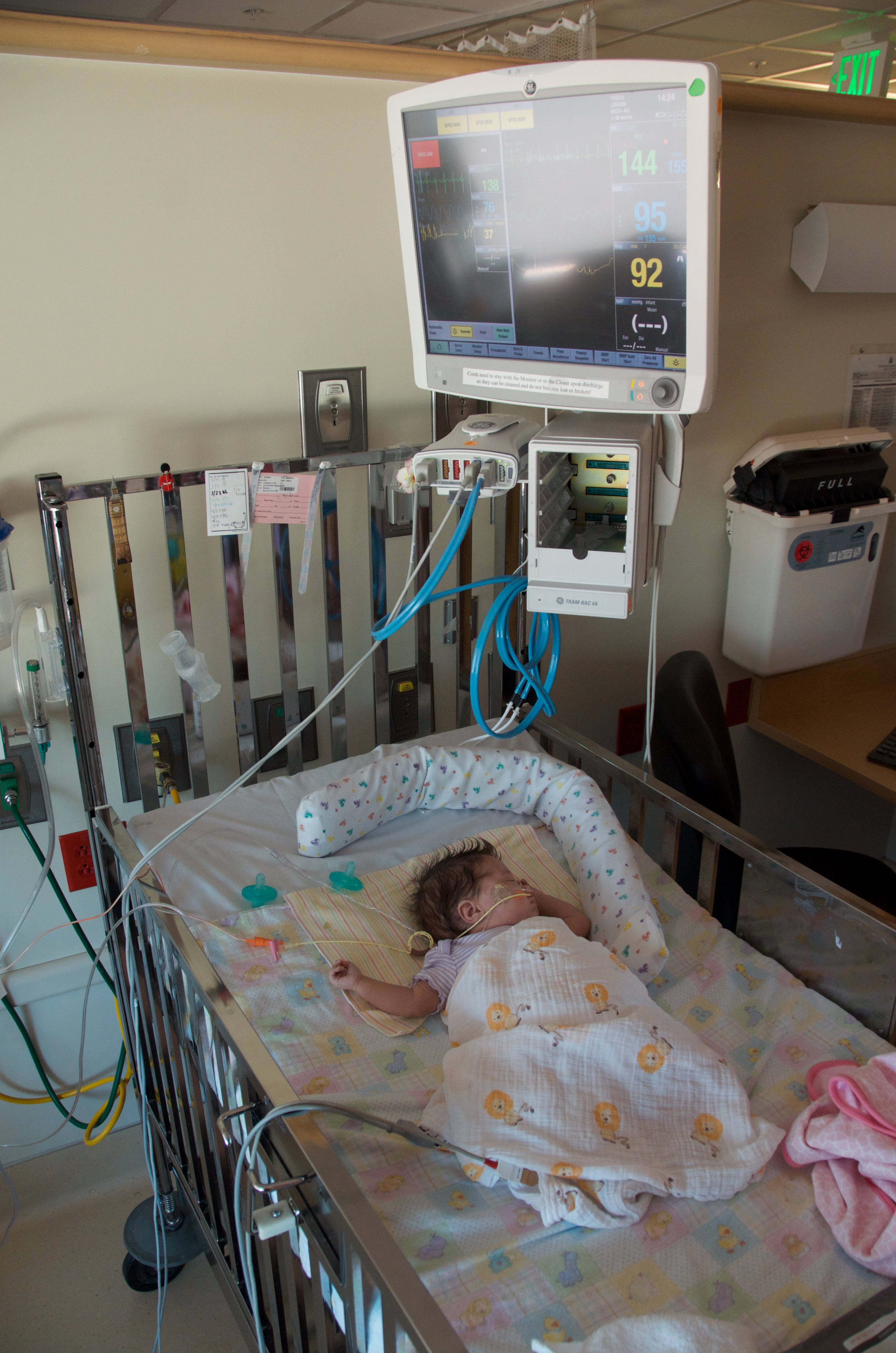
Two weeks after London was born I was foraging through the refrigerator for anything edible. We hadn’t been able to go grocery shopping since Kate was pregnant. I was not hopeful about what I would find, but why not try? If I found something, then maybe I would cook a meal at home. At this point we were living off meals delivered to our door while we were at the NICU.

As I moved condiments aside to see to the back of the fridge, I spotted something. It looked like lettuce before I saved it from the depths of the Kenmore, but it didn’t need saving, the package of baby kale spoiled at least a week prior. However, this was much more than a package of spoiled lettuce. I bought it before London’s birth so it was a relic of my former life. Standing there, holding the baby kale, I could picture the day I bought it. It seemed like ages ago. It was just a trip to the grocery store and the now yellowing leaves of baby kale made me yearn to be in that place again, where I was simply gIMG_3979rocery shopping without, in hindsight, a care in the world.
The baby kale linked me back to this person who I no longer was, a person I didn’t have the time to say goodbye to. Not only a person, but a lifestyle too, that in the weeks following London’s birth I mourned. In a way, as expecting parents, you have nearly ten months to transition from one lifestyle, the one with no kids, to another lifestyle, that of parenthood. One of the toughest things about having a preemie is that those remaining three months (in our case) were lopped off with no warning and in six hours you are thrust into an experience so beyond what you could have imagined. An experience with terrifying responsibilities and with horrific consequences.

There are of course things around our house that Kate and I bought long before London arrived, but the baby kale brought me back to the pre-London era like nothing else could. As I dropped the kale into the trash, I was not simply letting go of spoiled food, I was letting go of a past, one I could no longer identify with and letting go of a self I could barely remember being.

Stroller Love

Remember when BOB strollers were cool? Yeah, well, in this household the BOB fell short, quite literally, right from the start because I am 6’9″. There’s no point in asking if you’ve tried pushing a BOB stroller when you’re 81 inches tall because you haven’t. I’ll just tell you. It is freaking miserable, like walking around bent at the waist, stretching your hamstrings wherever you go.

BOB strollers have a great reputation, so when I first tried pushing one in a store I was so discouraged because I mistakingly thought BOBs were the pinnacle of strollerdom and if this stroller wasn’t going to do (and it clearly wasn’t) then what’s left?

Let me tell you what’s left…the just-as-short Graco strollers, the Eddie Bauer BOB look-a-like strollers (EB, really? I thought you learned to not branch out after the Ford Explorer Eddie Bauer Edition, but after a quick Google, it appears the EB edition is still a thing…how?), Britax (practical, a little taller, but Jony Ive needs to redesign them because they’ve been hit with the ugly stick so many times their wheels have two spokes…what were they thinking?), and Chicco (which just seems like a mashup of Graco and Britax). I could go on, but you get the point, right? All of these strollers, despite their own unique flaws, are all too short.

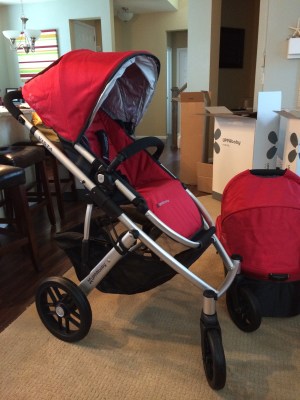
All hope was lost until we walked into the Right Start, sort of a posh baby store, and an actual employee listened to what we were looking for and walked us over to this beautiful stroller she was calling the Uppababy something, I didn’t catch the name right away because she said it right at the moment I looked at the price tag. While laughing in my head at the absurdity of paying that much for a stroller, I obliged the employee and took it for a little spin, but right before I strolled off, the employee reached to the center of the handle, gripped, and pulled. The handle raised a few inches higher off the ground. It was love at first step. My hands didn’t have to go down to my knees to push this thing. My feet didn’t hit the rear axle of the stroller because it’s not there, leaving plenty of room for my full-stride with size 15 shoes. The Uppababy Vista moved like butter around the store. Each and every step was a little more painful because I was falling more and more in love with the stroller but knew we weren’t going to IMG_3720drop that kind of cash on such a ride.
After that initial trip to the Right Start, we kept looking for strollers. We pushed around cheaper models at Target and Babies R Us. We pushed around much more expensive models (didn’t know that was possible, but makes sense, the celebrity parent needs something to push around) at a boutique stroller store. But always, the Uppababy Vista was there, lurking, pulling us back to its many wonderful features. However, it was always the height that appealed to me. Other bonuses, like the included bassinet, seemed unnecessary. The brand name, Uppababy, even bothered me. It was too pretentious sounding and it looks like it was missing an umlaut.

We kept resisting, but the stroller search was leading us nowhere. Before we formally spoke about it, I think we both knew the Uppababy Vista was going to be ours. It was inevitable.

We eventually were ready to buy and then we received an incredibly generous gift certificate to the Right Start from friends we met in Milwaukee. This made the purchase easier to stomach. And so it was, a week after I made a few fast clicks on the Right Start’s website, the Uppababy arrived at our doorstep and I immediately assembled it. Since it was April 14th, the stroller sat in the living room for a month like a piece of precious furniture that no one could sit in.

Months later, I can’t imagine having a different stroller. The cost of the stroller, even without the gift certificate, would have been worth it. Never once have we regretted the purchase. That unnecessary bassinet became indispensable. The car seat attachment beautiful. The height always right. However, I still think Uppababy is missing an umlaut.

Born in the USA, Raised in the NICU

London is a remarkably happy baby. She tolerates so much and cries very little. We hear this from nearly everyone London meets. I tell them I have a theory. For the first 3.5 months of London’s life she had medical professionals treating her around the clock. In addition to the diaper change, temperature check, and respiratory check every four hours, she was also interrupted with head ultrasounds, echocardiograms, at times shots, the placing of a new IV line, and physical therapy. This is the NICU norm. For the baby, they assume this is what life is like, this is how all babies live out their early days. So, what is crying going to do?

That is the attitude London embraced. To make London cry now, you almost have to give her an ROP exam. Her frightening start and all the procedures that it necessitated made her one tough babe. I like to think that most long-term NICU babies also graduate as super tough and tolerant little things, but I have a few reasons to believe that that is not the case because all too often nurses would tell us how amazing London is with a shot, for example, when she would barely cry for one second in response to the needle, but the boy next-door would wail for a couple minutes.

In a way, the NICU schedule of around the clock treatments or feedings continues when some preemies come home. Usually with full-term babies it’s the baby waking the parents up, but with preemies, it is quite often the parents waking the baby up. Whether it is a feeding time, a cannula check, a breathing check, or just a general are-you-alive-over-there check, London’s day and night were interrupted by her parents for quite some time.

Below are some pictures and a video that only give you a sliver of the stuff London and other preemies endure at the NICU.

_BKP2294

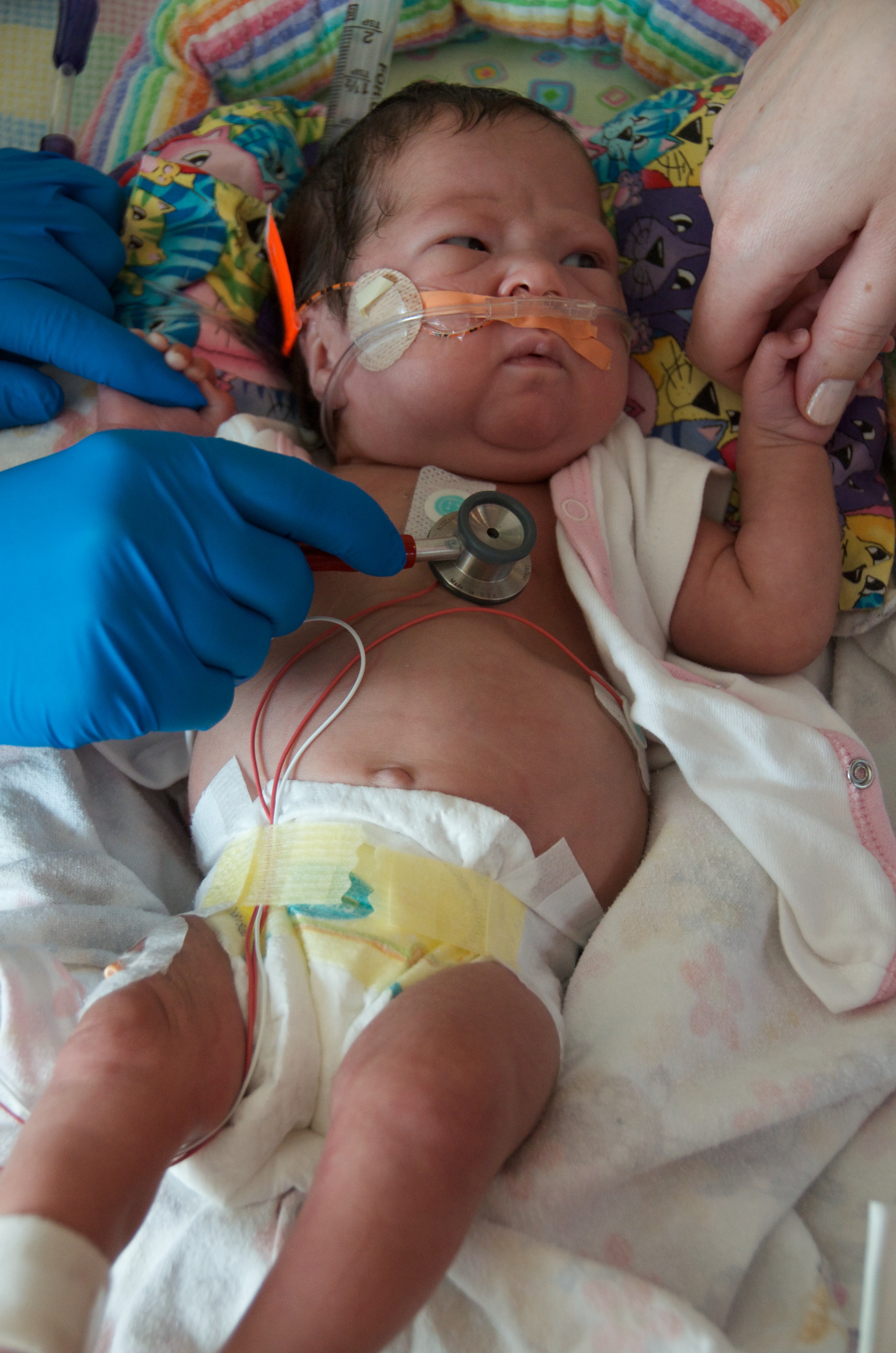
One of the less intrusive procedures, an echocardiogram when London was not even a week old. This one revealed a PDA, which was resolved over the two weeks following this echo.

IMG_1990

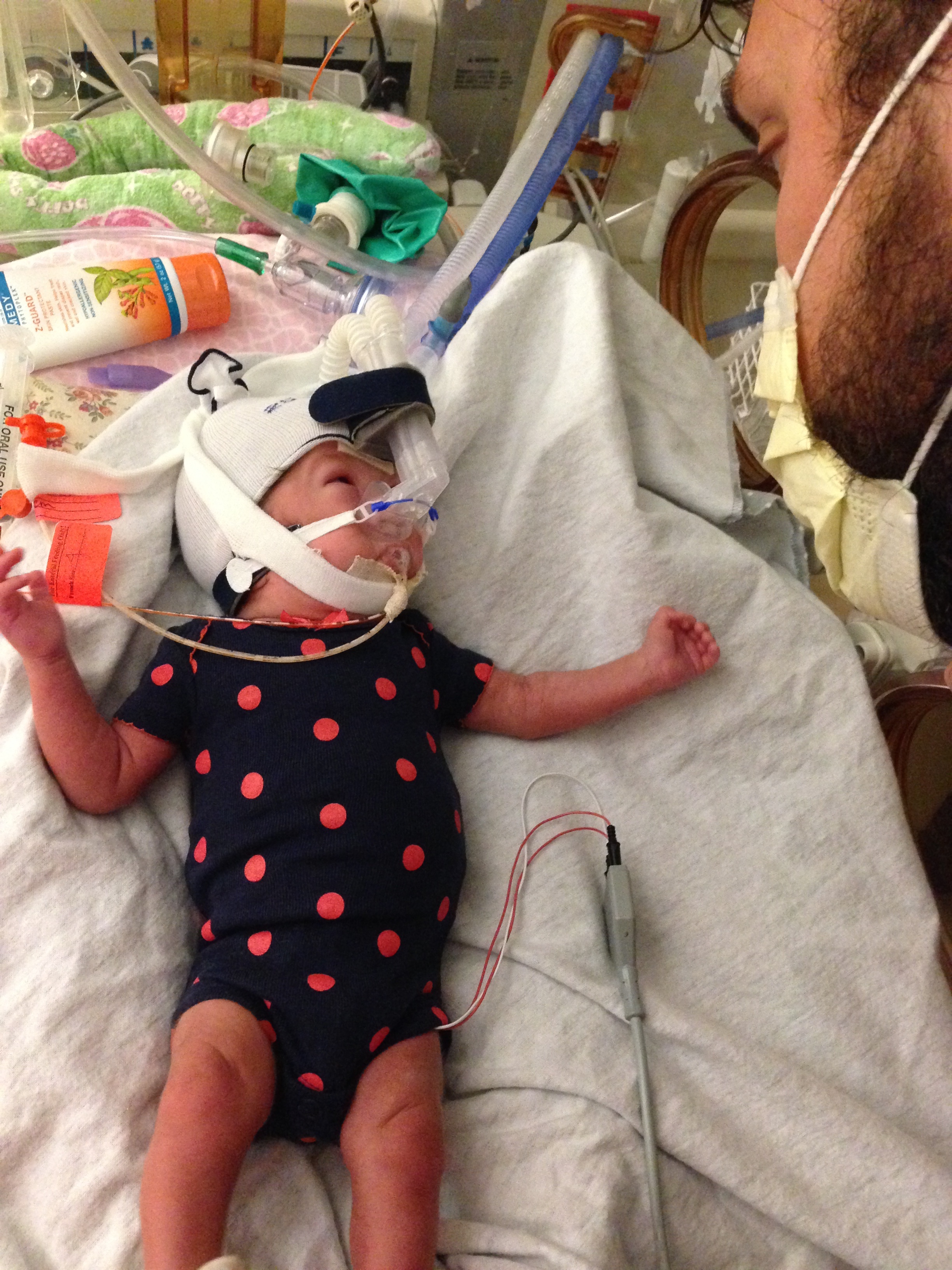
As London’s lungs strengthened, she was placed on CPAP. Of course, I loved the progress, but I had a strong dislike of CPAP because it covered up most of her face. It was nearly impossible to see both of her eyes from the same angle when she was wearing her snorkel-like attachment. It drove me crazy, but London, always so chill, tolerated it like a champ.

_BKP2551

An every four-hour checkup on London, one of her “cares.” This particular picture was taken during London’s three-chin phase of life.

It was May by the time of this echo. As you can see, it’s no big deal to her. She’s about ready to fall asleep mid-echo while nurse Eileen chats away in the background about how busy the NICU is that morning. We thought London was done with echocardiograms by this stage, but the doctor ordered another battery of tests to see why she was so tired and not eating. On this particular day, day 95 in the NICU, it was London’s peaceful state of mind that helped calm us down.

The Eyes Have It

London’s first ROP (retinopathy of prematurity) exam was around 8 weeks after she was born. From the first time someone mentioned the ROP exam, they made it sound like something that we, as parents, would not want to stick around for. Kate always heeded that advice. I did not.

After London’s eye exams revealed Stage 2 ROP, I knew avoiding them was going to be impossible. They were happening once a week and, as with every other procedure, I decided that I wanted to be with London through it all. I did not want to shield myself from what she was enduring. If I did not watch the exam, I would feel out of touch with her care and progress.

When it was time for London’s next exam, I had just put her back into her isolette. I informed the doctor that I was going to stay. “Okay, stay seated, because I’ve had a dad pass out on me before,” she said.

I stayed in the chair even though I was confident I could stand up and get a better view without passing out and hitting my head on the floor.

The nurse that day gave London some sugar water or “sweeties”, designed to distract London from the imminent eye invasion. When the nurse had an arm on each side of London and her hands holding London’s head firmly in place, the doctor placed the miniature eye speculum. London squirmed right away, but she didn’t start wailing until the doc was looking in her eyes. I had never heard London cry like that.

Now, having watched so many eye exams, the noise London makes when her eyes are being examined is the hardest part of being there. The speculum and the probing with other tools looks quite unpleasant, but I promise you it is the noise that is the worst. It is a traumatic enough burst of screaming that an adult might only make it if they were being slowly stabbed again and again.

It is nearly enough torture for the parent to hear as it is for the baby to endure. Once I heard her scream like that I knew the sound would be with me forever. But, as I sat there and watched eye exam after eye exam, I tried to absorb as much of London’s pain and fright as possible. The eye exams became a unique way for London and I to bond.

As soon as the eye exams were over, the nurse would hand London back to me. She would immediately stop crying, look up at me, and immediately rest her head against my chest.

Last week we endured one last ROP exam together. If London had to have another exam I am not sure how the doc and her assistant would be able to contain London’s thrashing and kicking. One last time I attempted to share in the pain with London by being by her side and one last time I had the privilege of comforting her as soon as the speculum was pulled away.

More Baby Time

IMG_2925

DOL 2: Eyes still fused shut.

How long is a baby considered a baby? Yeah, I just googled that because it feels like London has already been a baby for so long. The Google consensus is that a baby is a baby from one-month old to less than two years. Prior to a month, a baby is a newborn, although I never referred to London as a newborn when she was less than a month. She was a baby. Still is. And, I guess, she will be for quite some time still.

I suppose it feels like she has been a baby for so long because we watched her last three months of in-utero development outside of the uterus. By three-months, most babies are doing something new each week, maybe even rolling over. London was still doing something new each week, but at three-months she was still struggling with eating. Watching that development outside of the uterus is special. Not many parents get to watch their baby struggle as they open their eyes for the first time (which usually happens in the seventh month of pregnancy). But Kate and I were standing right there as the seal broke and London’s eyes flickered to life right in front of us. It is those moments that make London’s seven months of life stretch out to a year in my mind.

I know, among parents of preemies, I cannot be alone in marveling at the changes that can happen in 7 months. But I am also pretty sure most parents of full-term babies are also astonished at the changes 7 months can bring. Naturally, that feeling is more intense when the starting point is three months earlier and seven pounds lighter than you were expecting it to be.

Blinded By The Light

Last night, Kate and I watched some old videos of London in the NICU as we were falling asleep. We did this every night while she was in the NICU. Now, not so much, because we can get out of bed and walk twenty feet to her crib and there she is, sleeping so peacefully. As we scrolled through old photos and videos on our camera roll, we happened upon this one…

IMG_3100


Kate said, “You should write about this picture and the bili lights.”

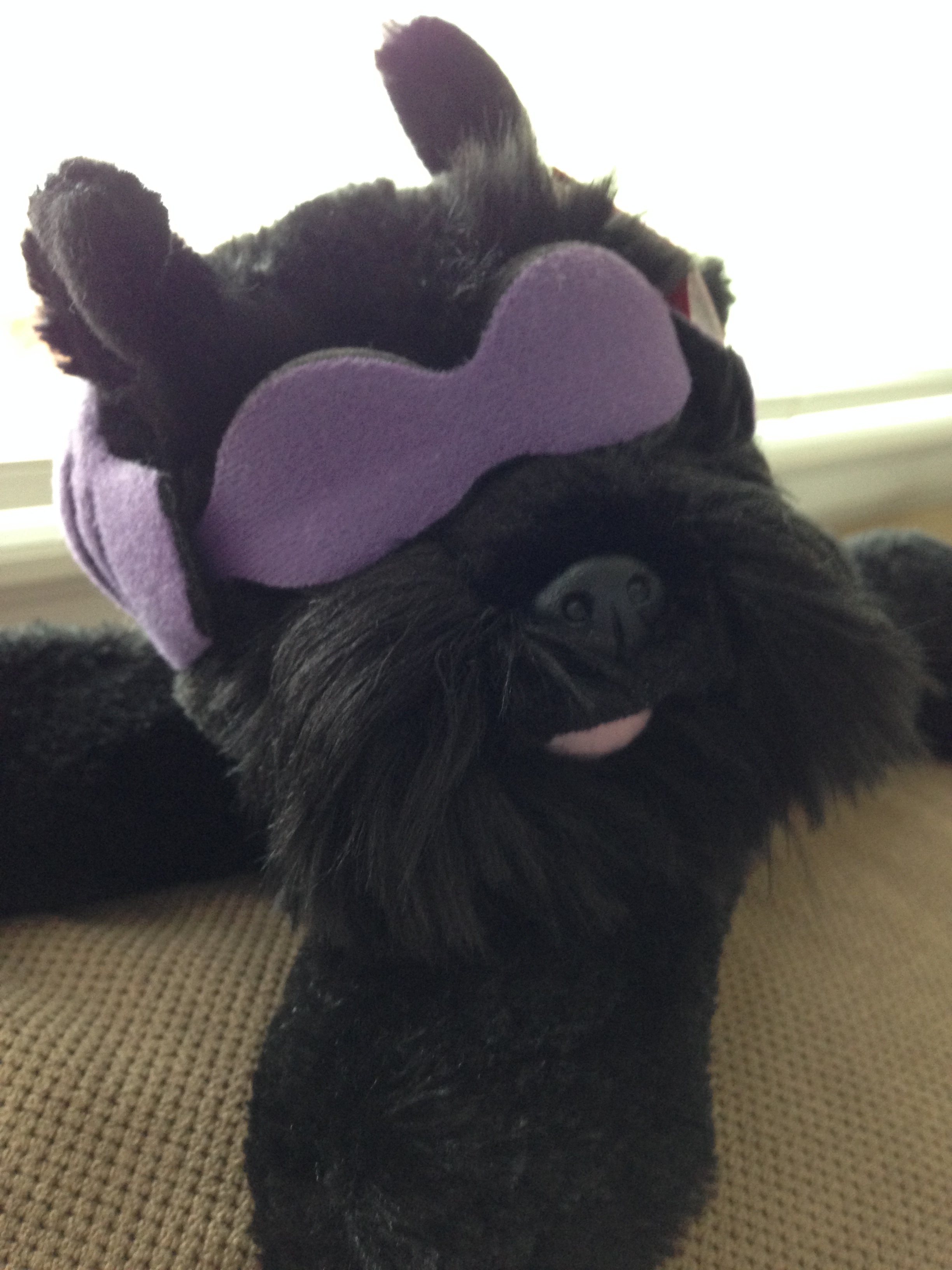
“Okay,” I said. But it took me a few more minutes to figure out where I could go with a post about this picture. First, I should just tell you about the picture, it is of a very small stuffed animal (beany baby size) wearing the goggles that London wore while she was under the bili lights. We have a couple of these BluBlockers because the nurses thought London was done with the bili lights and then she went back on them after we had taken the first goggles home.

These goggles were addicting to me once they were home because I could, whenever I would pass them in the living room, pick them up and smell them. Their smell transported me back to London’s room. So when these goggles came home, it felt, for the first time, like we had brought a little bit of London home with us. Before bed I would inhale deeply from the goggles. When I got downstairs in the morning I would take another hit from the goggles. It’s starting to sound like I’m talking about a bong, but that’s entirely appropriate because the smell of these goggles made me relax, they transported me to another place, and I was at peace.

Sadly, the goggles eventually lost their scent of newborn London. Unfortunately, one can’t take that smell and store it away in a NICU keepsakes box where the goggles now rest.

Every one of the fifteen weeks London was in the NICU, I took a load of her laundry home. And every time I was about to put her clothes in the washer I smelled them, although with clothes I had to carefully select where I was going to plunge my nose. Then I threw them into the washer. By the way, do you know how many preemie outfits you can fit in a modern washer? I’ll save you the calculation: a lot.

Smell was and still is an essential way to connect to your baby, especially if they are in an isolette. Even before we were discharged from Kate’s room at the hospital the nurses had us wearing receiving blankets in our shirts as we slept. Whenever we were next at London’s side, the nurses took the blankets from us and placed them near her head or wrapped her up in them. The blankets were supposed to familiarize London with her parents’ smell.

I liked to think of her taking a deep inhale from the receiving blanket before she fell asleep in her hot and humid isolette. And again, in the morning, taking a deep breath and catching a hint of mom or dad in the air so a part of us was always with her.

Daddy Kangaroo Care

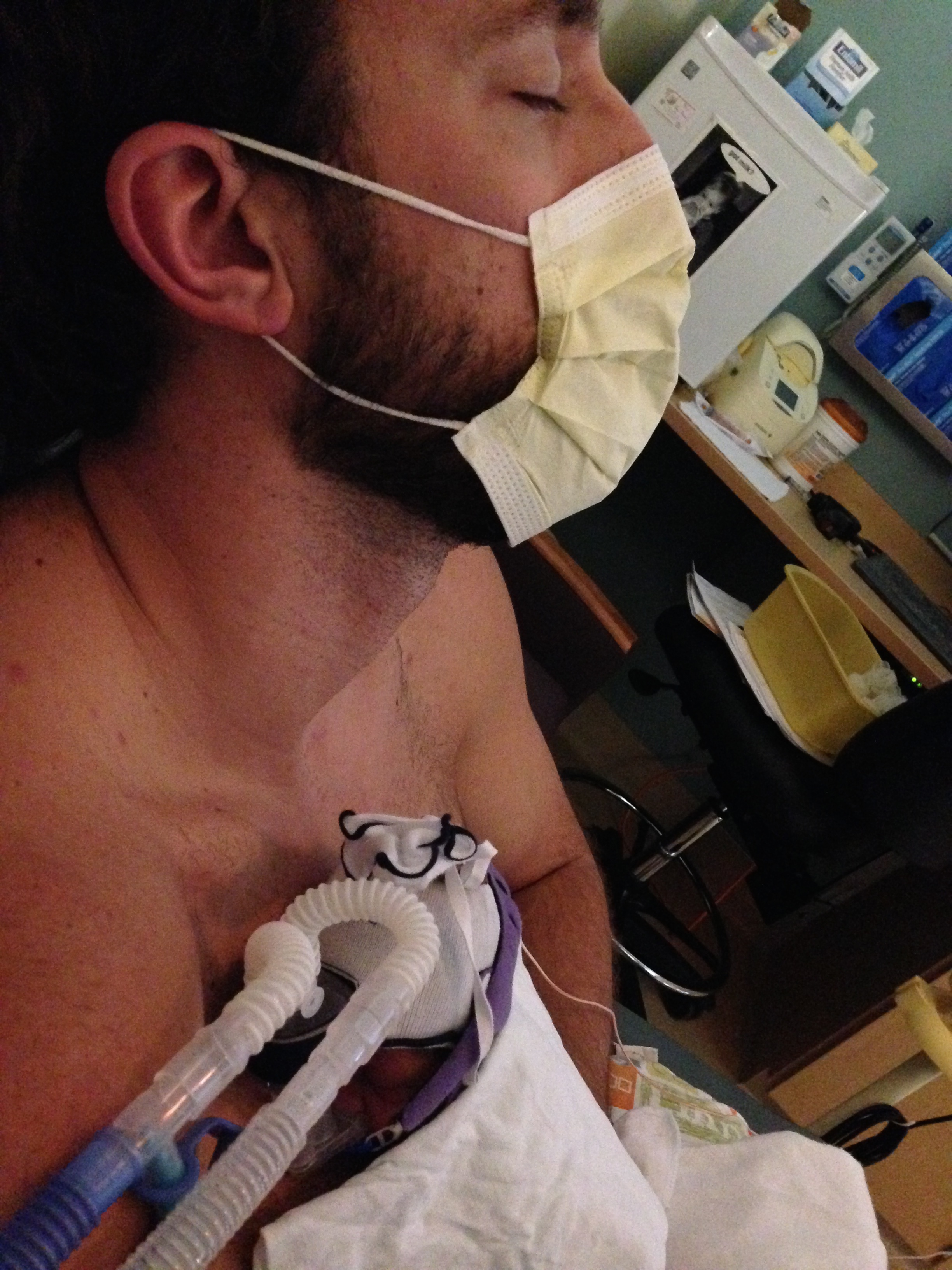
The best thing a dad can do for his baby in the NICU is kangaroo care. Mom’s got the breast milk covered, so dad needs to, again, man up, take his shirt off (or unbutton the shirt until it’s open), grab his baby, and sit in a chair for a few hours. When kangaroo care was explained to me, it was emphasized that the most beneficial kangaroo care is skin-t0-skin and that some dads are a little hesitant about taking their shirt off to do this. This was not the only time I heard of machismo getting in the way of taking care of a baby. (That is a whole other topic that I would like to address in later posts.)

After two weeks of London’s life, we were allowed to do kangaroo care with her. Of course, mom got the honors, but I worked my kangaroo care in when Kate had to hook up to the breast pump.

IMG_3068

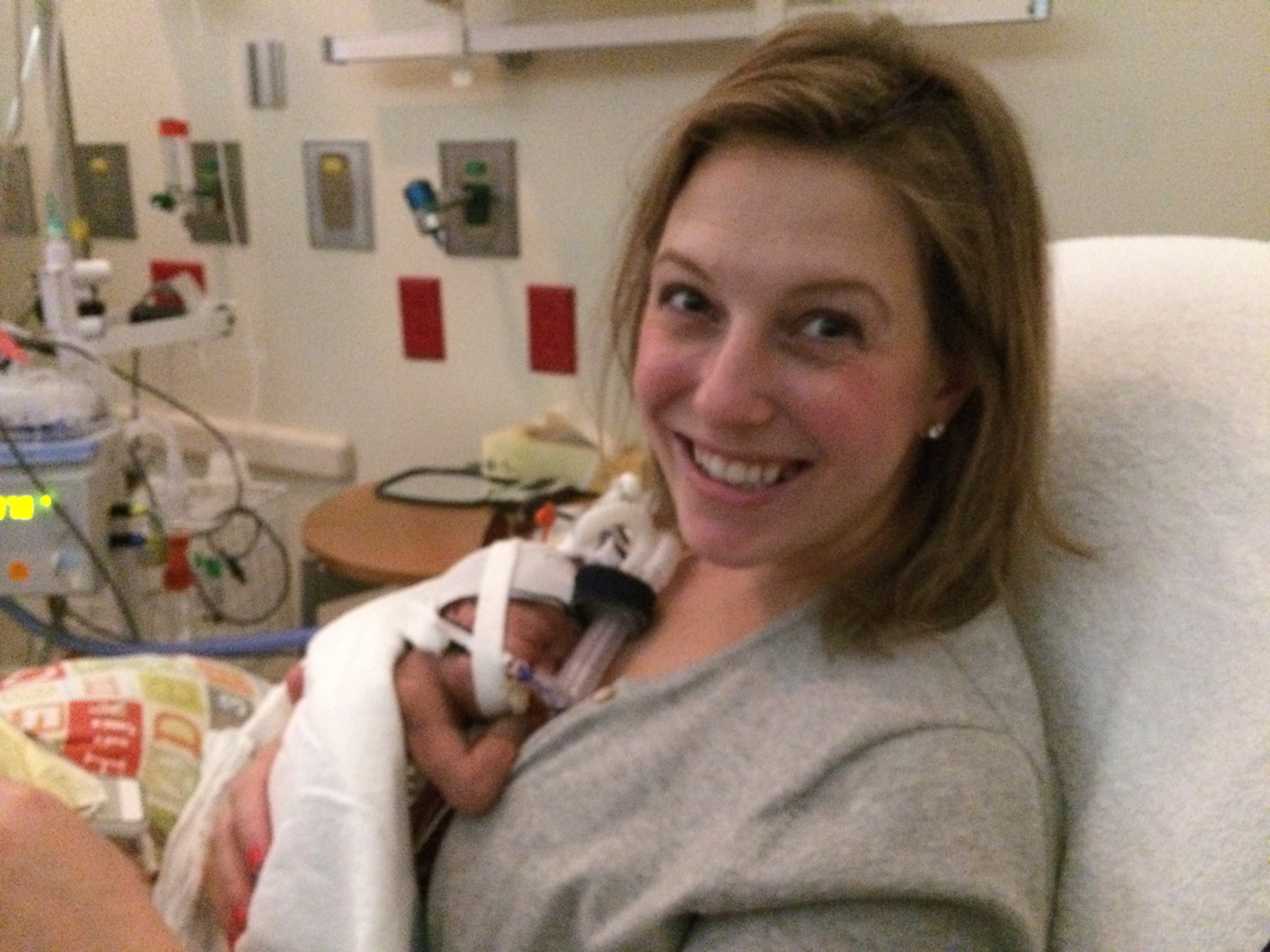
For the next couple of weeks London was small enough to tuck into Kate’s shirt. I thought that was the cutest. The two of them were so happy together during kangaroo care. I could not stop smiling whenever I would look at them. It was such a peaceful scene that I too could fall asleep even though I had been drinking iced coffee since I got up.

IMG_3163


The most challenging part about kangaroo care is the management of the tubes and wires when you are moving from isolette to recliner. Once the transfer is complete, you get to enjoy the easiest part about kangaroo care, falling asleep.

IMG_3168


Not the sharpest picture, but look at Kate, my sweet Kate. Whatever was happening that day with London, as soon as she got on mom’s chest she was doing better and every single time Kate looked like she was having the time of her life. Beaming. So proud.

IMG_4142


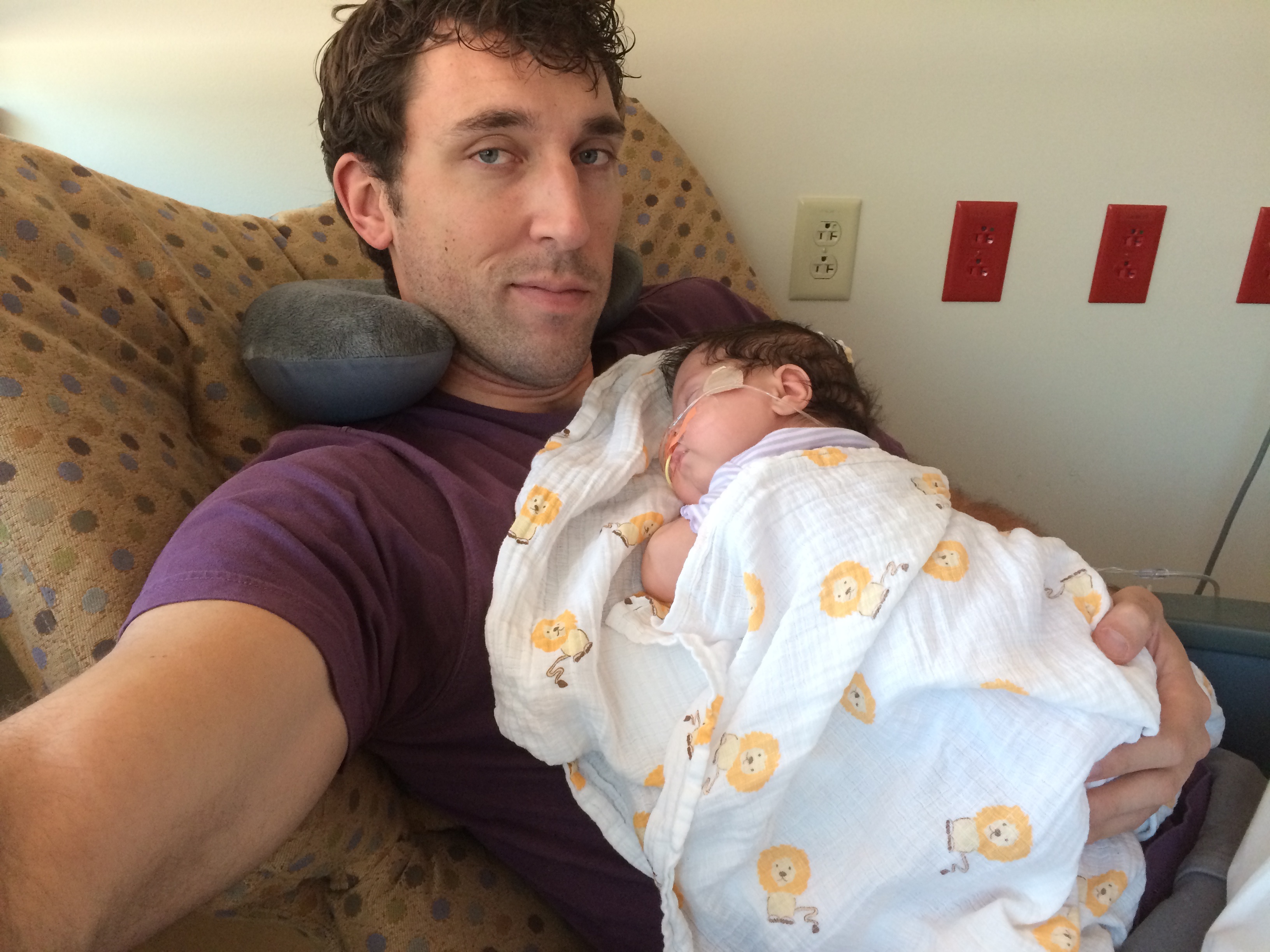
I did not always take my shirt off when I held London, especially toward the end because we would be switching so often between reading and sleeping on my chest. This was the day of London’s discharge from the NICU. Getting ready that morning at home, I grabbed this purple t-shirt, knowing I had worn it the night London was born, and now the day London came home. I still think of that every time I reach for this shirt in my closet.

IMG_4144


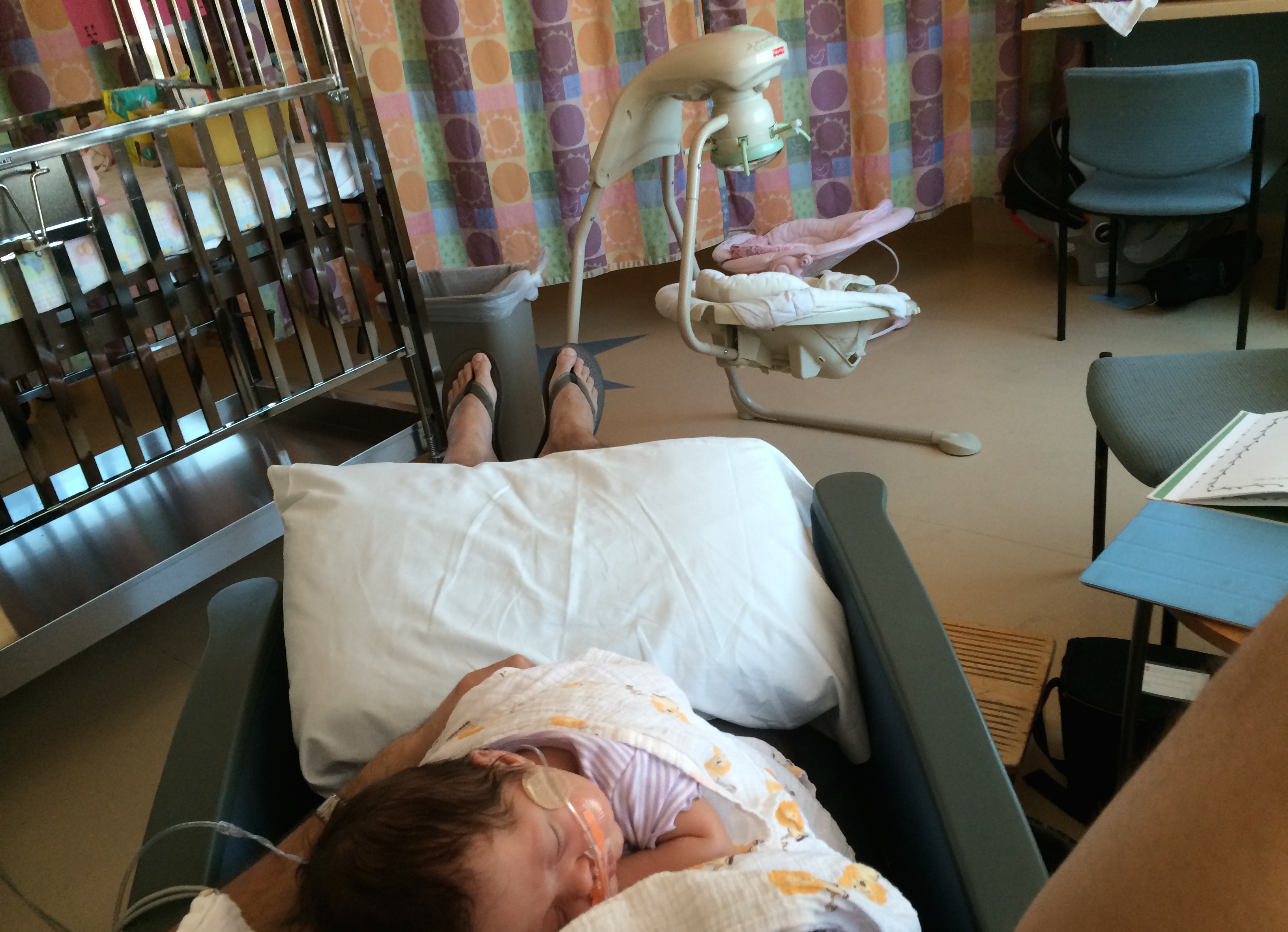
A lot of aspiring writers ask professional writers how they do the work they do? What do you start with? And a common response is, “Butt in chair.” The time to write was not while London was in the NICU, but it was the time to do the most important job I will ever have, which still required my “butt in chair.” This was my view for 109 days, I could not leave it the day of her discharge from the NICU without taking a point-of-view picture. Looking at it now takes me right back to that pod, from where we left the hospital together for the first time.

Not Fun, Placing an NG Tube

Before our NICU discharge, Kate and I both learned how to insert a nas0-gastric (NG) tube into London. NG tubes are necessary when the baby cannot drink enough milk to thrive. When London was discharged, she was only nippling 25% of her daily volume. The rest was pumped through the NG tube.

We needed to learn how to place it because NG tubes can be easily pulled out by the baby. During her NICU stay, London pulled her tube out several times. So, we had seen it put back in place by the nurses. A nursing student did it one day while we were there watching. I would have been extremely nervous if I had been in her shoes with the parents hovering over me, but she did extremely well, threading the tube up one of London’s nostrils and down, down, down to the stomach.

IMG_2436

At home, with that darned tube snaking out of her and all that orange tape on her face.

When it was time for Kate to practice on London they both did pretty well. When the tube first reached London’s nostril Kate stopped because she was already crying. Nurse Megan and I comforted her and told her she could do this. Kate composed herself and went for it, making it look easy, even though inserting an NG tube in your baby is really one of the worst tasks you can have as a parent of a newborn.

I tried the next day and, again, things went pretty well. Of course, by the time I was finishing up with the tube, London was bawling her eyes out, but regardless of who does this to her and how they do it, by the end, London was always screaming. I suspect most babies respond this way. Luckily, London was always easy to calm down afterward.

The success we had placing the NG tube while London was in the NICU did not follow us home. You can nearly cover your baby’s face with tape trying to hold that NG tube in place and attempting to make it impossible for the baby to get a finger around it and pull, but eventually, that thing is coming out. The first time this happened to us it was already late at night. We were so disappointed we had to do this to London. We let her calm down as we readied a new NG tube, tape, and a little sugar water to distract London from the pain. Kate tried first and I held London down on the bed. Things seemed to be going okay until the tube was a couple inches in and it wasn’t going anywhere. London was awake and bearing down so the tube had nowhere to go. It is agonizing to be in this position. We didn’t know if the tube was going somewhere it wasn’t supposed to be going. We didn’t know if we should push with more force. Meanwhile, London sounded like someone was torturing her.

We regrouped before I tried to place the tube. No luck. Same thing happened. London was bearing down and the tube wasn’t going anywhere. We abandoned that attempt. I was distraught, grabbing a pillow and screaming into it because I just couldn’t stand inflicting that much pain on London, twice, and without any reward.

After an hour of talking about our alternatives (try again in the morning or text one of London’s night nurses to see if they can place the tube if we go to the NICU) we decided it would be best to just go to the NICU. London’s nurses had offered to do this before we left. If we had any problems, let them know, come on by, and they will put in the NG tube.

We arrived at midnight and Windy had set up a little operating room in the NICU’s conference room. She placed the tube like it was no big deal and I tried to pay very close attention to how it worked so well in order to avoid doing this again.

A week or two later, London had pulled the tube again. I tried to recall the night at the NICU and I watched a couple of how-to videos on YouTube. The keys to doing this properly, at least on a baby, seemed to be sleepiness and speed. Don’t try this when your baby is wide awake because they are able to quickly bear down and stop the NG tube from going in. Don’t be slow about it either. By the time your baby figures out what is going on, you want the tube to already be in their stomach or damn near close.

I volunteered for the mission. Kate held London’s arms. Then we paused. We said a little prayer over London, attempting to calm ourselves before we do this again, praying that it would not be a repeat of last time. We finished praying. We took some deep breaths and then I plunged the tip of that NG tube into one of London’s nostrils and it curved downward and kept tunneling its way right down to London’s stomach. What a huge relief it was for all three of us to have that done. In this case though, I think Kate and I were the most relieved. No trip to the NICU tonight, baby.

We did not have to place the NG tube again. A little over a week later we pulled the NG tube ourselves because London was due for a photo shoot. That day she took all her milk by bottle. She looked and still does look amazing without that tube coming out of her nose and all that tape on her face. When I look at pictures from the NG days, I cannot get over how crowded her face looks. We are so happy to have put that phase behind us.

We’re Ready

About two weeks before London was born, I was talking with a mom of two kids and telling her about the baby girl that we planned on welcoming into the world on May 4th (or sometime around then). When I finished up sharing my exciting news, she had a question for me, “Are you ready?”

“Yeah, I’m ready,” I said.

“No. No, you’re not,” she replied.

For some reason this exchange, between the parent who is in the thick of it and the expectant parent, is commonplace. And, I would be willing to bet that expectant fathers get this response more than expectant mothers do, but I am not bothered by that. I am bothered by the response, “No. No, you’re not.”

Obviously, I recognize that this response is, in part, a weak attempt at humor. What appreciation I have for that humor though is wiped away by the response’s other message, one that seems to imply that my wife and I, one, did not know what we were doing when we decided to make a baby and, two, that prior to that decision, we did not think about what we were getting into or taking on.

Of course, no one knows for sure what they are getting into when they decide to start a family. We certainly did not know that five months to the day that we found out we were expectant parents our little girl would arrive. We did not know that London’s prematurity meant that I had to stay at home with her. We did not know of how deeply we would love our child. We could not have imagined our lives changing so much in the span of six hours on the night of January 29th.

But we did know something before London was even a whisper. We knew that if we moved forward with our desire to start a family we were embracing the unknown in a way we never had before. Within that unknown, there sure was the possibility of having a preemie. There was the possibility of a miscarriage. Really, the possibilities are endless and that is a frightening thought, especially when you become a parent.

For the chance to love someone more than ourselves; for the opportunity to have our hearts leave us and become a little human being, these are joys that trump the unknown.

For that mom who said, “No. No, you’re not,” who knows what surprises and challenges came her way in parenthood, but, she must know, and so must other parents who tell expectant parents that they are not ready, that, indeed, some of us are.