2 Good Documentaries

I regularly write movie reviews on a Facebook page I created a few years ago. When I feel like it, I’ll post them here as well. Both of the movies mentioned below are currently on Netflix.

Pantani: The Accidental Death of a Cyclist

The common cycling saga one hears about in the US is all about Lance Screen Shot 2015-09-04 at 1.24.48 PMArmstrong’s rise and fall, but this doc focuses on a cyclist who I’m embarrassed to mention I did not even know. Pantani raced in an age where every single team in the Tour and the Giro doped.
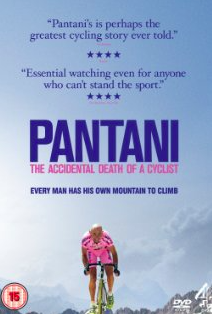
Had he been able to continue cycling, there does not seem to be doubt in people’s minds that he would have far exceeded Armstrong as the most successful doping cyclist to ever live.

The guy was a machine, seemed like he was made to ride a bike in a way that Armstrong never was. As soon as he hopped on his mom’s bike for his first training ride it was clear to his parents and his first coach that he was a prodigy. They were correct. But going pro turned out far more challenging than Pantani expected. The length of the rides were not a problem. The climbs were not a problem. The major challenge came when Pantani was introduced to the seedy underbelly of the cycling world at that time. This documentary follows Pantani’s arc as a professional, from his meteoric rise to the sudden, sad denouement.

Point and Shoot

This is a zany documentary about a zany kid who got his MA in IR from Screen Shot 2015-09-04 at 1.25.19 PMGeorgetown and then decided he hadn’t done anything cool, wasn’t a man, didn’t know crap, so he rode his motorcycle across the Middle East, came home, and then went back to fight alongside friends he made in Libya against Gaddafi and his army. Oh, and he was also imprisoned for five months during Libya’s civil war.
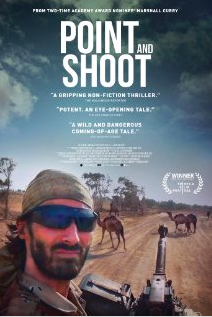
The guy is unique and he knows it. His moderate to severe OCD also plays a prominent role in his journey as would be expected. It’s a fascinating tale and it makes for one wild ride.

The Selma Snub

Going into the awkwardly long, movie award season, I remember Birdman had most Screen Shot 2015-08-19 at 4.23.34 PMof the momentum. Having seen it, I was not that surprised. The movie is shot in such an innovative way. The story was interesting. The acting superb. But the ending, the ending left something to be desired. Most people I have spoken with about Birdman mention that they walked out of the theater angry, confused, and generally wondering, what the hell just happened there? It seemed like the three positives I mentioned already, the cinematography, story, and acting overshadowed the overall effect, which was meh.

Come Oscar night, one could see the award for best picture coming a mile away, the meeting of it and Birdman was inevitable. At that point in time I had not seen all the Oscar favorites, Selma among them. I was extraordinarily late to Selma, having just watched it a few nights ago, but now I know just how badly that movie was robbed when it came to the award for best picture.

Selma is a movie that instantly grabs ahold of you and shakes you, it makes sure you are watching, it pleads with you to remember what you are seeing, and it begs you to not look away. It is powerful, important, and artistic. As a whole, it works in ways that Birdman and other movies from last year did not.

As I watched, I kept asking, how was this movie so drastically overlooked? Why is Oprah not in more movies? Because in this movie she instantly conveyed powerful emotion without even speaking in most scenes. What did Birdman have that this one did not besides Michael Keaton stomping through Times Square in his whitey tighties?

I can think of a number of things Selma has which Birdman did not. To borrow from MLK Jr., it has the “fierce urgency of now,” a story, unfortunately, quite relevant to today’s ongoing racial tensions and institutionalized racism. It evoked an important sense of disgust for a big slice of this country’s past. I think as Americans we occasionally have to be reminded of how blacks were treated then and how they are still victims today because of the color of their skin. To learn the latter, all that is required of us is to turn on the news or read a newspaper. For the former, sometimes it takes a talented director like Ava DuVernay to bring the events of Selma to the big screen in such a way that haunts us for hours and days to come. And, hopefully, longer.

Hollywood is selective about what trends it chooses to buck. The trend of the white, male director seems to be a lasting one. The trend of making the majority of movies for a male target audience ages 16-25 is here to stay. These trends should be bucked in favor of bringing back a more important trend, that of awarding the Oscar to the best picture of the year, not just the trendiest.

4,100 Pages of Harry Potter

On July 16th, I read the last page of the Harry Potter books to London. It had taken me one year, two months, and four days to read that page and the previous 4,099 to her. Before May 12, 2014, I had never made an earnest attempt at even reading the first book. I had made more of an attempt at watching the movies, but had only made it through the first two and started and failed to finish the third movie on several occasions.

By the time I got to page 759 of Harry Potter and the Deathly Hallows, I felt I was finishing more than a book, but a saga of both literature and life. The obvious saga, that of Harry Potter’s journey from Four Privet Drive to the climactic duel with Lord Voldemort, and the less obvious saga, of London’s journey from her 102nd day in the NICU (the day I started the first book) to her fourteenth month at home, and her seventeenth month of life.

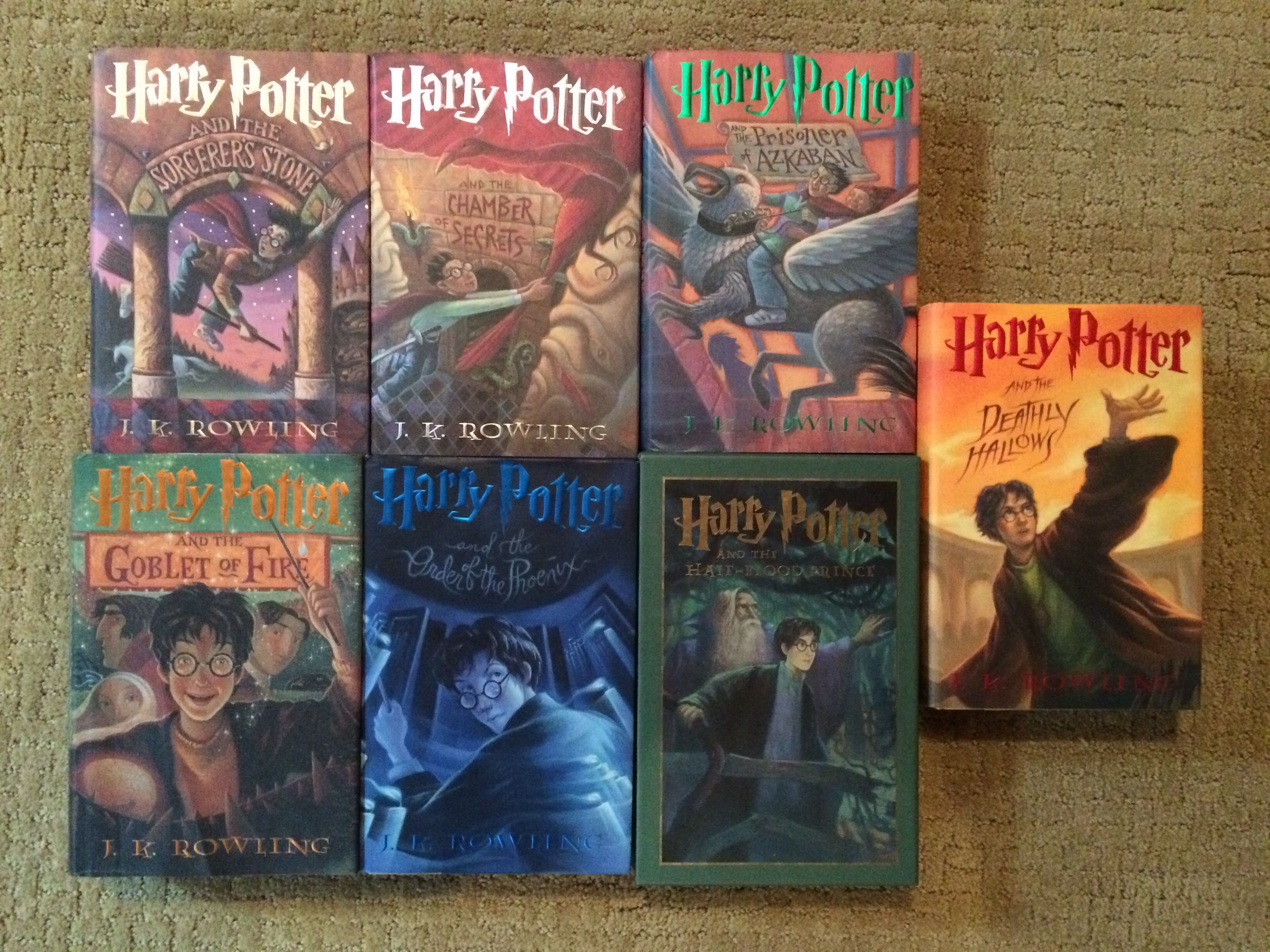
HP Books

Beautiful artwork on all the covers of these increasingly heavy books.

When I cracked open Harry Potter and the Sorcerer’s Stone it was an act of therapy. I did not know if I would finish all the books. I did not know if I would be able to read all of them to London. However, as time went by, it became clearer and clearer to me that I would finish the books, that London would hear every page of these books, and that just because we got out of the NICU did not mean the reading of the books ceased to be therapeutic.

In the beginning, it was easy to find time to read Harry Potter to London. I would place her on a pillow in my lap and could read for as long as I like really, assuming she was oxygenating well and in a comfortable position. When she left the NICU, I read several times a day to her, while she was on the floor making cooing noises, while she was falling asleep, and while she was taking a feeding from her NG tube. Later on, I only read to her as she fell asleep for naps. And a little later on from that, she stopped falling asleep if I was by her side reading Harry Potter. This coincided with her ability to pull to a standing position, so she would stand inside her crib and reach out for the pages of the book and get frustrated that she couldn’t grab them.

Eventually, I had to start reading Harry Potter to her when she was in the living room playing with toys. By this last stage, I knew that my voice comforted her. I could read a whole chapter and sometimes two while she played. I may have pushed the limit on July 16, when I read the last sixty pages to her in one sitting as she drained all the fun out of one toy to the next until she was clearly wondering why I had been reading to her for so long without any breaks.

On more than one occasion during the last several days of reading Harry Potter I choked up because it would dawn on me that I am almost done with the books, or I would remember in a flash how far London has come over these 4,100 pages, so incredibly far as you may know.

I take great joy in knowing that I will be able to read these books once again to London when she is older and able to follow the plot. Perhaps I won’t read every word aloud to her. She might take over. That is fine with me. I know I will always be reading with London.

*Special thanks to my wife’s family who let me borrow all of their pristine, hard cover, first edition Harry Potter books.