Camden’s Birth

Yesterday @ANNELAMOTT tweeted:

Okay everybody, it’s almost time to start writing. Main thing: put on some pants. Finish up your cup of coffee–no one here thinks you need more. You’re good. Now: butt in chair; deep breath; write something, badly.

Write something, badly. Too often I think I can’t write until I can sit down and write something, goodly. I have about four days a year, maybe, when I think that is a possibility. Thus, I don’t write that often. So, thank you, Anne, for tweeting this out like a punch to my gut. Here is something I will finish writing, badly. But I will not abandon the coffee. Not yet.

After a couple minutes of vigorous massage, Camden’s first cry pierced the atmosphere of the operating room. Life, new and loud, dirty and fragile, and a sweet, sweet noise, but what tugged at my heart was another noise I heard from elsewhere in the OR.

At 7am, that Saturday morning, we arrived at the hospital. Kate had gone into labor a couple of days before her scheduled C-section. Camden was breach, so as they would have done two days later, the doctors moved ahead with the operation, prepping Kate and handing me the biggest set of scrubs in the hospital.

Within an hour I was sitting outside the OR by myself as the anesthesiologist gave Kate a spinal block. The last time I was in this chair outside the OR, Kate was 26 weeks pregnant and we were having an emergency C-section. That time around I sat for two minutes as Kate’s spinal tap was administered, as doctors frantically scrubbed in, and as person after person filed past me through the double doors and into the OR. But this time I sat for 20 minutes as people casually prepared for another C-section, as I heard small talk and even laughter on the other side of those doors. The laid back, quiet atmosphere was surreal. The only thing familiar to me that Saturday morning was the chair, the door, and the closet-like feel to the space where spouses are made to wait until they are cleared to enter the OR. The expediency, the mood, the number of people in the OR, and the conversation were all different. All normal, I suppose. This is how C-sections at full-term proceed, we learned.

As I was allowed in, I started to take pictures. First of Kate on the operating table with a curtain rising up from her chest to shield our view and maintain a sterile environment. Then, a selfie of the two of us, five minutes before Camden arrived. From there, things moved quickly. The anesthesiologist and nurse anesthetist stood by Kate, telling her when she might feel tugging or pressure. I readied myself to stand up and look over the curtains to glimpse my son for the first time.
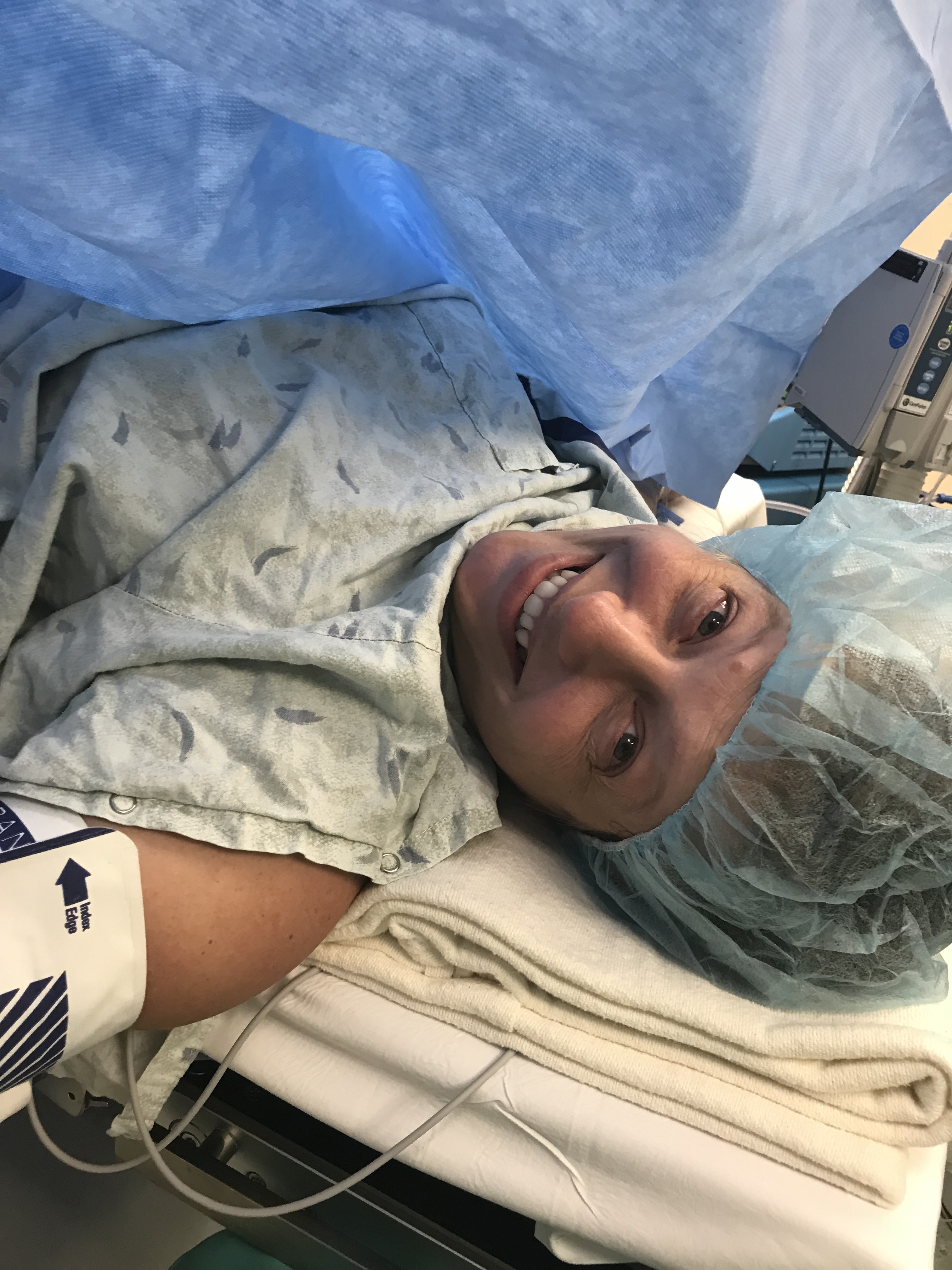
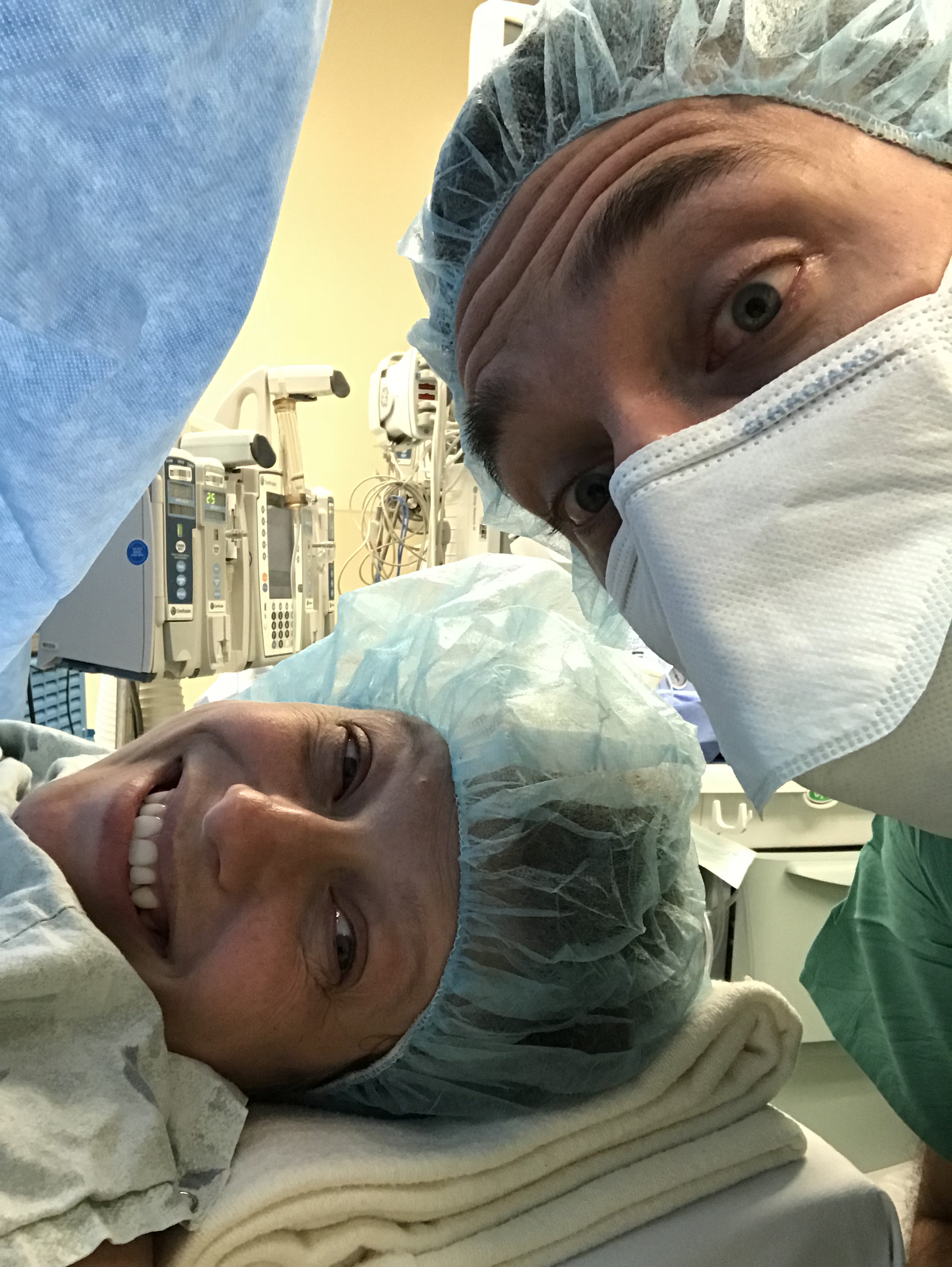
By the time I was told to stand, Camden had already been placed on a warming bed, out of Kate’s sight. I leaned over and kissed Kate and then walked over to meet my son.

As I stood and watched a small team handle Camden during his first minutes of life, I knew something was not entirely okay. He was not making noise. His color was a little off, not pink yet. There were six hands on him, firmly massaging his whole body. One doctor was sucking a tremendous amount of fluid out of his mouth and nose.

I tried to keep things in perspective while I stood there. I had seen much worse. I had seen these docs with a much different demeanor. They were not there yet. They kept busily working on Camden, but did not appear worried. I kept reminding myself that this is a full-term baby. He will come around. He will come around.

First picture of Camden. 7 minutes old. 8:55am. 10/14/2017.

And then, he took a deep breath, and let out his long, first cry, which was answered by the sweet sound of Kate’s cry, the sweetest sound I heard that morning. For Kate, Camden had been out of sight since the doctors pulled him from her womb. She knew nothing of what was happening for that minute or two. The noise that came from her is truly a noise replicated at no other time than when a mother hears her baby for the first time. I could hear in it the anxiety washed away, the instantaneous connection of mother to son. Hearing it, I knew she loved him so much already, in a way only mothers can. To bear witness to that love is one of the single greatest blessings of fatherhood.

Friday Humor

I’m at home still waiting for a drywall inspector to show up and look at my basement. The inspector was supposed to be here between 9:30 and 11:30. It’s past 1 pm now and nothing. London is asleep. I’m not going to start in on writing something knowing that I’ll likely be interrupted by the inspector, so I’ll share someone else’s writing for now.

It’s a funny piece, titled, “Dumb-Ass Stuff We Need To Stop Saying To Dads,” found on the Huffington Post, which apparently limits their paragraph length to three short sentences. Three is to give the HuffPo too much credit. Most of the time it’s one sentence and done for a paragraph.

I hope you enjoy the read.

Millennial Parenting

Yesterday, I sat down to read Time‘s cover story about millennial parents. Before starting out I made a few predictions. One, I would bring my palm to my face on more than one occasion. Two, I would read about a kid with a ridiculous name. And three, I would hear the same old stuff about one generation thinking the way they parented was the best and younger people parenting differently are just wrong.

Well, prediction one and two came true in the first paragraph. First facepalm, when I saw the vegan dad who is raising his kids vegan wearing a t-shirt, which simply said, “VEGAN.” This reminded me of the best joke I have ever heard about vegans. File this one away: How do you know someone is vegan? Don’t worry, they’ll tell you.

As for prediction number two, let’s just say that right away there was a name that, in my opinion, seems like a classic case of millennial desperation to make everything about their kid unique starting right away with the name.

Prediction number three was also accurate, although there was not as much worrying about millennial parents as I expected there to be. The article mostly detailed the differences among parents from three generations: millennial,  gen x, and baby boomers.

The author made a few lazy assumptions about millennials. One was right there on the first page, “And they continue to build vast archives of selfies.” Not true in my case. Maybe that is because I am just barely a millennial parent, but it is mostly true because I strongly dislike selfies. I take them, when no one else is around to take a picture of London and I, but that is out of necessity, not because I need to Instagram a selfie right now. Another prediction: if your Instagram profile is chock full of selfies we probably won’t be good friends.

One of the best points in this article was that, due to nearly universal use of social media among millennial parents, it is far easier for us to compare our parenting or family to some other family. The Facebook and Instagram posts often present “impossibly pristine, accomplished version[s] of their family lives on the web.” That is one of the more accurate statements about parents all across social media. We are highly selective about what we share. I am guilty of this so in the margins of the article I wrote, “write about the dirty, time-consuming tasks…Instagram them too.” A couple of nights ago I had the best opportunity to do this. London had vomited all over the couch, Kate, and the floor. Next time, that is going on Instagram.

The author later writes that “millennials say infighting over topics like breast-feeding and vaccines has driven them from online groups.” I haven’t experienced too much of this, but in some cases I have encountered parents of preemies who almost advertise the complications of their kid’s prematurity in their IG profile, Facebook page, or Twitter account. I have certainly shied away from groups or users like that, much in the same way I unfollow people on Facebook whose posts are always political.

A teacher interviewed in the articles makes the point that social media “is leading the children of millennials to form stronger social bonds than previous generations, because they’re in contact with one another more outside of school.” Is this a good thing though? Doesn’t it breed traits into our children such as the need to always be connected to the internet or to always have a smartphone nearby? Are these kids able to be alone? Will they be able to enjoy silence?

The last scrawl in the margins of this article I made was about kids being unique. A mom is quoted as saying, “I just want them to be unique.” Aren’t they unique in your own eyes? That should be enough. My kid or kids will always be unique to me and that is all that matters. Most importantly, I want them to be happy. I know that if they are happy, they will encounter people in their lives who consider them unique. These people will become their friends.

I think there is some urge in millennial parents for their kid to be unique in the eyes of the world, not just their eyes, like we are all trying to raise the next prodigy, celebrity, or savant. If there is a concerning theme in this article, that would be it for me.

A discovery about millennial parents that is particularly promising and hopeful to me is that parents in this generation favor more unstructured playtime and are more encouraging of kids to explore on their own, to be on their own. This, according to the article, is a move away from the helicopter parenting of Gen X. In my experience, this is pretty accurate.

If you are interested at all about Time’s take on millennial parents, then I encourage you to check this article out. I just tried to link to it, but was told that the page is only available to subscribers of the magazine. So it might necessitate a trip to the library or a little more sleuth work on the internet. The title of the article: Help! My Parents Are Millennials.

Wage Equality

Every year someone at the Oscars uses their acceptance speech as an opportunity to get up on their soapbox. And every year people in the media, politicians, and sometimes people in your own living room get slightly irritated to irate about these moments when someone “supposedly” strays off topic, like the actor should not have the freedom to do anything but praise the cast and crew of the movie they starred in and, of course, thank their parents, wife, husband, and/or kids.

This year, as you may recall, Patricia Arquette used some of her time at the mic, while accepting the award for best supporting actress, to give a little speech on how important she thinks wage equality is. Here’s a little excerpt:

To every woman who gave birth, to every taxpayer and citizen of this nation, we have fought for everybody else’s equal rights. It’s time to have wage equality once and for all. And equal rights for women in the United States of America.

I was surprised this year at the uproar over Arquette’s speech and her backstage comments as well. It’s like every year people forget that some celebrity is going to stand up and fight for what they believe in or what they want others to believe in. And then when it happens again. Outrage. Shouts of, “Get on with the show.” Etc.

What I did not expect is for people to get all pissy about a call for wage equality. As a husband to an amazing woman who is the primary breadwinner in this family (always has been, likely will be for years and years to come) and as a father to the most precious girl I will ever know, wage equality is extremely important to me.

Someone promoting wage equality at the Oscars isn’t going to bother me.

I’m not going to be bothered if a pastor ends his or her sermon with a call for wage equality.

I would be delighted if I was woken up in the middle of the night by someone outside calling for wage equality.

A call for wage equality is just never going to bother me and I will never understand why this year it irritated so many.