Daddy Kangaroo Care

The best thing a dad can do for his baby in the NICU is kangaroo care. Mom’s got the breast milk covered, so dad needs to, again, man up, take his shirt off (or unbutton the shirt until it’s open), grab his baby, and sit in a chair for a few hours. When kangaroo care was explained to me, it was emphasized that the most beneficial kangaroo care is skin-t0-skin and that some dads are a little hesitant about taking their shirt off to do this. This was not the only time I heard of machismo getting in the way of taking care of a baby. (That is a whole other topic that I would like to address in later posts.)

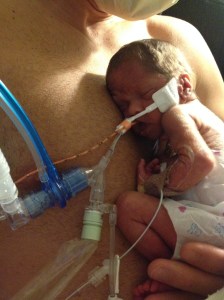
After two weeks of London’s life, we were allowed to do kangaroo care with her. Of course, mom got the honors, but I worked my kangaroo care in when Kate had to hook up to the breast pump.

IMG_3068

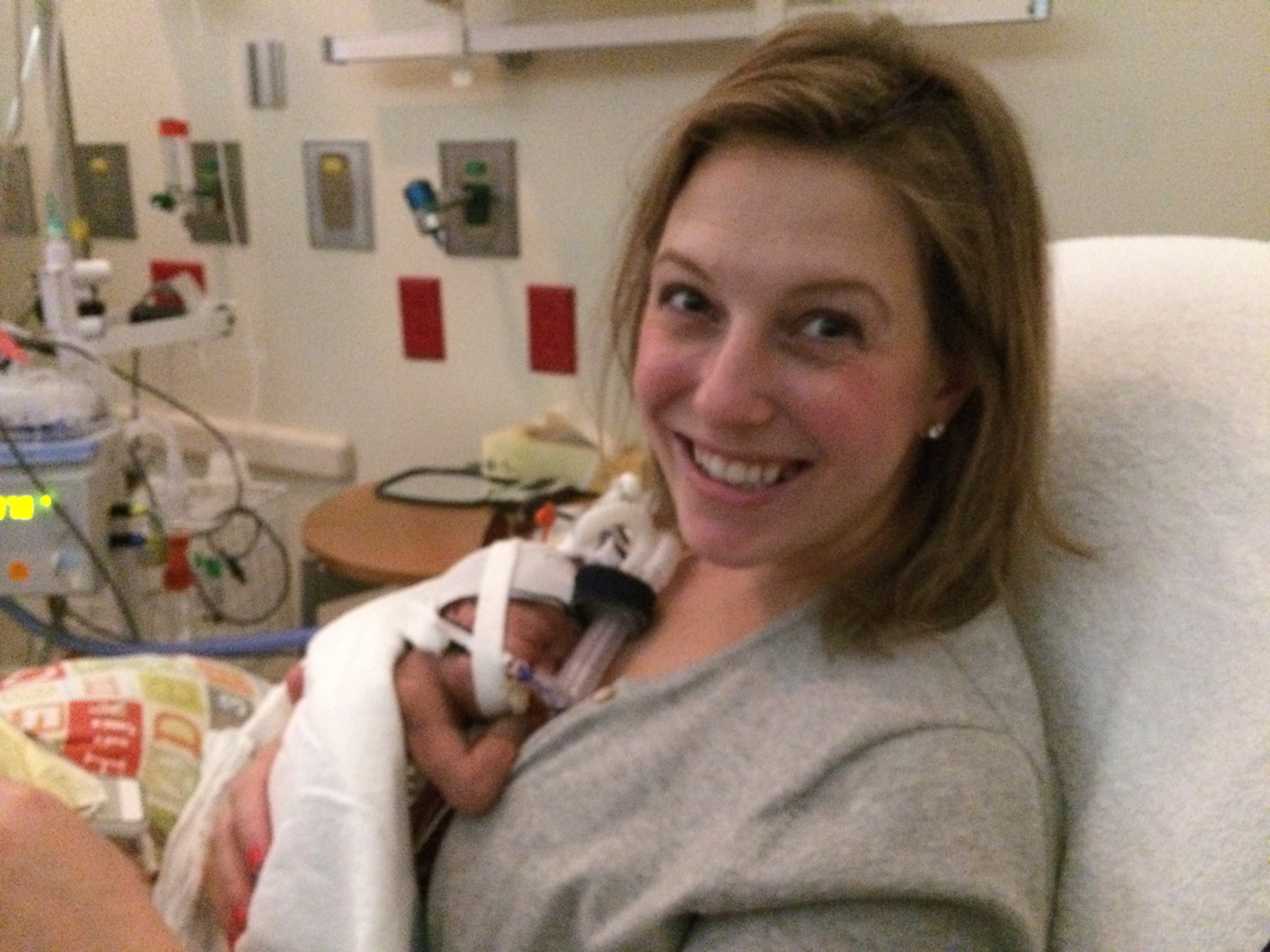
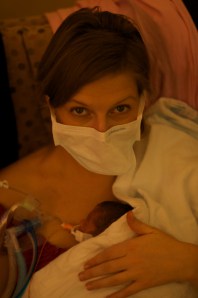
For the next couple of weeks London was small enough to tuck into Kate’s shirt. I thought that was the cutest. The two of them were so happy together during kangaroo care. I could not stop smiling whenever I would look at them. It was such a peaceful scene that I too could fall asleep even though I had been drinking iced coffee since I got up.

IMG_3163


The most challenging part about kangaroo care is the management of the tubes and wires when you are moving from isolette to recliner. Once the transfer is complete, you get to enjoy the easiest part about kangaroo care, falling asleep.

IMG_3168


Not the sharpest picture, but look at Kate, my sweet Kate. Whatever was happening that day with London, as soon as she got on mom’s chest she was doing better and every single time Kate looked like she was having the time of her life. Beaming. So proud.

IMG_4142


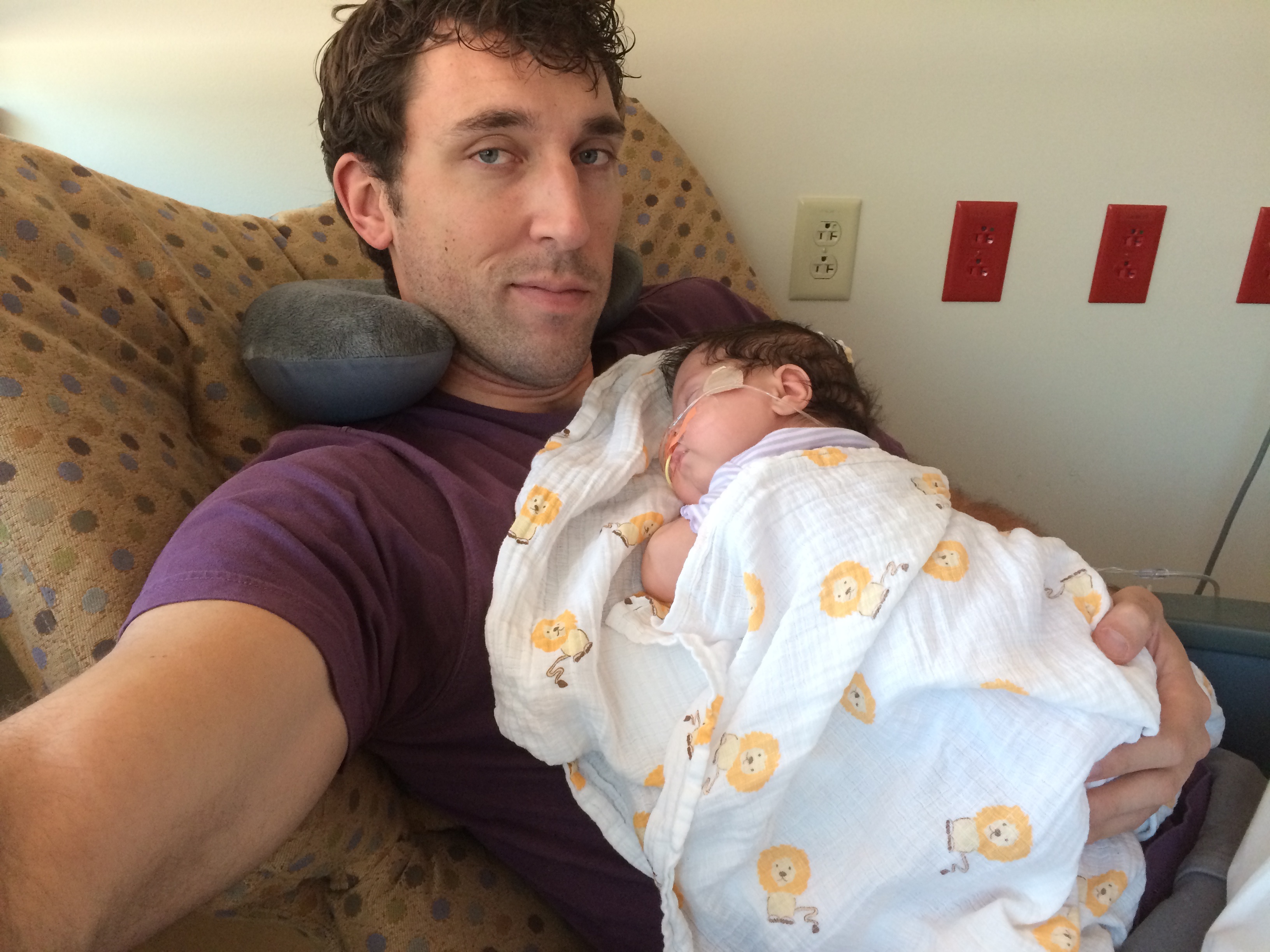
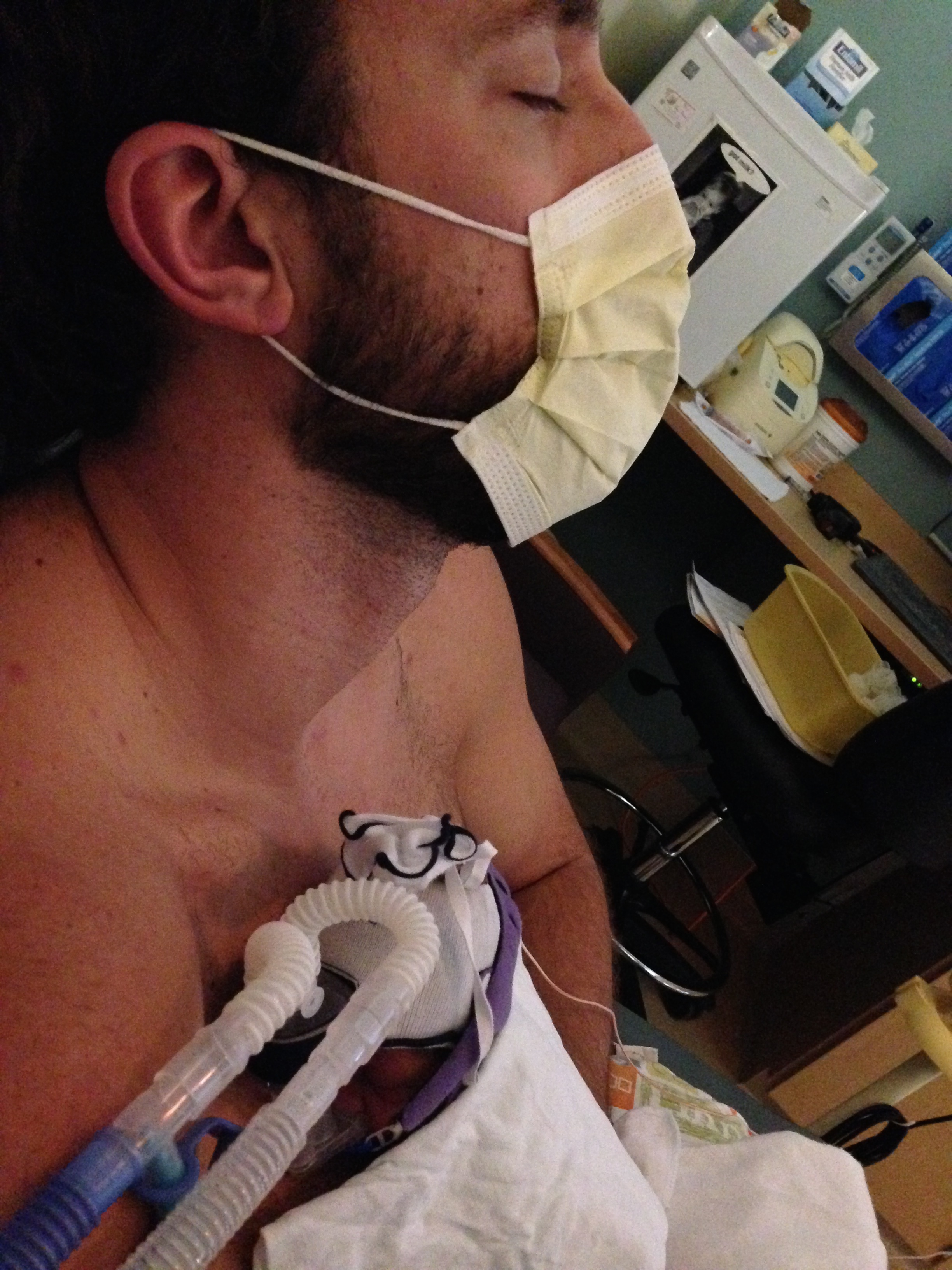
I did not always take my shirt off when I held London, especially toward the end because we would be switching so often between reading and sleeping on my chest. This was the day of London’s discharge from the NICU. Getting ready that morning at home, I grabbed this purple t-shirt, knowing I had worn it the night London was born, and now the day London came home. I still think of that every time I reach for this shirt in my closet.

IMG_4144


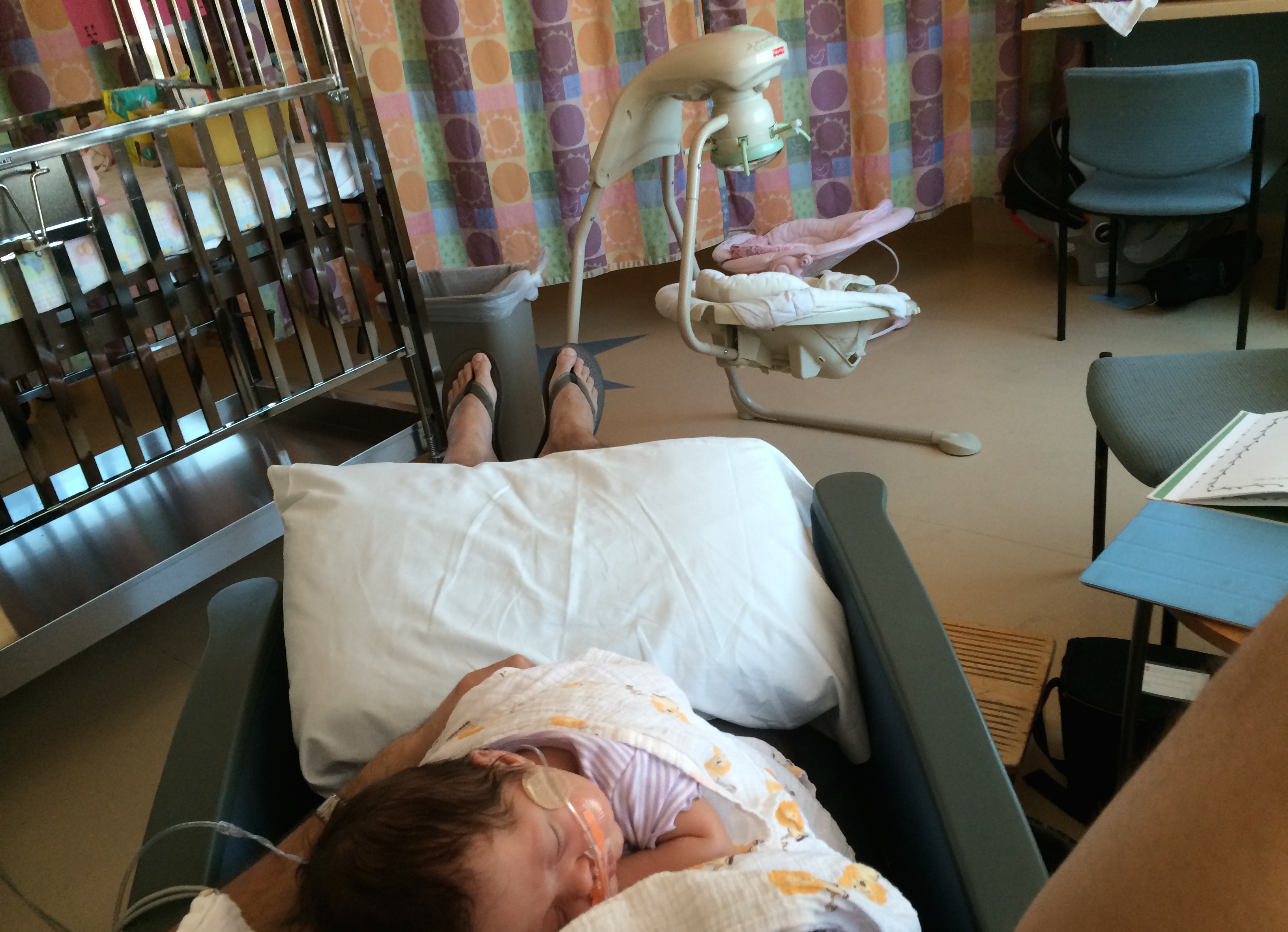
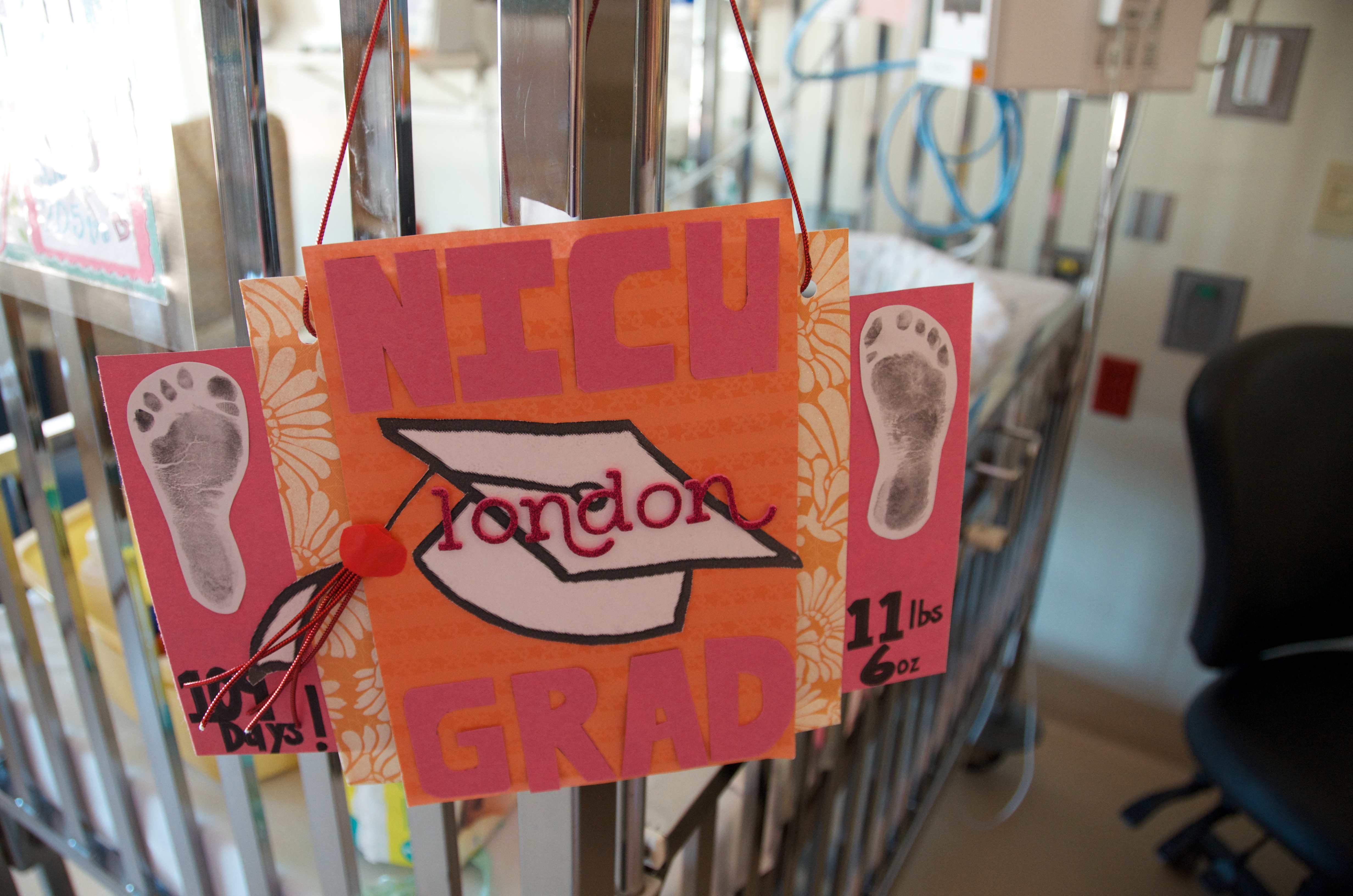
A lot of aspiring writers ask professional writers how they do the work they do? What do you start with? And a common response is, “Butt in chair.” The time to write was not while London was in the NICU, but it was the time to do the most important job I will ever have, which still required my “butt in chair.” This was my view for 109 days, I could not leave it the day of her discharge from the NICU without taking a point-of-view picture. Looking at it now takes me right back to that pod, from where we left the hospital together for the first time.

Not Fun, Placing an NG Tube

Before our NICU discharge, Kate and I both learned how to insert a nas0-gastric (NG) tube into London. NG tubes are necessary when the baby cannot drink enough milk to thrive. When London was discharged, she was only nippling 25% of her daily volume. The rest was pumped through the NG tube.

We needed to learn how to place it because NG tubes can be easily pulled out by the baby. During her NICU stay, London pulled her tube out several times. So, we had seen it put back in place by the nurses. A nursing student did it one day while we were there watching. I would have been extremely nervous if I had been in her shoes with the parents hovering over me, but she did extremely well, threading the tube up one of London’s nostrils and down, down, down to the stomach.

IMG_2436

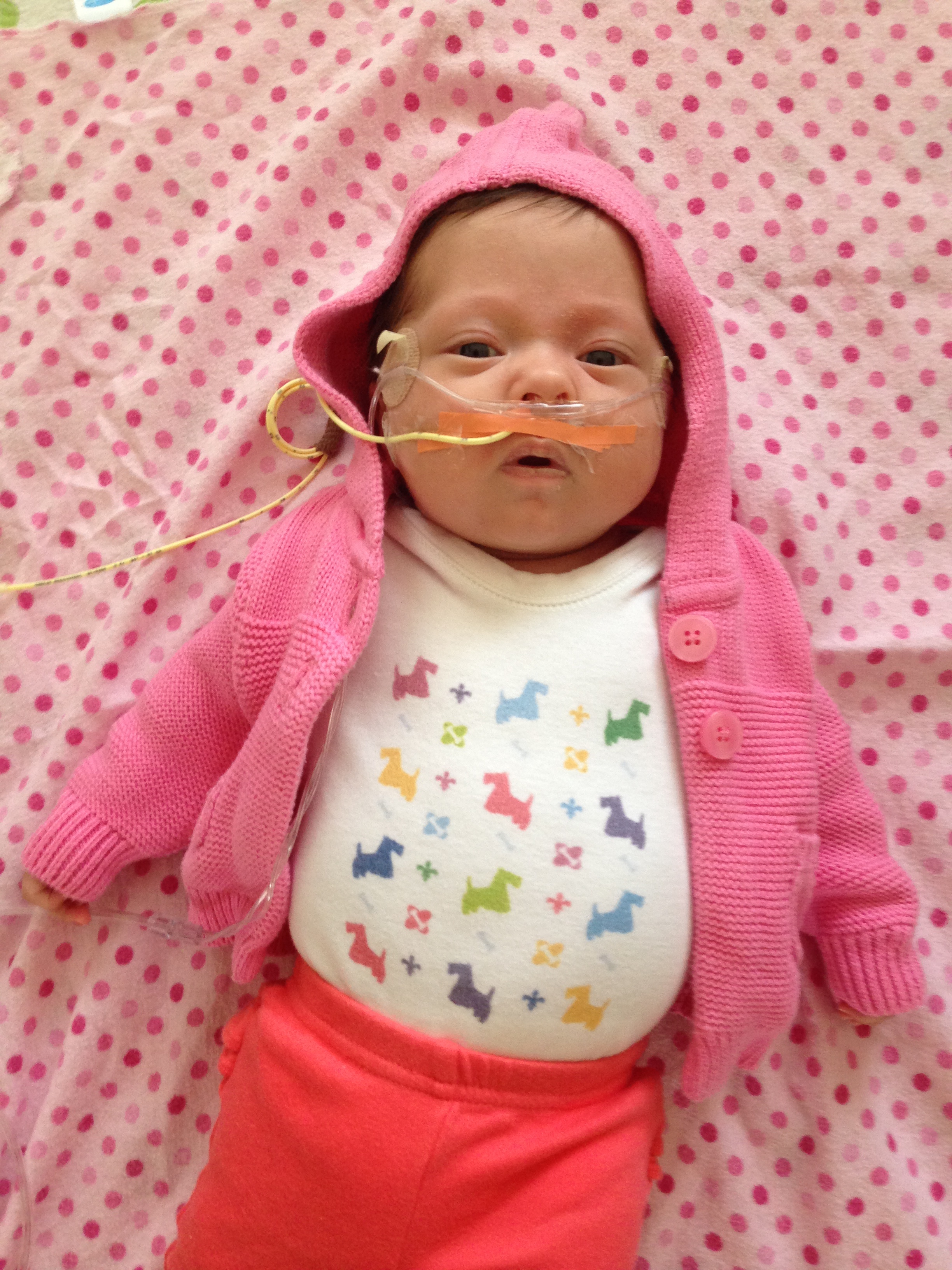
At home, with that darned tube snaking out of her and all that orange tape on her face.

When it was time for Kate to practice on London they both did pretty well. When the tube first reached London’s nostril Kate stopped because she was already crying. Nurse Megan and I comforted her and told her she could do this. Kate composed herself and went for it, making it look easy, even though inserting an NG tube in your baby is really one of the worst tasks you can have as a parent of a newborn.

I tried the next day and, again, things went pretty well. Of course, by the time I was finishing up with the tube, London was bawling her eyes out, but regardless of who does this to her and how they do it, by the end, London was always screaming. I suspect most babies respond this way. Luckily, London was always easy to calm down afterward.

The success we had placing the NG tube while London was in the NICU did not follow us home. You can nearly cover your baby’s face with tape trying to hold that NG tube in place and attempting to make it impossible for the baby to get a finger around it and pull, but eventually, that thing is coming out. The first time this happened to us it was already late at night. We were so disappointed we had to do this to London. We let her calm down as we readied a new NG tube, tape, and a little sugar water to distract London from the pain. Kate tried first and I held London down on the bed. Things seemed to be going okay until the tube was a couple inches in and it wasn’t going anywhere. London was awake and bearing down so the tube had nowhere to go. It is agonizing to be in this position. We didn’t know if the tube was going somewhere it wasn’t supposed to be going. We didn’t know if we should push with more force. Meanwhile, London sounded like someone was torturing her.

We regrouped before I tried to place the tube. No luck. Same thing happened. London was bearing down and the tube wasn’t going anywhere. We abandoned that attempt. I was distraught, grabbing a pillow and screaming into it because I just couldn’t stand inflicting that much pain on London, twice, and without any reward.

After an hour of talking about our alternatives (try again in the morning or text one of London’s night nurses to see if they can place the tube if we go to the NICU) we decided it would be best to just go to the NICU. London’s nurses had offered to do this before we left. If we had any problems, let them know, come on by, and they will put in the NG tube.

We arrived at midnight and Windy had set up a little operating room in the NICU’s conference room. She placed the tube like it was no big deal and I tried to pay very close attention to how it worked so well in order to avoid doing this again.

A week or two later, London had pulled the tube again. I tried to recall the night at the NICU and I watched a couple of how-to videos on YouTube. The keys to doing this properly, at least on a baby, seemed to be sleepiness and speed. Don’t try this when your baby is wide awake because they are able to quickly bear down and stop the NG tube from going in. Don’t be slow about it either. By the time your baby figures out what is going on, you want the tube to already be in their stomach or damn near close.

I volunteered for the mission. Kate held London’s arms. Then we paused. We said a little prayer over London, attempting to calm ourselves before we do this again, praying that it would not be a repeat of last time. We finished praying. We took some deep breaths and then I plunged the tip of that NG tube into one of London’s nostrils and it curved downward and kept tunneling its way right down to London’s stomach. What a huge relief it was for all three of us to have that done. In this case though, I think Kate and I were the most relieved. No trip to the NICU tonight, baby.

We did not have to place the NG tube again. A little over a week later we pulled the NG tube ourselves because London was due for a photo shoot. That day she took all her milk by bottle. She looked and still does look amazing without that tube coming out of her nose and all that tape on her face. When I look at pictures from the NG days, I cannot get over how crowded her face looks. We are so happy to have put that phase behind us.

The Museum of London

IMG_3038

I have a sneaky suspicion that throughout her life London will be the recipient of a few gifts with a British theme to them. If we were going to easily tire of this, we wouldn’t have named our daughter London. Those gifts started arriving right away, one of them directly from London itself. A friend of ours was in the UK when London was born and brought back a gift from the Museum of London. When I saw the bag the gift came in I knew exactly where I was going to place it…on one of the walls of London’s pod. There it stayed for 109 days. As the weeks and months passed, there were more signs on the walls in London’s pod. Of course we have them all now at home, but I took pictures of all of them before we cleaned out London’s NICU pod. Here they are…

IMG_3054

London’s first footprints with her birthweight. There’s no perspective here, but those feet are the size of my thumb. Oh, and all these signs were made by the nurses. That is something I never expected about our NICU stay, to have on-demand artists to create signs commemorating London’s growth and month birthdays and even holidays.

IMG_3055

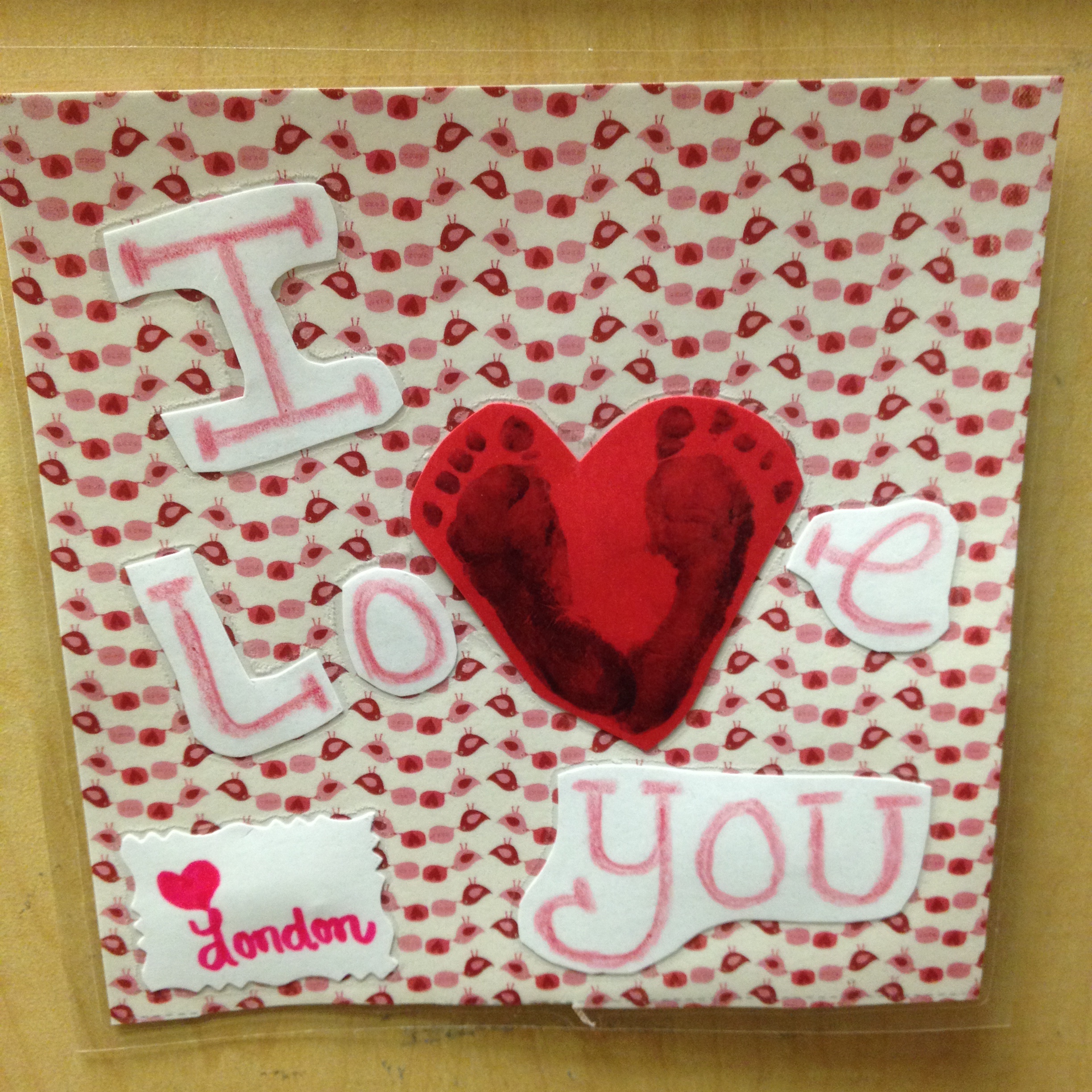
London’s first holiday was Valentine’s Day. We brought cards in for her. I bought a card for mom from London. Just looking at the card from London made mom cry. Forget about reading it.

IMG_3210

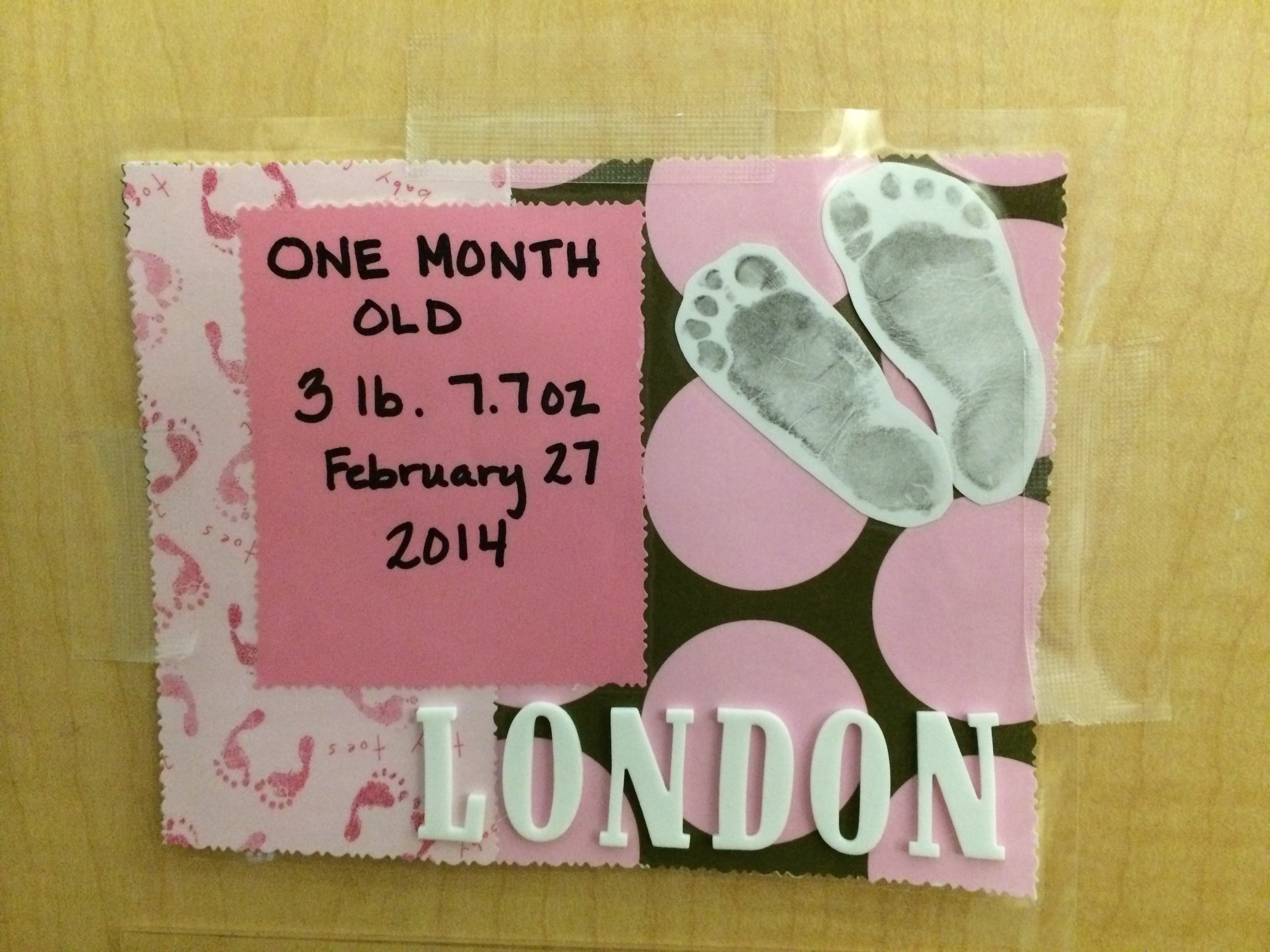
Born on January 30th, we just had to select a day at the end of February to be London’s one-month birthday. We took handprints and footprints that day and a family picture. London’s hands that day were about the size of my thumb.

IMG_3311


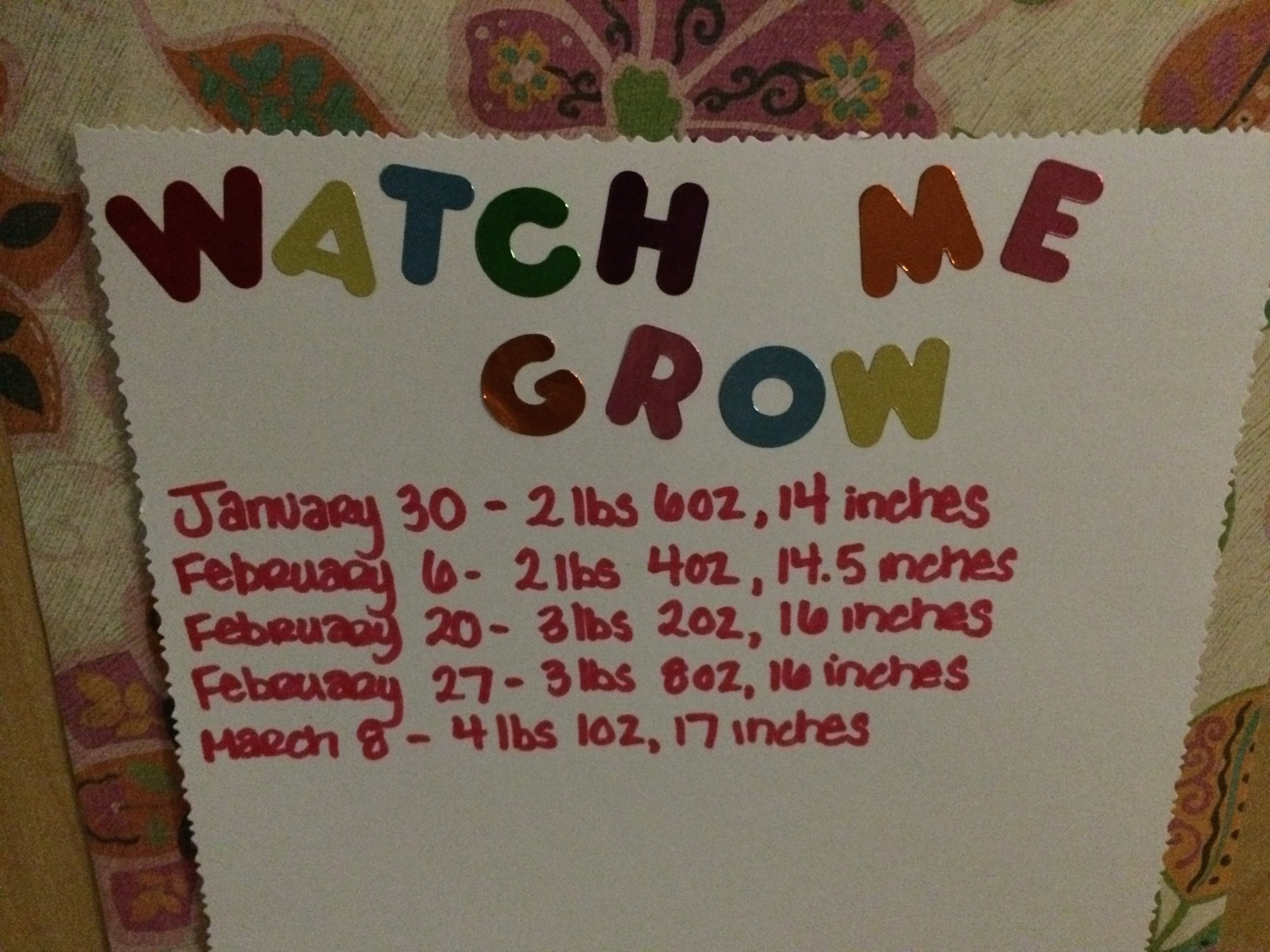
By March 8, London was 6 lbs 1oz shy of my birthweight.

IMG_3516

IMG_3936

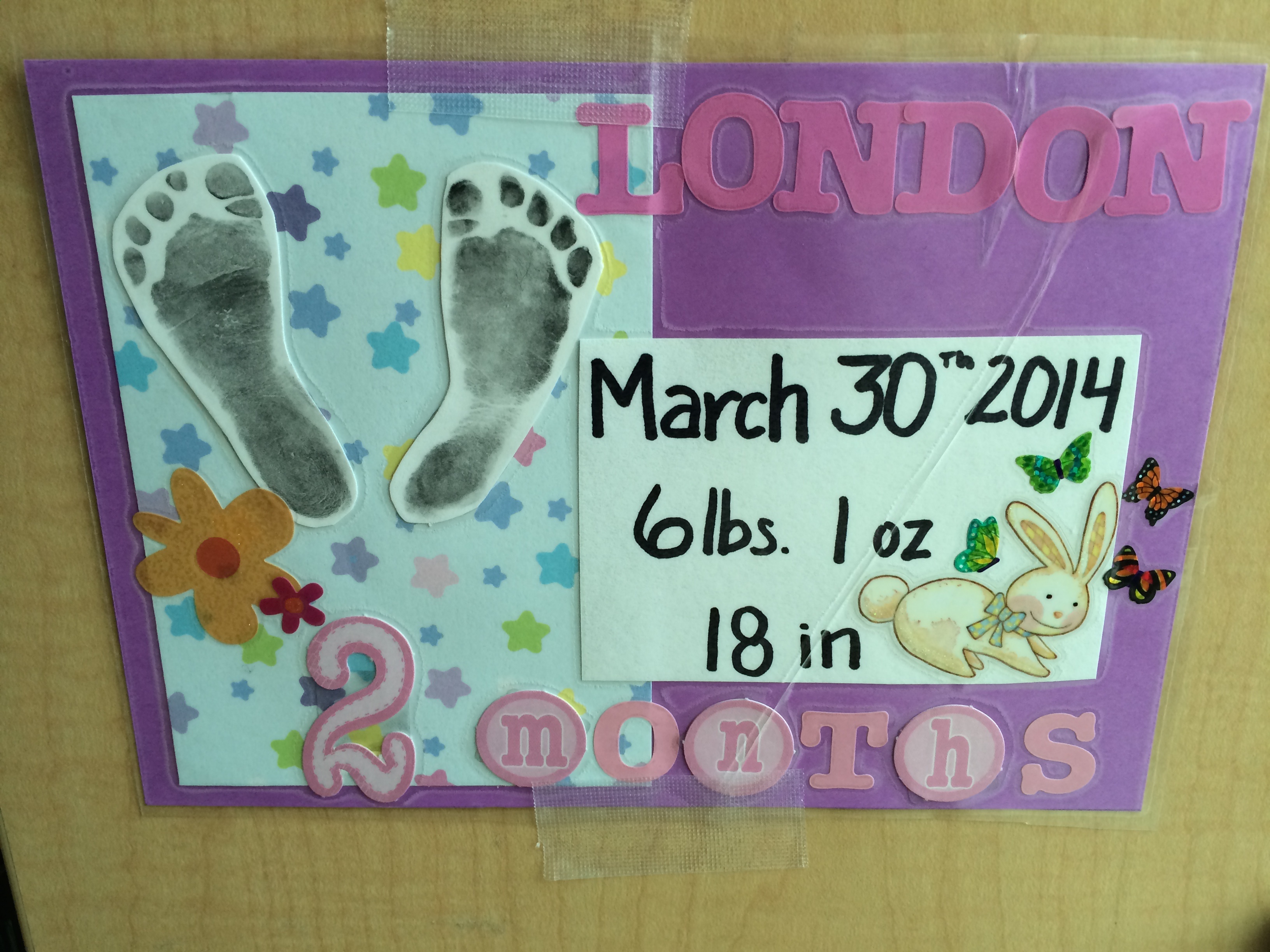
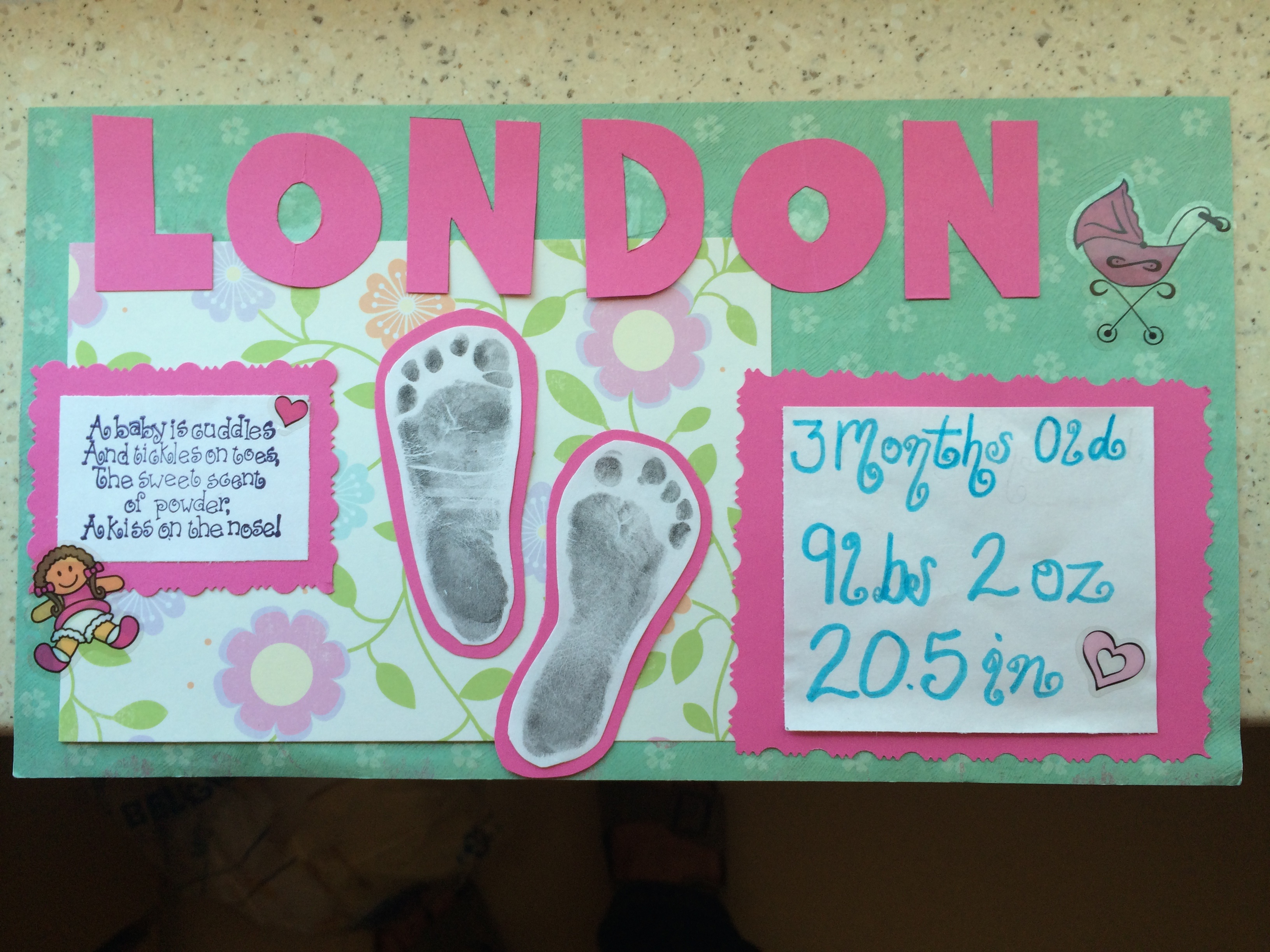
These footprints, although small, looked like Bigfoot had made them when you saw them side by side with London’s birth footprints. Unbelievable. Also, had London gone full term, we were told her birthweight would have been around 9 lbs 2 oz, the weight on her three-month birthday.

_BKP2734

Lastly, one more sign made just in time for London’s discharge day from the NICU. She gained 9 lbs in the NICU and grew 6 inches. By her fourth month there, London could have eaten some of her NICU neighbors for dinner. She was the Queen Bee, unrelenting in her cuteness and exponential growth chart.

Summa cum laude. 

We’re Ready

About two weeks before London was born, I was talking with a mom of two kids and telling her about the baby girl that we planned on welcoming into the world on May 4th (or sometime around then). When I finished up sharing my exciting news, she had a question for me, “Are you ready?”

“Yeah, I’m ready,” I said.

“No. No, you’re not,” she replied.

For some reason this exchange, between the parent who is in the thick of it and the expectant parent, is commonplace. And, I would be willing to bet that expectant fathers get this response more than expectant mothers do, but I am not bothered by that. I am bothered by the response, “No. No, you’re not.”

Obviously, I recognize that this response is, in part, a weak attempt at humor. What appreciation I have for that humor though is wiped away by the response’s other message, one that seems to imply that my wife and I, one, did not know what we were doing when we decided to make a baby and, two, that prior to that decision, we did not think about what we were getting into or taking on.

Of course, no one knows for sure what they are getting into when they decide to start a family. We certainly did not know that five months to the day that we found out we were expectant parents our little girl would arrive. We did not know that London’s prematurity meant that I had to stay at home with her. We did not know of how deeply we would love our child. We could not have imagined our lives changing so much in the span of six hours on the night of January 29th.

But we did know something before London was even a whisper. We knew that if we moved forward with our desire to start a family we were embracing the unknown in a way we never had before. Within that unknown, there sure was the possibility of having a preemie. There was the possibility of a miscarriage. Really, the possibilities are endless and that is a frightening thought, especially when you become a parent.

For the chance to love someone more than ourselves; for the opportunity to have our hearts leave us and become a little human being, these are joys that trump the unknown.

For that mom who said, “No. No, you’re not,” who knows what surprises and challenges came her way in parenthood, but, she must know, and so must other parents who tell expectant parents that they are not ready, that, indeed, some of us are.

Losing Anticipation

I touched on this topic a while back in “Life Goes On, But Something Was Lost,” but I wanted to write about it a little more.

IMG_2351

A getaway to Voodoo Doughnuts…we did bring some back to the NICU for the nurses.

When you have a baby in the NICU long-term, it takes a while to establish a routine. At first, you’re there all the time, until life elsewhere completely falls apart. By life elsewhere falling apart, I mean there will be no food in the fridge when you come home from the hospital, you’re out of toilet paper, you’ve forgot to pay bills, and you forget how to have fun, or, at the very least, you feel guilty for having fun or for merely being busy with something else other than sitting in the hospital with your baby.

The NICU nurses tell you right away that you can’t be at the hospital all the time. You’ll go mad if you do. As weird as it feels, you need to go out for dinner, go see a movie, and spend some time at home just relaxing. In our case, it was spending time at the house making it feel more like a home…we had moved in two weeks before London arrived.

At the NICU, I got the impression that some parents didn’t heed the nurses’ advice and spent every waking minute at the NICU. And when their baby was ready to come home, they were already exhausted. Eventually, we did take the nurses’ advice. Spending time away from the hospital did keep us sane, but it also allowed us to gain back some of that time we feel we had lost, the time we would have spent anticipating the arrival of our first baby. We had a lot of that time left, 14 weeks perhaps, and then it vanished the night London was born.

As a couple, spending time together away from the hospital was essential to our ability to get through the challenges that London faced. Before she was born, I had made Valentine’s Day reservations at a place downtown we had been wanting to go to for a while. When London arrived, I assumed I’d be canceling that reservation. It seemed like everything was off the table for weeks. Thankfully, I was wrong.

IMG_2368

My sister and I, post-brunch and many mimosas, getting ice cream at Little Man.

We could have gone 109 days without a night out, a Sunday brunch at Cafe Bar, a trip to Little Man Ice Cream. Kate could have gone without a baby shower…or three (with pictures of actual baby present). I could have gone without a couple trips to the Bull and Bush (“The pub you’ve been practicing for.” God bless them). We could have passed on going to church Easter morning. But if we had not done all these things, we would have completely lost those 14 weeks to the NICU.

The NICU is a beast. You don’t want to give her more time than you already have to. Of course, don’t take this too far. One nurse told us about a couple who had been told that their baby was going to be discharged on Friday of that week and they objected because they were going to Vegas that weekend. There’s a sweet spot you can find. I think we eventually found it. Our hearts never left the NICU, but our minds and bodies knew they had to leave that place every once in while to keep going.

28 Weeks, Not Too Early to Start Reading

IMG_3345

Reading In the Night Kitchen, one of my favorites.

Posted near the hand-washing station at the NICU entrance is a sign promoting the NICU library. By the looks of it, they have all the classics: Goodnight Moon, The Very Hungry Caterpillar, and Guess How Much I Love You. However, even though I looked forward to reading to my kids, I was a bit skeptical about reading to a baby who weighs four pounds and is on bubble CPAP. How could I even concentrate enough on a kid’s book? How could she hear me over the noises of the NICU?

The skepticism did not last long. After so many hours next to the isolette I had to do something to keep my sanity. Kate and I started reading to London while she was still vented, pre-30 weeks gestational age. Too early? Yeah, but we sensed a theme with London, she wants to do everything early. Why not oblige her? Plus, reading is a love of mine and I want it to be for my daughter too.

We started with a book of Disney short stories. I introduced In the Night Kitchen, An Awesome Book (by Dallas Clayton, one of my favorites), and On the Night You Were Born. London not only was calm while I read to her, she satted high too. Her eyes would wander around, trying to find my voice. I was hooked.

But what do you do when you’ve read every kids book you own several times already? Easy, you start over if your kid is old enough to make requests. But London couldn’t so I moved on to magazines and novels. The New Yorker…why not? I started reading from The New Yorker app on my phone, but then began bringing the magazines into the NICU. The subject of the piece did not matter to London. As long as she heard my voice and could watch my mouth move and see my face we were making progress. I read about the origins of house music in Berlin clubs, Amazon’s effect on the publishing industry, and the start of Under Armour. Sometimes I had to whisper the words to her because they weren’t exactly NICU-appropriate.

IMG_3815

Introducing London to Middle Earth in the NICU. The Hobbit. Read April 21-May 7.

Done with the magazines, a novel was next. Having seen the second of The Hobbit movies just a week before London arrived, and not having read the book since my freshman year of college, I had a strong desire to read the book again. I read this one from my iPad. I would shut the curtain to London’s pod for a little privacy, pick her up from the isolette, sit down in the recliner, rest her on one half of the pillow and the iPad on the other, and start reading. We finished The Hobbit in two weeks, every word of it read out loud to London as she drifted in and out of sleep on the pillow in front of me. We finished on May 7. By May 12, I had selected the next book, Harry Potter and the Sorcerer’s Stone, which meant I was committing London to a lot of listening and, for me, a lot of reading, because you can’t just read one book in a series. Well, you can, when the series sucks, but I didn’t expect that to be the case with Harry Potter. I had never read more than ten pages of a Harry Potter book. Now we are 250 pages into the third book.

I guess all the previous paragraphs represent my attempt at telling you it is never too early to read to your kid. It is hugely beneficial. Even before London was “full-term” she knew my reading voice from my regular voice. Realizing this could not have encouraged me more. She even smiled in response to the sound and rhythm of the words when she knew I was reading to her. She still does. Sometimes she flails around on the floor in pure excitement at the sound of the words and the sight of the book. And at other times she rests in the mamaRoo, so intensely focused on the movement of my mouth that I can see the learning in her eyes. And when she falls asleep I stop at the end of the page so, together, we won’t miss a word.

Be A Man, Change A Diaper

The first time I was present for London’s cares in the NICU, I made what was, for me, a radical decision. Instead of standing off to the side and becoming a spectator to my daughter’s care, I joined in and did as much as possible. So often I choose to spectate, deliberately choosing to not try something new and scary. However, when faced with the prospect of handling my two-pound daughter, I didn’t even think twice. I said I would go for it even though I could hardly believe the words that were coming out of my mouth.

All I had to do was take her temperature and change her diaper. That very first time, it was really difficult to do either of those tasks. I needed some coaching but got through it. London’s nurses that morning, Megan and Laura, were excellent teachers and perfectly understood that I was in a fragile state myself. Afterward, I certainly didn’t feel like a pro or anything, but I had this minuscule sense of accomplishment. In hindsight, choosing on the morning of London’s birth to jump right in and help with her care as much as I possibly could set the tone for the rest of our family’s time in the NICU.

_BKP2260

Reaching into London’s little world.

I don’t know if what I had was a very positive outlook in the NICU, but at least from that first morning on I had a tactile connection to my daughter that made things a little more bearable. I know it all started with that first diaper change. So how else could I feel when I saw a father being interviewed about his kids in the NICU and when asked if he was changing diapers he balked, giving the reporter a look that said are you crazy? The father responded: no. The reporter: why not? The reason he gave, with a chuckle: they’re too small.

I felt shock because the babies he was talking about were small, but not as small as London and preemies do come even smaller than London. I was also a little sad. I wanted to reach through the television and tell him my story, why I thought choosing right away to change a diaper on your preemie was such a good idea.

Until I saw this interview on television, maybe I didn’t realize how important my decision to change London’s diaper that first morning of her life was. I learned from my choice that I could become an active participant in this, the scariest thing I have ever gone through. It meant that I actually did get to touch my daughter and not just stare at her through thick plastic all day long. And for her, I don’t think I will ever know all the ways it helped her. I know that it helped her become familiar with my voice and touch. There were a lot of nurses taking care of London, but at least once a day the same person was taking her temperature, changing her diaper, and talking to her in his same, goofy voice.

These preemies need love and attention. As a father, you have to give that too them any way you can. It may seem like nothing at first, but if you keep loving them and helping with their care at every opportunity, they are going to get better. I remember toward the end of London’s NICU stay, the director of the entire NICU floor came over to London’s pod. He walked up to her bed and smiled at her, shaking his head in amazement. He had been an attending the week London was born so he had seen just how far she had come. “She’s made so much progress. She’s looking great!” I nodded in agreement and told him, “She’s amazing. Thank you!” He paused for a moment, “We do all that we can here, but it’s you guys that have really made the difference because you provide the love that she needs and we can’t bottle that stuff up.” We both looked down and smiled at London. He tapped the isolette, as if saying goodbye, and walked off. That love he mentioned, it took so many forms during London’s 109 days in the NICU, but maybe none more important than shedding fear and apprehension and stepping up to change that first diaper.

What Not To Read

Once London arrived, I was intent on researching preemies because I did not know a thing about them. The very kind nurses gave me a book on day two or three, cannot remember exactly, but I took it with interest. It was The Preemie Primer, written by an MD who gave birth to preemie triplets. Interested in what I would find out about our situation, I opened to the prologue and started reading, right there in the NICU. But how could any brand new parent of a preemie get past this passage detailing the very premature birth of one of the author’s triplets:

And then the worst words that I have ever heard, “Do you want to hold your son? He is dying.”

That is the first sentence of a paragraph. I did not make it to the second, at least not right then. I started to cry and quickly shut the book and put it aside, not touching it for weeks to come. Now, half a year later, I think I can enjoy what this book has to offer. However, I would not recommend it to brand new parents of preemies. At the very least, I would skip the prologue altogether. The thing about a book like this and others (like What to Expect When You’re Expecting) that aim to guide you through a critical time in your life, is that they do present all the worst case scenarios. There are good intentions, I am sure, but reading through them all is like getting on WebMD and self-diagnosing every time you come down with a weird rash or a string of very serious headaches. In other words, reading them can do more harm than good.

That said, Preemie Primer seems to be enjoyed by many readers, so I do intend to read relevant passages in the coming days, weeks, and months. Just don’t crack it open when there is even a chance of hearing those same words (quoted above) spoken to you.

All the Helicopters

One thing I always noticed once I became familiar with the medical campus London was on were the helicopters. I spent so much time at the hospital that I saw so many arrive there and, from London’s pod, I could see them arrive at Children’s. Every time, if I could, I stopped what I was doing and focused on the helicopter when I saw one and thought of the person arriving in it. What is wrong with them? Is it an adult, a child, a baby? Of course, I never got answers to those questions, but it did not stop me from feeling a connection to that person. Perhaps it was more of a connection to their situation, rather than the person, because if they were arriving by helicopter, they most likely were not in great shape. Whoever it was in that helicopter had an emergency and for the first time in my life I could identify with them.

I developed a newfound appreciation for people whose job it is to transport, via helicopter or ambulance, people who are in a medical emergency. Not surprisingly though, it was the helicopters that grabbed my attention as they flew toward the hospital, slowed down, and took one last perfect turn to line up with the roof of the hospital. I took a short video of one in February as I left the hospital one afternoon. Said a prayer, too.


London’s Emergency Extubation

A distinct feeling came over me as I looked at Kate’s eyes, huge and unblinking, staring straight ahead at London, the feeling that I could say nothing and do nothing to comfort her. I had never felt this. Though there seemed to be little value in it, I stood next to her and put my arm around her shoulders and held her tight while we both looked on, wondering if we were watching London pass away in front of us.

Thirty minutes earlier Kate had been holding London. It was a less than comfortable kangaroo care for mom and daughter. London never seemed completely content on Kate’s chest. She would squirm every other minute and toward the end of Kate’s hold time, as we bumped up to another of London’s cares, London was desatting more than usual. Eileen, London’s primary that day, was not too concerned. Neither were we. London did this every once in a while and usually when we placed her back in the isolette or changed her position, she would stabilize.

We got London back in her bed and proceeded with her cares. She initially checked out fine, a little desatting still, but nothing too serious. We had moved on to her diaper change. London decided to fill up the new diaper before we even had it sealed, so we slid a freshie underneath that one and took the soiled one away. She did the same thing with the next diaper so we got a third. Her bowels were working just fine. Before we were able to seal up the third, London started to desat again, but the saturation number was dropping further and faster than we had previously seen. I saw it in Eileen, not panic, but a flicker of concern across her face that told me she seemed to know that turning around to crank up the oxygen on the ventilator was not what London needed at the moment.

I stood at the foot of London’s isolette and watched as Kate handed Eileen the resuscitation bag and mask as Eileen had requested. Eileen quickly placed it over London’s nose and mouth and began squeezing oxygen into London. There was no response. London’s saturation numbers were still dropping. Another nurse stepped up and asked Eileen if things were okay. I had heard nurses ask this of Eileen before, but had never heard Eileen request help until then. The second nurse came in and took Kate’s spot next to London. I took a step back, not wanting to be in the way, but probably out of fear as well. The nurses worked now with a sense of urgency we had not seen since London’s first minutes out of the womb.

London was not responding to anything, looking quite a bit more lifeless than a normal desatting episode. Not just her lips were blue, but her face was starting to turn ashen. More nurses had come to help. I am not aware of how many stood just outside of London’s pod, but I saw Eileen look at one and sternly say, “Go get the doctors.” Kate and I knew then that we would have to make way for more people in the pod. We stepped out to a position where we could still see London and the numbers on her monitor.

The doctors were at London’s isolette within seconds. They were talking fast. Eileen updating them on what had happened so far. I strained my head to see London’s face through the team around her bed. I got a glimpse of her body, she looked like she was shutting down. Her oxygen saturation number was a single digit and her heart rate was very low. I saw the fellow extubate London in what seemed like a half second. I strengthened my hold on Kate. We did not speak to each other, just stood, watching. Like the night London was born, my mind was in two places, there next to London’s pod, where I took in the frantic sight of my daughter’s life being saved, but also somewhere else, where I was cycling again and again through possible outcomes of all of this.
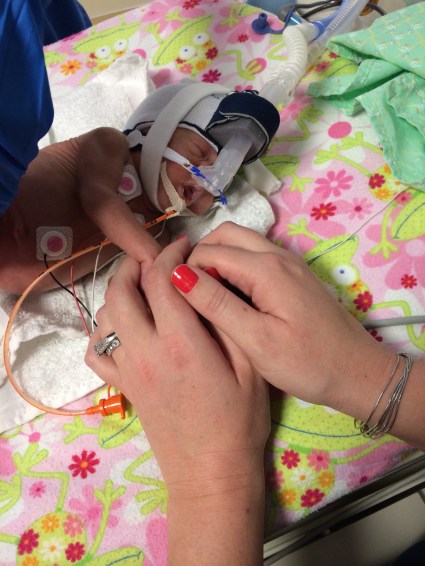
IMG_3143

London minutes after her emergency extubation, totally oblivious to what she had just put her parents through.

A resident approached us and calmly informed us that they were moving London to CPAP. A minute later London’s stats had rebounded halfway. Nothing was breaking my gaze from that monitor. Her numbers kept creeping up as a doctor explained to us what might have happened. Her endotracheal tube might have been out of place or she might have just clamped down on it somehow. They did not know for sure. The pod had cleared out somewhat and we took steps toward London. Eileen, stoic and so professionally cool, was there helping London back up.

London’s stats were almost back to normal. Her color was improving. She did not have a clue about what just happened because she was inexplicably calm. Kate held out her hands to grab London’s arms. I took a picture. The episode was over. Moments earlier there had been 8 to 10 people around London’s isolette, she was blue, and Kate and I were watching and crying. The whole event was probably over in 8 minutes, but it felt like 20 for us. I did not know if this was par for the course at the NICU. It certainly did not seem like it. Over the next three months I did not see or hear about any other emergency like this happening in the NICU. The whole matter was boiled down to one line in London’s discharge report, “She was extubated to bubble CPAP of 8 on DOL 23.”

As I left the NICU on DOL 23, I did not know what else to say to Eileen that afternoon. I had said thank you a couple of times and felt so dumb saying it. Couldn’t I have come up with anything else to say to the nurse who had just helped save my daughter’s life? That was all I had then so I walked out of the NICU for the afternoon, thinking about how I have watched London’s life saved twice now and distilling that down to its bare bones:

I am a dad.

My daughter is incredibly small and fragile.

I just watched 8 people save her life, like I had three weeks prior.

The weight of that hit me like a strong kick to the chest as I walked out the hospital’s main entrance. I lost my breath and inhaled deeply. Then I exhaled, holding back a wave of tears and emotion fighting to come out. And then, when that emotion overcame me, it came out as a big, deep whimpering sigh of relief followed by an upward glance to take in the beauty of the crisp, blue February sky. I thought, wow, what a ride. Never thought I’d be on a ride like this. Don’t know where it’s going. Don’t know how many ups and downs are left, but I just experienced the nadir of our NICU stay so far and perhaps one of its highest points, London stabilizing on CPAP, all in a matter of minutes.

I found myself asking, did that really just happen? What’s next? I did not even want to know. I was enjoying my victory walk that afternoon, trying as hard as I could to not think of the battle we would inevitably fight the next day or the one after that. One day at a time.

Handle With Care

Yesterday I wrote about holding London for the first time. Today I thought it appropriate to share a video of picking London up directly from her isolette. The video shows me doing this for the first time. The day of the first hold, I was seated in the chair already when the nurses placed London on my chest. Although that was complicated, it is a far more perilous task to pick London up out of the isolette and then move backwards with her to the chair and sit down. The most worrisome aspect of all this is the kink that can form in the oxygen tube when we move London. If that tube is not supported properly once she is on our chests it can once again kink.

When London was vented, it took about five or six minutes to move her and get her situated on us so that both London and parent were comfortable. I trimmed this video to just the first two minutes. At the beginning, you’ll be able to hear a lot of chatter about my height. This happened a lot in the NICU, but as our time there continued all the staff grew accustomed to my height, at least to the extent that they didn’t feel the need to tell me I was tall. If the video appears as huge on your screen as it does on mine, so big that you cannot see the whole video on your screen, press play (middle of frame), and then just click the full screen icon in the lower right corner of the video and you’ll be golden.

The First Hold

Due to London’s umbilical artery catheter (UAC) line and her general fragility, we could not hold her until she was a bit stronger so the UAC line could come out. They pulled that line on February 10, a Monday, and we were told that the next day we would most likely get to hold our daughter for the first time. Just the thought of that was tear-jerking and, I admit, a little intimidating.

IMG_3040

A new and improved family portrait.

The next day everything went as planned. So it was on DOL 12, that we got to hold her for the first time. I wrote in our journal:

I teared up as I saw you placed on your mom’s chest. You are so fragile and small. So helpless. We are absolutely in love with everything about you. After mom held you for a couple hours, I got to hold you. Kate took an amazing photo with one of our phones. It’s the best photo of us together so far…We reached a new level of love and connection to you today and it was all because of getting to hold you and be with you as we were meant to be with you at your birth.

IMG_3053

The picture Kate took. My favorite.

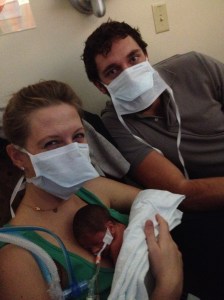
That photo Kate took is still one of my favorites. It will be for the rest of my life. It is such an explicit reminder of London’s beginning. That day I barely had to provide support with one hand to hold London up on my chest. She is wearing the smallest diaper available at the NICU. We have a couple of those diapers (clean ones) in our keepsakes bag from the NICU. When we show them off, most women compare the size of the diaper to a maxi pad. Folded up, the diaper is about the size of a kleenex, albeit slightly thicker.

The first picture of all three of us with London out of her isolette was sent out to everybody that night we got home. From February 11th on, there was not a day in the NICU for London when she was not held by one of us. Another of my favorite pictures is below.

_BKP2324

When Kate held London for the first time was when Kate transcended all previous definitions of beauty I held. It’s a moment that will be with me for the rest of my days.

Life Goes On, But Something Was Lost

“I love you, my child. My Child. Still can’t believe it all. Wishing you were still safe inside me and that I could feel you. I miss you, little girl. Be strong.”

– From a letter Kate wrote to London on January 31, 2014. London was one day old.


I start today’s post with this quote because in a few sentences Kate conveys the sense of loss mother’s have when they have their baby so early. Sense of loss is somewhat misleading (London was stable in the NICU), but Kate knew and I knew that the safest place for London and also where she would still be developing the best was lost. That was not the only thing lost though. A full-term pregnancy was now just a dream.

Kate was just starting to look pregnant when London arrived. Our closet was full of maternity clothes waiting for months 7, 8, and 9. In fact, the day we got home from the hospital I helped Kate up the stairs and followed her into our room. Shortly thereafter, I heard Kate in our closet and walked in to see what was going on. Kate stood staring at a rack of maternity clothes with tears running down her face. I listened to Kate and held her. Seeing Kate so sad about not getting to wear these clothes even made me cry.

As a father, I do not know the sense of worry and loss a mother has when, without any warning, the human being growing inside of her is out over three months early and exposed to a world she wasn’t supposed to see until spring. But now, having a wife who has gone through that, I have a decent understanding of what that is like.

The sense of loss manifests itself in a variety of ways. One of the strongest, at least in the first week after London was born, but one that also fades over time, is how painful it is to see pregnant women who are full-term or damn near close. To be honest, both Kate and I hated seeing very pregnant women for a while. We were comforted to know this is completely normal. In the two days after London was born, we received a slew of emails, calls, texts, and cards from people who wanted to let us know that they were praying for us and for London. A few of those contacts had preemies themselves. And in one particular email, a mom wrote, “you will hate seeing very pregnant women.” She nailed it. We both did. One of the first days out of the hospital we went to Baby’s R Us to stock up on some breast pump supplies. There were couples everywhere and it seemed like every single woman was about to pop. It was extraordinarily tough. I ran out of dagger eyes to give.

Being bothered by the sight of very pregnant women was the product of our envy during those early days. I remember I would see a couple who is clearly having a baby very soon and think, damn, they’ve got it so easy. They really have no idea. Look how they’re wandering the aisles at Baby’s R Us without a care in the world. Of course, our attitudes have since changed and I no longer think that those soon-to-be parents had it so easy. Having a baby is a lot of work, no matter the gestational age at birth. However, if having a full-term, healthy baby was exactly the same as having a preemie, I would be lying to you and severely devaluing our experience, the experience of thousands more, and the NICU and everyone who has ever worked in one.

I am so sensitive at times to other people’s feelings that it took me a long time to realize that even though this is our first time around with a baby, I know it has been more difficult than if London had been born full-term. Sharing that in the months since London was born and even now, I feel sort of like a jerk because it boils down to me saying, “Well, we have had it quite a bit harder than you.” I know that can sound like I am devaluing the difficulty of having a full-term baby, but that is not my intention. I am just trying to speak truth from our experience and that of the other parents in the NICU right now, who also know that with the littlest life they were blessed with comes the most terrifying and stressful days of their lives and the knowledge that although life goes on, something has been lost.

London’s Birth: Part X, Into the NICU

*This is another post in an ongoing series. Scroll all the way down or click to part I to get to the beginning.

Right outside the double doors the charge nurse introduced herself. She guided me through a winding path of at least sterile-looking hospital hallways. Now was as good a time as any, “Can I get a new mask?”

“Of course,” she said, stopping at a counter and getting me one and several tissues. I pulled my mask away and took a peek at the inside, not a pretty sight.

I followed the charge nurse to a pod. Each baby in the NICU we were walking into stays in a pod, not a room necessarily, but more like a cubicle with walls nearly to the ceiling. We walked the length of the NICU, took a left and there was London, skinny, vented, cleaned, and holding on. The doctors kept telling me she was receiving surfactant, which is a mixture of fat and proteins made in the lungs, but preemies are often born before their lungs can produce enough surfactant. The mixture coats the alveoli, or air sacs in the lungs, and this prevents the alveoli from sticking together when the baby exhales. A nurse said London’s lungs were like a hardened sponge right now, not ready for life outside the womb.

I stood there for five to ten minutes, all the while an occasional nurse and doctor would tell me about what they are doing or what they plan on doing. I did not retain that much. I was just locked to my daughter and I was in sort of an emotionless state, unable to fully register the last six hours. I was thinking enough to take my phone out and snap a picture of her. I was hesitant to get close. I had the same feeling I had earlier in the OR, stepping up to the bedside and taking a picture of London meant I was getting closer to her. I was letting my guard down. I was starting to realize that five and a half months ago we embraced the idea of creating a life we ultimately had no control over. The unknown and deeply frightening future belonging to my daughter was coming into sharp focus. I took two quick pictures. London with a full head of hair turned to her left, eyes fused shut, gaping mouth with the endotracheal tube snaking out of it, monitors on her chest, blood pressure cuff and pulse ox on right arm, umbilical chord clamped shut, plastic covering her lower body to keep it humid, and a nurse’s blue-gloved hand holding her legs down. I said a quick prayer when I took the picture, please God, do not let this be the only picture I get to take of her.

Sometime later, the team was prepping London to place a peripherally inserted central catheter or PICC line and an umbilical catheter. They told me it was a good time to go check on Kate because they would be working for a while. I thought that sounded great. I took a picture of London’s pod number, “Pod 3, 423,” not knowing if I would be able to find my way back or if I would need that information later on. I started stepping away from the pod and realized I had no clue where Kate was now. Someone took me to a room, which looked like it was used to just house patients in limbo who might be fresh out of surgery and do not have a room to go to. There were four hospital beds and four curtains, but none of them were drawn. Kate was the only patient there. She looked great to me because she was still here, conscious, and strong, but she looked amazingly tired, which is to be expected. I know I looked like hell. We chatted about London and where she was placed in the NICU, what they were doing to her, her weight and height. 2 lbs, 6oz and 14.75 inches long.

London’s Birth: Part IX, What’s her name?

*This is another post in an ongoing series. Scroll all the way down or click to part I to get to the beginning.

Throughout the operation there were tears slowly dripping from my eyes and my nose was a leaky faucet. I was aware that my snot had flowed through my mask and even in that moment I was mildly annoyed with the thought of having to ask for another mask. I would ask later, when the time seemed right. Until then, I tried to minimize the flow of tears and snot.

It may sound like my eyes were wandering once my daughter was out of Kate, but they weren’t. I glanced for split seconds here and there, but my eyes were essentially locked on the little human being in front of me. Vented now, the doctors seemed a little more relaxed with her and ready to move. They told me where we were going. It went in one ear and out the other. I would follow them anywhere. They started to roll my daughter a bit, making for the double doors I had come through to enter the OR. They halted for a second, one NP turning to me and asking, “What’s her name?”

I had not yet imagined when I would announce to those present in any room the name of my daughter, but if I had, it would never have crossed my mind that this would be how I would introduce her to the world. “Her name is London,” I announced. It sounded weird giving a name to her at this stage because when your child is born this small and fragile, they almost seem like a science experiment. I had started to become aware of a disturbing, but natural protection mechanism that sets in when you see your preemie like this. I wanted to protect myself from her in a way. I didn’t want to become so attached to her just in case I lost her in the next hour, but giving a name to her instantly made it harder to keep my distance.

London and the team working on her started moving out, rolling right by Kate’s face and slowing down a bit so she might possibly get a glimpse of London’s face. I saw Kate strain her head to try to see her baby before we went through the doors. I stopped and gave Kate a huge kiss, an exchange of tears cheek to cheek, and a word about how London is vented. I also checked that I should keep on walking with London and the team. Kate nodded yes and I was off through the double doors with an “I love you” and one last glance at the amazing team sewing up my wife.

London’s Birth: Part VIII, 18 People

*This is another post in an ongoing series. Scroll all the way down or click to part I to get to the beginning.

I confirmed with Kate that I was to go be with the baby now. We kissed. I told her she was doing great and walked to the foot of Kate’s bed where the doctors had placed my daughter’s very small bed.

In front of me was an impossibly small baby girl. To call her a baby is not quite accurate. She looked more like a very, very small, skinny human being. There was no fat on her and she had none of the cuddly attributes that full-term babies have. There were seven doctors and residents attending to her, looking for signs of breathing, mostly. They seemed to poke and prod here and there with their hands and a few tools.

Immediately to my left, Kate was on the operating table, with her incision still wide open. I didn’t stare long, but I felt comfortable looking at the incision and the tissue and organs that were being rearranged so they could settle back into place. I turned my head ninety degrees right and continued to watch the doctors revive my daughter. I saw them prepping a blade to start the intubation when another doctor informed me that was exactly what they were being forced to do. She said this was very common. She was tall, had blond hair, and I remember a minute after my baby girl arrived on her miniature bed, she referred to her as a him. I clarified, “It’s a girl, right?” She looked again, “Oh, I’m so sorry.”

My daughter was successfully intubated a moment later. Her head and neck seemed impossibly flexible for the doctors to place the blade and insert the endotracheal tube. I looked left to Kate again. A nurse walked right in front of me carrying a metal dish with a big red blob in it that had what looked like puncture wounds. It was the deflated, tragic looking placenta that had prematurely detached from the uterine wall, aka placental abruption.

The OR was highly organized chaos to my uninitiated eyes. I took a moment, counting all the people in the room saving my wife and daughter. Eighteen. It was the beginning of a deep, new appreciation for the professionals around me. I was learning in the quickest and most explicit way possible that the quickest way to my heart was to save the two people dearest to me. It was early to have this revelation because I didn’t know if everything was going to turn out fine, but I still felt like I would love and cherish these people for the rest of my life because of their effort here.

London’s Birth: Part VII, 27 Minutes Later

These posts are in reverse chronological order. Read earlier posts first. They can be found by scrolling all the way down or clicking the links provided here: Part I, Part II, Part III, Part IV, Part V, and Part VI.

The only time I have ever seen a C-section setup in an OR was on ER. Well, in that respect, the set of ER got it right. Kate’s neck and head were peeking out from a curtain draped across the top of her shoulders. There was a nurse standing to the right of Kate’s head. There was a chair positioned to the left of Kate for me to sit in. I walked over and sat in it. I gave her a kiss. We exchanged “I love yous” and I sat down.

At this point, we didn’t have to discuss whether or not I would watch the baby come out or whether I would go be with the baby once she was out. Just a few days ago at home over dinner we had talked about what we would do in the case of a C-section. I said I would sit by Kate and would want to be present for everything. We agreed that I would go be with the baby once she was out of Kate, if Kate was clearly doing okay. I also expressed interest in seeing the baby being pulled out. In hindsight, it is incredible that we had this discussion already.

When seated next to Kate, I couldn’t even see the doctors working on her lower body. Kate said all she felt was pressure. I could see Kate’s head and shoulders shifting up and down and left to right on the bed as the doctors peeled away the layers, pushed things to the side, and cleared a path to the uterus.

The urgency of the C-section and the speed at which it all happened was astounding. I was not next to Kate long before the nurse next to her spoke up, “They are about to pull her out. Do you want to look?”

“Yes,” I said. The nurse would tell me when to stand up and look. “Okay.”

“Alright, stand now if you want to see,” she said.

I hesitated just for a second or two, perhaps not quite ready to see what I was about to see, scared to see what I was about to see, or just trying to register the moment. I’m sitting by my wife behind a curtain and on the other side is the rest of my wife’s body with a significant opening in it from which they are pulling out this human being we made, our daughter, who will be in my thoughts for the rest of my life no matter what happens in the next few minutes, hours, or days.

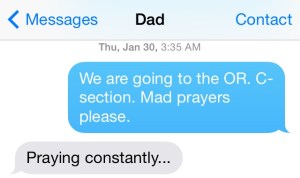
I rose from my chair and saw two doctors lifting my daughter up out of Kate. My daughter’s foot, the last part of her touching Kate, was just slipping the protective casing that had collapsed around her. Nothing could have prepared me for that view. It was beyond beautiful and it literally took my breath away. My legs gave out a bit and I had to sit down quickly. I was crying and Kate was looking at me expectantly. “She is the most beautiful thing I’ve ever seen,” I reported. We smiled through our tears. It was 4:02am, twenty-seven minutes since I had texted my dad, saying we were going to the OR.

London’s Birth: Part VI, At the Doors of the OR

Parts ONE, TWO, THREE, FOUR, and FIVE of this series should be read first.

The walk to the operating room was extraordinarily difficult. Dwelling on a worst-case scenario was unavoidable at times. Kate occasionally cried while she was being pushed toward the OR. The doctor told us that they would do their best to use local anesthesia so Kate could stay awake and so that they wouldn’t have to intubate her. I was told that I couldn’t come into the OR until the team had determined what type of anesthesia Kate would need.

At the huge double doors to the OR I had to say goodbye to Kate. No other goodbye I’ve had in my life had been that hard. How long was I saying goodbye for? I didn’t know for sure. Five minutes? I hope so. Five hours? I hope not. Five days because they had to intubate her and then there were complications? I don’t know how I would have gotten through it. But there was also the question in the back of my mind, for forever? The team pushed her through the doors and I was alone in this barren anteroom with two chairs and a couple of carts with masks, gloves, and other sterile clothing.

I did not expect to be alone at this point. I thought someone might stay with me. I sat down on one of the two chairs. At this point I continued praying, which I had not stopped doing for a while. It felt more like begging at this point or, more accurately, making demands of God. I sat with my head in my hands.

In a few minutes the doctors were attempting to place the epidural. Kate was screaming like she was being cut open. The trauma of having an emergency C-Section at 26 weeks coupled with the pain of the needle is enough to make any woman scream. I didn’t know what sounds to expect from the OR at this point, but that was as much as I could handle. Still seated, I think I may have been rocking back and forth at this point, still with my head in my hands.

The doors to the OR were to my right. A few doctors went through them once they got gowned up. Some of them wore clear shields that covered their whole face. One knows exactly what these are for. They’ll protect the doctors’ faces from splatters from cutting my wife open, moving aside some organs, and pulling a little human being out.

A doctor came through a different set of doors to my left. As she gowned up and scrubbed in she spoke with a healthy dose of authority, giving me a one-minute crash course on 26-weekers. “They have an 85% survival rate,” she said. That is higher than I thought it would be, I thought. “A common complication is with the eyes. It’s called ROP. It can be fixed with laser surgery,” she continued. And with that she walked through the doors. She was just very matter of fact and did not give me a parting “goodbye” or “see you in there.” But I completely understood. She was going into the OR to save the two most precious people in my life. If I could have sped her up somehow I would have. Godspeed, Lady.

A few more minutes passed and a different doctor came out of the OR with good news. “Kate is on a local anesthetic and doing great. You can come in now.”

London’s Birth: Part V, “We gotta get that baby out.”

This is a post in a series about my daughter’s birth. Read parts one, two, three, and four first.

Around 3:20am our doctor came into the room and made the call. The baby needed to come out now. Her heart rate was dropping too much and too frequently to safely leave her in Kate any longer. We were terrified, but I kept telling Kate silly things like, “It’s gonna be okay,” or, “We’re gonna get through this.” Kate was crying a lot, but also trying to compose herself. I remember her really losing it when a nurse and I were had to work Kate’s bra off in order to prep for the OR.

My scrubs were delivered to our room. They looked like a flight suit. I put them on backwards at first. A nurse pointed it out, but she said it didn’t matter. It mattered to me, so I turned the one-piece around, but didn’t quite zip it up yet.

You can easily argue that nothing in the future is certain. That is why so many of us worry. Especially during traumatic moments, we start to consider all the wildest and scariest scenarios. Kate and I had arrived at that point. “You know what to do if anything happens,” Kate said. “You know about my life insurance. You would have to contact my employer.”

IMG_3726 - Version 2

“Yes, I know,” I said. “But I’m not going to have to deal with that.” In response, Kate probably said, I know, but I can’t remember. I was at her side and just crying with her and telling her over and over, it’s going to be okay, she’s going to be okay.

Before I tucked myself into my scrubs and isolated my phone in my jeans pocket, I sent out text messages to both sets of parents and then we were off to the OR. It was 3:35am.

London’s Birth: Part IV, 2:30am Phone call

Just arriving? Read parts ONE, TWO, & THREE in this series before moving on.

The nurses placed monitors on Kate’s belly to watch the baby, but every time Kate had a contraction the baby’s heart rate dropped dramatically or the monitor was no longer picking the heartbeat up. Every time this happened the nurse had to come in and adjust the monitor to find the baby’s heartbeat. This happened so frequently it was pointless for a nurse to leave the room.

Absolutely ignorant of how the rest of the evening was going to unravel, Kate and I attempted to rest. I laid down on a couch, almost two feet shorter than me, but comfortable, and closed my eyes, but it was fruitless. The baby’s heart monitor would beep every couple of minutes; there were nurses in and out, and a few doctors here and there. After I while, I sat up. The doctor was in and out more often talking about the baby’s heartbeat. I don’t remember at all what time it was, but at some point in the evening, before we attempted to rest, we called Kate’s mom. We put her on speakerphone with the phone resting on Kate’s chest. Kate was getting IVs put in at the moment, one in each arm. The nurses were giving fluid, obviously, in hopes that there could be some fluid retention in Kate’s uterus, to build up a buffer for the baby. And in another arm she was starting to get some other drugs that I would learn a lot more about later on.

My mother-in-law went into a mom/nurse practitioner hybrid mode, which I can’t blame her for. She wanted to know all the technicalities. I just wanted Kate to tell her the basics and get off the phone because Kate should be resting. Eventually they hung up and I texted for a while with my mother-in-law. I tried to imply that Kate was really tired and shouldn’t be staying up and talking on the phone at the moment. The message was well received.

I had moved to the side of Kate’s bed as things continued to get a little more serious. I knew I had to call my parents. I hated knowing a call was necessary. By dialing them I was losing the last bit of me that thought everything was going to calm down soon. It meant I was giving into the seriousness of the situation because I was willing to introduce into my parents’ lives a horrible and scary scenario that would make them cry and worry like they haven’t done in years. My mom is old school. She doesn’t even sleep with her cell phone on usually. If it’s on, it’s in another room of the house. I went with my dad’s cell and after a few rings he picked up. I tried to imply right away that we were all still okay. Without saying it, I meant that we were all alive. I also tried to give him a few seconds to wake up and tune in his ears due to the difficulty of receiving a call at 2:30 in the morning. I just cut right to the chase and said, “Kate might be going into labor. Her water broke. We don’t know exactly what is going to happen, but this is what happened so far…”

I remember hearing my mom wake up in the background. She realized my dad was on the phone and not just talking to himself. My dad took a moment and recapped for my mom what I had told him. I heard it in my mom’s voice right away, shock, worry, and sadness. I disliked that I brought that upon them, but I had arrived at the point that not telling them was out of the question. We weren’t on the phone long, but I said I would keep them posted via text message about any changes on our end. We said our tearful goodbyes and hung up.