Another Day, Another Echo

Two days ago I posted “Turning One Again“. In that post I mentioned that this time last year London was going through a bunch of new tests to find out why she was so tired. Actually, “new tests” is incorrect. By May 4th, 2014, London had had several echocardiograms, she was just going to have another. I thought I would share a video of the last echo she had in the NICU. Kate had stopped by London’s room on the way to work (in the building next door) and had wound up getting to see the echo.

I do not expect you to be interested in watching a baby get an echocardiogram. The event is not spectacular or rare at all if you have had a preemie. But what is exceptional about the video is how London is so cool with it. She yawns in the middle of the video, like, c’mon, get this over with…it’s not my heart that has an issue.

Kate sent me the video that morning before I had made it to the NICU and it warmed my heart. This was classic London–so extraordinarily comfortable with another intrusive procedure in the NICU–that it did not surprise me all that much. London remained unperturbed throughout this test and others. Over the course of 109 days in the NICU London’s attitude absolutely rubbed off on us. We were never happy to have to sit through another echo or eye exam, but seeing how tough London was through it all made us roll with the punches like old pros. You will stress yourself to death if you can’t find a way to cope. Looking to our baby for strength proved to be one of the best strategies to weather the storm.

I just realized I posted this video on the blog already, but it was months ago and in a different context. Thanks for stopping by!

To the Internet, Not So Fast

Back in 2007 I had a troubling sickness. It started with migraines, then it transitioned to the frightening Bell’s Palsy, and whatever I had did not stop there. I developed iritis (inflammation of the iris, which makes the whites of your eyes blood red and the photophobia can be unforgiving). I had partial hearing loss in one ear. Doctors ran me through a battery of tests. In a few months I had a CT, blood draws, many eye exams, an MRI with and without contrast, X-rays, and a flexibility test, where the doctor looked for signs of Ankylosing Spondylitis, a symptom of which can be stiffness and pain in the spine and neck.

The tests turned up nothing of concern, but the symptoms continued to give me plenty of reasons to worry. In between visits to the doctor I would sometimes have a lapse of judgment during which I logged onto the internet and did some self-diagnosing. What I found was terrifying. There was an encyclopedia of diseases and unheard of (to me) maladies that could, in theory, give me some of the symptoms I had. Brain tumors. Cancers. Crohn’s disease. Thinking about it all scared me. The doctors, I knew, were doing their best to give me an answer. For a time, I thought that their lack of explanation was a bad sign. When I was firmly convinced of this I went to the internet. Ultimately, what I found led to prolonged worry and who knows, maybe some of the symptoms would have gone away sooner if I was not giving them their unwarranted attention.

By 2008, all of my aches, pains, and inflammation were gone. Most likely a virus had attacked me and, my body, with some hiccups along the way, crushed it. However, if any of the symptoms had returned in the seven years since I would not have consulted the internet. I would have gone to a doctor.

To have this lesson in my back pocket heading into London’s bumpy start to life was an unexpected blessing. London’s actual and possible complications from prematurity were a tsunami of information compared to my sickness years ago. The first wave of preemie particulars and statistics hit even before London was born. While I was waiting outside the operating room a doctor came by and ran down a random list of possible complications. She told me 26-weekers have an 85% survival rate. This brief conversation introducing me to the challenges preemies face was similar to seeing the tip of an iceberg above water. The other 90% was below the surface, or in our case, through the OR’s double doors and on into the NICU. To borrow from The Lord of the Rings, it was “the deep breath before the plunge.”

*          *          *

Upon your family’s arrival in the NICU, you might feel like you’re drowning. There are more people taking care of your baby than you can keep track of. There is a new procedure every day. Thus, there are results every day, results that must be explained to you, sometimes three or four times. In addition to that, there are a lot of unknowns and, regardless of how talented the NICU staff may be, no one can accurately foresee the obstacles ahead for your baby. The internet is not going to be any different. There, you will find many question marks and new and more dangerous preemie complications to worry about, even if your baby is not suffering from them.

As parents with a baby in the NICU, Kate and I felt like there needed to be a sacred part of the day, during which we would try to not worry about the next results from London’s latest blood draw or echocardiogram. Of course, to not worry is impossible. It is more accurate to say we carved out time in each day during which we would purposefully not heighten our worry. This time became essential to getting us through every month our daughter was in the NICU.

Seeking information or support online seemed to only disrupt any sense of peace and hope we had regarding London’s course of treatment. If it was information we sought, then it was to go down the rabbit hole again, entering a world where one complication, like a brain hemorrhage, could lead to hydrocephalus and, almost certainly, cognitive disabilities. At least, that is what the internet would like you to believe at times. And if it was support we queried, we discovered far more troubling accounts than our own, which led to more worry.

Very early on in our NICU adventure we discovered the very poor predictive quality of the internet. Thus, the net never became a source of information for us. We much preferred getting answers straight from the trained professionals who were taking care of our daughter.

I have used the internet for queries about preemies many more times since starting this blog than I did while my daughter was in the NICU. When I am using the internet to find a definition of a certain malady, it can be helpful and I am grateful for that, but the internet will remain a horrible diagnostician and a font of worry for parents with a baby in the NICU.
Born in the USA, Raised in the NICU

London is a remarkably happy baby. She tolerates so much and cries very little. We hear this from nearly everyone London meets. I tell them I have a theory. For the first 3.5 months of London’s life she had medical professionals treating her around the clock. In addition to the diaper change, temperature check, and respiratory check every four hours, she was also interrupted with head ultrasounds, echocardiograms, at times shots, the placing of a new IV line, and physical therapy. This is the NICU norm. For the baby, they assume this is what life is like, this is how all babies live out their early days. So, what is crying going to do?

That is the attitude London embraced. To make London cry now, you almost have to give her an ROP exam. Her frightening start and all the procedures that it necessitated made her one tough babe. I like to think that most long-term NICU babies also graduate as super tough and tolerant little things, but I have a few reasons to believe that that is not the case because all too often nurses would tell us how amazing London is with a shot, for example, when she would barely cry for one second in response to the needle, but the boy next-door would wail for a couple minutes.

In a way, the NICU schedule of around the clock treatments or feedings continues when some preemies come home. Usually with full-term babies it’s the baby waking the parents up, but with preemies, it is quite often the parents waking the baby up. Whether it is a feeding time, a cannula check, a breathing check, or just a general are-you-alive-over-there check, London’s day and night were interrupted by her parents for quite some time.

Below are some pictures and a video that only give you a sliver of the stuff London and other preemies endure at the NICU.

_BKP2294

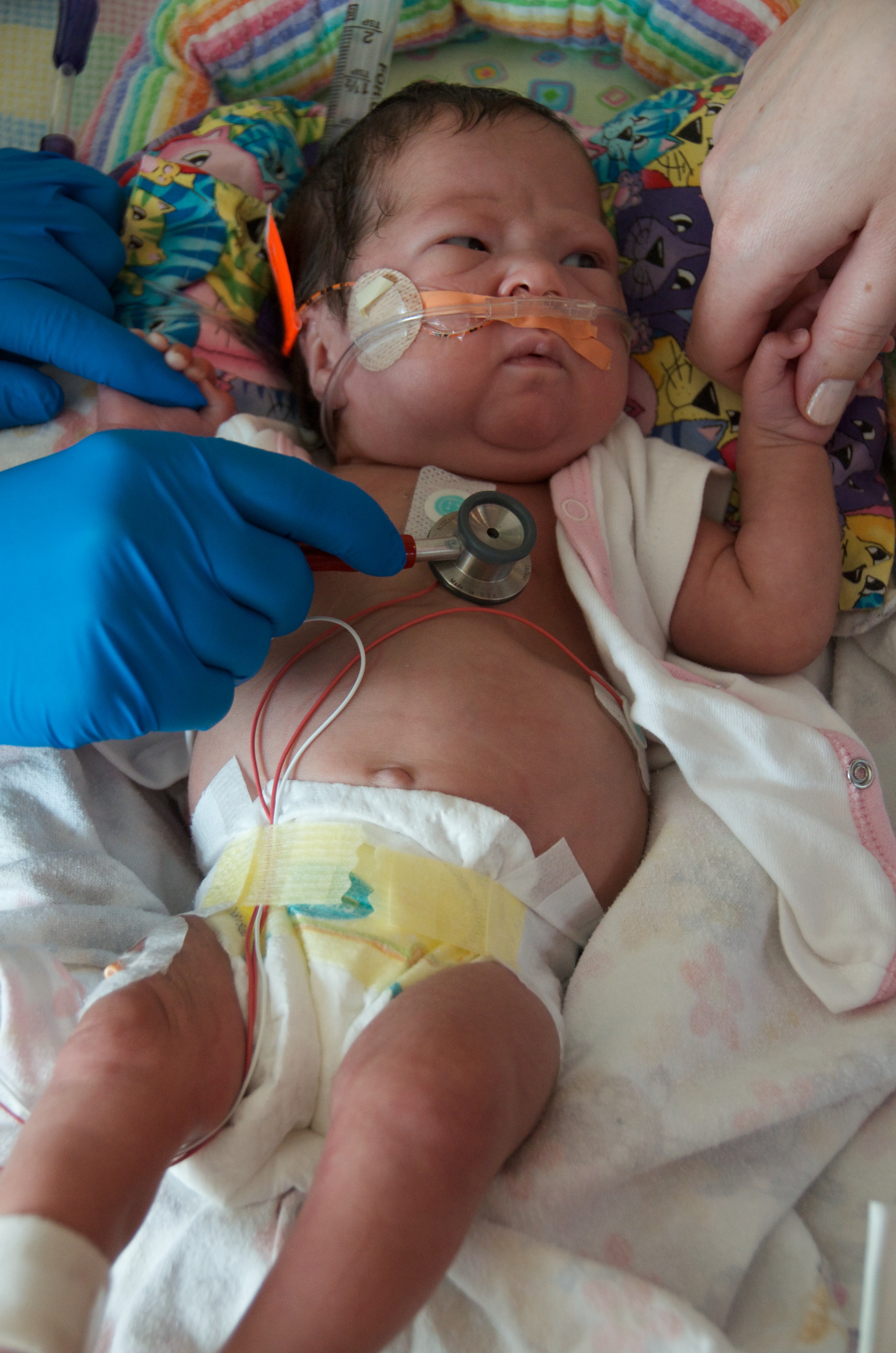
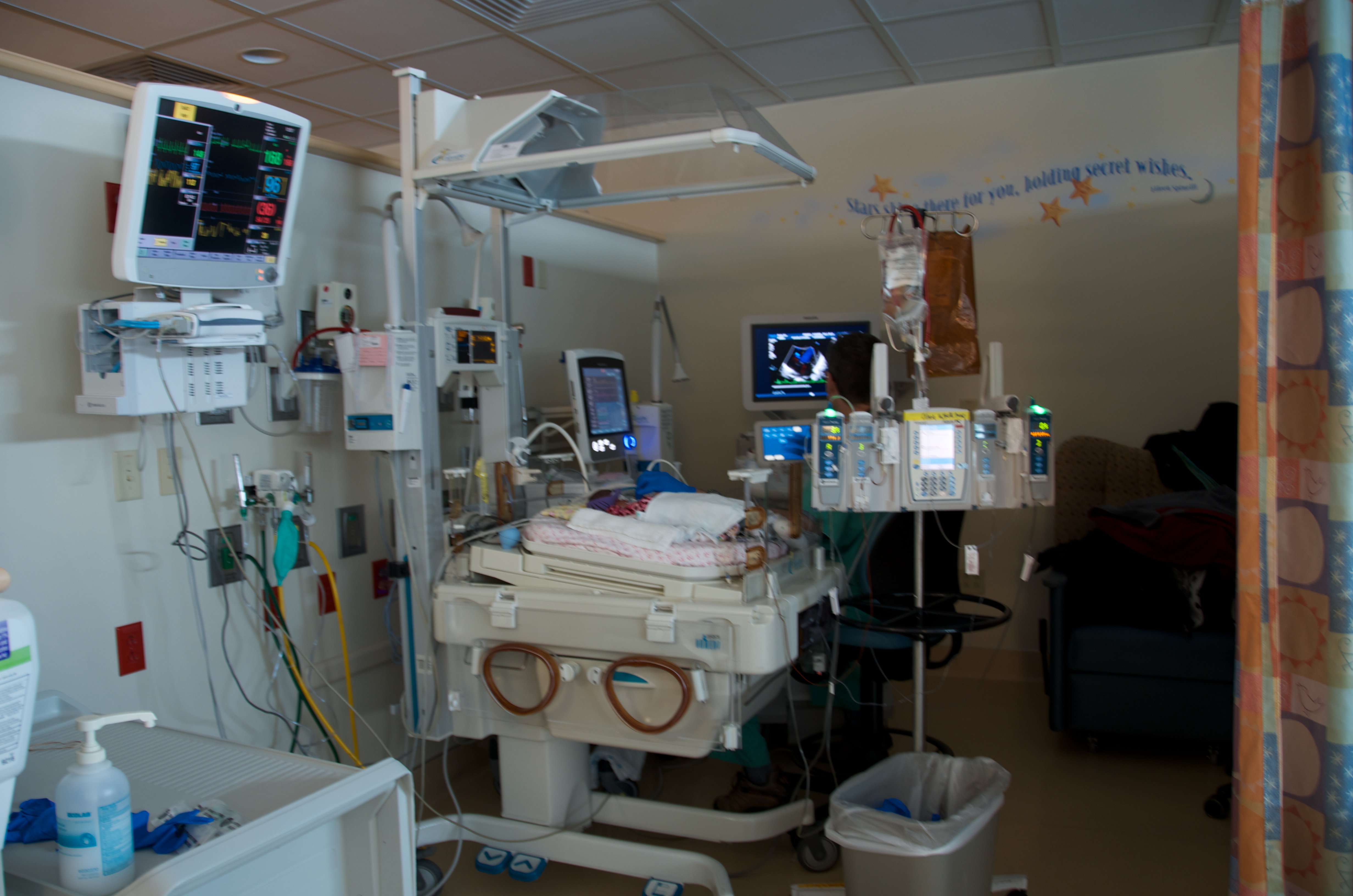
One of the less intrusive procedures, an echocardiogram when London was not even a week old. This one revealed a PDA, which was resolved over the two weeks following this echo.

IMG_1990

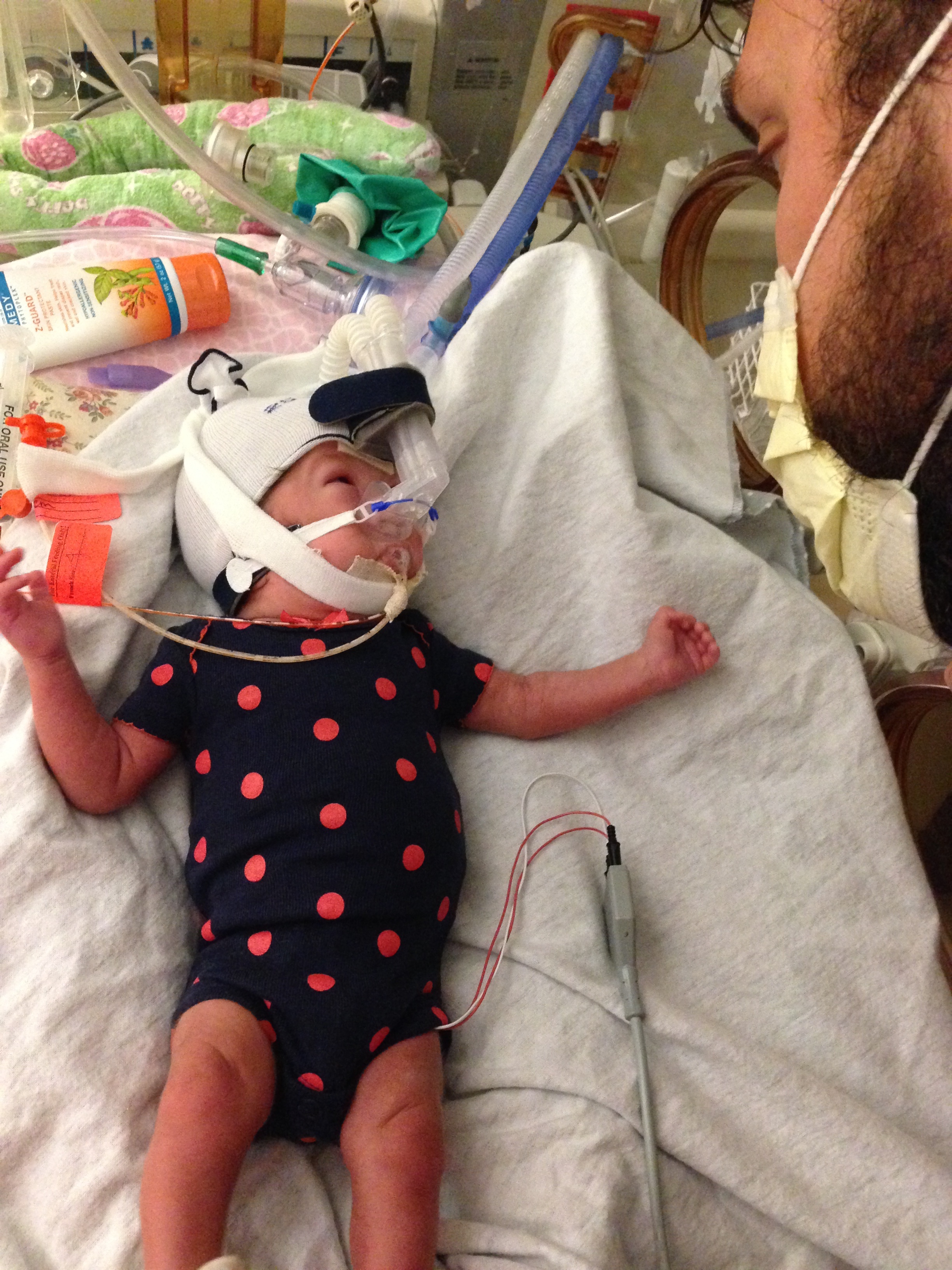
As London’s lungs strengthened, she was placed on CPAP. Of course, I loved the progress, but I had a strong dislike of CPAP because it covered up most of her face. It was nearly impossible to see both of her eyes from the same angle when she was wearing her snorkel-like attachment. It drove me crazy, but London, always so chill, tolerated it like a champ.

_BKP2551

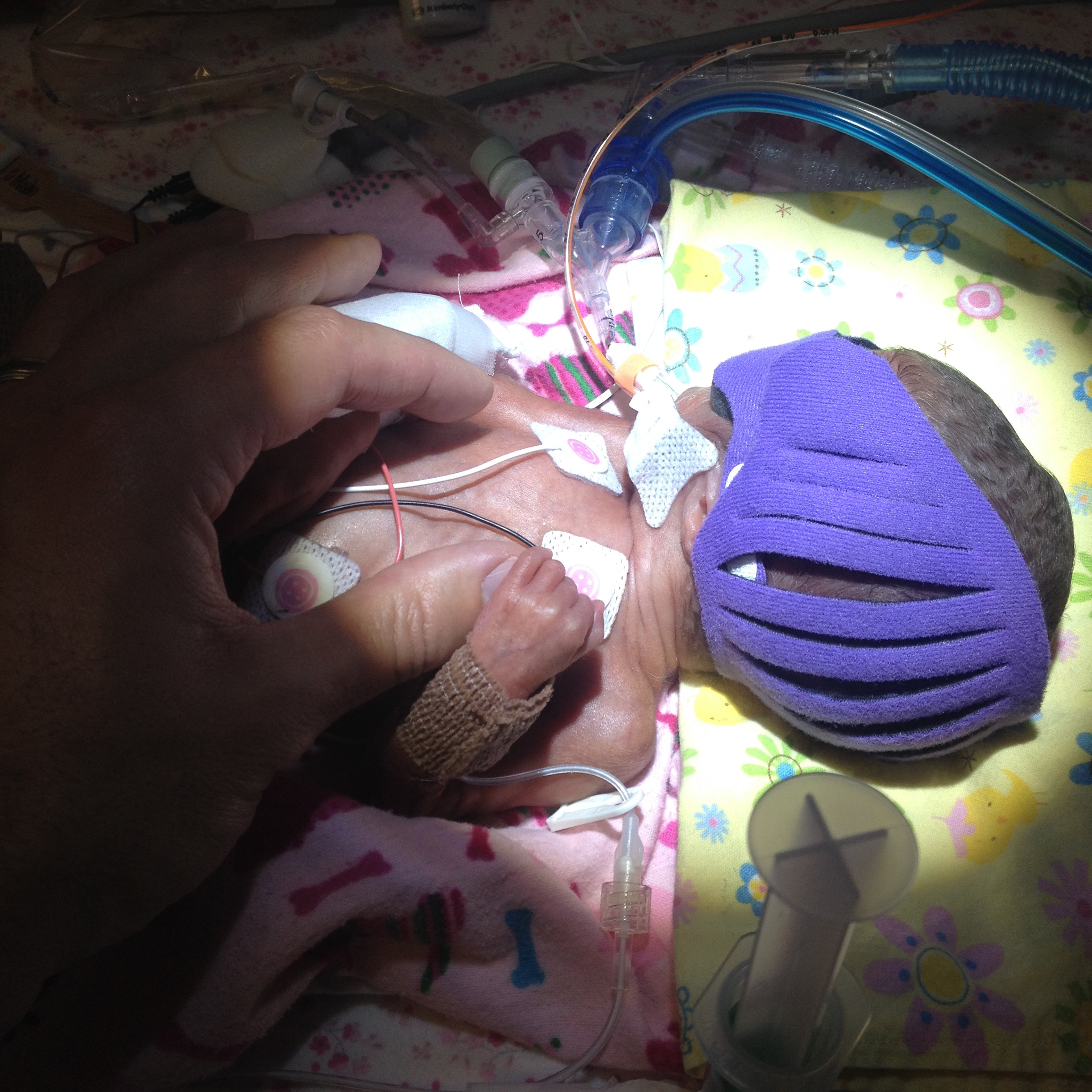
An every four-hour checkup on London, one of her “cares.” This particular picture was taken during London’s three-chin phase of life.

It was May by the time of this echo. As you can see, it’s no big deal to her. She’s about ready to fall asleep mid-echo while nurse Eileen chats away in the background about how busy the NICU is that morning. We thought London was done with echocardiograms by this stage, but the doctor ordered another battery of tests to see why she was so tired and not eating. On this particular day, day 95 in the NICU, it was London’s peaceful state of mind that helped calm us down.

Super Bowl Night in the NICU

*For the most part I am trying to post about the NICU events chronologically to avoid confusion, but I have skipped ahead in writing about the day Kate and I came home from the hospital. Now, I’m jumping back a day, to the stretch of time all three of us were still spending our nights at the hospital.

Kate's mom and Kate's sister (Angela) pose next to London's isolette before they depart.

Kate’s mom and Kate’s sister, Angela (at right) pose next to London’s isolette before they depart.

It was Super Bowl Sunday. February 2, 2014. It was also the first day London got an echocardiogram (or echo). It revealed that she had a PDA, aka a patent ductus arteriosus, which the NIH describes as this, “The ductus arteriosus is a blood vessel that allows blood to go around the baby’s lungs before birth. Soon after the infant is born and the lungs fill with air, the ductus arteriosus is no longer needed. It usually closes in a couple of days after birth. If the vessel doesn’t close, it is referred to as a PDA.

PDAs are not an unusual condition for preemies to have. Girls are more likely to have them as well. Sometimes the PDA naturally closes and other times drugs are necessary to encourage closure. If the PDA is large and resisting drug treatment then surgery is an option. The staff at the hospital was very good in describing the treatment options we had and the prognosis. We decided to treat it with drugs, which are similar to ibuprofen, hoping it would seal up on its own. That same day we decided to stay in the hospital one more night. We loved being just steps from London. Going home didn’t mean we would be so far away, but for one more night we could be across the hall.

Kate’s family left this day as well, but Kendra stayed an extra day. With London resting well, it was time to for

Hanging with London during the Super Bowl.

Hanging with London during the Super Bowl.

me to go home and prep for the game. I brought back bean dip and smuggled in a couple of beers for myself and a cosmo I made for Kate, the first martini she had after giving birth to London. There was also a bottle of Prosecco. Sadly, smuggling the drinks into the room was more exciting than the Super Bowl itself. I knew it was just the first snap of the game, but I had a gut feeling the Broncos were screwed. From there, things just sort of went downhill. I held on until halftime, but then I wandered over to London’s room and just looked at her, this is something you do a lot of when your kid is in the NICU. Sometimes it is all that you can do. Stand and stare. Worry. Marvel. Pray. Take pictures, like I did that night. Try to let them know you are there, but at the same time wonder if it is really making a difference. To just be present in body, mind, and soul is the best thing you can do for your baby at this stage, but it is the most exhausting thing I have ever done. More on that and the PDA to come…