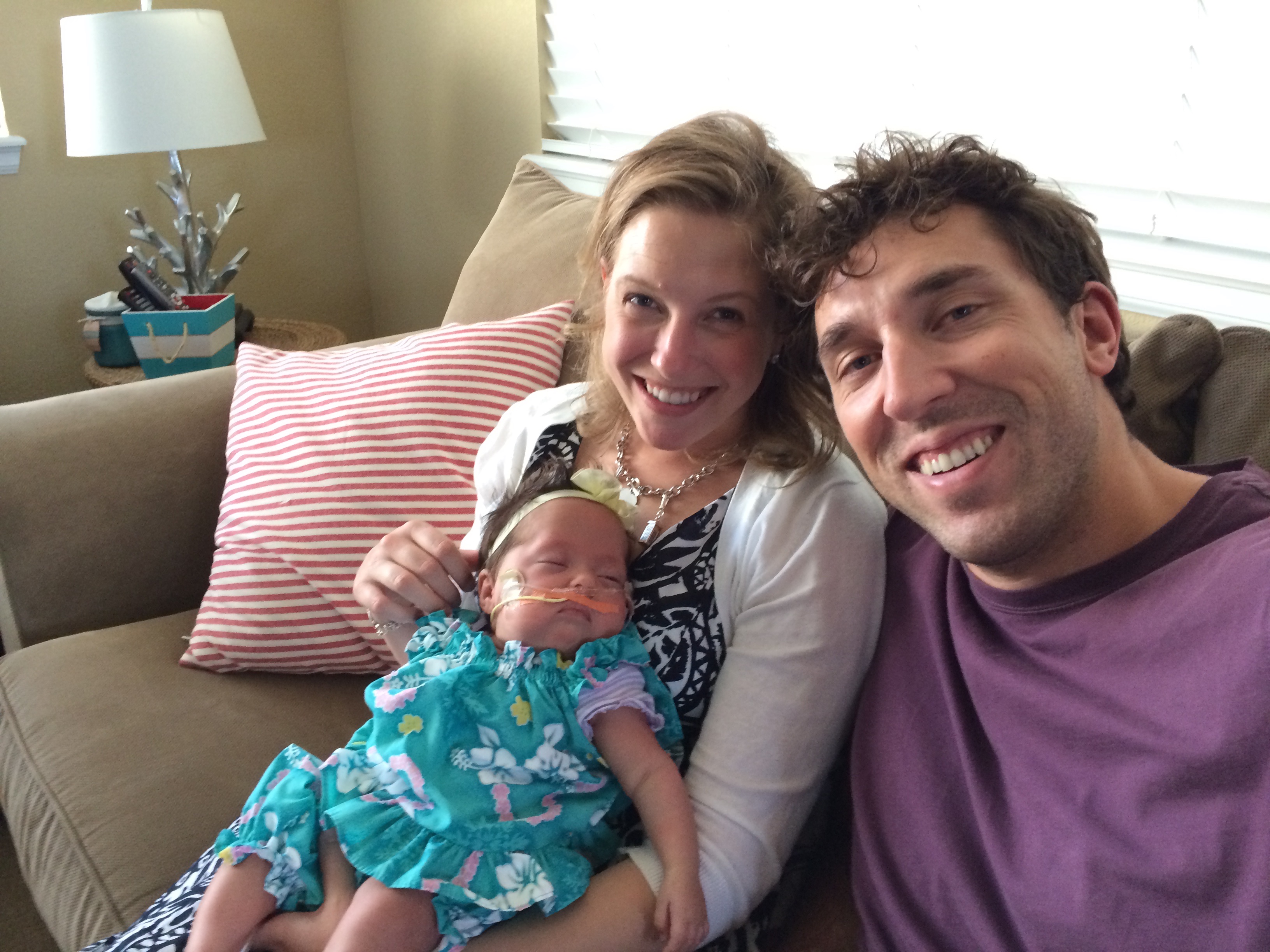
Welcome to the Pump House: Adventures in Fatherhood and Breast Milk Management

A version of this post appeared on my blog years ago when London wasn’t even a year old. But I just tweaked it a bit, slimmed it down , and added here and there. I think it’s better now. Here it is…

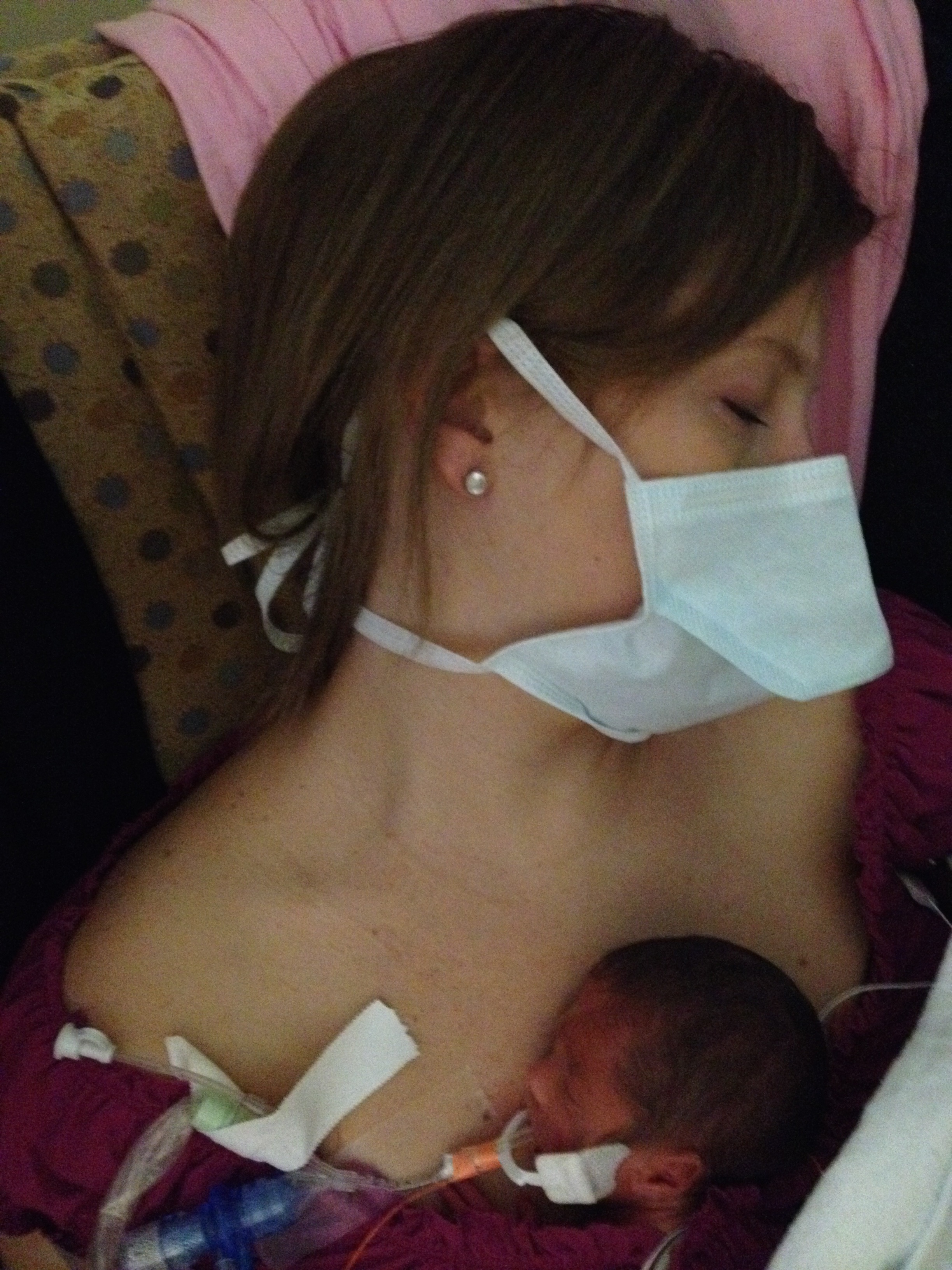
Never in my wildest dreams, as I prepared for fatherhood, did I think I was going to spend so much time with lactation nurses, reviewing the intricacies of hand expressing (including motions), analyzing breast milk volumes, discussing engorgement, and just how much breast milk one could fit in a chest freezer.

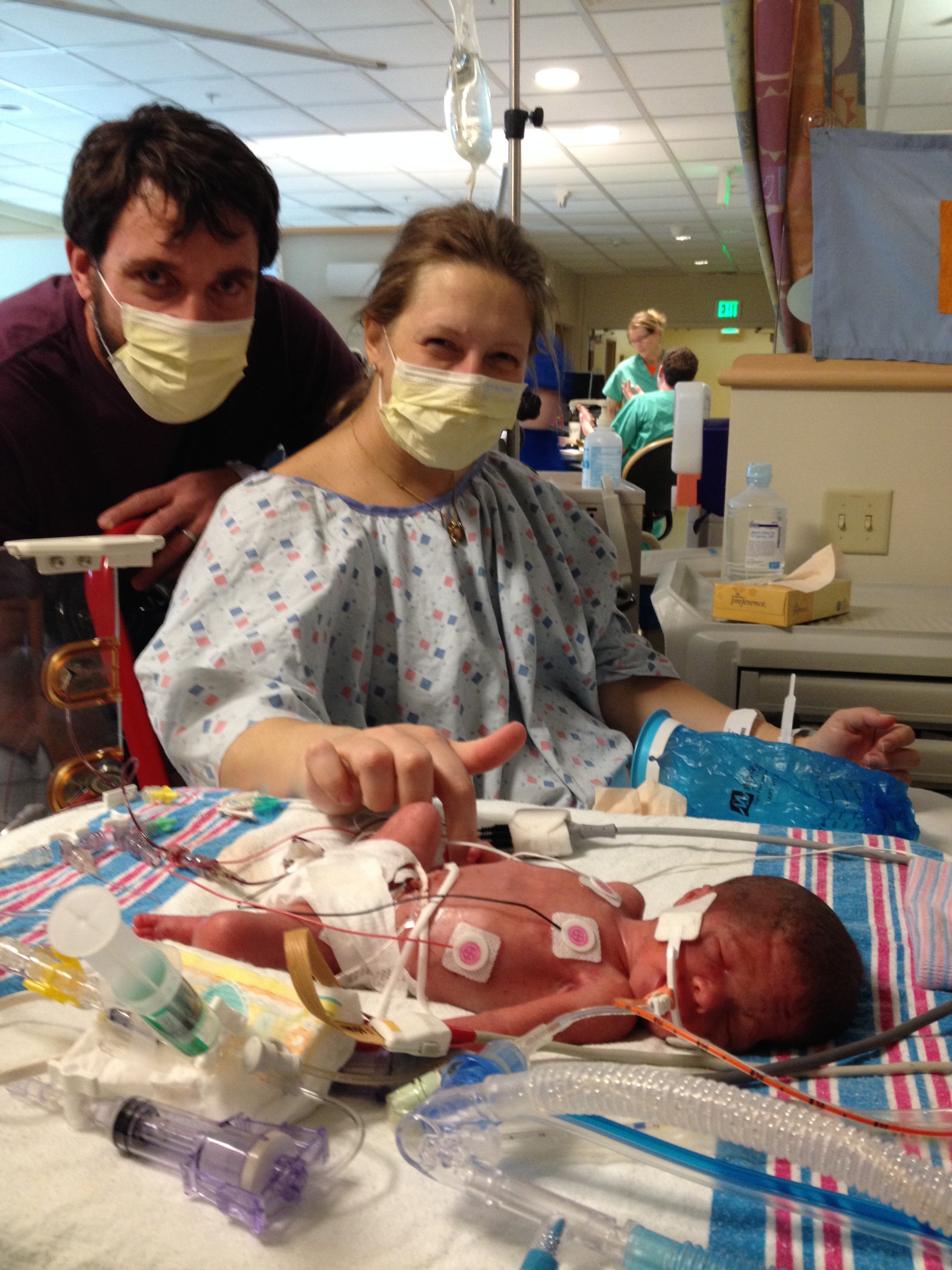
A few hours prior to my meeting with lactation consultants, thinking there were three more months to learn these things, I didn’t even know lactation nurses existed. I knew that some babies were born prematurely, but I didn’t know my wife’s breast milk would still come in just as early as our daughter wanted out at 26 weeks gestation.

So it was that our 109-day stay in the neonatal intensive care unit (NICU) started with a crash course in breast milk. Within those first days of life for my daughter (London), my wife (Kate) and I spoke at great length with not just one lactation nurse, but several of them about breast milk and breasts, starting with a nurse asking my wife if she was going to pump breastmilk. Partly due to the trauma of the last 24 hours, and partly due to my complete lack of knowledge about breastfeeding, I had not thought a bit about breast milk or pumping. Kate was of a similar mindset at that particular moment, but we were both satisfied to know that there was a good chance Kate’s milk would come in. The early drops of colostrum, the nutrient-dense milk first released by the mammary glands, often come in shortly after the placenta detaches from the uterine wall, no matter the gestational age.

A couple of hours later a lactation nurse wheeled into our room something that looked like a medieval torture device. They were calling it the Symphony. They hooked Kate up to it and it hummed and sucked for 18 minutes. At the end of that first session, we could just barely make out two milliliters of colostrum. A few hours later Kate produced 2.6ml and then later that night 3.8ml. The next day, January 31, marked Kate’s first 24 hours of pumping. She produced 32.6ml that day, or 1.1 ounce. The lactation team handed us a log with the direction that we were to write down when Kate pumped, for how long, and the total volume.

We then received a DVD to watch, which would apparently help Kate get more milk by hand expressing and provide tips to alleviate the pain of engorgement. We were to watch it and return it to the NICU team afterwards. That same day, we popped the DVD into my laptop to watch some before going to bed. One minute into this educational video, the biggest breast and nipple either of us had seen appeared on screen. Kate laughed so hard she began to worry she might injure herself being only two days clear of a C-section. Everything hurt. If we continued watching, we put Kate’s health at risk. I slammed the laptop shut. Tears ran down our cheeks from laughing so hard.

Who knows who is responsible for making this particular lactation video, but may I make one small suggestion on behalf of my wife and all women who have recently had C-sections? Great. Do not make the first breasts on the video also be the largest breasts known to mankind. They should not be comically large, needing 3-4 hands to get them under control. In fact, this video is a danger to new mothers everywhere, they might literally bust open their gut laughing from it, like we almost did.

Thus, it fell on me to watch the lactation video alone, gleaning from it any helpful tips and then sharing them with Kate. She was impressed. It wasn’t like Kate’s breast milk volumes needed any help. Not long after London was born, I was spending part of everyday rearranging containers of breast milk in the chest freezer in the basement—the chest freezer we needed to buy solely to store breast milk. Kate and I would joke that I knew more about hand expressing breast milk than she did so I should print up some business cards and walk around the NICU offering my services to anyone who needed them. Hand Expressions by Bryce. Simple and to the point.

By day of life 57 for our little girl, Kate was producing 1,863ml a day, or 63oz of breast milk. To put that in perspective, London was fed a total of 800ml on day 57, the most she had ever consumed in one day. In fact, it took London a long time to drink as much milk in one day as Kate got from one 20-minute pump. A point was reached where no amount of rearranging the breast milk in the freezer would make room for more. I picked up a second chest freezer at Costco and Kate started to fill that, too.

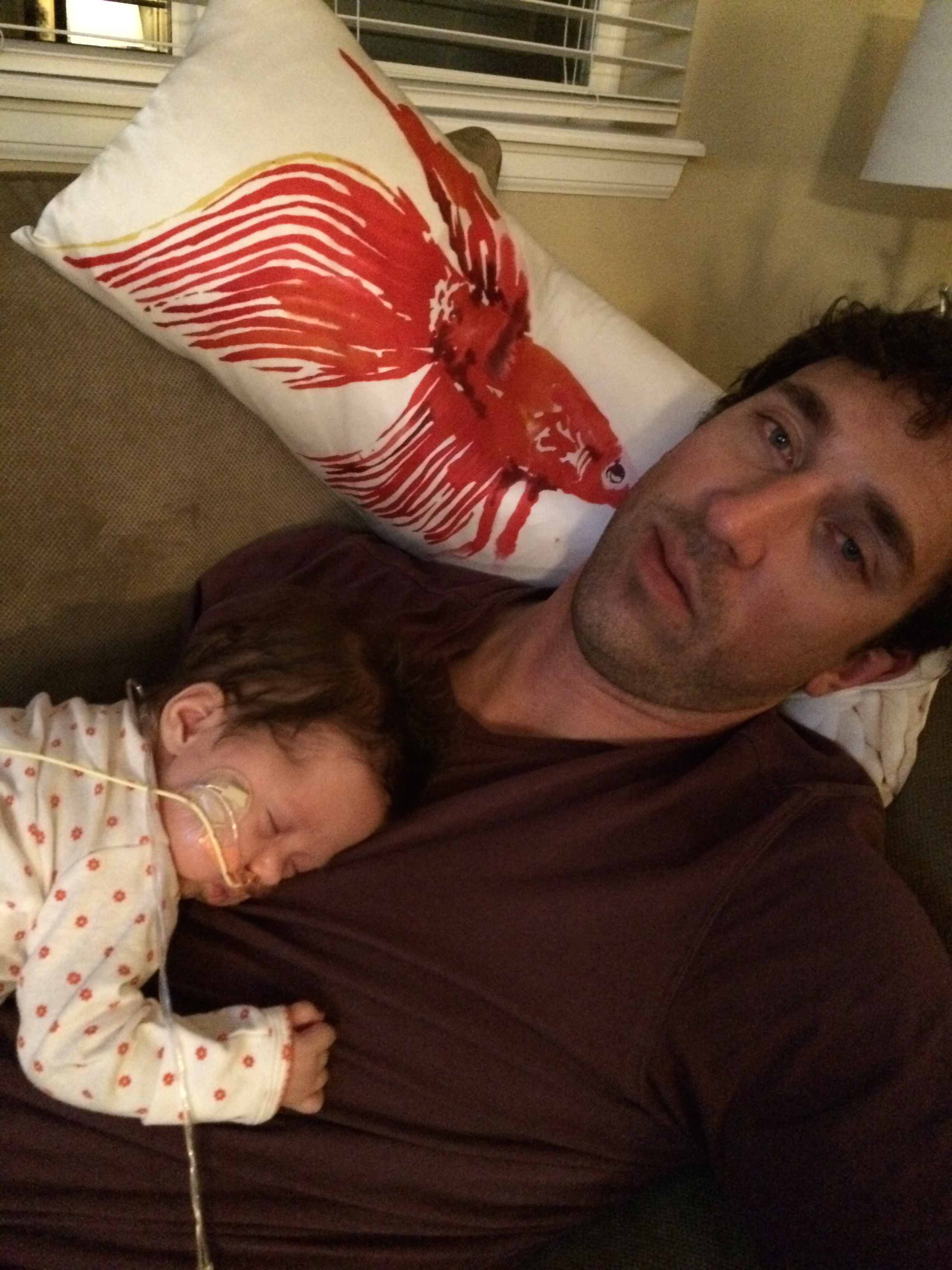
For the months London was in the NICU we rented a Symphony pump, which at the time retailed for $1500-2500, and kept it in our bedroom. We started to call it the pump house. When at home, Kate disappeared every three to four hours to spend some quality time with the Symphony. As all moms know that schedule wreaks havoc on sleep and work responsibilities, but Kate did an excellent job. I did what I could by waking with her every time throughout the night, assisting in bottling of the milk, labeling and recording volumes, washing pump parts, and then delivering milk to the freezers in the basement. So, at our house, at least two times a night, Netflix and chill was swapped out for Netflix and pump.

As Kate tapered off the pump, we were just filling up the second chest freezer and the lactation nurses understood why Kate was putting an end to pumping. She had developed a reputation in the NICU as a super producer. At London’s discharge, on May 19th, 109 days after she was born, the NICU staff wrote messages to us. One of our favorites from the lactation team wrote, “Your mom was a rock star with pumping. She could have fed three babies in the NICU!”

Next week, London will be six-months-old and I can thaw breast milk from three months back. And right now it’s lunch time for the little girl, to the chest freezer I go.
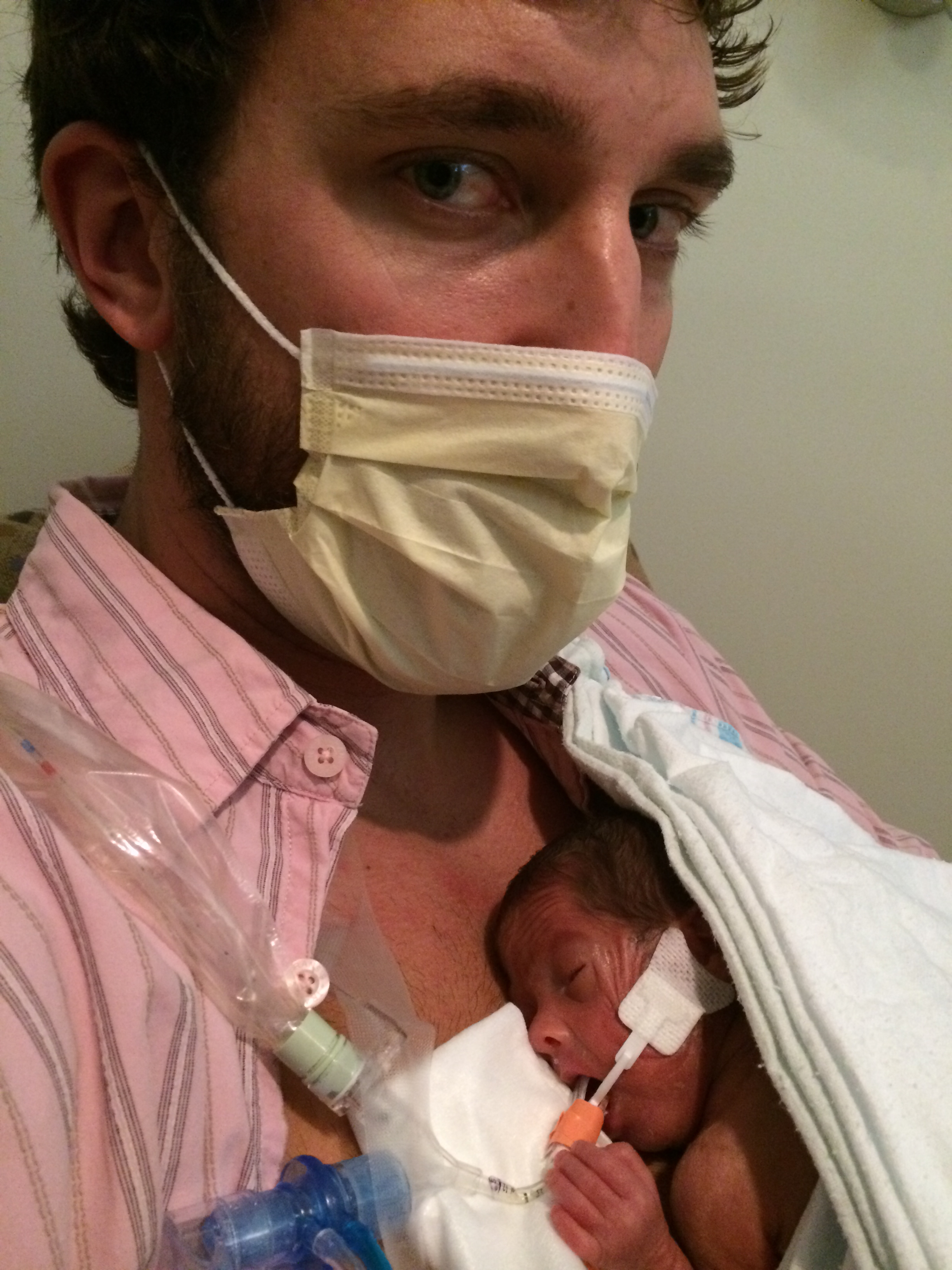
How to Help a NICU Parent

A friend recently asked me for some advice. She knows someone who just IMG_3089_127883had a preemie at or around 26 weeks gestation and wanted to know how she could help them out, what to say, what not to say, etc. She gave me permission to post my response to her. It follows:

I am happy to share my advice. Some of it will be based on the assumption that you are in the same town as your brother and Erin and their new daughter, Harper.

Well, having a kid in the NICU is the most exhausting thing Kate and I have ever been through. Very important question: is this their first kid? If not, well, it’ll be even more exhausting than our journey. Anyway, exhausting, so the last thing I ever wanted to do when getting home from the hospital every day was cook. It’s sort of become a cliche, but cooking for them would probably be a huge help. I don’t think Kate and I went to the grocery store for 3 weeks after London was born. Without all the meals we received, we couldn’t give London as much attention as we did. We had one less thing to worry about and that was huge because having a 26-weeker is an all-consuming worry.

The first few days of NICU care are possibly the worst. Once the baby makes it a week, things can start to get a little easier. So now could be the most terrifying of days for your brother and his wife. It all sort of depends on Harper’s situation. Was this an emergency c-section? Did they have 24 hour notice so they could get some steroids to Harper before she was born? London did not have the benefit of steroids before she was born, which really set her back for some time. She was on the ventilator for nearly three weeks, if I’m remembering correctly. I’m not sure what I’m getting at here, but maybe it’s just that I know I was very open about London’s health and situation throughout her NICU stay. I sent out near-daily email updates to a large group of people. I would have never been able to tell all those people independently. So if your brother is open to the idea, I’d recommend that. Or if someone in the family wants to keep other family members and friends dialed into the situation by doing email updates then that would be a big help too.

I’ve completely forgot to mention that it’s so great they named her. I know that naming her is a commitment of the heart and soul that you resist when you see such a small and fragile human being. But it’s a big step and it might bring them some hope. I remember when London was just ten minutes old and being transferred from the OR to the NICU while Kate was still on the operating table, the doctor asked me what her name was, and I was just put on the spot and had to say it loudly enough that everyone in the OR could hear it. I didn’t know it then, but in hindsight, that was a pivotal moment of accepting as truth something I still couldn’t believe was happening.

In terms of what not to say, that’s always tough to answer. You know? It depends on the person’s tolerance of the cliche, like, “Everything’s going to be alright.” We heard that a few times and I may have even said it later on in London’s NICU stay, like in month 2 and 3, but I did not like hearing it in the first few days or couple of weeks even. I just wanted to know the specifics of London’s situation and all I wanted to share were the specifics. I didn’t want to speculate with family members and friends. I just tried to avoid the “what ifs”, so maybe help them do that.

I’ll stop writing after this next point. At three months early, Harper is going to be in the NICU for a long time. It’s important for your brother and Erin to get time away from the NICU. That won’t be right now, obviously, but later on it will be. As a NICU parent you feel the urge to be at the NICU as much as possible, but it is essential to get away from time to time. We wanted our health and our sanity while London was in the hospital and I think we may have lost both if we stayed there round the clock for the first month. Our NICU nurses were exceptional in that they all encouraged us to take breaks from being at London’s bedside. Clearly, we still went to the hospital every day for 109 days, but the time away from the hospital was almost as important as the time there. We needed a chance at rest and revival before facing the NICU’s minute by minute ups and downs. So, when it’s time, encourage your brother and Erin to get away, even if it takes you spending some hours by Harper’s side. Perhaps they will be uncomfortable with it at first, but they will appreciate it.

How’s that for a disjointed email? I mean, there are so many things that come to mind. Please, let me know if you have other questions. Sorry they are going through this. I hope Harper is doing well.

*All names in this post have been changed. 

Parents on the NICU and their PTSD

Over a month ago, I read and posted about an article in the New York Times about 22 weeks gestational age being the new definition of viability (for some doctors). In the sidebar I noticed another article under “related.” Its title: For Parents on NICU, Trauma May Last. As soon as I was done reading about the viability of 22 weekers I clicked over and read about PTSD in NICU parents, which I had blogged about once already.

I have not read a more accurate article about parents dealing with the NICU. The first parent’s story is more stressful and scary than ours was. For example, I never got to the point where I was sleeping with my shoes on, but on more than one occasion I expected the hospital to call with horrible news. And I was and can still be easy to anger as a direct result from our NICU experience. I mentioned that back in October as well.

This NY Times article was first published in 2009, citing a new (for then) study about PTSD in NICU parents:

A new study from Stanford University School of Medicine, published in the journal Psychosomatics, followed 18 such parents, both men and women. After four months, three had diagnoses of P.T.S.D. and seven were considered at high risk for the disorder.

In another study, researchers from Duke University interviewed parents six months after their baby’s due date and scored them on three post-traumatic stress symptoms: avoidance, hyperarousal, and flashbacks or nightmares. Of the 30 parents, 29 had two or three of the symptoms, and 16 had all three.

One of the NICU parents quoted in the article hits the nail on the head:

“The NICU was very much like a war zone, with the alarms, the noises, and death and sickness,” Ms. Roscoe said. “You don’t know who’s going to die and who will go home healthy.”

I haven’t said it better myself. As a parent, even after months in the NICU, I would find myself wondering if we were ever going to make it out whole, meaning all three of us. Perhaps the most revealing statistic shared in the article is this:

The Stanford study found that although none of the fathers experienced acute stress symptoms while their child was in the NICU, they actually had higher rates of post-traumatic stress than the mothers when they were followed up later. “At four months, 33 percent of fathers and 9 percent of mothers had P.T.S.D.,” Dr. Shaw said.

It’s easy to picture stoic fathers in the NICU, but what most of them are really doing is repressing so much intense fear and anguish that once the drawn-out trauma of their child’s NICU stay is over they burst. I was stoic from time to time, but I certainly was not afraid to show emotion during London’s stay in the hospital. Crying in front of nurses was not something I was above. This helped.

One NICU survivor shares this in the NYT article:

In her book, Ms. Forman wrote: “From the moment my twins were born, I saw potential for tragedy wherever I turned. It would be years before I stopped thinking that way.”

This is probably what I struggle with the most now. It’s beyond worrying, it’s an all-consuming conviction that something horrible is going to happen. Prior to my trip to DC, I had a really hard time shaking the feeling that I wasn’t going to see my family again, I wasn’t going to make it back from DC, or maybe I was never going to make it there in the first place. Before the NICU, I was not wired to think this way, but now a part of me is. The other part is fighting for balance. Like Ms. Forman, maybe it will be years before hope and the safety I knew become my heading once again.

One Year Ago Today, We Left the NICU

IMG_4165

London’s first night home. I already look horrible.

Today is the one-year anniversary of London’s big move from the NICU to her new home. Reflecting on that day a year later, I think I made the right choice by not overthinking what a big change it was going to be for London and for us.

I knew it would be an exhausting transition, but my thinking was that I would roll with the punches, get knocked down a few times (which I did), adapt my style (easy, give up sleep), and then hang on for dear life and at some point in the future I would come out a practiced and knowledgable parent (still looking to the future on that one, at least in some regards). To me, going through that process seemed easier than trying to be ahead of the curve. Plus, that would take time to read and figure out what I was doing wrong. After 109 days in the NICU and then starting parenthood all over again when London came home, we did not have time for that.

Learning London’s cues taught me nearly everything I needed to know about taking care of her this last year. A few cues are exclusive to taking care of a preemie, like knowing when to stop the bottle feed and move forward with the tube feed, or knowing when 1/8th liter flow was not enough or if it was just right. I relied on London’s pediatrician, her nurses, her physical therapist, her occupational therapist, and both sets of grandparents to fill in the gaps in my knowledge.

FullSizeRender-3

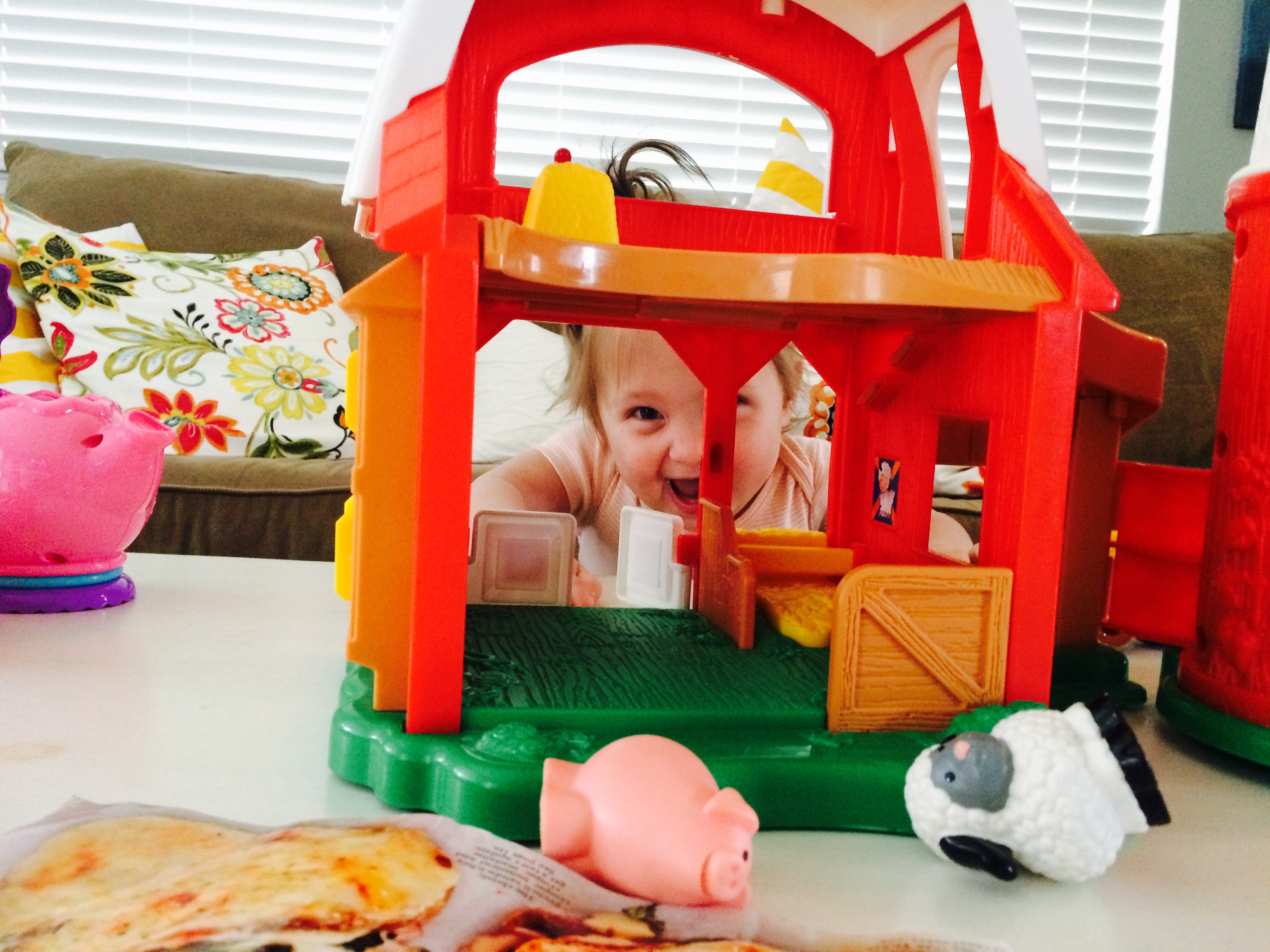
Today. Playing with her Little People farm.

A year later, London is far easier to take care of than she was with all the accessories she came home with. And, I am far more rested than those first days and weeks she was home. I am still tired most of the time, but I have coffee for that.

London’s first year home bears the mark of many a preemie: daily doctor’s appointments at first, then weekly, and then gradually monthly, with some major scares along the way. I hope and pray her second year at home will be smoother than that, that it will bear more marks of hope and promise than it will remnants of her harrowing beginning.

Surviving at 22 Weeks

“Do you want us to save your baby?”

_BKP2261

London at one-day old.

That’s a question you may have to answer if your baby is born earlier than 24 weeks, the current gestational age of viability. In fact, you may not get that question at all. Quite a few NICUs do not have the means to even attempt to save a 22 weeker. And, from the sound of an article I read in the NY Times yesterday, some doctors will not try to save a 22 weeker if they aren’t breathing on their own. And the chances of such a preemie breathing on their own, if the mother didn’t receive corticosteroids, is extremely slim, if it’s possible at all.

Yet, there are some 22 weekers who have made it, as detailed in a recent study, from The New England Journal of Medicine, mentioned in the aforementioned article.

The study, one of the largest and most systematic examinations of care for very premature infants, found that hospitals with sophisticated neonatal units varied widely in their approach to 22-week-olds, ranging from a few that offer no active medical treatment to a handful that assertively treat most cases with measures like ventilation, intubation and surfactant to improve the functioning of babies’ lungs.

The study involved very premature babies, those born at 22-27 weeks. Among the 22 weekers, there were 78 cases:

18 survived, and by the time they were young toddlers, seven of those did not have moderate or severe impairments. Six had serious problems such as blindnessdeafness or severe cerebral palsy.

7 out of 78. So at 22 weeks, there’s less than a 10% chance of surviving without any severe, lasting impairments. Survival rate at 23 weeks was about 33%.

The article detailed the varying strategies used by hospitals around the country. Some hospitals are very ambitious and with the parental approval, go after all 22 weekers. But, understandably, some hospitals stick to the 24 week line as the viability tipping point. A doctor describes his hospital’s strategy this way:

At his hospital, “we go after the 24-weekers,” he said. “If it’s 23, we will talk to the family and explain to them that for us it’s an unknown pathway. At 22 weeks, in my opinion, the outcomes are so dismal that I don’t recommend any interventions.”

At 22 and 23 weeks, I am glad that parents are asked the question I opened this blog post with. After having experienced the emergency delivery of my daughter at 26 weeks and then the following 109 days in the NICU, I would hesitate to answer yes in a 22 week or 23 week situation. My gut tells me at 22 weeks, I would say no. At 23, I’d have to think about it a lot more. It would depend on whether or not my wife received steroids. There was no time for steroids in London’s case, and that set her back significantly even at 26 weeks, nearly a month older than the earliest babies in this study.

It was a fascinating article to read. Here is the link again. I am amazed that 22 weekers can survive, but blindness, deafness, and severe CP are not minor complications. And those are the 22 weekers who make it out of the hospital.


The Story of London’s Birth

IMG_0109

This picture…because it’s Cinco de Mayo!

A few months ago I wrote a post linking back to the story of London’s birth, the first posts on this blog. It had been a while since I had mentioned them and wanted to make sure people were aware of them, especially since they were now buried in the archives.

I have finally done something I should have done months ago. I have posted links to London’s birth story in the About the Author tab of this blog. I encourage you to read those posts if you have not.

In the meantime, happy Cinco de Mayo! I made a margarita last night following this recipe. It was delicious, but to make more tonight I had to raid the limes at the grocery store today. You will need a lot of limes. Enjoy!

London’s First Cry

London was on a ventilator for the first three weeks of her life. This meant that we didn’t hear a peep from her all that time. We could see from time to time that she was crying, but there was no noise to accompany the cry. It looked so odd, different than any other baby cry I have ever seen. Finally, when London promptly freed herself of the ventilator we could hear her cry. This time it was unlike any baby cry I had ever heard. Intubation can damage the vocal cords of preemies. The damage, in London’s case, was only temporary, but for a while her cry sounded like this. I described it to someone as sounding like a goat. It’s heart-wrenching to hear, then and now, because I just want to pick her up, cuddle, and rock her, but back then that was never an option. And now that it is, London doesn’t cry. Decent trade off.

The Complicated Age of Preemies

_BKP2827

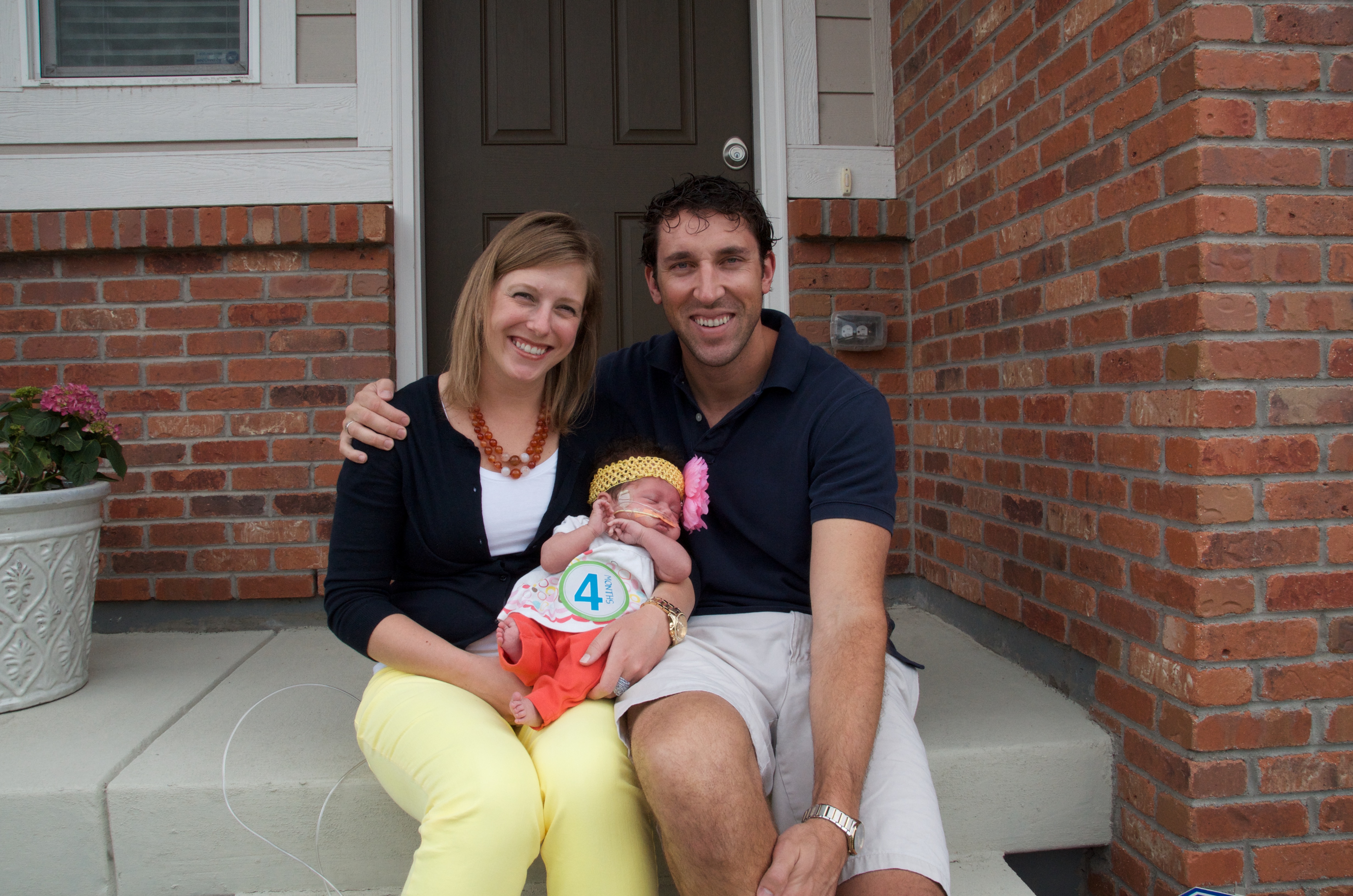
Home at last. London’s 4-month and 1-month birthday.

“How old is she?” The simplest of questions for parents of full-term babies to answer, but not so for parents of preemies because there are two answers for this one question.

At some point, a baby arrives so early that their actual age is going to be different from their developmental age. For example, my daughter, London, was born at 26 weeks gestational age, three months early. Her birthday is January 30, 2014. Her developmental birthday is May 4, 2014. This means London’s adjusted age is 11.5 months, even though she’s been with us for 14.5 months.

So how do I answer the question, “How old is she?” Well, sometimes I lie. If the person asking is asking because they are wondering why London is not walking and or talking because she’s the size of some two-year-olds, I lie and give them the adjusted age. By doing so, I direct the conversation toward the obvious and usually hear something like this: “My God, what a big baby.” I would much rather talk about how big my baby girl is than tell the person the truth and then have the conversation inevitably slide toward how London is, developmentally speaking, three months behind.

That said, I think most of the time I tell the truth and answer, “Almost 15 months,” because most people, whether they dwell on my answer or not, just aren’t going to say anything else. But I know, because I’ve seen it in their eyes, that when I say London’s real age some people look a little confused. I don’t know what they are thinking exactly, but it’s something along the lines of:

“Shouldn’t she look older?”

“She should be crawling by now.”

“She should be walking by now.”

“She should be talking more by now.”

IMG_2714

At seven and four-months old.

When I feel this reaction in people I know I could take the time and explain London’s two ages, but somehow just saying, “She was born three months early,” sounds cheap because I’m taking this huge, scary part of our lives and trivializing it in six words. Plus, the majority of people will not be able to comprehend what those six words truly mean. Getting stranger after stranger to comprehend that over and over again can be exhausting. I know, because I would make a casual effort to explain London’s prematurity to nearly everyone that asked. This was right after she came home from the NICU. Still on oxygen. Still rocking cheek patches. NG tube still snaking across her face. Understandably, those people who asked how old she was back then knew they were probably going to get something more than, “3 months.” But after a while, parents of preemies tire of going into the explanation thing. So, like parents of full-term babies we get back to basics with a simple, short answer, “Fourteen and a half months.”

Or am I going to say, “Eleven and a half months,” this time?

Oh hell, maybe I’ll just split the difference.

“Thirteen months.”

Nana Remembers London’s Birth

I’ve been meaning to share this comment since it was left on January 29th, when I wrote this post. The comment is from my mom, recalling the night and early morning of January 30, 2014.

I have been thinking all day about the phone ringing this night a year ago when we were sound asleep. Groggy and confused we listened to you tell us Kate was in distress, the docs were monitoring her and you would keep us posted. We hung up the phone, prayed through our tears thinking how can a baby live at 26 weeks? And we called her Grace not knowing you’d give her that moniker as her middle name. Your next call came to say Kate was about to undergo an emergency C-section. More tears and ongoing prayer. I remember my heart was beating so hard for what seemed like hours but you called again less than two hours later to say “London Grace” was here. Dozens of doctors and nurses were looking after her and Kate was in recovery. Then you asked, “Do you want to see a picture of her?” And so it began.

Still, I can’t read this without fighting back some tears. I had sort of forgotten that I asked my parents if they wanted to see a picture of their granddaughter. Such a question seems a little odd, but in the moment it was not an unusual precaution. The one picture I had of London at that point was graphic, for lack of a better word. She was vulnerable and the picture succeeded in showing that. I must have thought that maybe they would not want to see a picture of her until she stabilized some. Had they felt that way it would not have bothered me. Obviously, I was still protecting myself, but I also thought about protecting others and this was a way I tried.

I have known for a long time now that there was no protecting me or anyone else if things had gone horribly wrong during those first days. I was in shock and still under the illusion that I had any control over what happened next.

2 lbs, 8.5 oz

I decided to post another original entry from our NICU journal. This is unedited from one year ago today.

Day 13 – February 12, 2014 – Wednesday

IMG_3068 (1)

February 12, 2014, one day after we got to hold London for the first time.

London had her PICC line pulled today. As well as her IV. So she is a lot freer today.

Tomorrow is London’s 2nd head ultrasound.

Today was a tough day, though not for you, London, but for your parents because the baby across the hallway from us was dying. This baby arrived around the same time you did, but we had noticed its condition was declining. When we saw both of the teenage parents sobbing today and calling in relatives we knew it was bad.

I had gone to return a pump and overheard docs saying that the chaplain had arrived. As I later stood at the sink washing breast pump parts, not more than 8 feet from where the baby was dying surrounded by family, I couldn’t help but cry. I don’t know this baby. I don’t know its parents, but I know what they went through to make it to this point and to face the truth that not all babies make it out of here was gut-wrenching.

The baby and the family were moved to a private room for the baby’s final hours of life. Now their pod is empty, lifeless, and being mopped by a janitor who hasn’t a clue what happened in that space just an hour earlier.

There is an amazing disconnect between some hospital employees and the patients and stories contained within the rooms of that hospital. I will never quite get used to it.

Today, London, you weighed 2 lbs, 8.5 ounces and it dawned on me that I weigh 100 times as much as you do.

Did it go by fast?

Did it go by fast?

That’s what everyone asks when we tell them London is turning one this week.

Like all new parents we have been very busy this last year. That’s what happens when you have kids. Life speeds up as you nurture another life. Everything takes longer from getting out the door to eating a meal to loading a car full of stuff for just six hours away from the house.

Time goes by quickly when everything takes longer. Maybe that is why everyone seems to have that feeling that the first year flies by.

But the answer is no. This year did not go by fast.

We just visited the NICU on Tuesday. We saw a few nurses who took care of London. The front desk staff recognized us as we were walking up the hallway toward them. “You guys look familiar,” one of them said, motioning at my height. IMG_2912

Standing there while London smiled and giggled at everyone who stopped to say hi, I had this overwhelming feeling of gratefulness. To think of London’s days in the NICU I feel like I need to look much further back in time than one year. Sometimes it feels like two years ago. Sometimes it feels like it never happened because that time was so different than what our day-to-day routine is like now.

Walking those familiar hospital hallways, making that familiar request to get through to the NICU, seeing the nurses, and hearing the distant beeps and alarms from the monitors in the NICU pods reminded me of how routine the NICU became. I forget it, but this place was our home for 109 days. Our house was just where we slept, but our lives unfolded in this little corner of the hospital.

I don’t know if you have ever had to visit your baby in the NICU. If you haven’t, let me tell you those days don’t pass quickly by. Since we almost spent a third of London’s first year in the NICU, a third of that year dragged on with countless questions, tests, consultations, laughs, smiles, and tears.

When I woke up this morning I glanced at my iPhone like I always do. The little white icon for the calendar app displayed “29.” I froze and stared at the number. London was not born until the 30th, but the 29th, January 29th, is when her early arrival started. To me, January 29, 2014 was the beginning of a miracle, so it holds a very special place in my heart, second only to January 30, 2014.

One year ago tonight we exited the elevator on the 4th floor. Our hearts remained there until May 19th. The time in between felt more like a year, which also feels like it took place years ago.

No, it did not go by fast.

36 Weeker ≠ 26 Weeker

One does not want to brag about how long their baby was in the NICU, although many do (see this earlier post on NICU bragging).

However, not all who mention how long their baby was in the NICU for are bragging about the experience. I would say a decent number of parents are simply stating that information up front as a desperate attempt to find someone else out there who has gone through exactly what they have gone through. I can relate to their desire because parents who have had a 26-weeker are not going to have much in common with parents of a 36-weeker.

What Kate and I know about prematurity is based on our own experience of having a 26-weeker. So, if you can, imagine our reaction when we read something like this, “My baby was born at 36 weeks. It was so horrible. We had to stay in the NICU for two weeks.” Parents of a 26-weeker are just going to laugh at that. In a similar fashion, so different our experience could be from a 24-weeker that parents of such a preemie might rightly scoff at our daughter’s 109 days in the NICU. I would not hold that against them because 24-weekers are at a higher risk of having longterm side effects from their prematurity than 26-weekers.

The earlier your child is born, the more you will hear stories from parents of preemies that will sound “easy” or “absurd.” The more they are going to sound like the person is NICU bragging, when, in fact, they might not be at all. Perhaps they just want to share their story. 32-weekers are fairly rare, right? Yes.

As you might be able to tell from reading the earlier post about NICU bragging, my views on this phenomenon have slightly evolved. For parents of preemies, a good rule of thumb is this:

Next time you are talking to someone who has also had a preemie, do not assume that their child’s time in the NICU was harder, easier, shorter, or longer than your child’s stay there. There are ways to find parents who have gone through the same experience as you have, but starting off with woe is me, is likely going to isolate you rather than find you the support you desire.

A Letter to a Year

Dear 2014,

Only 28 days passed predictably by before you became a year unlike any we had ever had. We were already set up for a big year with the closing on our first house December 31, 2013, and with our first kid on the way, due May 4th, and with me finding a job by then. But, only one of those big events went as planned, sort of. We did plan on having more than three weeks in our house before we added another person to it. Was this your way of hogging London? Eight months with her was not good enough for you? You wanted 11 months and one day to spend with London. I understand. After spending one moment with London, I could not hold that against you, but your selfishness sure made it hard on mom and dad.

Lots of things happened during your 365 days. Weddings. Holidays. A little travel here and there. Weeks of thunderstorms. Weeks of dry, hot heat. The Super Bowl. A season of television. Tax day. Pay days. Big days. Little days. Slow weeks and fast weeks.

But for 337 days, only one being mattered. You got your wish, 2014. You are all about London, but in three parts: her early arrival, her fight to stay here with us, and then her thriving.

You forced me to change so much I can barely remember what that little sliver of me was like before London arrived. But as I write this I know I am very much the same person I was at the start of the year as I am now at the end of it. But everything I am has been rearranged and redefined. Yes, 2014, you sure had your way with us, but we left you much stronger than we were when we said hello to you all those long days ago.

I know there will be other years like you. I wish I could see some of them coming, but I am also thankful I cannot, because in a lifetime not all years have happy endings, but this one does. I’ll toast to that.

Cheers, 2014.

The Redefining

I wanted to share something short today.

At some point during London’s NICU stay I was shuffling through some words in my head. The words were not new words to me, but rather old ones with new, real-life experience meaning.

Selfless.

Difficult.

Scary.

Challenging.

Beautiful.

Enduring.

Love.

The meaning of these words most often change with a full-term baby, but when you have a super early preemie almost no word or perspective is left unchanged. The story of London’s birth is many things to us, but to boil it down to a few sentences is this…

A shift of everything into high gear and high limits. Your life and your cares as you knew them were wiped away in an instant. It is the redefining moment of your lives. What you thought would break you passed and you emerged from it whole.

Remade.

And redefined.

Free Of It

I was filling up a growler at the Bull and Bush when I received word that London no longer needed oxygen support. Tears immediately filled my eyes as I stared at the text message from Kate that delivered the news. I tried to compose myself as I signed the bill and took my growler, noticing a woman next to me at the bar. The woman’s prolonged stares told me that she knew I was trying hard not to cry.

Back in my car, I was able to share the news with my parents who were visiting us for Thanksgiving. After that I wept. I was overcome with pride in my daughter’s strength and attitude. It was the happiest cry I can remember having.

Here, on this blog, I have tried to convey to you what this journey has been like for our little family. However, there are some emotions that are so hard for me to put into words that I know I cannot give you the depth of feeling I felt at this news or that news, nor should I really expect to be able to do that because my feelings as London’s dad are obviously not going to be the same for you. Nevertheless, I wanted to try.

If you have read this blog from the start, you know just how far London has come since birth. I have reminded you enough. But her finally shedding oxygen support was a landmark event in her story, unlike any that she or heFullSizeRender-2r parents have lived through.
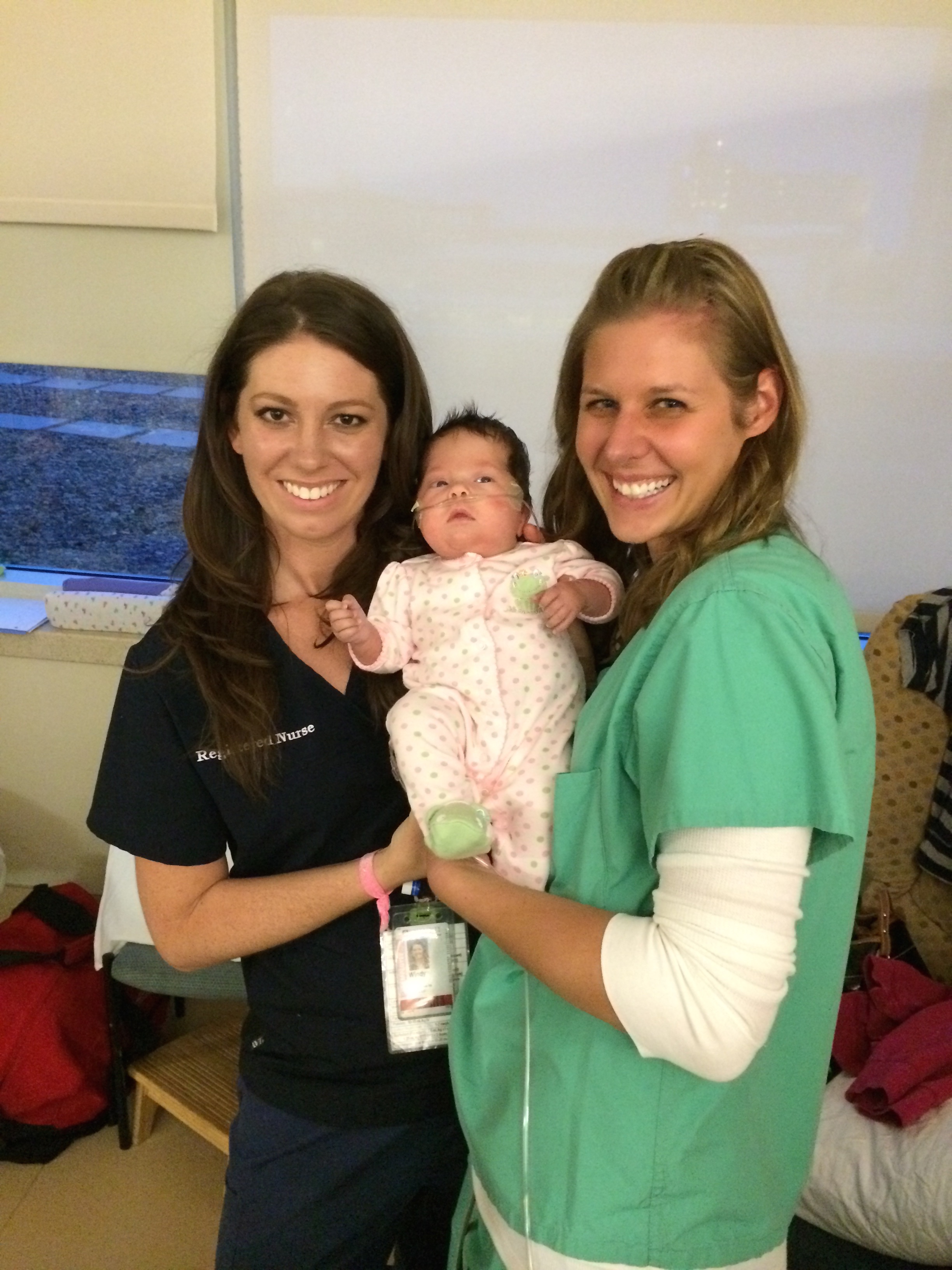
From January 30, 2014, we have treated London like a normal baby, sort of convincing ourselves that this is how all lives start. This is a coping mechanism and I suspect parents of babies and children with physical or mental setbacks have often treated their child as completely normal. This has served us well and I am sure it has served countless other parents well.

Now, I can only speak for myself, but no matter how much I thought of London as normal, I knew of her unique health risks and the challenges she had faced, so I never forgot that this was all quite far from normal. For all of her life up until last Tuesday, London had external, let’s call them accent pieces, on her face that clued everyone else into her prematurity or special needs. As a parent of a preemie, you get used to this, but from that first moment when you see your baby in that Isolette with tubes coming out of her mouth, nose, and belly, you yearn for the day when she can rid herself of it all, when she can be free of it.

Just shy of her ten-month birthday, that day arrived and I will remember for the rest of my life where I was when it did.

Pictures: Leaving the NICU

_BKP2732


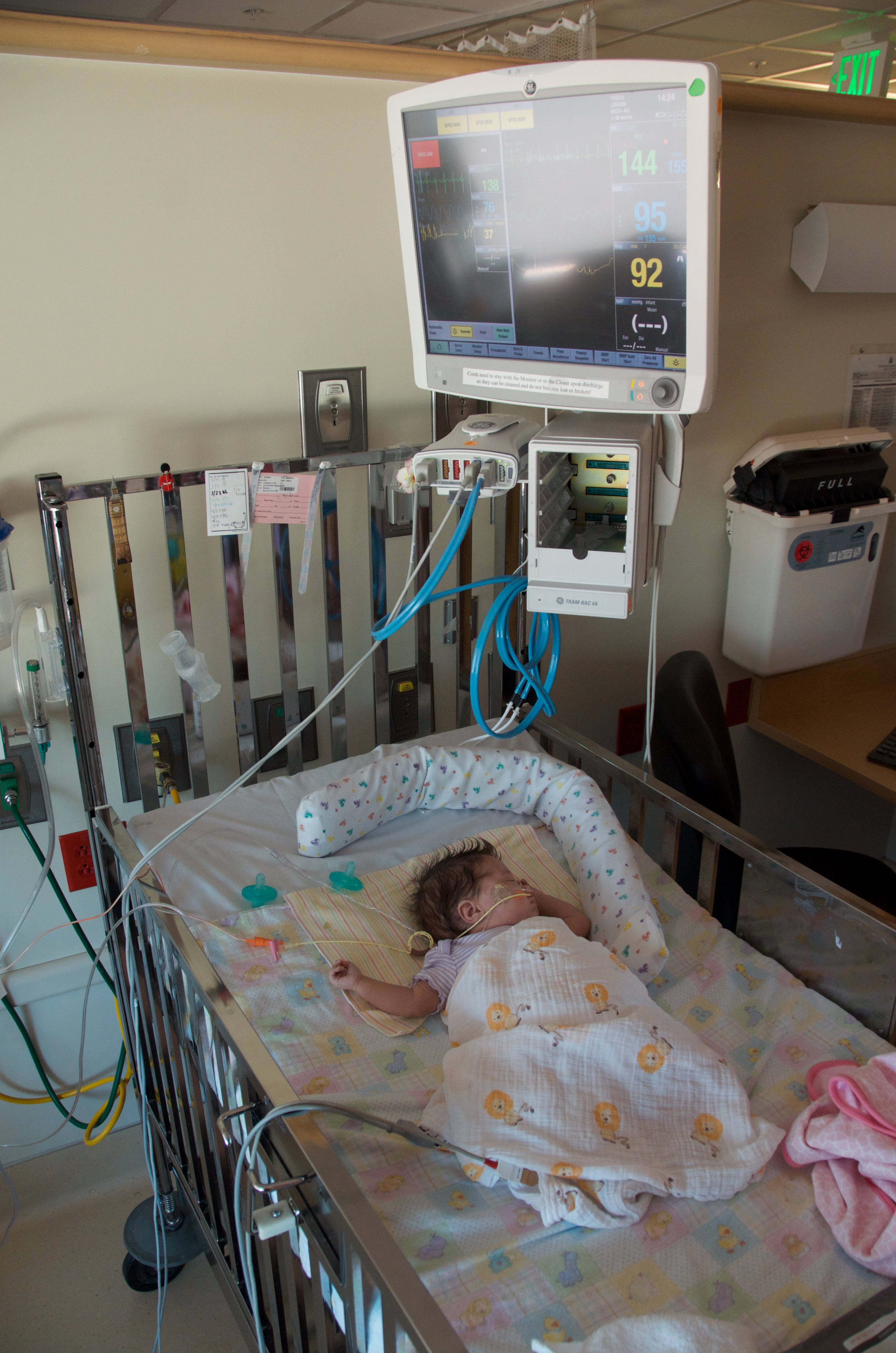
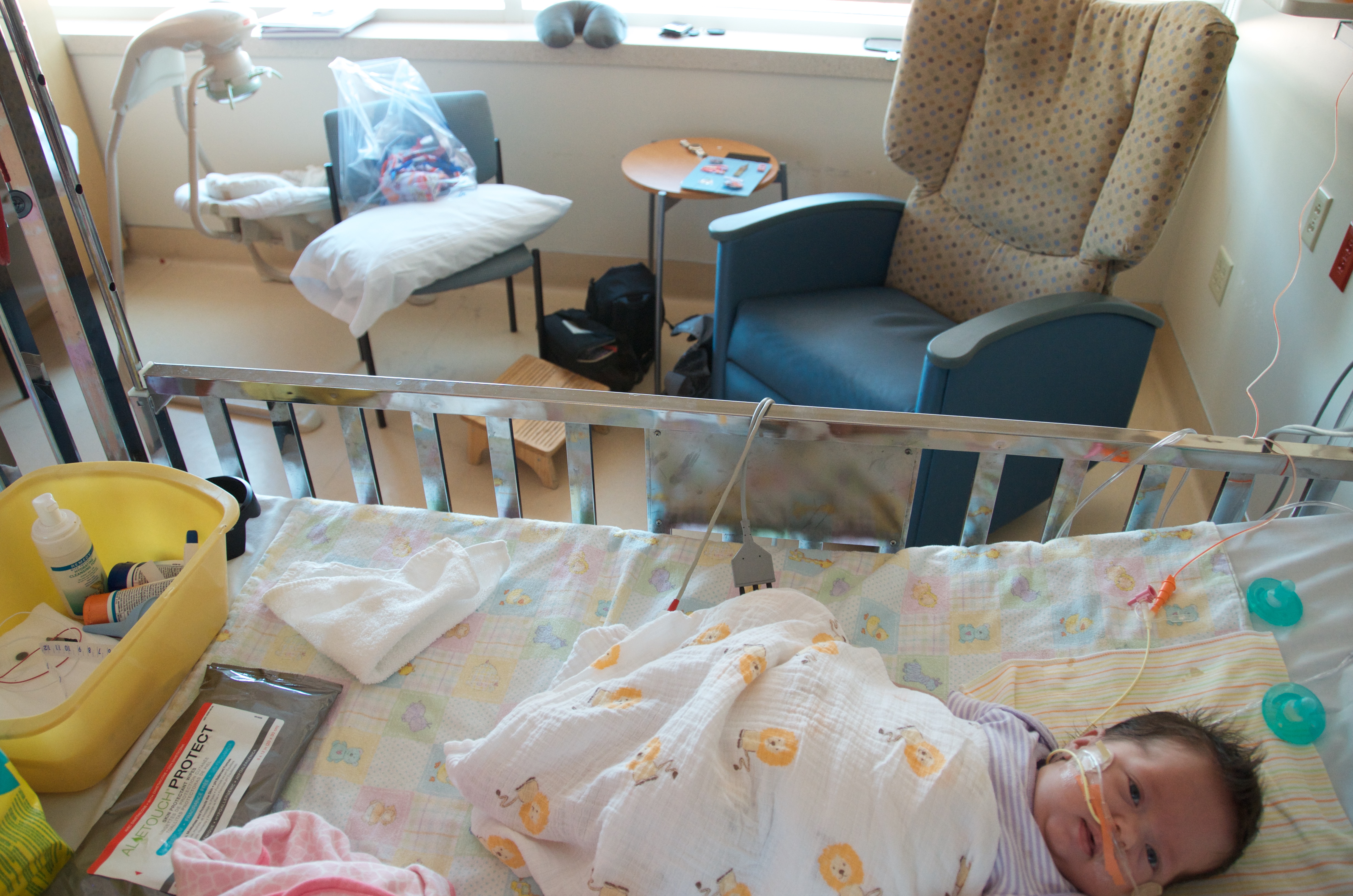
The day of London’s discharge from the NICU I brought the Nikon to take some higher res photos of her room and its surroundings. Although we never wanted a baby in the NICU, it did become a home for us after three and a half months. I suppose anywhere your baby has to stay will inevitably feel like a second home. I wanted to capture even the mundane things of the room, like the chairs we sat in everyday, or the closet doors displaying her footprints and growth progress. So, some of these shots will just not have much appeal to you, but I thought I would share them anyway because they mean so much to our little family.

_BKP2735

London resting in her NICU bed. For her, the day was not so monumental as it was for us. She had no idea what was in store. We did, and we could hardly contain our excitement and nervousness.

_BKP2741

This is one of those pictures that is more for our benefit than for yours. I wanted to capture what I saw from this side of the bed, where I actually rarely stood. I stood on the other side all the time. But at least from this angle you get a feel for what was in the rest of the room and the amazing windows we had in the room.

_BKP2745

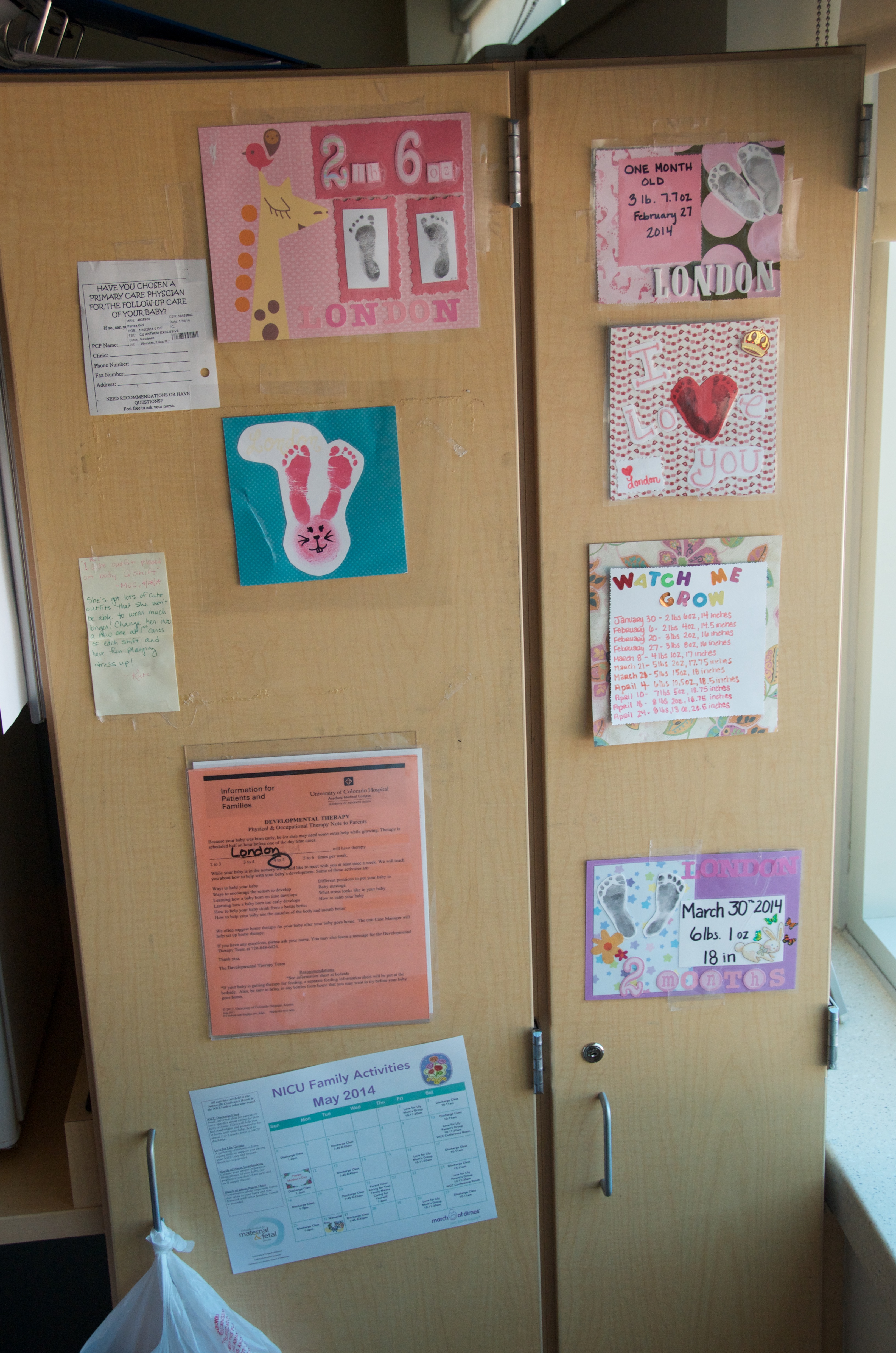
The closet in London’s room with several footprints, a growth chart, a physical therapy schedule, a note from Kate, and the top of a bag holding London’s dirty clothes. Again, just trying to capture it like it was before all this stuff came home with us.

_BKP2746

The million-dollar view. It doesn’t look like it, but it’s the only window this size in any of the NICU’s pods. We scored in a major way.

_BKP2748

I took all the stickers we had placed on things around the room and put them on the iPad. The outcast Leprechaun was a treat from our Irish primary nurse. When he was on the lamp for months, I had placed a Union Jack flag in his hand. Eileen was not amused.

_BKP2763

Dear Megan, London’s primary, on the last day she was responsible for taking care of London.

IMG_4148

Spent a lot of days in both of those chairs, usually with coffee on the side table and always with my Timbuk2 bag filled with magazines or books to read when, or if, I could get some time to do so.

IMG_4149

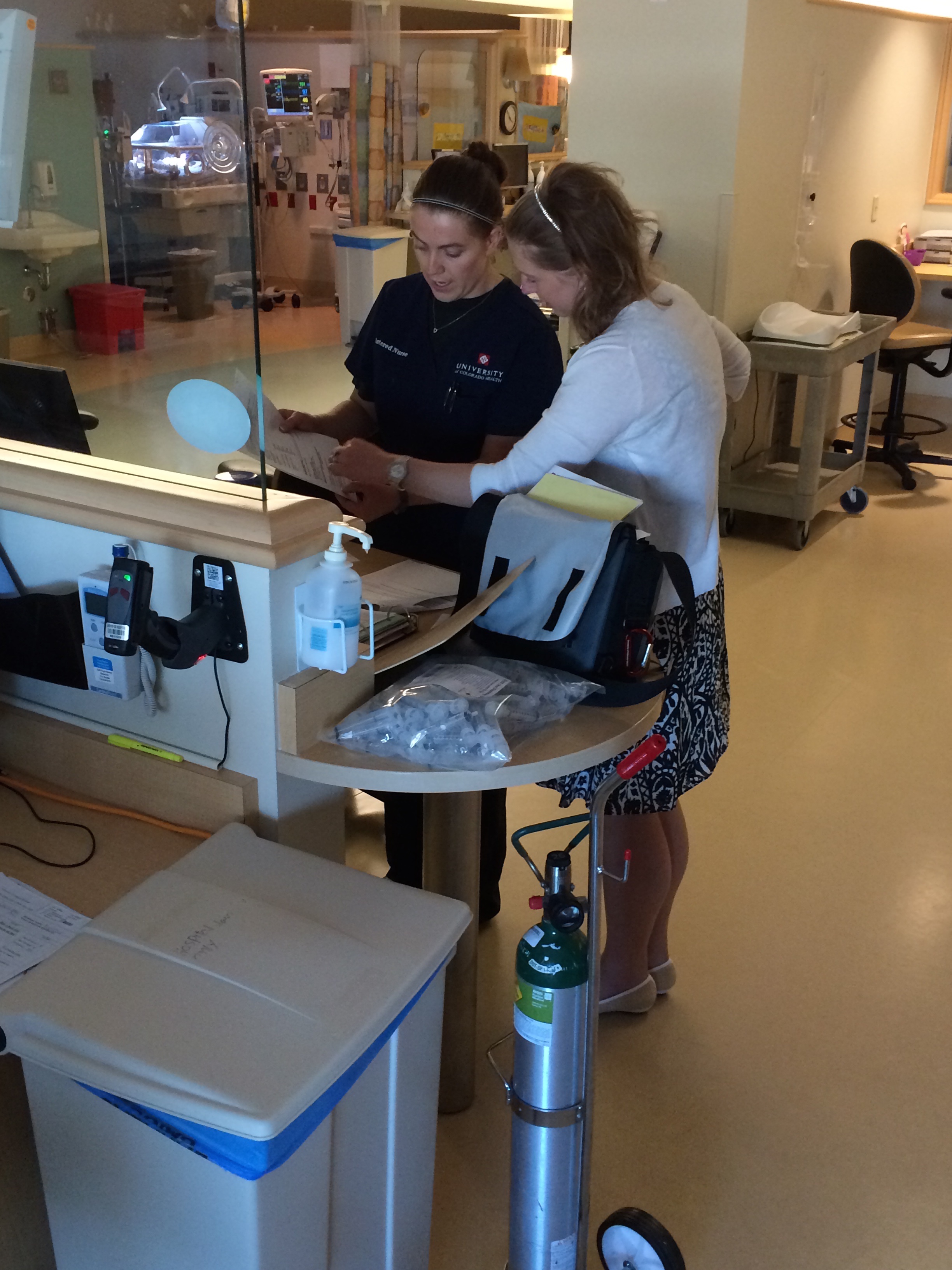
Megan and Kate going over some paperwork before we finish packing the room up and carry London out of there once and for all. There’s no way to explain just how nervous you feel about taking your daughter home from the hospital after she has been there for almost four months. You absolutely need to get everything right and you also need to know again and again what exactly needs to be done if there is a problem with something once you are home. In less than an hour there is not going to be a team of nurses and doctors on the other side of the curtain able to answer your every question.

IMG_2423

Moments after all three of us stepped outside the hospital, 109 days after we frantically arrived, thinking we’d spend just a few hours there.

IMG_4157

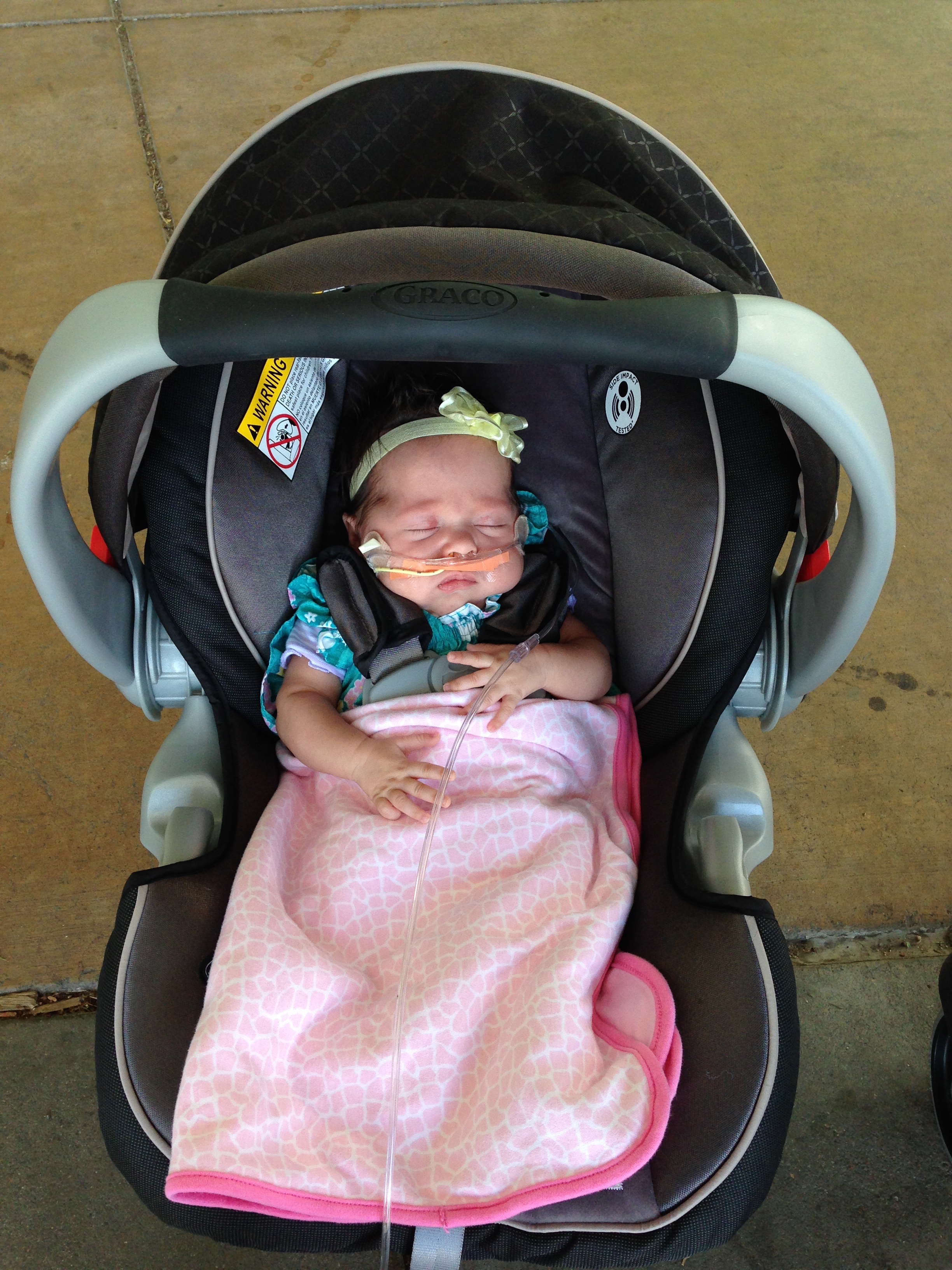
Home. The adventure begins anew.

World Prematurity Day

Right before falling asleep last night I was scanning Twitter and I learned that yesterday was World Prematurity Day. The March of Dimes Twitter account, which I follow, had shared images of city landmarks all across the world that were lit up purple, the color of support for preemies.

I don’t know how I missed this day, but today I read some articles about prematurity and found this one on NPR, the most interesting. Money quote:

Premature birth is now the single largest cause of death among babies and young children. Every year, 1.09 million children under age 5 die due to health complications that stem from being born before week 37 of pregnancy (a 40-week pregnancy is considered full-term).

I recommend reading  the whole article at NPR. It’s quite short. The editorial, titled “Preterm Birth: Now the Leading Cause of Child Death Worldwide,” mentioned in the NPR piece can be found here.

After reading the article and seeing the picture at the top of the NPR page, I am, again, so thankful for the treatment available to us here in Denver and that we were not traveling when London suddenly decided she wanted out.

Praise for Noradrenaline

A few nights ago London, who started sleeping through the night months ago, woke up at 2 am. Admittedly, I was a bit angry at first. Aren’t we over this part? The answer most nights is yes, but that did not make it any easier to get up and feed her.

After I put London back in her crib, turned the oxygen back on, put her nasal cannula in, and compulsively checked the flow of oxygen, I asked Kate, “How did we function that first month after London was born when we would both get up every three hours back when you were pumping breast milk?”

“We were in survival mode,” Kate answered.

I guess I hadn’t really thought of it that way. Survival mode is a term I think of in a similar way as I used to think about PTSD. I just thought it applied to different situations from ours, even though what we went through is the most intense situation of my life.

Survival mode is exactly what enabled us to carry on. It turns out, we owe Noradrenaline (norepinephrine) a big thanks.

Noradrenaline produces wide ranging effects on many areas of the body and is often referred to as a ‘fight or flight’ chemical, as it is responsible for the body’s reaction to stressful situations.

For a time we were able to survive on a few hours of uninterrupted sleep each night. If you asked me to do that right now, I would collapse midday.

Survival mode played a role in my curious ability during London’s NICU stay to forget about meals, mostly breakfast and lunch, if it was a particularly busy and stressful day at the hospital. Nowadays, I don’t forget about meals.

So, thanks noradrenaline for making the impossible possible. I will say, it would be nice to have higher concentrations of you around on those days I wish I could get by with just three hours of sleep, but I will forgive you for calming down and going away until I need you next.

To the Internet, Not So Fast

Back in 2007 I had a troubling sickness. It started with migraines, then it transitioned to the frightening Bell’s Palsy, and whatever I had did not stop there. I developed iritis (inflammation of the iris, which makes the whites of your eyes blood red and the photophobia can be unforgiving). I had partial hearing loss in one ear. Doctors ran me through a battery of tests. In a few months I had a CT, blood draws, many eye exams, an MRI with and without contrast, X-rays, and a flexibility test, where the doctor looked for signs of Ankylosing Spondylitis, a symptom of which can be stiffness and pain in the spine and neck.

The tests turned up nothing of concern, but the symptoms continued to give me plenty of reasons to worry. In between visits to the doctor I would sometimes have a lapse of judgment during which I logged onto the internet and did some self-diagnosing. What I found was terrifying. There was an encyclopedia of diseases and unheard of (to me) maladies that could, in theory, give me some of the symptoms I had. Brain tumors. Cancers. Crohn’s disease. Thinking about it all scared me. The doctors, I knew, were doing their best to give me an answer. For a time, I thought that their lack of explanation was a bad sign. When I was firmly convinced of this I went to the internet. Ultimately, what I found led to prolonged worry and who knows, maybe some of the symptoms would have gone away sooner if I was not giving them their unwarranted attention.

By 2008, all of my aches, pains, and inflammation were gone. Most likely a virus had attacked me and, my body, with some hiccups along the way, crushed it. However, if any of the symptoms had returned in the seven years since I would not have consulted the internet. I would have gone to a doctor.

To have this lesson in my back pocket heading into London’s bumpy start to life was an unexpected blessing. London’s actual and possible complications from prematurity were a tsunami of information compared to my sickness years ago. The first wave of preemie particulars and statistics hit even before London was born. While I was waiting outside the operating room a doctor came by and ran down a random list of possible complications. She told me 26-weekers have an 85% survival rate. This brief conversation introducing me to the challenges preemies face was similar to seeing the tip of an iceberg above water. The other 90% was below the surface, or in our case, through the OR’s double doors and on into the NICU. To borrow from The Lord of the Rings, it was “the deep breath before the plunge.”

*          *          *

Upon your family’s arrival in the NICU, you might feel like you’re drowning. There are more people taking care of your baby than you can keep track of. There is a new procedure every day. Thus, there are results every day, results that must be explained to you, sometimes three or four times. In addition to that, there are a lot of unknowns and, regardless of how talented the NICU staff may be, no one can accurately foresee the obstacles ahead for your baby. The internet is not going to be any different. There, you will find many question marks and new and more dangerous preemie complications to worry about, even if your baby is not suffering from them.

As parents with a baby in the NICU, Kate and I felt like there needed to be a sacred part of the day, during which we would try to not worry about the next results from London’s latest blood draw or echocardiogram. Of course, to not worry is impossible. It is more accurate to say we carved out time in each day during which we would purposefully not heighten our worry. This time became essential to getting us through every month our daughter was in the NICU.

Seeking information or support online seemed to only disrupt any sense of peace and hope we had regarding London’s course of treatment. If it was information we sought, then it was to go down the rabbit hole again, entering a world where one complication, like a brain hemorrhage, could lead to hydrocephalus and, almost certainly, cognitive disabilities. At least, that is what the internet would like you to believe at times. And if it was support we queried, we discovered far more troubling accounts than our own, which led to more worry.

Very early on in our NICU adventure we discovered the very poor predictive quality of the internet. Thus, the net never became a source of information for us. We much preferred getting answers straight from the trained professionals who were taking care of our daughter.

I have used the internet for queries about preemies many more times since starting this blog than I did while my daughter was in the NICU. When I am using the internet to find a definition of a certain malady, it can be helpful and I am grateful for that, but the internet will remain a horrible diagnostician and a font of worry for parents with a baby in the NICU.

Do you remember the show Rescue 911?

IMG_4109

Windy and Rachel on their last night shift with London before she leaves the NICU.

When I was much younger I watched the show Rescue 911. Hosted by William Shatner, the show reenacted real-life emergencies and spliced in interviews from people who were present when the aforementioned emergencies occurred. At the end of the reenactments, the rescuers who saved the individual/s in need of help, were reunited with the people they saved.

The reenactments are so bad they are painful to watch. It was easy to find some old episodes of the show on YouTube. There is even a story about a baby being born “nearly three months early” while on a flight. He weighed in at 4 lbs, 6 oz. (I have to interject here, if the baby was really almost three months early, that’s a huge kid for that gestational age). Here’s the link to the story about the premature birth on the flight. As you might guess, the reenactment is hilariously bad.

What got me thinking about Rescue 911 was seeing some of London’s nurses the other week. I got home and two of her primaries were visiting Kate and London, eating pizza Kate made, and sipping wine. I got a chance to visit with the nurses a little bit before they left and during that time I thought of the reunions at the end of Rescue 911. I always enjoyed these scenes, loving the idea of being able to see and possibly become friends with the people responsible for saving my life or, in this case, my daughter’s life. And now, that was happening right there in my kitchen.

I would never wish what Kate and I went through with London upon anyone. But if it is to happen, this is the happiest ending one could possibly hope for. We were incredibly blessed to have such caring NICU nurses. And now those nurses have become friends. I hope that as long as we are in Denver and as long as they are working nearby, the reunions continue because, for us, they are heroines.