Parents on the NICU and their PTSD

Over a month ago, I read and posted about an article in the New York Times about 22 weeks gestational age being the new definition of viability (for some doctors). In the sidebar I noticed another article under “related.” Its title: For Parents on NICU, Trauma May Last. As soon as I was done reading about the viability of 22 weekers I clicked over and read about PTSD in NICU parents, which I had blogged about once already.

I have not read a more accurate article about parents dealing with the NICU. The first parent’s story is more stressful and scary than ours was. For example, I never got to the point where I was sleeping with my shoes on, but on more than one occasion I expected the hospital to call with horrible news. And I was and can still be easy to anger as a direct result from our NICU experience. I mentioned that back in October as well.

This NY Times article was first published in 2009, citing a new (for then) study about PTSD in NICU parents:

A new study from Stanford University School of Medicine, published in the journal Psychosomatics, followed 18 such parents, both men and women. After four months, three had diagnoses of P.T.S.D. and seven were considered at high risk for the disorder.

In another study, researchers from Duke University interviewed parents six months after their baby’s due date and scored them on three post-traumatic stress symptoms: avoidance, hyperarousal, and flashbacks or nightmares. Of the 30 parents, 29 had two or three of the symptoms, and 16 had all three.

One of the NICU parents quoted in the article hits the nail on the head:

“The NICU was very much like a war zone, with the alarms, the noises, and death and sickness,” Ms. Roscoe said. “You don’t know who’s going to die and who will go home healthy.”

I haven’t said it better myself. As a parent, even after months in the NICU, I would find myself wondering if we were ever going to make it out whole, meaning all three of us. Perhaps the most revealing statistic shared in the article is this:

The Stanford study found that although none of the fathers experienced acute stress symptoms while their child was in the NICU, they actually had higher rates of post-traumatic stress than the mothers when they were followed up later. “At four months, 33 percent of fathers and 9 percent of mothers had P.T.S.D.,” Dr. Shaw said.

It’s easy to picture stoic fathers in the NICU, but what most of them are really doing is repressing so much intense fear and anguish that once the drawn-out trauma of their child’s NICU stay is over they burst. I was stoic from time to time, but I certainly was not afraid to show emotion during London’s stay in the hospital. Crying in front of nurses was not something I was above. This helped.

One NICU survivor shares this in the NYT article:

In her book, Ms. Forman wrote: “From the moment my twins were born, I saw potential for tragedy wherever I turned. It would be years before I stopped thinking that way.”

This is probably what I struggle with the most now. It’s beyond worrying, it’s an all-consuming conviction that something horrible is going to happen. Prior to my trip to DC, I had a really hard time shaking the feeling that I wasn’t going to see my family again, I wasn’t going to make it back from DC, or maybe I was never going to make it there in the first place. Before the NICU, I was not wired to think this way, but now a part of me is. The other part is fighting for balance. Like Ms. Forman, maybe it will be years before hope and the safety I knew become my heading once again.
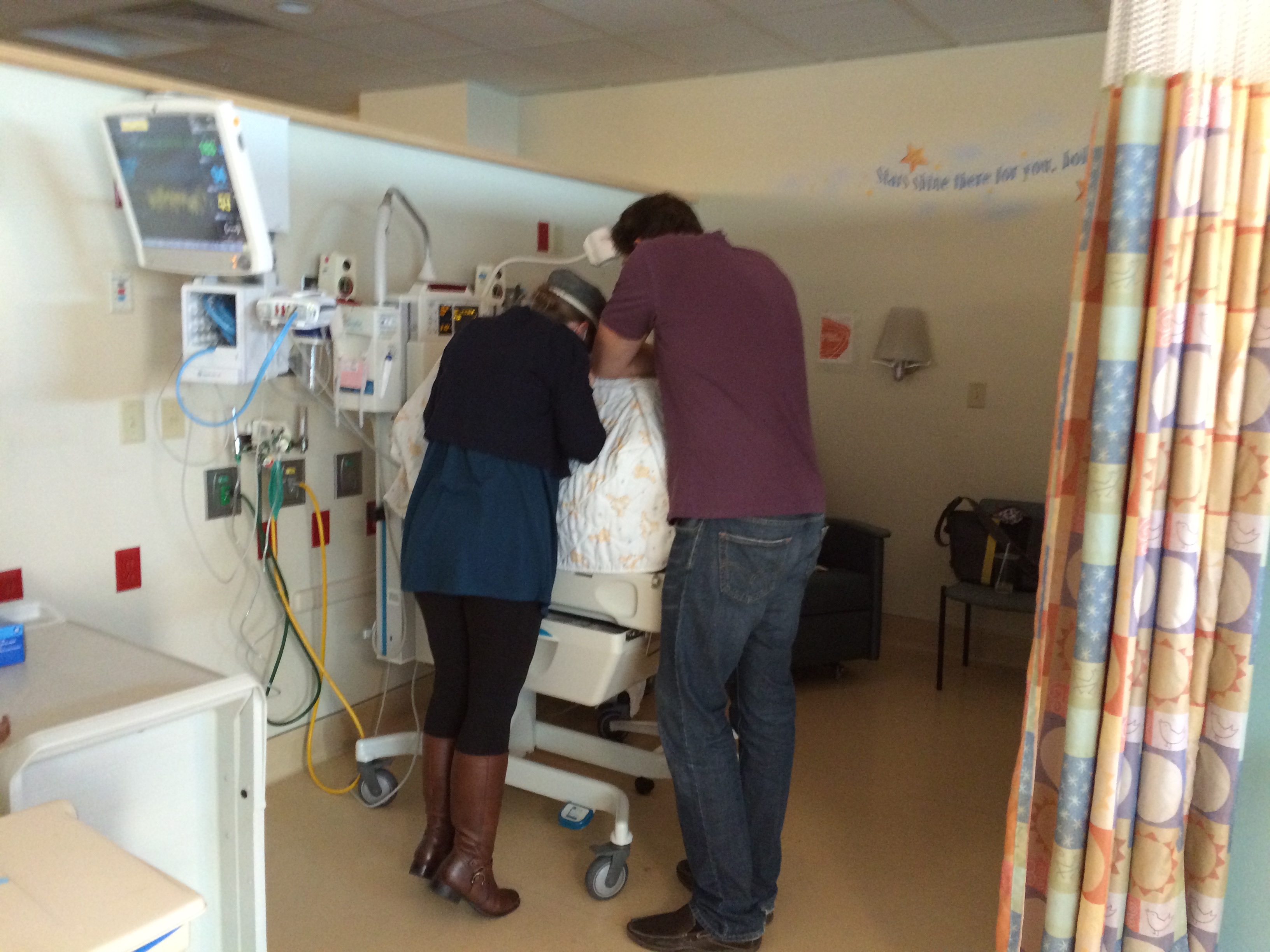
PTSD from the NICU

IMG_3083

Another day down, but one last peek at London before we leave for the night.

When someone first suggested that I am suffering from Post-Traumatic Stress Disorder (PTSD) I stifled my disagreement and listened, doubtfully, to their explanation. A few minutes later, when they were done speaking, I was nearly in agreement with them.

Prior to this conversation, having PTSD was not something I thought I could get. Naively, I associated PTSD with war veterans and not many other people. But this is so wrong. The National Institute of Mental Health (NIMH) defines PTSD this way:

When in danger, it’s natural to feel afraid. This fear triggers many split-second changes in the body to prepare to defend against the danger or to avoid it. This “fight-or-flight” response is a healthy reaction meant to protect a person from harm. But in post-traumatic stress disorder (PTSD), this reaction is changed or damaged. People who have PTSD may feel stressed or frightened even when they’re no longer in danger.

PTSD develops after a terrifying ordeal that involved physical harm or the threat of physical harm. The person who develops PTSD may have been the one who was harmed, the harm may have happened to a loved one, or the person may have witnessed a harmful event that happened to loved ones or strangers.

Kate and I were afraid for months while London was in the NICU. We did not always realize it, but we were preparing ourselves for the worst outcomes in the NICU in an attempt to defend against them. Now that London is out, far removed from those most terrifying days, we still occasionally feel frightened and on edge. I first noticed a change when I was performing simple tasks, like preparing some milk for London. On a few occasions I spilled some of that milk and instantly my temper flared. And if anyone was around, I was mean to them. When I am like this I do not want to be near anyone. I was not crying over spilled milk. I was inconsolable over spilled milk. I was not sad. I was irate that something did not go my way. Everything sucked. I consider myself to be a patient person, so this new feeling of anger over something so unimportant was troubling. In fact, that realization made everything worse, bringing a snowball effect to my PTSD.

In addition to losing my temper, I can be anywhere doing anything and if I slip up and think about the scariest moments in the NICU or in the OR the night of London’s birth I am fighting back tears. These are not voluntary recalls. I do not want to think about the scary moments, but the trauma of London’s start is prolonged and fresh in my mind. To think back is to invite some of those moments into the present and once you do that it is hard to stop the flow.

The NIMH definition of PTSD continues:

PTSD was first brought to public attention in relation to war veterans, but it can result from a variety of traumatic incidents, such as mugging, rape, torture, being kidnapped or held captive, child abuse, car accidents, train wrecks, plane crashes, bombings, or natural disasters such as floods or earthquakes.

Or as someone recently put it, “You were not just in a single life-threatening accident with London. You were in one week after week after week and the person most precious to you in this world was the one always at the greatest risk.”

Truer words have not been shared with me. Having a baby at 26 weeks is exactly like that. Every time we drove to the hospital we braced ourselves for the accident. For a while, we got bad news every day. Sometimes it was just a trickle. And on the worst days it was a flood.

Even when the bad news did not come, we still braced for it. Do that day after day for 109 days and PTSD becomes a near certainty. For almost four months Kate and I did not just daydream about worst-case scenarios. On top of the worries every parent has concerning their newborn baby, we had to have real, hard discussions about our variety of worries stemming solely from London’s delicate start to life. At the end of most of these discussions one or both of us were crying and holding onto each other.

Until your child comes home from the NICU you live at a heightened state of anxiety. It becomes your new normal and when you plateau for that long coming down can do some really weird things to you. We are still adjusting.