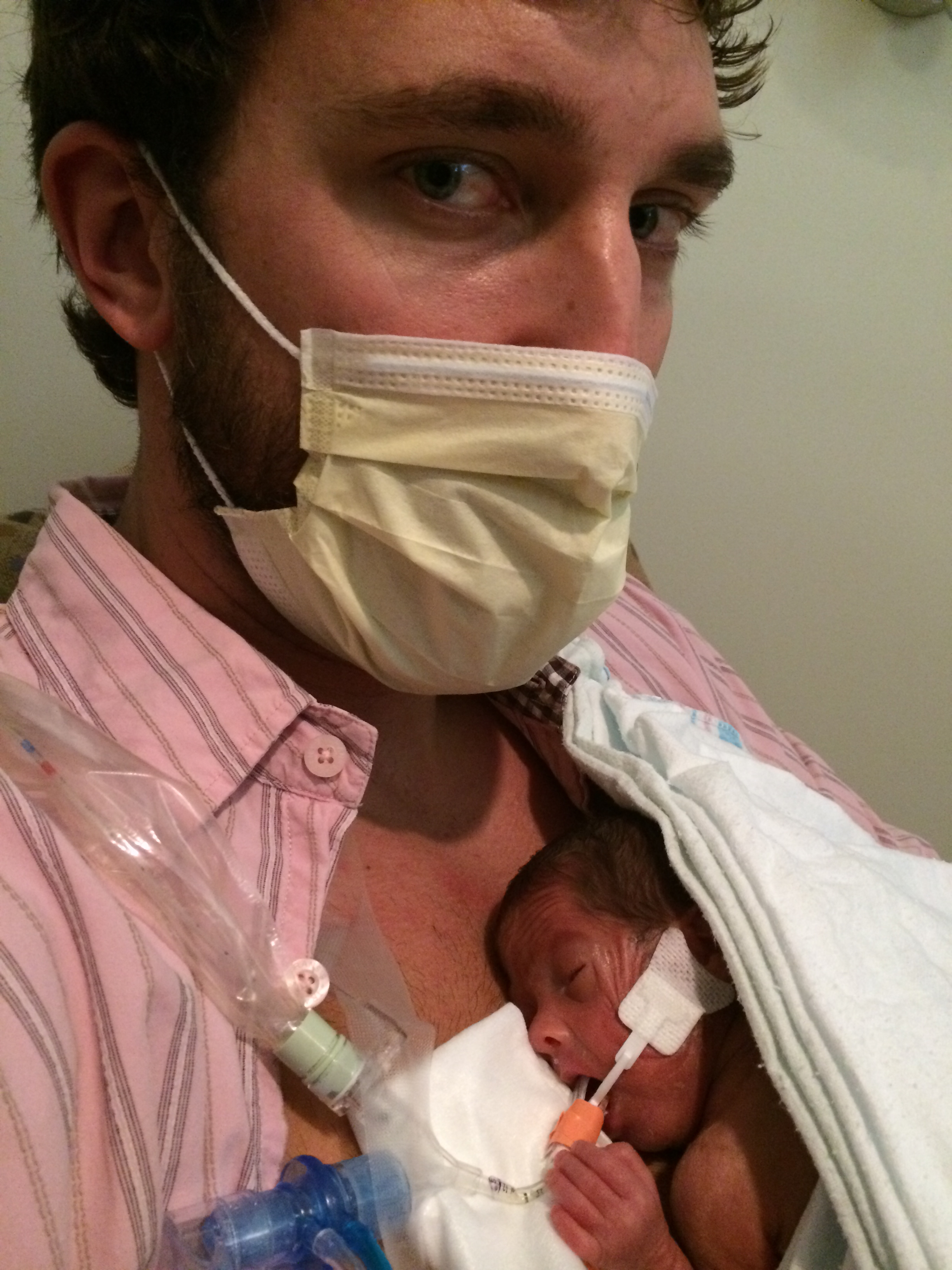
Welcome to the Pump House: Adventures in Fatherhood and Breast Milk Management

A version of this post appeared on my blog years ago when London wasn’t even a year old. But I just tweaked it a bit, slimmed it down , and added here and there. I think it’s better now. Here it is…

Never in my wildest dreams, as I prepared for fatherhood, did I think I was going to spend so much time with lactation nurses, reviewing the intricacies of hand expressing (including motions), analyzing breast milk volumes, discussing engorgement, and just how much breast milk one could fit in a chest freezer.

A few hours prior to my meeting with lactation consultants, thinking there were three more months to learn these things, I didn’t even know lactation nurses existed. I knew that some babies were born prematurely, but I didn’t know my wife’s breast milk would still come in just as early as our daughter wanted out at 26 weeks gestation.

So it was that our 109-day stay in the neonatal intensive care unit (NICU) started with a crash course in breast milk. Within those first days of life for my daughter (London), my wife (Kate) and I spoke at great length with not just one lactation nurse, but several of them about breast milk and breasts, starting with a nurse asking my wife if she was going to pump breastmilk. Partly due to the trauma of the last 24 hours, and partly due to my complete lack of knowledge about breastfeeding, I had not thought a bit about breast milk or pumping. Kate was of a similar mindset at that particular moment, but we were both satisfied to know that there was a good chance Kate’s milk would come in. The early drops of colostrum, the nutrient-dense milk first released by the mammary glands, often come in shortly after the placenta detaches from the uterine wall, no matter the gestational age.

A couple of hours later a lactation nurse wheeled into our room something that looked like a medieval torture device. They were calling it the Symphony. They hooked Kate up to it and it hummed and sucked for 18 minutes. At the end of that first session, we could just barely make out two milliliters of colostrum. A few hours later Kate produced 2.6ml and then later that night 3.8ml. The next day, January 31, marked Kate’s first 24 hours of pumping. She produced 32.6ml that day, or 1.1 ounce. The lactation team handed us a log with the direction that we were to write down when Kate pumped, for how long, and the total volume.

We then received a DVD to watch, which would apparently help Kate get more milk by hand expressing and provide tips to alleviate the pain of engorgement. We were to watch it and return it to the NICU team afterwards. That same day, we popped the DVD into my laptop to watch some before going to bed. One minute into this educational video, the biggest breast and nipple either of us had seen appeared on screen. Kate laughed so hard she began to worry she might injure herself being only two days clear of a C-section. Everything hurt. If we continued watching, we put Kate’s health at risk. I slammed the laptop shut. Tears ran down our cheeks from laughing so hard.

Who knows who is responsible for making this particular lactation video, but may I make one small suggestion on behalf of my wife and all women who have recently had C-sections? Great. Do not make the first breasts on the video also be the largest breasts known to mankind. They should not be comically large, needing 3-4 hands to get them under control. In fact, this video is a danger to new mothers everywhere, they might literally bust open their gut laughing from it, like we almost did.

Thus, it fell on me to watch the lactation video alone, gleaning from it any helpful tips and then sharing them with Kate. She was impressed. It wasn’t like Kate’s breast milk volumes needed any help. Not long after London was born, I was spending part of everyday rearranging containers of breast milk in the chest freezer in the basement—the chest freezer we needed to buy solely to store breast milk. Kate and I would joke that I knew more about hand expressing breast milk than she did so I should print up some business cards and walk around the NICU offering my services to anyone who needed them. Hand Expressions by Bryce. Simple and to the point.

By day of life 57 for our little girl, Kate was producing 1,863ml a day, or 63oz of breast milk. To put that in perspective, London was fed a total of 800ml on day 57, the most she had ever consumed in one day. In fact, it took London a long time to drink as much milk in one day as Kate got from one 20-minute pump. A point was reached where no amount of rearranging the breast milk in the freezer would make room for more. I picked up a second chest freezer at Costco and Kate started to fill that, too.

For the months London was in the NICU we rented a Symphony pump, which at the time retailed for $1500-2500, and kept it in our bedroom. We started to call it the pump house. When at home, Kate disappeared every three to four hours to spend some quality time with the Symphony. As all moms know that schedule wreaks havoc on sleep and work responsibilities, but Kate did an excellent job. I did what I could by waking with her every time throughout the night, assisting in bottling of the milk, labeling and recording volumes, washing pump parts, and then delivering milk to the freezers in the basement. So, at our house, at least two times a night, Netflix and chill was swapped out for Netflix and pump.

As Kate tapered off the pump, we were just filling up the second chest freezer and the lactation nurses understood why Kate was putting an end to pumping. She had developed a reputation in the NICU as a super producer. At London’s discharge, on May 19th, 109 days after she was born, the NICU staff wrote messages to us. One of our favorites from the lactation team wrote, “Your mom was a rock star with pumping. She could have fed three babies in the NICU!”

Next week, London will be six-months-old and I can thaw breast milk from three months back. And right now it’s lunch time for the little girl, to the chest freezer I go.
How to Help a NICU Parent

A friend recently asked me for some advice. She knows someone who just IMG_3089_127883had a preemie at or around 26 weeks gestation and wanted to know how she could help them out, what to say, what not to say, etc. She gave me permission to post my response to her. It follows:

I am happy to share my advice. Some of it will be based on the assumption that you are in the same town as your brother and Erin and their new daughter, Harper.

Well, having a kid in the NICU is the most exhausting thing Kate and I have ever been through. Very important question: is this their first kid? If not, well, it’ll be even more exhausting than our journey. Anyway, exhausting, so the last thing I ever wanted to do when getting home from the hospital every day was cook. It’s sort of become a cliche, but cooking for them would probably be a huge help. I don’t think Kate and I went to the grocery store for 3 weeks after London was born. Without all the meals we received, we couldn’t give London as much attention as we did. We had one less thing to worry about and that was huge because having a 26-weeker is an all-consuming worry.

The first few days of NICU care are possibly the worst. Once the baby makes it a week, things can start to get a little easier. So now could be the most terrifying of days for your brother and his wife. It all sort of depends on Harper’s situation. Was this an emergency c-section? Did they have 24 hour notice so they could get some steroids to Harper before she was born? London did not have the benefit of steroids before she was born, which really set her back for some time. She was on the ventilator for nearly three weeks, if I’m remembering correctly. I’m not sure what I’m getting at here, but maybe it’s just that I know I was very open about London’s health and situation throughout her NICU stay. I sent out near-daily email updates to a large group of people. I would have never been able to tell all those people independently. So if your brother is open to the idea, I’d recommend that. Or if someone in the family wants to keep other family members and friends dialed into the situation by doing email updates then that would be a big help too.

I’ve completely forgot to mention that it’s so great they named her. I know that naming her is a commitment of the heart and soul that you resist when you see such a small and fragile human being. But it’s a big step and it might bring them some hope. I remember when London was just ten minutes old and being transferred from the OR to the NICU while Kate was still on the operating table, the doctor asked me what her name was, and I was just put on the spot and had to say it loudly enough that everyone in the OR could hear it. I didn’t know it then, but in hindsight, that was a pivotal moment of accepting as truth something I still couldn’t believe was happening.

In terms of what not to say, that’s always tough to answer. You know? It depends on the person’s tolerance of the cliche, like, “Everything’s going to be alright.” We heard that a few times and I may have even said it later on in London’s NICU stay, like in month 2 and 3, but I did not like hearing it in the first few days or couple of weeks even. I just wanted to know the specifics of London’s situation and all I wanted to share were the specifics. I didn’t want to speculate with family members and friends. I just tried to avoid the “what ifs”, so maybe help them do that.

I’ll stop writing after this next point. At three months early, Harper is going to be in the NICU for a long time. It’s important for your brother and Erin to get time away from the NICU. That won’t be right now, obviously, but later on it will be. As a NICU parent you feel the urge to be at the NICU as much as possible, but it is essential to get away from time to time. We wanted our health and our sanity while London was in the hospital and I think we may have lost both if we stayed there round the clock for the first month. Our NICU nurses were exceptional in that they all encouraged us to take breaks from being at London’s bedside. Clearly, we still went to the hospital every day for 109 days, but the time away from the hospital was almost as important as the time there. We needed a chance at rest and revival before facing the NICU’s minute by minute ups and downs. So, when it’s time, encourage your brother and Erin to get away, even if it takes you spending some hours by Harper’s side. Perhaps they will be uncomfortable with it at first, but they will appreciate it.

How’s that for a disjointed email? I mean, there are so many things that come to mind. Please, let me know if you have other questions. Sorry they are going through this. I hope Harper is doing well.

*All names in this post have been changed. 

Another Day, Another Echo

Two days ago I posted “Turning One Again“. In that post I mentioned that this time last year London was going through a bunch of new tests to find out why she was so tired. Actually, “new tests” is incorrect. By May 4th, 2014, London had had several echocardiograms, she was just going to have another. I thought I would share a video of the last echo she had in the NICU. Kate had stopped by London’s room on the way to work (in the building next door) and had wound up getting to see the echo.

I do not expect you to be interested in watching a baby get an echocardiogram. The event is not spectacular or rare at all if you have had a preemie. But what is exceptional about the video is how London is so cool with it. She yawns in the middle of the video, like, c’mon, get this over with…it’s not my heart that has an issue.

Kate sent me the video that morning before I had made it to the NICU and it warmed my heart. This was classic London–so extraordinarily comfortable with another intrusive procedure in the NICU–that it did not surprise me all that much. London remained unperturbed throughout this test and others. Over the course of 109 days in the NICU London’s attitude absolutely rubbed off on us. We were never happy to have to sit through another echo or eye exam, but seeing how tough London was through it all made us roll with the punches like old pros. You will stress yourself to death if you can’t find a way to cope. Looking to our baby for strength proved to be one of the best strategies to weather the storm.

I just realized I posted this video on the blog already, but it was months ago and in a different context. Thanks for stopping by!

The Story of London’s Birth

IMG_0109

This picture…because it’s Cinco de Mayo!

A few months ago I wrote a post linking back to the story of London’s birth, the first posts on this blog. It had been a while since I had mentioned them and wanted to make sure people were aware of them, especially since they were now buried in the archives.

I have finally done something I should have done months ago. I have posted links to London’s birth story in the About the Author tab of this blog. I encourage you to read those posts if you have not.

In the meantime, happy Cinco de Mayo! I made a margarita last night following this recipe. It was delicious, but to make more tonight I had to raid the limes at the grocery store today. You will need a lot of limes. Enjoy!

Nana Remembers London’s Birth

I’ve been meaning to share this comment since it was left on January 29th, when I wrote this post. The comment is from my mom, recalling the night and early morning of January 30, 2014.

I have been thinking all day about the phone ringing this night a year ago when we were sound asleep. Groggy and confused we listened to you tell us Kate was in distress, the docs were monitoring her and you would keep us posted. We hung up the phone, prayed through our tears thinking how can a baby live at 26 weeks? And we called her Grace not knowing you’d give her that moniker as her middle name. Your next call came to say Kate was about to undergo an emergency C-section. More tears and ongoing prayer. I remember my heart was beating so hard for what seemed like hours but you called again less than two hours later to say “London Grace” was here. Dozens of doctors and nurses were looking after her and Kate was in recovery. Then you asked, “Do you want to see a picture of her?” And so it began.

Still, I can’t read this without fighting back some tears. I had sort of forgotten that I asked my parents if they wanted to see a picture of their granddaughter. Such a question seems a little odd, but in the moment it was not an unusual precaution. The one picture I had of London at that point was graphic, for lack of a better word. She was vulnerable and the picture succeeded in showing that. I must have thought that maybe they would not want to see a picture of her until she stabilized some. Had they felt that way it would not have bothered me. Obviously, I was still protecting myself, but I also thought about protecting others and this was a way I tried.

I have known for a long time now that there was no protecting me or anyone else if things had gone horribly wrong during those first days. I was in shock and still under the illusion that I had any control over what happened next.

To the Internet, Not So Fast

Back in 2007 I had a troubling sickness. It started with migraines, then it transitioned to the frightening Bell’s Palsy, and whatever I had did not stop there. I developed iritis (inflammation of the iris, which makes the whites of your eyes blood red and the photophobia can be unforgiving). I had partial hearing loss in one ear. Doctors ran me through a battery of tests. In a few months I had a CT, blood draws, many eye exams, an MRI with and without contrast, X-rays, and a flexibility test, where the doctor looked for signs of Ankylosing Spondylitis, a symptom of which can be stiffness and pain in the spine and neck.

The tests turned up nothing of concern, but the symptoms continued to give me plenty of reasons to worry. In between visits to the doctor I would sometimes have a lapse of judgment during which I logged onto the internet and did some self-diagnosing. What I found was terrifying. There was an encyclopedia of diseases and unheard of (to me) maladies that could, in theory, give me some of the symptoms I had. Brain tumors. Cancers. Crohn’s disease. Thinking about it all scared me. The doctors, I knew, were doing their best to give me an answer. For a time, I thought that their lack of explanation was a bad sign. When I was firmly convinced of this I went to the internet. Ultimately, what I found led to prolonged worry and who knows, maybe some of the symptoms would have gone away sooner if I was not giving them their unwarranted attention.

By 2008, all of my aches, pains, and inflammation were gone. Most likely a virus had attacked me and, my body, with some hiccups along the way, crushed it. However, if any of the symptoms had returned in the seven years since I would not have consulted the internet. I would have gone to a doctor.

To have this lesson in my back pocket heading into London’s bumpy start to life was an unexpected blessing. London’s actual and possible complications from prematurity were a tsunami of information compared to my sickness years ago. The first wave of preemie particulars and statistics hit even before London was born. While I was waiting outside the operating room a doctor came by and ran down a random list of possible complications. She told me 26-weekers have an 85% survival rate. This brief conversation introducing me to the challenges preemies face was similar to seeing the tip of an iceberg above water. The other 90% was below the surface, or in our case, through the OR’s double doors and on into the NICU. To borrow from The Lord of the Rings, it was “the deep breath before the plunge.”

*          *          *

Upon your family’s arrival in the NICU, you might feel like you’re drowning. There are more people taking care of your baby than you can keep track of. There is a new procedure every day. Thus, there are results every day, results that must be explained to you, sometimes three or four times. In addition to that, there are a lot of unknowns and, regardless of how talented the NICU staff may be, no one can accurately foresee the obstacles ahead for your baby. The internet is not going to be any different. There, you will find many question marks and new and more dangerous preemie complications to worry about, even if your baby is not suffering from them.

As parents with a baby in the NICU, Kate and I felt like there needed to be a sacred part of the day, during which we would try to not worry about the next results from London’s latest blood draw or echocardiogram. Of course, to not worry is impossible. It is more accurate to say we carved out time in each day during which we would purposefully not heighten our worry. This time became essential to getting us through every month our daughter was in the NICU.

Seeking information or support online seemed to only disrupt any sense of peace and hope we had regarding London’s course of treatment. If it was information we sought, then it was to go down the rabbit hole again, entering a world where one complication, like a brain hemorrhage, could lead to hydrocephalus and, almost certainly, cognitive disabilities. At least, that is what the internet would like you to believe at times. And if it was support we queried, we discovered far more troubling accounts than our own, which led to more worry.

Very early on in our NICU adventure we discovered the very poor predictive quality of the internet. Thus, the net never became a source of information for us. We much preferred getting answers straight from the trained professionals who were taking care of our daughter.

I have used the internet for queries about preemies many more times since starting this blog than I did while my daughter was in the NICU. When I am using the internet to find a definition of a certain malady, it can be helpful and I am grateful for that, but the internet will remain a horrible diagnostician and a font of worry for parents with a baby in the NICU.

Double Takes and Long Stares

IMG_2422

On the day we left the NICU for good.

The day after London came home from the NICU we took her on a brief outing, a trip to Target. We were both quite scared. I had hand sanitizer in my pocket, in the diaper bag, and probably in the stroller. As most new parents move about, we were slow, paranoid about every baby carrying tool properly snapping into place, and just a little hesitant about our ability to accomplish an errand with London in tow.

I was scared most by the threat of germs. For over 100 days every single person who came to see London had washed their hands twice, even if they weren’t necessarily touching her. Taking her into a Target, where a nutter could potentially walk up to London and touch her foot freaked me out. Even the idea of her breathing the air in a Target sort of worried me. I know, that’s ridiculous, but that’s the stuff we thought about back then and we prepared for it.

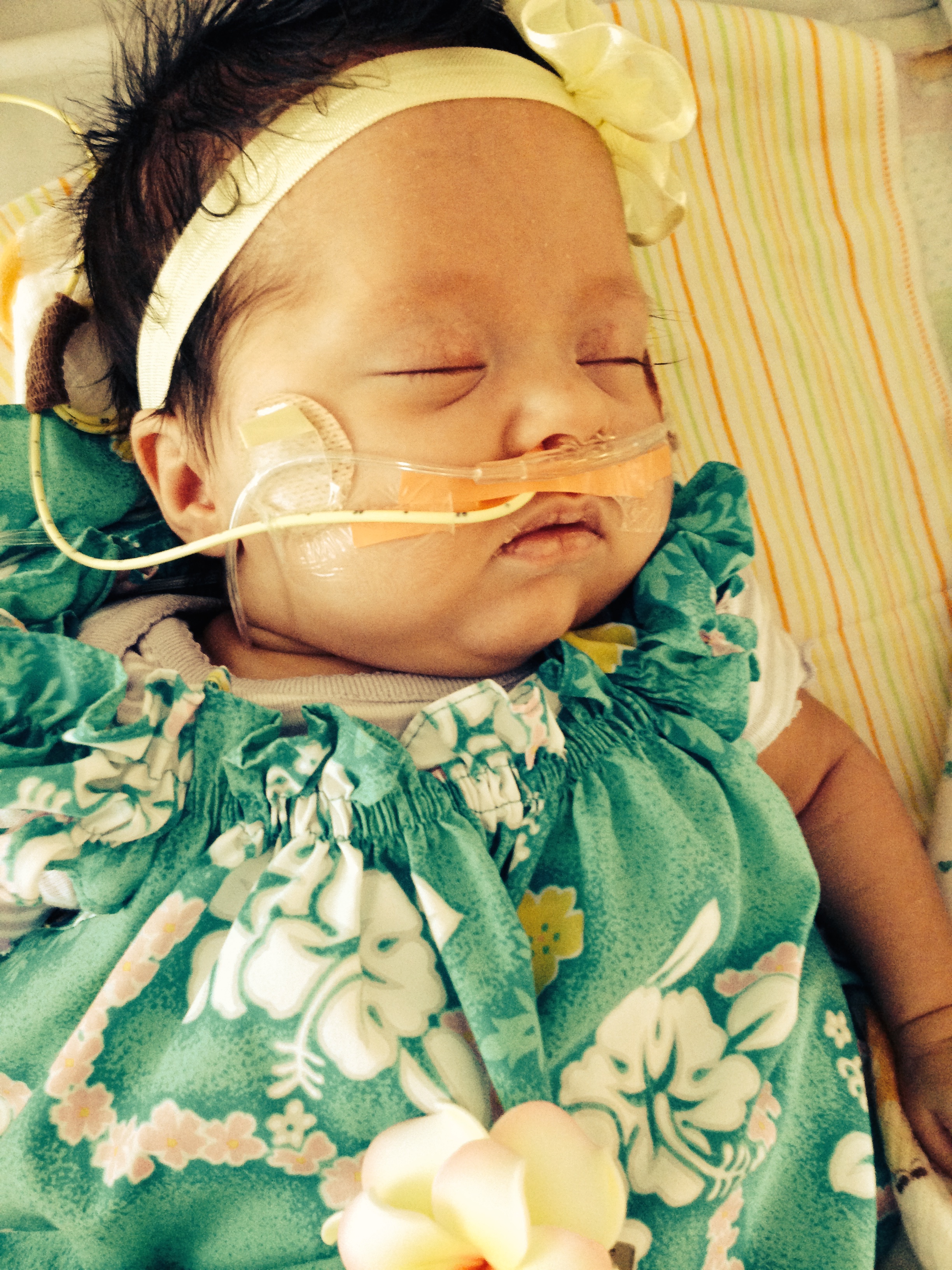
What I did not prepare myself for were the looks we were going to get from people who glanced at our baby. To put it more accurately, the looks our baby would get, the long stares and the double and triple takes. When you take a baby out in public people are inclined to look at him or her. What they do not really expect to see are tender grip cheek stickers holding a nasal cannula in place and an NG tube, held down by an orange strip of tape and wrinkly patches of tegaderm, snaking its way across the baby’s face.

I can still see the first person inside Target who saw all that on London’s face. A nice looking man who was clearly caught off guard by all those sticky accessories. He did a double take and by his second look at London I could see it in his face, he did not have a clue what any of that stuff was. He could very well have thought London’s situation was more serious than it really was. A part of me wanted to stop everything and explain to him what every little tube and piece of tape was doing and that London was a very strong little girl who had been through more scary days than many people my age have endured.

But I could not take the time to tell that man about all that stuff and all those scary days. It would feel like we were back in the NICU explaining to visitors what all the machines around London were doing and why she needed them. It would be an exhaustive way to transition into a life at home with London. So, I just nodded and smiled at the man and kept on walking, his inquisitive stare following us around the store. I had then such an instantaneous and deep appreciation for parents whose kids will never shed their special medical tools and/or physical and mental challenges. We were, for the moment, living that.

But after 109 days in the NICU, I also knew that we had an insanely determined little baby on our hands and, with time, people were going to lean over the stroller and see nothing that might hint at this little girl’s history, enough to fill a book, and that is what has brought a smile to my face every double take since.

Do you remember the show Rescue 911?

IMG_4109

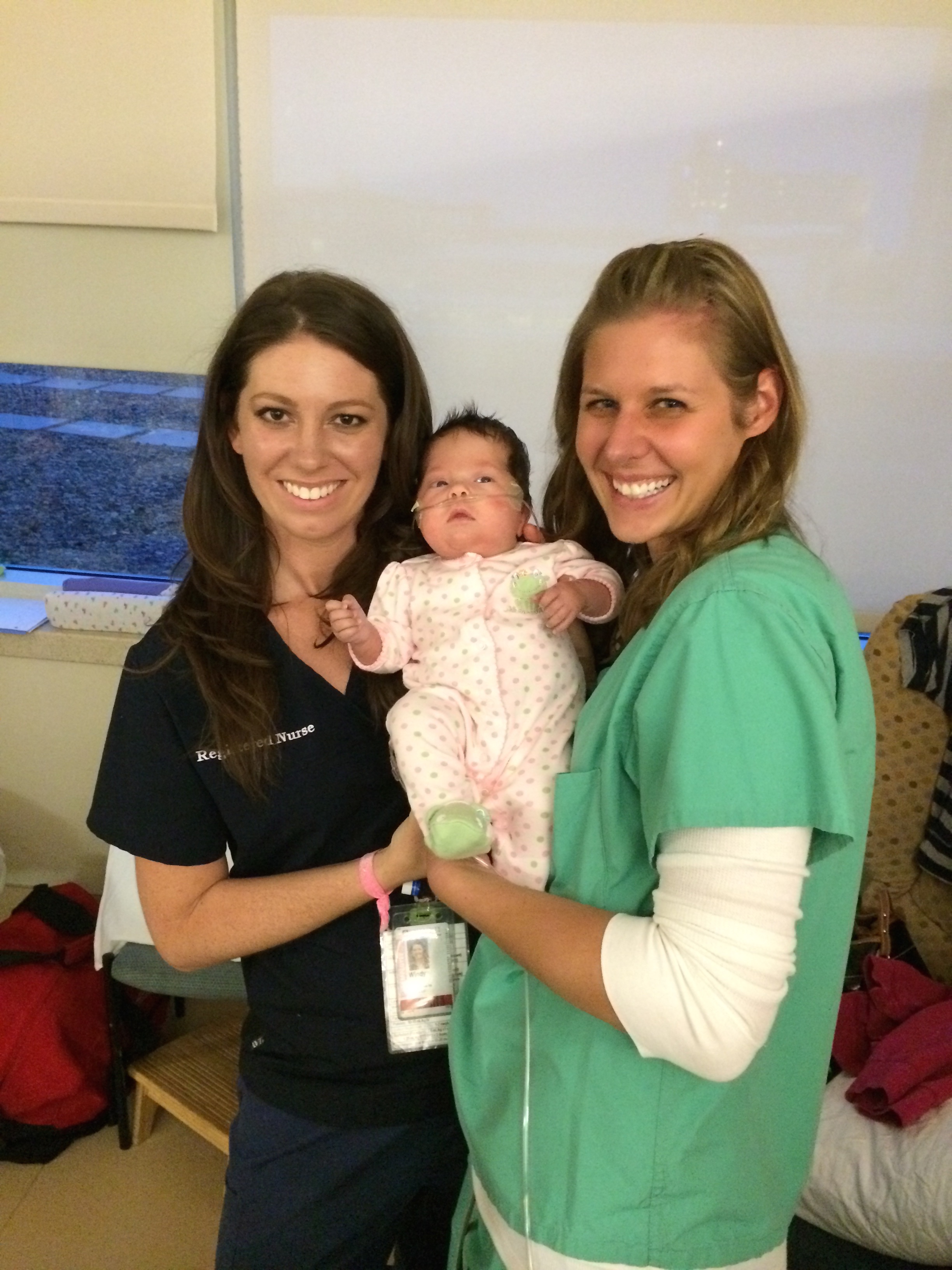
Windy and Rachel on their last night shift with London before she leaves the NICU.

When I was much younger I watched the show Rescue 911. Hosted by William Shatner, the show reenacted real-life emergencies and spliced in interviews from people who were present when the aforementioned emergencies occurred. At the end of the reenactments, the rescuers who saved the individual/s in need of help, were reunited with the people they saved.

The reenactments are so bad they are painful to watch. It was easy to find some old episodes of the show on YouTube. There is even a story about a baby being born “nearly three months early” while on a flight. He weighed in at 4 lbs, 6 oz. (I have to interject here, if the baby was really almost three months early, that’s a huge kid for that gestational age). Here’s the link to the story about the premature birth on the flight. As you might guess, the reenactment is hilariously bad.

What got me thinking about Rescue 911 was seeing some of London’s nurses the other week. I got home and two of her primaries were visiting Kate and London, eating pizza Kate made, and sipping wine. I got a chance to visit with the nurses a little bit before they left and during that time I thought of the reunions at the end of Rescue 911. I always enjoyed these scenes, loving the idea of being able to see and possibly become friends with the people responsible for saving my life or, in this case, my daughter’s life. And now, that was happening right there in my kitchen.

I would never wish what Kate and I went through with London upon anyone. But if it is to happen, this is the happiest ending one could possibly hope for. We were incredibly blessed to have such caring NICU nurses. And now those nurses have become friends. I hope that as long as we are in Denver and as long as they are working nearby, the reunions continue because, for us, they are heroines.

If You’re Just Now Getting Here

I probably should have done this sooner, but if you’re just now finding this blog via a tweet, Facebook share, or web search, then you should know that it all started with a series of posts detailing London’s birth. These posts are the foundation of this blog and, for their author, the hardest to write and the hardest to reread.

Feel free to scroll down through the archives, but if you’re looking for square one, and for getting a better feeling of how this family got its start, follow the links below. A quick word about the original posts, there are thirteen of them, but they aren’t very long posts so reading all parts is not a big ask.

London’s Birth Part I. 

Part II.

Part III.

Part IV.

Part V.

Part VI.

Part VII.

Part VIII. 

Part IX.

Part X.

Part XI.

Part XII.

Part XIII.

The NICU Is A Fortress

IMG_3504

One of my favorites. Her 2-month birthday. “To infinity and beyond.”

As badly as I wanted London to leave the NICU I was also terrified of some of the things she would lose when we walked out of that hospital. 24/7 caretakers. A team of RNs, NPs, and MDs just feet away. The opportunity to talk to one of them whenever we wanted to and to ask the dumbest questions of.

As a parent, you do grow accustomed to having your baby in the hospital 24/7. It is comforting to know that your child has the best babysitters in the world.

While London was still in the hospital I wrote:

Right now I feel like taking her home will be bittersweet. I’ll be beside myself, in a good way, when we walk into our house holding London, but it’ll also be frightening to leave our NICU family.

Back then, the approaching discharge date meant exposing an already fragile baby to the terrors of this world like driving home with her! Or contact with the public, those creepy baby oglers who think they have the right to walk up and touch your child just because she is the cutest thing they have ever seen. Can’t stand these people! We would be responsible for a baby, yes, but also all the leashes that come with her: NG tube connected to a feeding pump, an oxygen cord, and a pulse ox connected to her foot. Monitoring all that could be overwhelming on top of normal baby duties.

But a baby has to leave the NICU eventually. We had our gambles and triumphs there in that pod, but the good stuff was to be found in life beyond those hospital walls. It is hard to think of leaving the NICU as anything but a tradeoff. An adventure was before us, filled with successes and failures, loss and gain, losses and victories. But behind us was London’s NICU pod, which, for her parents, became the safest place in the world.

The Header Image

Just a quick story about the header image. It is a panoramic shot of London’s second room in the NICU. This is really the penthouse of the NICU. When we moved from our original pod to this one it felt like going from the ground floor to the fiftieth floor. It’s 1.5 times the size of our first room and it is the only room in the NICU with a whole wall of windows. Our first room had no windows.

I was hesitant when the room opened up and it was first mentioned to us that we could possibly move in there. This was the room that was opposite our first room. I wrote about it in this post. So, you understand my hesitancy.

One of our primary nurses had one stipulation about our move into this room. She said that everyone else that gets that room always ends up pulling the shades and blocking the only flood of natural light the NICU gets. If we were to move in there, we would have to promise her that we would only have the shades down in the morning when the sun is unpleasantly shining straight into the NICU’s eyes. We promised. I got over my initial hesitancy and we made the move, knowing that we had well over a month left in the NICU so why not upgrade for free?

The move was one of the smartest things we did while London was in the NICU. We were there for quite a bit longer than we thought we were going to be. We fell in love with that room, as much as one can fall in love with a hospital room.

Toward the end of London’s NICU stay, there was a leak in the ceiling in London’s room and we had to give it up for just one night while it was fixed. The next morning I came back to the NICU and London was in her temporary room, which was much further back in the NICU. No natural light made it there. Everyone was pale and had a depressed look on their face. At least, that’s the way it seemed after living in the penthouse for so long. I only had to sit with London in that room for 40 minutes, but that was more than enough. I pushed her back to her pod with a nurse and it was like stepping out of a tunnel into a glorious sunny day.

We are so thankful for that upgrade.

Not Fun, Placing an NG Tube

Before our NICU discharge, Kate and I both learned how to insert a nas0-gastric (NG) tube into London. NG tubes are necessary when the baby cannot drink enough milk to thrive. When London was discharged, she was only nippling 25% of her daily volume. The rest was pumped through the NG tube.

We needed to learn how to place it because NG tubes can be easily pulled out by the baby. During her NICU stay, London pulled her tube out several times. So, we had seen it put back in place by the nurses. A nursing student did it one day while we were there watching. I would have been extremely nervous if I had been in her shoes with the parents hovering over me, but she did extremely well, threading the tube up one of London’s nostrils and down, down, down to the stomach.

IMG_2436

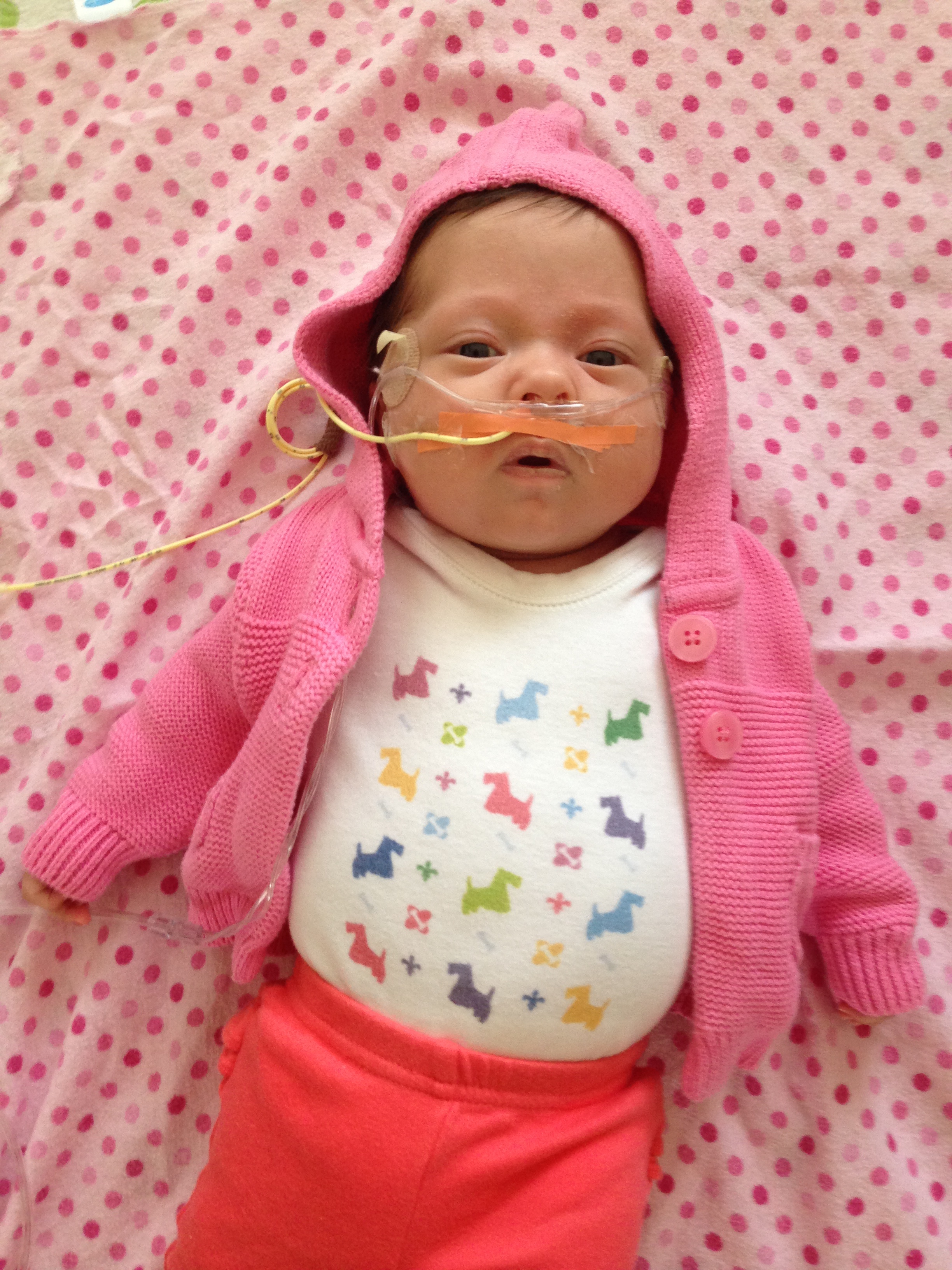
At home, with that darned tube snaking out of her and all that orange tape on her face.

When it was time for Kate to practice on London they both did pretty well. When the tube first reached London’s nostril Kate stopped because she was already crying. Nurse Megan and I comforted her and told her she could do this. Kate composed herself and went for it, making it look easy, even though inserting an NG tube in your baby is really one of the worst tasks you can have as a parent of a newborn.

I tried the next day and, again, things went pretty well. Of course, by the time I was finishing up with the tube, London was bawling her eyes out, but regardless of who does this to her and how they do it, by the end, London was always screaming. I suspect most babies respond this way. Luckily, London was always easy to calm down afterward.

The success we had placing the NG tube while London was in the NICU did not follow us home. You can nearly cover your baby’s face with tape trying to hold that NG tube in place and attempting to make it impossible for the baby to get a finger around it and pull, but eventually, that thing is coming out. The first time this happened to us it was already late at night. We were so disappointed we had to do this to London. We let her calm down as we readied a new NG tube, tape, and a little sugar water to distract London from the pain. Kate tried first and I held London down on the bed. Things seemed to be going okay until the tube was a couple inches in and it wasn’t going anywhere. London was awake and bearing down so the tube had nowhere to go. It is agonizing to be in this position. We didn’t know if the tube was going somewhere it wasn’t supposed to be going. We didn’t know if we should push with more force. Meanwhile, London sounded like someone was torturing her.

We regrouped before I tried to place the tube. No luck. Same thing happened. London was bearing down and the tube wasn’t going anywhere. We abandoned that attempt. I was distraught, grabbing a pillow and screaming into it because I just couldn’t stand inflicting that much pain on London, twice, and without any reward.

After an hour of talking about our alternatives (try again in the morning or text one of London’s night nurses to see if they can place the tube if we go to the NICU) we decided it would be best to just go to the NICU. London’s nurses had offered to do this before we left. If we had any problems, let them know, come on by, and they will put in the NG tube.

We arrived at midnight and Windy had set up a little operating room in the NICU’s conference room. She placed the tube like it was no big deal and I tried to pay very close attention to how it worked so well in order to avoid doing this again.

A week or two later, London had pulled the tube again. I tried to recall the night at the NICU and I watched a couple of how-to videos on YouTube. The keys to doing this properly, at least on a baby, seemed to be sleepiness and speed. Don’t try this when your baby is wide awake because they are able to quickly bear down and stop the NG tube from going in. Don’t be slow about it either. By the time your baby figures out what is going on, you want the tube to already be in their stomach or damn near close.

I volunteered for the mission. Kate held London’s arms. Then we paused. We said a little prayer over London, attempting to calm ourselves before we do this again, praying that it would not be a repeat of last time. We finished praying. We took some deep breaths and then I plunged the tip of that NG tube into one of London’s nostrils and it curved downward and kept tunneling its way right down to London’s stomach. What a huge relief it was for all three of us to have that done. In this case though, I think Kate and I were the most relieved. No trip to the NICU tonight, baby.

We did not have to place the NG tube again. A little over a week later we pulled the NG tube ourselves because London was due for a photo shoot. That day she took all her milk by bottle. She looked and still does look amazing without that tube coming out of her nose and all that tape on her face. When I look at pictures from the NG days, I cannot get over how crowded her face looks. We are so happy to have put that phase behind us.

We’re Ready

About two weeks before London was born, I was talking with a mom of two kids and telling her about the baby girl that we planned on welcoming into the world on May 4th (or sometime around then). When I finished up sharing my exciting news, she had a question for me, “Are you ready?”

“Yeah, I’m ready,” I said.

“No. No, you’re not,” she replied.

For some reason this exchange, between the parent who is in the thick of it and the expectant parent, is commonplace. And, I would be willing to bet that expectant fathers get this response more than expectant mothers do, but I am not bothered by that. I am bothered by the response, “No. No, you’re not.”

Obviously, I recognize that this response is, in part, a weak attempt at humor. What appreciation I have for that humor though is wiped away by the response’s other message, one that seems to imply that my wife and I, one, did not know what we were doing when we decided to make a baby and, two, that prior to that decision, we did not think about what we were getting into or taking on.

Of course, no one knows for sure what they are getting into when they decide to start a family. We certainly did not know that five months to the day that we found out we were expectant parents our little girl would arrive. We did not know that London’s prematurity meant that I had to stay at home with her. We did not know of how deeply we would love our child. We could not have imagined our lives changing so much in the span of six hours on the night of January 29th.

But we did know something before London was even a whisper. We knew that if we moved forward with our desire to start a family we were embracing the unknown in a way we never had before. Within that unknown, there sure was the possibility of having a preemie. There was the possibility of a miscarriage. Really, the possibilities are endless and that is a frightening thought, especially when you become a parent.

For the chance to love someone more than ourselves; for the opportunity to have our hearts leave us and become a little human being, these are joys that trump the unknown.

For that mom who said, “No. No, you’re not,” who knows what surprises and challenges came her way in parenthood, but, she must know, and so must other parents who tell expectant parents that they are not ready, that, indeed, some of us are.

London’s Email Updates

I sent the first of many emails updating family and friends about our situation at 2:43am on January 30th, one hour and nineteen minutes before London was born. It reads:

Hey Dear Friends,

Weve spent the night at the hospital because our little girl is coming early, really early. Kate felt some pain last night around 10 and we thought it necessitated a trip to the hospital. We are very thankful we came here because Kate’s water broke about an hour after we arrived. Kate is stable and the baby is doing okay for now, but Kate won’t be leaving the hospital until the baby is born. We don’t know exactly when that will be. It could be a day, weeks, or over a month.

We all need your prayers, happy thoughts, and whatever positive vibes you can send our way.

Love,

Bryce

Of course I had to send out another email very soon after that:

Update. The doctors needed to go forward with a c-section. Kate is doing great in recovery. Our daughter, London Grace Perica is also doing well. She was born at 4:02 this morning, 2 lbs 6 oz, 14.75 inches long. She’s stable. Very crucial period right now and I am so thankful for all your prayers and support.

Love,

The Perica Family

From that point on, email was the way to keep everyone in the loop regarding the many ups and downs of London’s NICU stay, but especially during those fragile first weeks. We received so many responses from these two small emails that it has taken me hours to scroll through them and the brief exchanges I had with some of you who asked specific questions about London’s health and how exactly you could support us through this time. The email conversations with some of you never stopped for the entire time we were in the NICU. Sitting down to write weekly updates about London’s progress or sometimes lack of progress was therapeutic for me. Writing the emails allowed me to calm down some after an especially frustrating or scary day. I wrote them next to London’s side, or during dinner at home, and sometimes they were the very last thing I did at night, tapping out emails on my iPhone in the dark with Kate sleeping beside me. It was a form of meditation. It is something that I would recommend to parents in a similar situation. Whether you are just emailing your parents or a huge group of friends, sending updates may trick you into thinking you are spreading the burden around. It may have had that effect on me.

Inevitably, I grew tired of sending out email updates about London in the NICU because all three of us just wanted the hell out. Writing the last update on May 22, three days after London came home was the best email I have ever sent. I have shared it below. Thank you for responding to emails throughout London’s stay and for reading further on this blog about her time in the NICU and raising her there and at home.

May 22, 2014, 11:34pm

Friends,

On Monday, after 109 days in the NICU, Kate and I walked out of the hospital with London. We were helped out to our car by one of our primary nurses, Megan, who was there the morning London was born and admitted to the NICU. By Monday, we had shed enough tears with Megan (and London’s 3 other primary nurses) throughout London’s NICU stay that there were only smiles on our faces as we loaded London into the car, hugged Megan goodbye, and drove home very carefully.

London has come home with an NG tube since she was not taking 100% of her milk through bottles. Kate and I both placed NG tubes in London before she was discharged. London has the tendency to yank them out so we need to know how to insert a new one. When necessary, we use a pump to give her the rest of her milk. She is on oxygen, as are most preemies in Colorado when they come home. At this point, it’s also necessary to hook her up to a monitor at night. Baby came home from the hospital with a lot of hardware, but we’ve got it all figured out.

London had a follow-up head ultrasound before discharge. We received the results on Monday before we left. The bleed in her brain has been completely reabsorbed. However, her ventricles are still enlarged. At this stage the doctors would like to see them a bit smaller, but they aren’t concerned enough at this point to do anything clinically. They will monitor her closely in follow-up appointments. At this point, we wait it out a little bit and hope the ventricles decrease in size. This was not 100% positive news, so it was a little unsettling to receive it the day we left, but it does not really change London’s outlook at this point. Other news we received before London was discharged…She had one more eye exam before going home. Her ROP continues to improve.

Though we are sure to face quite a few more challenges with London’s health and development, we are of the mindset that the biggest and scariest obstacle, the NICU stay, is behind us. Thus, I am finally ending this long email chain. Thank you so much for all the meaningful and loving replies and for your interest in London’s progress while she was in the NICU. Thank you for the prayers. It was always humbling to know how many people were lifting us up. I could say thank you for so many more things, but it would be a long, boring list, which would fall short of expressing our gratitude for you and the profound joy that has come to us in our little girl and finally getting her home.

Our Love,

bryce, kate, & london grace

Little London’s Nurses

When I first met London’s primary NICU nurses I did not know just how special they would become to Kate and I. In hindsight, that I would come to think of them as extended family in a way was inevitable. NICU parents have to get away from the unit for their own health, but for many other reasons as well. Life goes on. Jobs don’t wait. Other responsibilities don’t disappear just because you find yourself in this incredibly hard situation. So, when it comes time to leave the hospital, you leave your preemie first and foremost in the hands of your NICU nurse. Of course, there is other support, other nurses on the floor, nurse practitioners, residents, fellows, and attendings, but the one who is on the front lines, the first responder, is the primary nurse for your child.

London had four primaries. From the start they were the most comforting, knowledgable, and loving people. They were her first, and they will always be her best, babysitters. They taught Kate and I most of what we know about raising a preemie. They explained every twist and turn of London’s treatments. I could go on and on and write a long list of the many things they did for London and for Kate and I, but why should I when I can just write this: they ushered me into parenthood with such grace that when it was time to leave the NICU with London it was hardest to say goodbye to them.

As I continue to write about the experience of having a preemie, I will write more about London’s nurses. But for now, I will end this short post with this thought that I had long before London was discharged:  London’s primaries are people who, no matter how well we stay in touch for years to come, I will treasure for the rest of my life because I will never forget the way London was introduced to this world and thus, I will never forget the people standing by her bed during that tumultuous beginning.


NICU Noises

As we settled into the NICU routine we started to accustom ourselves to the environment there. The NICU is a far cry from a nursery (pun intended), but one thing we noticed right away were the noises. They came from everywhere. Every preemie is on a monitor and every monitor has the potential to make some very loud, annoying beeps. The NICU we were in can hold somewhere around 50 babies. Combined with the beeps from the monitors, the cries, the noises from the staff and the visiting families, there really is no quiet time in the NICU.

London’s monitor alone made four different noises. Right away, you learn to fear and hate the beep for a brady (short for bradycardia) when the baby’s heart slows and blood flow decreases, followed by dropping oxygenation levels. The noise itself leaves no room for peace. I suppose that is the goal. It gets everyone’s attention and makes you want to hit all the monitors in the place with a golf club. Good thing I am not a NICU nurse. It took a while to get used to the bradys. They sound like a horrible thing, and they can be, believe me, but bradys are quite common for preemies. London bradied quite a bit. Occasionally we had to rub her on the back a little bit to get her to snap out of it, but most of the time she climbed right back up into a normal range without any stimulation. There were days when London barely bradied at all, but then there were the horrible days where every baby in our corner of the NICU seemed to have made a pact to all brady at the same time or take turns. Like I said, a parent gets used to it, but you don’t quite realize how normal the bradys can become until you have visitors and your baby bradys while they are there. The visitors looked way more concerned than we did after a while, especially if they are in healthcare and are used to taking care of adults.

The noise for when the baby goes apneic, or stops breathing temporarily, is slightly different than the brady noise. Don’t worry though, when you hear it you will still want to jump out of your seat and break the monitor over your knee while simultaneously appreciating the notification that your daughter is not breathing. London did not have many apneic episodes and, when she did, they were mostly false alarms. The monitor would tell me London’s breathing at 2 breaths per minute, but her oxygenation was at 99. Note: just get clarification from your nurses about the quirkiness of the particular monitor your child is hooked up to.

_BKP2265The most common noise we heard from our monitor is for desaturation, aka desat, meaning there is a low blood oxygen concentration. London struggled with chronic lung disease throughout her NICU stay, so she desated a lot. Some days the alarm seemed like it was always on and the nurse would have to come into our pod every five to ten minutes to silence the alarm or tweak London’s ventilator settings. Not as alarming as the brady beep, but the desat beep had a way to bore itself into my brain. I would here it in a song on the drive back home from the NICU. I would hear it in my sleep. I would hear it come from the TV. It sends a strong message that your child is not oxygenating like she should be. It does not let you forget and it never leaves your head as long as you have a baby in the NICU.

The last noise is really the only happy noise your baby’s monitor makes. It’s a gentle beep that notifies those around your child that she is oxygenating very well, with levels around 98-100. If this is the case, then the oxygen can be titrated down to see if your baby continues to oxygenate well on a lower flow. For us, this noise was the rarest, but toward the end of London’s NICU stay we did start to hear it a little more often.

The main takeaway from this post: the NICU monitors are always making noise. Some are deeply alarming and others you shrug off after a few weeks. How do I know this? Because after a while the only alarm that could wake me up out of a little nap in London’s pod was the brady beep. In fact, the other noises can lull you into a little nap when you are stretched out in the recliner next to your baby’s pod. And then, BAM, a brady alarm makes sure you don’t get too comfortable.

Life Goes On, But Something Was Lost

“I love you, my child. My Child. Still can’t believe it all. Wishing you were still safe inside me and that I could feel you. I miss you, little girl. Be strong.”

– From a letter Kate wrote to London on January 31, 2014. London was one day old.


I start today’s post with this quote because in a few sentences Kate conveys the sense of loss mother’s have when they have their baby so early. Sense of loss is somewhat misleading (London was stable in the NICU), but Kate knew and I knew that the safest place for London and also where she would still be developing the best was lost. That was not the only thing lost though. A full-term pregnancy was now just a dream.

Kate was just starting to look pregnant when London arrived. Our closet was full of maternity clothes waiting for months 7, 8, and 9. In fact, the day we got home from the hospital I helped Kate up the stairs and followed her into our room. Shortly thereafter, I heard Kate in our closet and walked in to see what was going on. Kate stood staring at a rack of maternity clothes with tears running down her face. I listened to Kate and held her. Seeing Kate so sad about not getting to wear these clothes even made me cry.

As a father, I do not know the sense of worry and loss a mother has when, without any warning, the human being growing inside of her is out over three months early and exposed to a world she wasn’t supposed to see until spring. But now, having a wife who has gone through that, I have a decent understanding of what that is like.

The sense of loss manifests itself in a variety of ways. One of the strongest, at least in the first week after London was born, but one that also fades over time, is how painful it is to see pregnant women who are full-term or damn near close. To be honest, both Kate and I hated seeing very pregnant women for a while. We were comforted to know this is completely normal. In the two days after London was born, we received a slew of emails, calls, texts, and cards from people who wanted to let us know that they were praying for us and for London. A few of those contacts had preemies themselves. And in one particular email, a mom wrote, “you will hate seeing very pregnant women.” She nailed it. We both did. One of the first days out of the hospital we went to Baby’s R Us to stock up on some breast pump supplies. There were couples everywhere and it seemed like every single woman was about to pop. It was extraordinarily tough. I ran out of dagger eyes to give.

Being bothered by the sight of very pregnant women was the product of our envy during those early days. I remember I would see a couple who is clearly having a baby very soon and think, damn, they’ve got it so easy. They really have no idea. Look how they’re wandering the aisles at Baby’s R Us without a care in the world. Of course, our attitudes have since changed and I no longer think that those soon-to-be parents had it so easy. Having a baby is a lot of work, no matter the gestational age at birth. However, if having a full-term, healthy baby was exactly the same as having a preemie, I would be lying to you and severely devaluing our experience, the experience of thousands more, and the NICU and everyone who has ever worked in one.

I am so sensitive at times to other people’s feelings that it took me a long time to realize that even though this is our first time around with a baby, I know it has been more difficult than if London had been born full-term. Sharing that in the months since London was born and even now, I feel sort of like a jerk because it boils down to me saying, “Well, we have had it quite a bit harder than you.” I know that can sound like I am devaluing the difficulty of having a full-term baby, but that is not my intention. I am just trying to speak truth from our experience and that of the other parents in the NICU right now, who also know that with the littlest life they were blessed with comes the most terrifying and stressful days of their lives and the knowledge that although life goes on, something has been lost.

Letter to London On My 31st Birthday, Her Day 4

Dear London,

You will remain for the rest of my life, the best birthday gift I have received. I did not expect to become a dad at 30. I thought I had a few more months, a little more time to prepare for your arrival. IMG_2967

On this birthday, your mom and I checked out of the hospital. It was extraordinarily tough leaving there without you, but getting home did make us smile. We can’t wait to bring you here. Aunt Kendra cleaned up the entire house. There was a giant balloon that said, “Baby Girl!” (a note from the present day: the baby girl balloon was still aloft, but slightly deflated, three months later when we finally disposed of it) and there were two smaller balloons that read, “Happy Birthday!” and “Welcome Home.”

Kendra left a birthday cake in the fridge for us too. It was about as good as a homecoming could have been without you there.

Your  mom and I were very tired so we fell right asleep for a nap before Nana and Papa arrived. Their arrival woke us up. I brought them upstairs aIMG_2968nd we all talked about you for a while in our room before we went downstairs for dinner. During our meal, I retold the story of your birth and what it was like seeing you for the first time.

After dinner, we took Nana and Papa to meet you. They instantly fell in love with you. Nana called you a miracle and of course they both shed tears. After a while we prayed over you, like we have been doing every night since you first arrived.

We eventually went home. What I want you to know about home on my birthday and, until the day you come home, is that it is just a shell where we eat and sleep. It is incomplete without you. Our hearts are always besides yours at the NICU. Here at home, we fall asleep trying to fill the void with videos and pictures of you. And then we dream of you. Sometimes we cannot sleep because of the worry at our core for you. As soon as we wake, you are our only concern. Our home’s potential is latent. We bought it just weeks ago with you in mind and it is only you who will make it what we so badly want it to be.

Goodnight London.

London’s Birth: Part X, Into the NICU

*This is another post in an ongoing series. Scroll all the way down or click to part I to get to the beginning.

Right outside the double doors the charge nurse introduced herself. She guided me through a winding path of at least sterile-looking hospital hallways. Now was as good a time as any, “Can I get a new mask?”

“Of course,” she said, stopping at a counter and getting me one and several tissues. I pulled my mask away and took a peek at the inside, not a pretty sight.

I followed the charge nurse to a pod. Each baby in the NICU we were walking into stays in a pod, not a room necessarily, but more like a cubicle with walls nearly to the ceiling. We walked the length of the NICU, took a left and there was London, skinny, vented, cleaned, and holding on. The doctors kept telling me she was receiving surfactant, which is a mixture of fat and proteins made in the lungs, but preemies are often born before their lungs can produce enough surfactant. The mixture coats the alveoli, or air sacs in the lungs, and this prevents the alveoli from sticking together when the baby exhales. A nurse said London’s lungs were like a hardened sponge right now, not ready for life outside the womb.

I stood there for five to ten minutes, all the while an occasional nurse and doctor would tell me about what they are doing or what they plan on doing. I did not retain that much. I was just locked to my daughter and I was in sort of an emotionless state, unable to fully register the last six hours. I was thinking enough to take my phone out and snap a picture of her. I was hesitant to get close. I had the same feeling I had earlier in the OR, stepping up to the bedside and taking a picture of London meant I was getting closer to her. I was letting my guard down. I was starting to realize that five and a half months ago we embraced the idea of creating a life we ultimately had no control over. The unknown and deeply frightening future belonging to my daughter was coming into sharp focus. I took two quick pictures. London with a full head of hair turned to her left, eyes fused shut, gaping mouth with the endotracheal tube snaking out of it, monitors on her chest, blood pressure cuff and pulse ox on right arm, umbilical chord clamped shut, plastic covering her lower body to keep it humid, and a nurse’s blue-gloved hand holding her legs down. I said a quick prayer when I took the picture, please God, do not let this be the only picture I get to take of her.

Sometime later, the team was prepping London to place a peripherally inserted central catheter or PICC line and an umbilical catheter. They told me it was a good time to go check on Kate because they would be working for a while. I thought that sounded great. I took a picture of London’s pod number, “Pod 3, 423,” not knowing if I would be able to find my way back or if I would need that information later on. I started stepping away from the pod and realized I had no clue where Kate was now. Someone took me to a room, which looked like it was used to just house patients in limbo who might be fresh out of surgery and do not have a room to go to. There were four hospital beds and four curtains, but none of them were drawn. Kate was the only patient there. She looked great to me because she was still here, conscious, and strong, but she looked amazingly tired, which is to be expected. I know I looked like hell. We chatted about London and where she was placed in the NICU, what they were doing to her, her weight and height. 2 lbs, 6oz and 14.75 inches long.