How’d This Happen?

A couple of weeks after we returned from our beach vacation last summer, Kate expressed to me that she thought she was not pregnant (we had been trying for a couple of months). She was deeply saddened by this, even starting to worry about us having fertility problems. I did my best to calm her, telling her that on average it takes six months of trying after coming off the pill before the woman becomes pregnant.

Two more weeks passed. In the days before Kate’s family arrived (on August 30), Kate told me that something didn’t feel right. Hearing this from Kate, along with her smelling “horrible smells,” which I couldn’t get the faintest whiff of, I encouraged Kate to just take a pregnancy test to confirm that she wasn’t pregnant. This was on August 29th, the same day we received a box of pregnancy tests from my sister, who had officially decided her childbearing years were behind her.

On the 30th, I woke up around 6:15 in the morning. I noticed Kate wasn’t in bed, but that wasn’t unusual. I sleepily walked into the bathroom to pee and right as I started, I heard Kate’s loud footsteps. She was running toward me and yelling, “Wait! Wait!” When she got to me she shoved an empty and clean peanut butter jar straight into my stream of pee and yelled, “I need some of your pee!”

In Kate’s other had was one of the pregnancy tests from my sister. I was not quite with it yet that morning so I just thought she was seeing if they work properly, although with a level of excitement I did not expect. As my brain warmed up in those few seconds the obvious reason for her behavior came to me. She had already taken a test, it came back positive, and so she was testing the accuracy of these pregnancy tests due to their expiration 18 months ago.

My test came back negative (surprise!) and Kate explained to me that she had taken one before I woke up and it had been positive. She had her doubts though because she read only that morning about how expired tests were not be used and/or trusted. Nevertheless, we had one positive test. Kate even tested the tap water. Negative. Kate said she would try to get in for a test at work.

I spent the day doing some last minute errands and getting ready for our company to arrive, but I could not stop thinking about the possibility that Kate was pregnant. I thought about it all day until the afternoon when Kate got home and set a bag on the counter, telling me it was a card and book for Kendra (her sister) and her boyfriend. She then nervously walked straight out of the room, but added that I could look at the card and book. Flipping the book over first, I saw the title, something about the first year of fatherhood. In a daze, I looked at the card, not even reading the front, flipping it open, saw that Kate had already written in it and signed, “Kate and B.” In my current state, I still thought that it was a card for Kendra and Jake and that Kate had already signed it for us, Kate and Bryce. I didn’t even read what else she had written._BKP1683
I ran to Kate, who stood at the doorway to our room and asked, “Really?”

“Yes,” Kate said through tears and a joyous smile. I hugged her close and lifted her off the ground.

Kate said something about reading the card and I told her I hadn’t. Oops. I ran over to the kitchen and read it. “Cute as a button” graced the cover. Had I bothered taking the split second to read the card, I would have known that it was a card for us. I truly felt sad about botching her efforts to tell me. The daddy book made it pretty clear though. The rest of the afternoon we basked in the news and finalized how we were going to share it with Kate’s family.

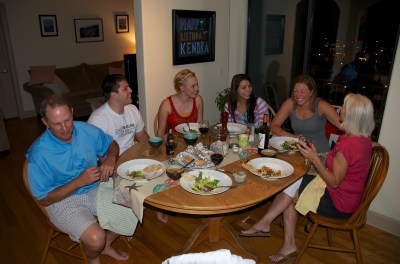
Toward the end of our family dinner that night, I stood up and signaled to everyone that I wanted to take a group picture. Once I had all of Kate’s family in the frame Kate commenced with a countdown, “One, two, three, we’re pregnant.” I had the camera take a burst of pictures, catching everyone’s reactions. The first picture didn’t record any remarkable changes in facial expression.
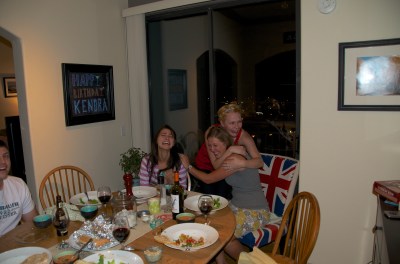
_BKP1684In the next picture, my father-in-law is looking at the ground. He doesn’t look disappointed, but it does look like the weight of the news, that in nine months he would become a grandparent, is hitting him pretty good. Next, my brother-in-law, and Kate’s sisters are all looking at Kate with huge smiles. Kate’s mom is looking at Kate, still, amazingly, holding her wine glass. And in the next photo, pandemonium.

I set the camera down and joined in. Kate was making her way over to her dad to hug him. He was as happy as anyone there, but still, his first question was, “How’d this happen?”

The rest of the evening is sort of a blur. I know we discussed what we knew about the pregnancy at that point. Four and a half weeks along. Due May 4th. The next nine months were pretty clearly laid out. We thought.


The NICU’s Empty Rooms

Not all NICU stories have happy endings. We did not know the parents in the pod opposite London’s pod. They were very young, teenagers probably. Their baby seemed to arrive in the NICU around the same time London did. For nearly two weeks we were neighbors, who at most acknowledged each other’s presence, but did not speak to each other. We were just getting into the groove of having a baby in the NICU and I was not in the mood to chat it up with strangers. In addition to that, I did not identify with this couple. It seemed like the only thing we had in common was that we both had a baby in the NICU.

As London entered her second week of life, Kate and I noticed that anyone entering the pod across the hall had to gown up. One afternoon some doctors were working on this baby. Some sort of operation. Looked serious. One can only guess what was wrong, but it did not seem like a standard procedure.

Two days later, as we joined London for the day, I took notice of the parents. They looked especially worn out as they spoke with a doctor. We overheard a bit and they were being encouraged to call their parents. I should have taken that as a sign that things were not going to end well for them, but I remained optimistic. Maybe things have just gotten a little more serious, but the baby is still doing okay. Those hopes eroded a few hours later as I returned from a coffee run and heard a fellow speaking to other staff members. A chaplain had been called and most of the family was already here.

I entered our pod and told Kate what I heard. A little time passed and then I stepped outside our pod and stood at the sink in the hallway. Kate stayed inside holding London. As I washed breast pump parts I could hear the mom and dad across the hall starting to say goodbye to their baby. My back was turned to anyone else in the hall, so I did not hold my tears in. I wept for the parents out of sadness. I wept out of fear. I wanted to finish up cleaning as quick as possible so I could go back in our pod and sit a little closer to my baby girl.

Less than an hour later the baby across the hall was moved to a private room, where the family could spend the last hours of the baby’s life in privacy. This practice seems to be as much a benefit of the family with the sick baby as it is for the other NICU families.

Another hour later, I was getting water down the hall from the NICU front desk when I saw someone walk by with a professional camera. I recognized some of the people with the photographer as family of the sick baby. I don’t know for sure if the baby was still alive at that point, but there was still time for one last family portrait.

By the time we left and walked out of London’s room, the pod across the hall had been emptied of medical equipment, mopped, and sterilized. The equipment had been cleaned and put back in the room, but draped in plastic, protected and ready for use when the next little patient arrived. The room looked inviting with its giant windows and rocking chair, like it had already forgotten the family who was in there hours earlier. I remember thinking, the secrets these rooms keep are sometimes for the best.

Leaving Her Doesn’t Get Easier

*Originally written on April 22, 2014.

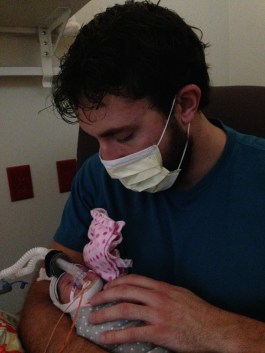
You don’t grow used to visiting her at the hospital. Some might think that happens because she’s been there for nearly 3 months, but not true. Everyday we see her grow. We track her progress. We see her struggles. And eventually you start to see her supreme strength and a little personality emerge. We love her more every single day we see her. She becomes our daughter more and more every day.

IMG_3809

Holding London on April 22, 2014, right before saying goodbye for the day.

You realize there are hours in every day that she might be alert and you won’t be there. Sometimes you have to leave right when she is super alert and scanning the NICU air space for a familiar outline or voice, but you have to go because you have to eat, you have to sleep, and all that is at home, not at her NICU pod. So, yes, at some point you have to pry yourself away from her isolette, watching her as every step you take, takes you closer to that corner where you will lose sight of her until you’re back the next day. You can see that her eyes are trying to track your fading image. Her forehead wrinkles as she does. But sometimes you still have to walk away. No, it doesn’t get any easier leaving her at the hospital. It gets harder.

Every time you round that corner and she disappears, you instantly start thinking about seeing her the next day. How will she have changed between one visit and the next? How long will she be awake while you are gone? Every day you have to round that corner and leave your heart there in her NICU pod. The only time of day you feel complete is when you are by her side. Her NICU pod is the site of happy reunions every morning and angst-filled goodbyes every night.

Some thoughts keep you going. One day, you will get to carry her out of the NICU with you. She will get her first breath of fresh air. She will squint from the sun’s glare for the first time. She’ll see the crisp, blue sky, watching as clouds drift overhead. She’ll hear birds chirping and singing. Maybe it’ll be raining. You will have the honor of introducing all of that and more to a little human being who will have spent her first 100 days of life inside a hospital. You will then have the terror of driving her home, but with the reward of carrying her into that home, where you’ve dreamed about her every night since she was born, where you’ve been toiling in her room to get it just right, where, finally, you will feel complete.


Forget About Stress Eating, We Forgot to Eat

A few words about food. If you have found yourself in a situation similar to ours, you will know that really simple things, like grocery shopping, cooking, eating…heck, even bathing, become so overwhelming that they don’t get done. Of course, that is if you even think about them. There were quite a few mornings that I did not think about them at all as I sat in the NICU holding London. Then, around noon, when I would start to think about lunch, I’d realize I hadn’t had breakfast. I hadn’t thought about it at all. Trust me when I say this, I have to be extremely stressed out and busy to completely forget about eating.

IMG_3015

Coq au vin, prepared by my mom. With Odell beer and Highland Park 18 Yr Scotch.

Things were like this for a while. Kate and I did not have the time or energy to sit down and plan meals for a week and then figure out the necessary items to pick up at the grocery store. It was never going to happen.

We had so many people asking us how they could help. I don’t know about you, but it feels weird to say things like, “Well, we could really use a dinner tonight,” or “Do you want to go vacuum our house?” “Do our laundry?” “Bring us lunch at the hospital.”

Luckily, we have some amazing friends who know from their own experience or the experience of others that stepping up and providing a meal is the best thing you can do for parents who have a baby in the NICU.

We had meals in the freezer for weeks. Friends even came into our house while we were still at the hospital and made dinner, so when we got home there was soup in the crockpot, bread on the counter, and salad in the fridge. There were meals on our doorstep, driven in from Boulder. There were strangers at the door, well, someone who knew someone who knew Kate, dropping dinner off and telling me, “You look tired. Be sure to get some rest.” There were people showing up at the NICU to meet London, but also handing us a meal. There was a Trader Joe’s gift card in the mail. There were parents who cooked amazing meals for us at the end of a long day in the NICU.

I did not do a big grocery shopping for four weeks. I occasionally had to get a few items like milk (of course), eggs, and bread, but other than that, we survived on peoples’ kindness and generosity for weeks, even months. I want to write that we could not have made it through the NICU days without them, but that is silly exaggeration. We would have made it, we just would have survived off countless Chipotle burritos, Einstein bagels, and Panera sandwiches. For bringing a home-cooked meal into our home, we thank you. For keeping us far away from regular fast food stops, our tastebuds, waistlines, and digestive tracts thank you.

At Last, Some Answers

Today, a little something I wrote in a journal back in March. Just a word about this entry, and others like it, is that they often take the form of a letter to London.

March 8, 2014

IMG_1945

Holding London on March 14, 2014.

Held London during Kate’s first baby shower.

Leaving the NICU, walking out into a beautiful sunny day, driving away with the sunroof open, sort of crying. Just hits me how I have to leave you behind every day. You are stuck inside and your world is so incredibly small right now. I can’t grasp how much I love you. I can’t put it into words. It’s a depth of feeling that transcends any prior experience. When I am able to grasp just how much I love you, it lasts a second, in which I am overwhelmed, in awe of creation and what God has blessed us with.

There is something uniquely peaceful about spending time with you alone. You were so good today, satting high and just zonked out on me.

You know, at times throughout this experience I have wondered why we are going through this. Is it something God planned? And I’ve been cynical at times, doubting that saying a prayer would help lasix work as best as it can. At times I am uncertain about the answers, but I am certain of one thing: your arrival has awakened in me a love I never knew existed. It has finally put into perspective how strong God’s love for us is. He looks upon us as newborns, perfect, innocent, like we can do no wrong.

You’ve brought me closer to God, into pure love, than I have ever been. The path forward is not without worry, but it is clear. Clear in that my life up until your birth has shown me exactly how to love you and your mom through all this. I didn’t know I had it in me. I didn’t know if I could. If someone had asked me how to proceed, I would have said I don’t know. Now you’re here and, at last, I have some answers.


What Not To Read

Once London arrived, I was intent on researching preemies because I did not know a thing about them. The very kind nurses gave me a book on day two or three, cannot remember exactly, but I took it with interest. It was The Preemie Primer, written by an MD who gave birth to preemie triplets. Interested in what I would find out about our situation, I opened to the prologue and started reading, right there in the NICU. But how could any brand new parent of a preemie get past this passage detailing the very premature birth of one of the author’s triplets:

And then the worst words that I have ever heard, “Do you want to hold your son? He is dying.”

That is the first sentence of a paragraph. I did not make it to the second, at least not right then. I started to cry and quickly shut the book and put it aside, not touching it for weeks to come. Now, half a year later, I think I can enjoy what this book has to offer. However, I would not recommend it to brand new parents of preemies. At the very least, I would skip the prologue altogether. The thing about a book like this and others (like What to Expect When You’re Expecting) that aim to guide you through a critical time in your life, is that they do present all the worst case scenarios. There are good intentions, I am sure, but reading through them all is like getting on WebMD and self-diagnosing every time you come down with a weird rash or a string of very serious headaches. In other words, reading them can do more harm than good.

That said, Preemie Primer seems to be enjoyed by many readers, so I do intend to read relevant passages in the coming days, weeks, and months. Just don’t crack it open when there is even a chance of hearing those same words (quoted above) spoken to you.

All the Helicopters

One thing I always noticed once I became familiar with the medical campus London was on were the helicopters. I spent so much time at the hospital that I saw so many arrive there and, from London’s pod, I could see them arrive at Children’s. Every time, if I could, I stopped what I was doing and focused on the helicopter when I saw one and thought of the person arriving in it. What is wrong with them? Is it an adult, a child, a baby? Of course, I never got answers to those questions, but it did not stop me from feeling a connection to that person. Perhaps it was more of a connection to their situation, rather than the person, because if they were arriving by helicopter, they most likely were not in great shape. Whoever it was in that helicopter had an emergency and for the first time in my life I could identify with them.

I developed a newfound appreciation for people whose job it is to transport, via helicopter or ambulance, people who are in a medical emergency. Not surprisingly though, it was the helicopters that grabbed my attention as they flew toward the hospital, slowed down, and took one last perfect turn to line up with the roof of the hospital. I took a short video of one in February as I left the hospital one afternoon. Said a prayer, too.


Handle With Care

Yesterday I wrote about holding London for the first time. Today I thought it appropriate to share a video of picking London up directly from her isolette. The video shows me doing this for the first time. The day of the first hold, I was seated in the chair already when the nurses placed London on my chest. Although that was complicated, it is a far more perilous task to pick London up out of the isolette and then move backwards with her to the chair and sit down. The most worrisome aspect of all this is the kink that can form in the oxygen tube when we move London. If that tube is not supported properly once she is on our chests it can once again kink.

When London was vented, it took about five or six minutes to move her and get her situated on us so that both London and parent were comfortable. I trimmed this video to just the first two minutes. At the beginning, you’ll be able to hear a lot of chatter about my height. This happened a lot in the NICU, but as our time there continued all the staff grew accustomed to my height, at least to the extent that they didn’t feel the need to tell me I was tall. If the video appears as huge on your screen as it does on mine, so big that you cannot see the whole video on your screen, press play (middle of frame), and then just click the full screen icon in the lower right corner of the video and you’ll be golden.

The First Hold

Due to London’s umbilical artery catheter (UAC) line and her general fragility, we could not hold her until she was a bit stronger so the UAC line could come out. They pulled that line on February 10, a Monday, and we were told that the next day we would most likely get to hold our daughter for the first time. Just the thought of that was tear-jerking and, I admit, a little intimidating.

IMG_3040

A new and improved family portrait.

The next day everything went as planned. So it was on DOL 12, that we got to hold her for the first time. I wrote in our journal:

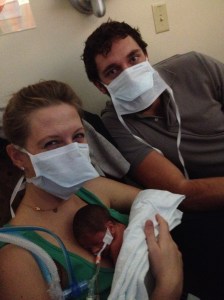
I teared up as I saw you placed on your mom’s chest. You are so fragile and small. So helpless. We are absolutely in love with everything about you. After mom held you for a couple hours, I got to hold you. Kate took an amazing photo with one of our phones. It’s the best photo of us together so far…We reached a new level of love and connection to you today and it was all because of getting to hold you and be with you as we were meant to be with you at your birth.

IMG_3053

The picture Kate took. My favorite.

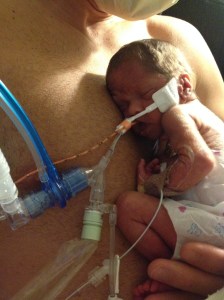
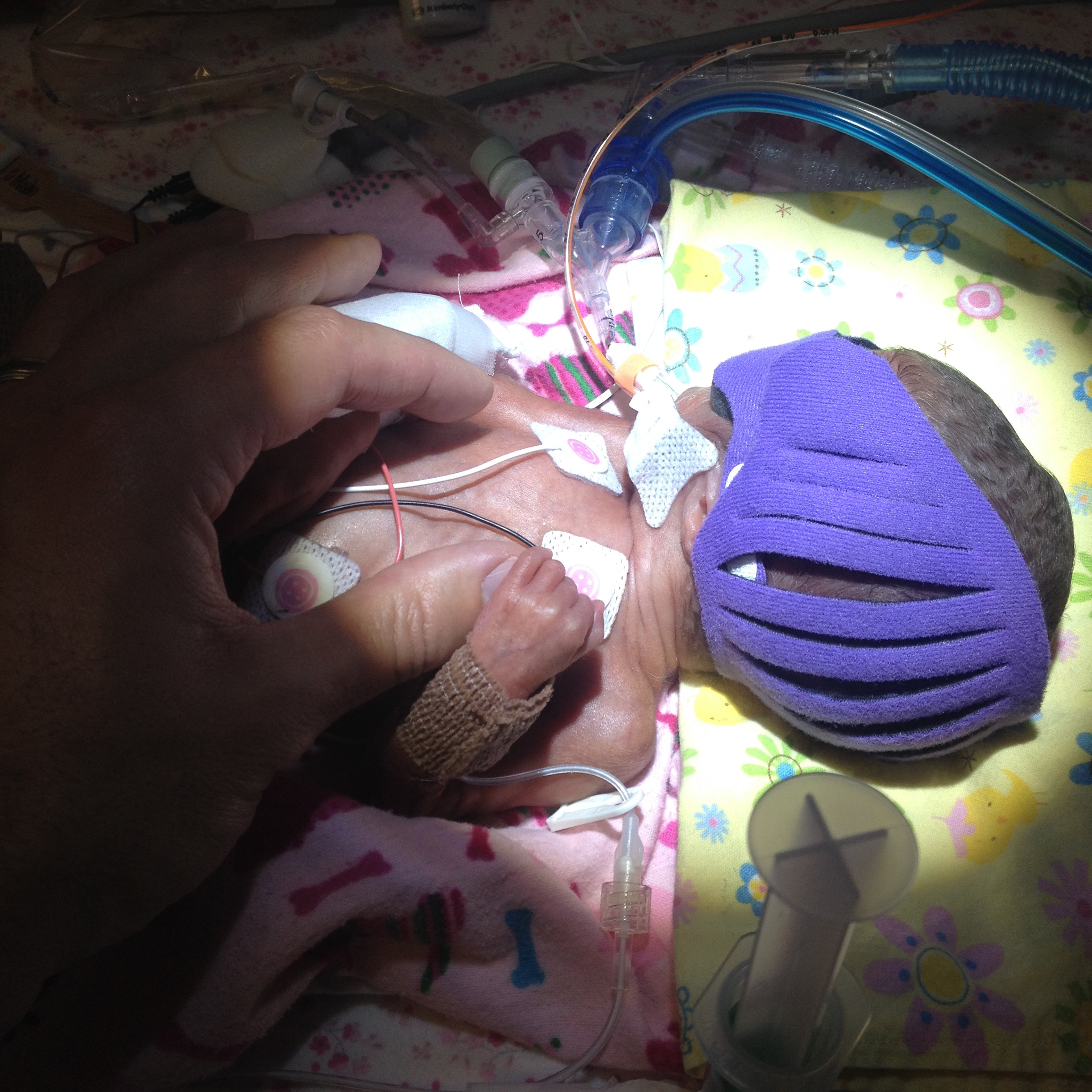
That photo Kate took is still one of my favorites. It will be for the rest of my life. It is such an explicit reminder of London’s beginning. That day I barely had to provide support with one hand to hold London up on my chest. She is wearing the smallest diaper available at the NICU. We have a couple of those diapers (clean ones) in our keepsakes bag from the NICU. When we show them off, most women compare the size of the diaper to a maxi pad. Folded up, the diaper is about the size of a kleenex, albeit slightly thicker.

The first picture of all three of us with London out of her isolette was sent out to everybody that night we got home. From February 11th on, there was not a day in the NICU for London when she was not held by one of us. Another of my favorite pictures is below.

_BKP2324

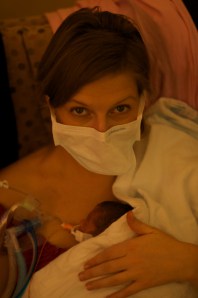
When Kate held London for the first time was when Kate transcended all previous definitions of beauty I held. It’s a moment that will be with me for the rest of my days.

About A Preemie

In March, as I painted London’s room, I queued up a Radiolab podcast. This specific story I had been told about by a good friend, as well as Kate. It is about another couple who had a preemie, but one that was born on the edge of viability, at 23 weeks and 6 days, so early that the parents had to make the decision about whether or not they wanted the doctors to save their child.

I was hooked as soon as I pressed play. Although this preemie had quite a few different complications than London, our story and their story is amazingly similar. Many of the feelings the parents expressed I had felt too or Kate had felt. When the father was talking about feeling the squeeze of his daughter’s hand for the first time, I stopped working, laid down on the floor, and listened so intently that I forgot to blink. I was reliving the very first time I got to touch London. It was impossible not to cry.

If you want to better understand our lives during London’s time in the NICU or the lives of someone else who had a preemie or was a preemie, I cannot think of a more articulate, informative, and thoughtful presentation of the experience. Please, listen. The link is below. The podcast streams from the top of the Radiolab page. Have a great weekend!

Listen here.

Welcome to the Pumphouse

Never in my wildest dreams did I think I was going to spend so much time with lactation nurses. We discussed the intricacies of hand expressing (whilst using hand motions), breast milk volumes, engorgement, and just how much breast milk one could fit in a chest freezer. I had no clue that my wife’s breast milk would still come in even though London was born at 26 weeks. I did not know there was such a job as a lactation nurse. But, like so many other things about London’s birth and care, I learned soon enough.

Breast milk, I was told, quite often comes in as soon as the placenta detaches from the uterine wall, no matter the gestational age. And, I soon found out, there is not just one lactation nurse in the NICU, there is a whole damn team, and I spoke at great length about breast milk and breasts with each one of them.

IMG_3159

From the early days, when I thought this was a lot of breast milk.

The day of London’s birth, a lactation nurse stopped by Kate’s room to ask if she was going to pump breast milk. I had not even thought about that. The trauma of the last 16 hours was still settling in and thinking about and planning for the future had not yet crossed my mind. I think Kate was sort of at this point too, but we both were satisfied to know that there was a good chance Kate’s milk would come in. Let us begin then. Lactation brought in a breast pump that looked like a medieval torture device. They were calling it the “Symphony.” They hooked Kate up and the Symphony ran for 18 minutes and at the end you could just barely make out two milliliters of colostrum. A few hours later Kate produced 2.6mls and then later that night 3.8mls. The next day, January 31, was Kate’s first 24 hours of pumping. She produced 32.6mls that day, or 1.1 ounce. Lactation handed us a log, in which we kept track of when Kate pumped, for how long she pumped, and total volume.

A few days later, once we were home, lactation gave us a DVD to watch. Apparently, the DVD would help Kate get more milk by hand expressing and it would provide tips to alleviate the pain of engorgement. We were to watch it and return it in a timely fashion. On the night we received the DVD we popped it into my laptop to watch it before going to bed. We watched approximately one minute before Kate was laughing so hard it was painful, no really, it was very painful to laugh for Kate. She had had a C-section a few days ago. Kate was clearly in too much pain. If we continued watching we would only laugh harder, so I slammed the laptop shut. I had tears running down my cheeks I had been laughing so hard. I don’t know who is responsible for making lactation videos like this, but perhaps, now this is just a suggestion, do not make the first breasts on the video also the largest breasts known to mankind. In fact, moving forward, I would advise the filmmakers to not feature these breasts in any lactation video, ever. They were comically large, needing 3-4 hands to handle them. They were cringe inducing. They gave us an attack of the giggles like nothing had before. Actually, it is dangerous to watch this lactation video. You might literally bust your gut laughing if you have just had a C-section. Or, like me, you might become scared of laughing to death.

We decided that only I should watch the hand expression video. It was too dangerous for Kate to watch again. I would get myself in a very serious mindset and then watch it, hoping to tell Kate what I learned. It took a couple weeks to finally watch the video though. Lactation had twice asked for it back, the first time Kate and I told them the truth, we had tried watching it once already but couldn’t stop laughing. I am not sure lactation found this amusing. The second time they asked for the DVD I knew I had to buckle down and watch. So, one of those days at the NICU I brought my laptop and the DVD with me. While Kate was holding London, I backed my chair up to one wall of the pod, put on my headphones, and watched the lactation video. I kept my cool, not even bursting out in tears or shrieks of disgust. Not once, I tell you.

I shared with Kate what I had learned. She was impressed. Not like Kate’s breast milk volumes needed help. I mean, by now I was spending part of everyday rearranging containers of breast milk in the chest freezer, the chest freezer we needed to buy solely to store breast milk. But Kate’s volumes did increase and she was feeling better too. We joked that I knew more about hand expressing breast milk than she did so I should try to make a little money from it. I could print some business cards and walk around the NICU offering my services to anyone who needed them. I even had a business name, “Hand Expressions by Bryce.” Simple and to the point.

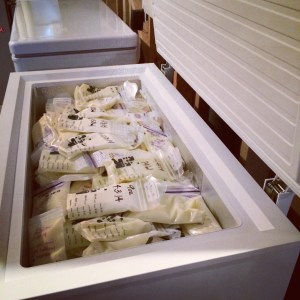
By day 57, or March 28, Kate was producing 1,863mls a day, or 63 ounces of breast milk. To put that in perspective, London took a total of 800mls yesterday  (July 23) and that is the most she has ever eaten in one day. In fact, it took London a long time to drink as much milk in one day as Kate got from one 20 minute pump. After a while I could no longer rearrange the breast milk in the chest freezer. It was full. It took us a while to accept that we were going to need a second chest freezer for milk, but I finally broke down and snagged the second one at Costco, one I had been eyeing for a couple of weeks.

IMG_3564

In foreground, first chest freezer maxed out with breast milk. In background, second chest freezer at the ready.

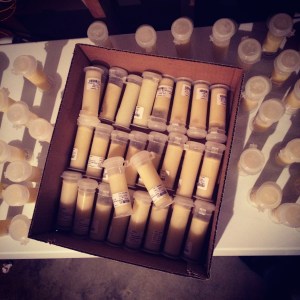
For a few months we rented a Symphony, which retails for $1500-2500, and kept it upstairs in our room where Kate did most of her pumping. We started to call it the Pumphouse. If we were home, Kate had to sneak off to the Pumphouse every three to four hours to spend some quality time with the Symphony. It was very tough keeping that schedule through the night, but Kate did an excellent job. I woke with her every time throughout the night and assisted in the bottling of the milk, the cleaning of the breast pump parts, the labeling, and then I would deliver the milk to the chest freezer in the basement. While Kate was hooked up to the Symphony we would queue up Netflix. We blew through the second season of House of Cards in thirty minute blasts. We moved on to movies, watching thirty minutes at a time of those too.

Toward the end of April, Kate was tapering off with the pumping. She had not dried up. No, no, no. We had filled over half of that second chest freezer. It was just getting to be too much for Kate to work full time and pump. But by then, the lactation nurses understood why Kate was putting an end to the pumping. Kate had a reputation around the NICU as a “super producer.” One day, a lactation nurse stopped by just to tell us that there might be another mom in the NICU who is producing more milk than Kate. It was impressive for all of us to hear. Good for her.

Much later, when it was time for us to bring London home, we had London’s staff write on one page of the journal we had been keeping about her NICU stay. One of our favorites from the lactation team wrote, “London, Just want you to know what a rock star your Mom was with pumping for you! She could have fed 3 babies in the NICU!! You are a lucky little girl to have the parents you do!”

I too believe Kate was a rock star with pumping. Heck, next week London is six-months-old and I can still dig around in our chest freezer for milk from March. Speaking of milk , it’s 11:30, time to feed her again. To the chest freezer I go.

Heart, Lungs, and Brain

Starting with the discovery of London’s PDA on February 2, London’s day of life 3 (DOL 3), Kate and I were in for a whirlwind of diagnoses. We chose to treat London’s PDA with a course of indomethacin. Early on, we were told that London’s extubation relied on getting the PDA to close up. On February 4, we arrived at the hospital during a follow up echo. One of London’s primaries was there that morning. She lined up some chairs for Kate and I and my parents and said, “Sit down and watch the movie.” She was referring to the monitor where the image of London’s heart was visible. My mom had a very hard time watching it. She started crying a lot and had to excuse herself. She later said that the situation was much more real that morning than the night before, when she and my dad first saw London. To me, this was one of the first signs that Kate and I had been assimilated by the NICU. Watching another echo on our daughter was just part of the journey. We had not become numb to the alarms and the busyness of the NICU, but already we were growing tolerant of life there, teetering on the edge of tragedy and triumph.

The next day, when we found out the results of that echo, that London’s PDA had only closed a little, we were somewhat discouraged. We followed up with another course of indomethacin and on February 6 we were told London did not have any symptomatic signs of a PDA. However, on that same day, London’s oxygen settings on her ventilator increased to 50-55%. Finally, on February 11, we were told London’s PDA had officially closed. Had the drugs not worked, a minor surgery might have been necessary. We were so thankful we avoided that.

IMG_2935

Day of Life 2

Meanwhile, London’s oxygen requirements were not decreasing, if anything they seemed to be going up. This was due to her chronic lung disease, which many preemies get. X-rays showed London’s cloudy lungs, indicating there was quite a bit of unwanted moisture there. Her bronchopulmonary dysplasia was classified as severe. For this, London had Lasix as well as a weaker drug Aldactazide. Ultimately, these drugs seemed to provide only temporary fixes to London’s lung condition. London received caffeine for apnea of prematurity. The caffeine was done following a last dose on March 20. Much later on she received Prednisone therapy, which meant that she got shots every day for 10 days. She was then, and still is, one tough girl. She sometimes never reacted to the needle and when she did, it was a whimper.

As if concerns about her heart and lungs weren’t enough, we threw in the brain as well. The good ole’ trifecta. On February 6, London’s first head ultrasound revealed a Grade III R>L hemorrhage. I think for both of us this continues to be the scariest complication. We had an outstanding fellow that week who assured us that for years the literature on head ultrasounds has concluded that brain bleeds are not predictive of the quality of life later on. The scale for these hemorrhages is 1 to 4, with 4 being the most severe. Because of London’s brain bleed, she had to be monitored weekly with head ultrasounds to ensure there was no parenchymal bleed, i.e. Grade IV. Luckily, there was not. By the time London received her last head ultrasound in the NICU, the week of May 12, the bleed had been completely reabsorbed into the body, but her ventricles were still not as small as the doctors hoped they would be, but this was still not worrying to them, at least not to the point that they wanted to do anything else.

From the night the doctors got London out of Kate in 25 minutes, I have been in awe of modern medicine. Nearly every day in the NICU I marveled at procedures being done on London or on one of the other preemies (hey, sound travels pretty easily from one pod to the next). I felt so thankful that it was 2014 and not much earlier, like when babies with Grade III hemorrhages weren’t even considered viable by many doctors, thus ending the treatment of the babies with such bleeds. To know that London’s life would have been considered unviable decades earlier breaks my heart. The current view of brain bleeds is an advancement of medical knowledge that to NICU parents is a damn miracle. It is one of many we experienced during the 109 days we hung out with London in the NICU.

London’s Email Updates

I sent the first of many emails updating family and friends about our situation at 2:43am on January 30th, one hour and nineteen minutes before London was born. It reads:

Hey Dear Friends,

Weve spent the night at the hospital because our little girl is coming early, really early. Kate felt some pain last night around 10 and we thought it necessitated a trip to the hospital. We are very thankful we came here because Kate’s water broke about an hour after we arrived. Kate is stable and the baby is doing okay for now, but Kate won’t be leaving the hospital until the baby is born. We don’t know exactly when that will be. It could be a day, weeks, or over a month.

We all need your prayers, happy thoughts, and whatever positive vibes you can send our way.

Love,

Bryce

Of course I had to send out another email very soon after that:

Update. The doctors needed to go forward with a c-section. Kate is doing great in recovery. Our daughter, London Grace Perica is also doing well. She was born at 4:02 this morning, 2 lbs 6 oz, 14.75 inches long. She’s stable. Very crucial period right now and I am so thankful for all your prayers and support.

Love,

The Perica Family

From that point on, email was the way to keep everyone in the loop regarding the many ups and downs of London’s NICU stay, but especially during those fragile first weeks. We received so many responses from these two small emails that it has taken me hours to scroll through them and the brief exchanges I had with some of you who asked specific questions about London’s health and how exactly you could support us through this time. The email conversations with some of you never stopped for the entire time we were in the NICU. Sitting down to write weekly updates about London’s progress or sometimes lack of progress was therapeutic for me. Writing the emails allowed me to calm down some after an especially frustrating or scary day. I wrote them next to London’s side, or during dinner at home, and sometimes they were the very last thing I did at night, tapping out emails on my iPhone in the dark with Kate sleeping beside me. It was a form of meditation. It is something that I would recommend to parents in a similar situation. Whether you are just emailing your parents or a huge group of friends, sending updates may trick you into thinking you are spreading the burden around. It may have had that effect on me.

Inevitably, I grew tired of sending out email updates about London in the NICU because all three of us just wanted the hell out. Writing the last update on May 22, three days after London came home was the best email I have ever sent. I have shared it below. Thank you for responding to emails throughout London’s stay and for reading further on this blog about her time in the NICU and raising her there and at home.

May 22, 2014, 11:34pm

Friends,

On Monday, after 109 days in the NICU, Kate and I walked out of the hospital with London. We were helped out to our car by one of our primary nurses, Megan, who was there the morning London was born and admitted to the NICU. By Monday, we had shed enough tears with Megan (and London’s 3 other primary nurses) throughout London’s NICU stay that there were only smiles on our faces as we loaded London into the car, hugged Megan goodbye, and drove home very carefully.

London has come home with an NG tube since she was not taking 100% of her milk through bottles. Kate and I both placed NG tubes in London before she was discharged. London has the tendency to yank them out so we need to know how to insert a new one. When necessary, we use a pump to give her the rest of her milk. She is on oxygen, as are most preemies in Colorado when they come home. At this point, it’s also necessary to hook her up to a monitor at night. Baby came home from the hospital with a lot of hardware, but we’ve got it all figured out.

London had a follow-up head ultrasound before discharge. We received the results on Monday before we left. The bleed in her brain has been completely reabsorbed. However, her ventricles are still enlarged. At this stage the doctors would like to see them a bit smaller, but they aren’t concerned enough at this point to do anything clinically. They will monitor her closely in follow-up appointments. At this point, we wait it out a little bit and hope the ventricles decrease in size. This was not 100% positive news, so it was a little unsettling to receive it the day we left, but it does not really change London’s outlook at this point. Other news we received before London was discharged…She had one more eye exam before going home. Her ROP continues to improve.

Though we are sure to face quite a few more challenges with London’s health and development, we are of the mindset that the biggest and scariest obstacle, the NICU stay, is behind us. Thus, I am finally ending this long email chain. Thank you so much for all the meaningful and loving replies and for your interest in London’s progress while she was in the NICU. Thank you for the prayers. It was always humbling to know how many people were lifting us up. I could say thank you for so many more things, but it would be a long, boring list, which would fall short of expressing our gratitude for you and the profound joy that has come to us in our little girl and finally getting her home.

Our Love,

bryce, kate, & london grace

Little London’s Nurses

When I first met London’s primary NICU nurses I did not know just how special they would become to Kate and I. In hindsight, that I would come to think of them as extended family in a way was inevitable. NICU parents have to get away from the unit for their own health, but for many other reasons as well. Life goes on. Jobs don’t wait. Other responsibilities don’t disappear just because you find yourself in this incredibly hard situation. So, when it comes time to leave the hospital, you leave your preemie first and foremost in the hands of your NICU nurse. Of course, there is other support, other nurses on the floor, nurse practitioners, residents, fellows, and attendings, but the one who is on the front lines, the first responder, is the primary nurse for your child.

London had four primaries. From the start they were the most comforting, knowledgable, and loving people. They were her first, and they will always be her best, babysitters. They taught Kate and I most of what we know about raising a preemie. They explained every twist and turn of London’s treatments. I could go on and on and write a long list of the many things they did for London and for Kate and I, but why should I when I can just write this: they ushered me into parenthood with such grace that when it was time to leave the NICU with London it was hardest to say goodbye to them.

As I continue to write about the experience of having a preemie, I will write more about London’s nurses. But for now, I will end this short post with this thought that I had long before London was discharged:  London’s primaries are people who, no matter how well we stay in touch for years to come, I will treasure for the rest of my life because I will never forget the way London was introduced to this world and thus, I will never forget the people standing by her bed during that tumultuous beginning.


NICU Noises

As we settled into the NICU routine we started to accustom ourselves to the environment there. The NICU is a far cry from a nursery (pun intended), but one thing we noticed right away were the noises. They came from everywhere. Every preemie is on a monitor and every monitor has the potential to make some very loud, annoying beeps. The NICU we were in can hold somewhere around 50 babies. Combined with the beeps from the monitors, the cries, the noises from the staff and the visiting families, there really is no quiet time in the NICU.

London’s monitor alone made four different noises. Right away, you learn to fear and hate the beep for a brady (short for bradycardia) when the baby’s heart slows and blood flow decreases, followed by dropping oxygenation levels. The noise itself leaves no room for peace. I suppose that is the goal. It gets everyone’s attention and makes you want to hit all the monitors in the place with a golf club. Good thing I am not a NICU nurse. It took a while to get used to the bradys. They sound like a horrible thing, and they can be, believe me, but bradys are quite common for preemies. London bradied quite a bit. Occasionally we had to rub her on the back a little bit to get her to snap out of it, but most of the time she climbed right back up into a normal range without any stimulation. There were days when London barely bradied at all, but then there were the horrible days where every baby in our corner of the NICU seemed to have made a pact to all brady at the same time or take turns. Like I said, a parent gets used to it, but you don’t quite realize how normal the bradys can become until you have visitors and your baby bradys while they are there. The visitors looked way more concerned than we did after a while, especially if they are in healthcare and are used to taking care of adults.

The noise for when the baby goes apneic, or stops breathing temporarily, is slightly different than the brady noise. Don’t worry though, when you hear it you will still want to jump out of your seat and break the monitor over your knee while simultaneously appreciating the notification that your daughter is not breathing. London did not have many apneic episodes and, when she did, they were mostly false alarms. The monitor would tell me London’s breathing at 2 breaths per minute, but her oxygenation was at 99. Note: just get clarification from your nurses about the quirkiness of the particular monitor your child is hooked up to.

_BKP2265The most common noise we heard from our monitor is for desaturation, aka desat, meaning there is a low blood oxygen concentration. London struggled with chronic lung disease throughout her NICU stay, so she desated a lot. Some days the alarm seemed like it was always on and the nurse would have to come into our pod every five to ten minutes to silence the alarm or tweak London’s ventilator settings. Not as alarming as the brady beep, but the desat beep had a way to bore itself into my brain. I would here it in a song on the drive back home from the NICU. I would hear it in my sleep. I would hear it come from the TV. It sends a strong message that your child is not oxygenating like she should be. It does not let you forget and it never leaves your head as long as you have a baby in the NICU.

The last noise is really the only happy noise your baby’s monitor makes. It’s a gentle beep that notifies those around your child that she is oxygenating very well, with levels around 98-100. If this is the case, then the oxygen can be titrated down to see if your baby continues to oxygenate well on a lower flow. For us, this noise was the rarest, but toward the end of London’s NICU stay we did start to hear it a little more often.

The main takeaway from this post: the NICU monitors are always making noise. Some are deeply alarming and others you shrug off after a few weeks. How do I know this? Because after a while the only alarm that could wake me up out of a little nap in London’s pod was the brady beep. In fact, the other noises can lull you into a little nap when you are stretched out in the recliner next to your baby’s pod. And then, BAM, a brady alarm makes sure you don’t get too comfortable.

Life Goes On, But Something Was Lost

“I love you, my child. My Child. Still can’t believe it all. Wishing you were still safe inside me and that I could feel you. I miss you, little girl. Be strong.”

– From a letter Kate wrote to London on January 31, 2014. London was one day old.


I start today’s post with this quote because in a few sentences Kate conveys the sense of loss mother’s have when they have their baby so early. Sense of loss is somewhat misleading (London was stable in the NICU), but Kate knew and I knew that the safest place for London and also where she would still be developing the best was lost. That was not the only thing lost though. A full-term pregnancy was now just a dream.

Kate was just starting to look pregnant when London arrived. Our closet was full of maternity clothes waiting for months 7, 8, and 9. In fact, the day we got home from the hospital I helped Kate up the stairs and followed her into our room. Shortly thereafter, I heard Kate in our closet and walked in to see what was going on. Kate stood staring at a rack of maternity clothes with tears running down her face. I listened to Kate and held her. Seeing Kate so sad about not getting to wear these clothes even made me cry.

As a father, I do not know the sense of worry and loss a mother has when, without any warning, the human being growing inside of her is out over three months early and exposed to a world she wasn’t supposed to see until spring. But now, having a wife who has gone through that, I have a decent understanding of what that is like.

The sense of loss manifests itself in a variety of ways. One of the strongest, at least in the first week after London was born, but one that also fades over time, is how painful it is to see pregnant women who are full-term or damn near close. To be honest, both Kate and I hated seeing very pregnant women for a while. We were comforted to know this is completely normal. In the two days after London was born, we received a slew of emails, calls, texts, and cards from people who wanted to let us know that they were praying for us and for London. A few of those contacts had preemies themselves. And in one particular email, a mom wrote, “you will hate seeing very pregnant women.” She nailed it. We both did. One of the first days out of the hospital we went to Baby’s R Us to stock up on some breast pump supplies. There were couples everywhere and it seemed like every single woman was about to pop. It was extraordinarily tough. I ran out of dagger eyes to give.

Being bothered by the sight of very pregnant women was the product of our envy during those early days. I remember I would see a couple who is clearly having a baby very soon and think, damn, they’ve got it so easy. They really have no idea. Look how they’re wandering the aisles at Baby’s R Us without a care in the world. Of course, our attitudes have since changed and I no longer think that those soon-to-be parents had it so easy. Having a baby is a lot of work, no matter the gestational age at birth. However, if having a full-term, healthy baby was exactly the same as having a preemie, I would be lying to you and severely devaluing our experience, the experience of thousands more, and the NICU and everyone who has ever worked in one.

I am so sensitive at times to other people’s feelings that it took me a long time to realize that even though this is our first time around with a baby, I know it has been more difficult than if London had been born full-term. Sharing that in the months since London was born and even now, I feel sort of like a jerk because it boils down to me saying, “Well, we have had it quite a bit harder than you.” I know that can sound like I am devaluing the difficulty of having a full-term baby, but that is not my intention. I am just trying to speak truth from our experience and that of the other parents in the NICU right now, who also know that with the littlest life they were blessed with comes the most terrifying and stressful days of their lives and the knowledge that although life goes on, something has been lost.

Super Bowl Night in the NICU

*For the most part I am trying to post about the NICU events chronologically to avoid confusion, but I have skipped ahead in writing about the day Kate and I came home from the hospital. Now, I’m jumping back a day, to the stretch of time all three of us were still spending our nights at the hospital.

Kate's mom and Kate's sister (Angela) pose next to London's isolette before they depart.

Kate’s mom and Kate’s sister, Angela (at right) pose next to London’s isolette before they depart.

It was Super Bowl Sunday. February 2, 2014. It was also the first day London got an echocardiogram (or echo). It revealed that she had a PDA, aka a patent ductus arteriosus, which the NIH describes as this, “The ductus arteriosus is a blood vessel that allows blood to go around the baby’s lungs before birth. Soon after the infant is born and the lungs fill with air, the ductus arteriosus is no longer needed. It usually closes in a couple of days after birth. If the vessel doesn’t close, it is referred to as a PDA.

PDAs are not an unusual condition for preemies to have. Girls are more likely to have them as well. Sometimes the PDA naturally closes and other times drugs are necessary to encourage closure. If the PDA is large and resisting drug treatment then surgery is an option. The staff at the hospital was very good in describing the treatment options we had and the prognosis. We decided to treat it with drugs, which are similar to ibuprofen, hoping it would seal up on its own. That same day we decided to stay in the hospital one more night. We loved being just steps from London. Going home didn’t mean we would be so far away, but for one more night we could be across the hall.

Kate’s family left this day as well, but Kendra stayed an extra day. With London resting well, it was time to for

Hanging with London during the Super Bowl.

Hanging with London during the Super Bowl.

me to go home and prep for the game. I brought back bean dip and smuggled in a couple of beers for myself and a cosmo I made for Kate, the first martini she had after giving birth to London. There was also a bottle of Prosecco. Sadly, smuggling the drinks into the room was more exciting than the Super Bowl itself. I knew it was just the first snap of the game, but I had a gut feeling the Broncos were screwed. From there, things just sort of went downhill. I held on until halftime, but then I wandered over to London’s room and just looked at her, this is something you do a lot of when your kid is in the NICU. Sometimes it is all that you can do. Stand and stare. Worry. Marvel. Pray. Take pictures, like I did that night. Try to let them know you are there, but at the same time wonder if it is really making a difference. To just be present in body, mind, and soul is the best thing you can do for your baby at this stage, but it is the most exhausting thing I have ever done. More on that and the PDA to come…


Hospital on the Horizon

Before London, I never really liked being in a hospital for any reason. Even if I was there for a flu shot or to pick Kate up from work. I only saw hospitals through a narrow, ignorant lens. I thought they were places where sick people go to stay for a while and at the end of their stay those lucky enough to leave are still sick or don’t know why they are sick. Those without the luck, arrive at a hospital and stay there until their death. This is a morbid way to think about a place designed to get you better, but I had this view for a couple reasons.

When your spouse works in a hospital they tend to convey some sad stories to you about things they have seen at the hospital. The stories could be worse depending on what unit they work in. For example, stories from the outpatient wing probably aren’t going to be as horrific as some from oncology. Well, I used to hear some pretty sad stories and they were very difficult to hear. I did not hear enough of the good stories because I always found myself thinking, how could you work at a place like that? How depressing. So when I would go into a hospital I would maybe just choose to see the very sick and that made hospitals nearly impossible to be in.

And then I got very sick in 2007…The short story about that experience is this. I had a bunch of weird things happening to me, headaches, Bells Palsy, partial, but temporary hearing loss in one ear, and iritis were among the most troubling issues. I had a CT, an MRI, X-rays, blood draws of all sorts, and I spoke with a lot of doctors and specialists. I never received a diagnosis. I got better, but I could not attribute that to treatment I received at a hospital, except for the steroids for the Bells Palsy and later for the iritis. I probably had a virus of some sort that was working its way through my body. Doctors never knew when it would be over. They couldn’t tell me what it was. And all those tests…negative. I had a big scare and I felt like it was just dumb luck that I got better, when really my body finally overcame whatever serious bug was screwing everything up.

My opinion of hospitals changed very quickly in January. The morbid thoughts were, for the most part gone. Of course I worried for the health of my wife and daughter, but for the first time the hospital was no longer a place where you go to die. It was a place of healing, of miracles. It was where you went to live. Even the sight of the building became a comfort to me. This particular hospital is huge and easy to see from many parts of Denver and so, when I wasn’t at the hospital with London, I could often look to the horizon and see her home and know that she was surrounded by the most professional and loving staff I could have ever dreamed of. This was our family’s fortress now. Not all rooms in it have a happy story to tell. Hope is sometimes scarce in this place, but I knew of an OR tucked away on the fourth floor where not just lives were saved, but dreams, hopes, and a future were salvaged because of a hospital. I will never think of them the same way.

Letter to London On My 31st Birthday, Her Day 4

Dear London,

You will remain for the rest of my life, the best birthday gift I have received. I did not expect to become a dad at 30. I thought I had a few more months, a little more time to prepare for your arrival. IMG_2967

On this birthday, your mom and I checked out of the hospital. It was extraordinarily tough leaving there without you, but getting home did make us smile. We can’t wait to bring you here. Aunt Kendra cleaned up the entire house. There was a giant balloon that said, “Baby Girl!” (a note from the present day: the baby girl balloon was still aloft, but slightly deflated, three months later when we finally disposed of it) and there were two smaller balloons that read, “Happy Birthday!” and “Welcome Home.”

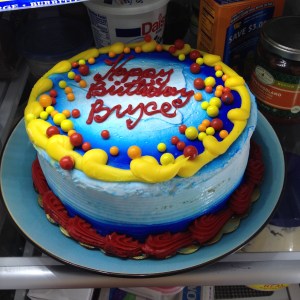
Kendra left a birthday cake in the fridge for us too. It was about as good as a homecoming could have been without you there.

Your  mom and I were very tired so we fell right asleep for a nap before Nana and Papa arrived. Their arrival woke us up. I brought them upstairs aIMG_2968nd we all talked about you for a while in our room before we went downstairs for dinner. During our meal, I retold the story of your birth and what it was like seeing you for the first time.

After dinner, we took Nana and Papa to meet you. They instantly fell in love with you. Nana called you a miracle and of course they both shed tears. After a while we prayed over you, like we have been doing every night since you first arrived.

We eventually went home. What I want you to know about home on my birthday and, until the day you come home, is that it is just a shell where we eat and sleep. It is incomplete without you. Our hearts are always besides yours at the NICU. Here at home, we fall asleep trying to fill the void with videos and pictures of you. And then we dream of you. Sometimes we cannot sleep because of the worry at our core for you. As soon as we wake, you are our only concern. Our home’s potential is latent. We bought it just weeks ago with you in mind and it is only you who will make it what we so badly want it to be.

Goodnight London.

Why Was London Early?

*In which I try to fill in some medical details I left out of the posts regarding London’s birth.

The doctors never exactly figured out why London was born early. London’s premature birth may or may not have been related to a very small blood clot seen in one ultrasound quite a few weeks before London was born, but the doctors never seemed overly concerned with what they saw.

We don’t know why Kate started to have contractions, but we were very thankful we went to the hospital when they started. As noted in an older post, once Kate’s water broke we knew things were very serious, but we learned shortly after her water broke that doctors can successfully put fluid back into the uterus so the baby is once again protected. They tried this for Kate and, obviously, it didn’t work.

The next option the doctors had was to simply stabilize London and Kate so they could theoretically rest for a week, hopefully, until London was delivered. This would have given London a huge boost. She could have received all the benefits of betamethasone, which would have drastically strengthened her for the outside world and would have better protected her from the stresses of delivery.

London’s heart rate kept dropping due to her funic presentation, this is “where the umbilical cord points toward the internal cervical os or lower uterine segment.” In the most serious cases, this can lead to an umbilical cord prolapse. This is when the umbilical cord “protrudes into the cervical canal,” and why London’s heart rate would occasionally drop due to Kate’s contracting cervix. A medical website describes the situation as “an obstetric emergency that in a viable fetus necessitates an expeditious delivery.” The same medical website, radiopaedia.org, reports that umbilical cord prolapse occurs in 0.2 to 0.5% of all pregnancies.

So we will never know what set this all in motion, but we do have a clear reason why London needed to come out as quickly as possible. On January 30th, had we not been near a hospital that could perform an “expeditious delivery,” I would not be here today writing about raising London. Kate and London’s treatment in the hospital was miraculous, a true marvel, but it was just as miraculous to us that we were a ten-minute drive from a top-of-the-line NICU.