Dread and Disappearing

If you know me, you know that I love movies and, to complement that love of movies, I listen to and also love The Big Picture, the esteemed podcast from The Ringer with hosts Sean Fennessey and Amanda Dobbins. I do not miss an episode and, on occasion, I even listen to them discuss a movie that I have not seen. In fact, that frequently happens because getting to the theater is hard. I really have to carve out time, arrange for someone to watch the kids, and then, hope that what I want to see has not left theaters during the weeks it took me to secure said viewing time.

I was listening to such an episode (one in which the hosts discuss a movie I haven’t seen) in October, when Sean interviewed the writer and director of If I Had Legs I’d Kick You, Mary Bronstein. To help out, here’s the one sentence synopsis from IMDB, “While trying to manage her own life and career, a woman on the verge of a breakdown must cope with her daughter’s illness, an absent husband, a missing person, and an unusual relationship with her therapist.” The connection I feel to this movie (I still haven’t seen it!) and its writer/director is that Bronstein’s daughter had a serious illness and Bronstein played caregiver for a long, hard time. Okay, let’s go to the interview.

Right out of the blocks, Sean asks, “Do you remember the exact day you began writing it?”

Bronstein gives a long, eloquent answer, but one thing she says hits me so hard, some truth that I had felt before I listened to this pod, but a truth that was really good to hear someone else utter, especially an artist. Bronstein answers that she had a “sense of existential dread that I couldn’t put my finger on and, at first, I thought it was because the situation I was in, like, will she get better? What will happen? Then I realized it wasn’t that at all. It was the feeling that I felt like I was disappearing, because everything, every part of my being was put into taking care of her and making sure that she was gonna get better and we could get back to New York and get back to normal. But then I realized, oh wait, she is gonna get better and we are going to go back to New York and our home and it is going to go back to…normal. But like what then? What then? Because I’ve been in this state now for so long…in this caretaking role for so long it’s been my whole life, what then? What’s gonna happen?…In a very literal sense I felt myself disappearing, my being, my self, and I started writing…in that state.”

That’s the quote. And if you’ve been a caretaker for someone before, especially of a child with some disease, disorder, or illness, you know that regardless of the severity of that disease, it can be all consuming and it can completely suffocate the will you have to do anything else with your time, if you’re lucky enough to have any time leftover.

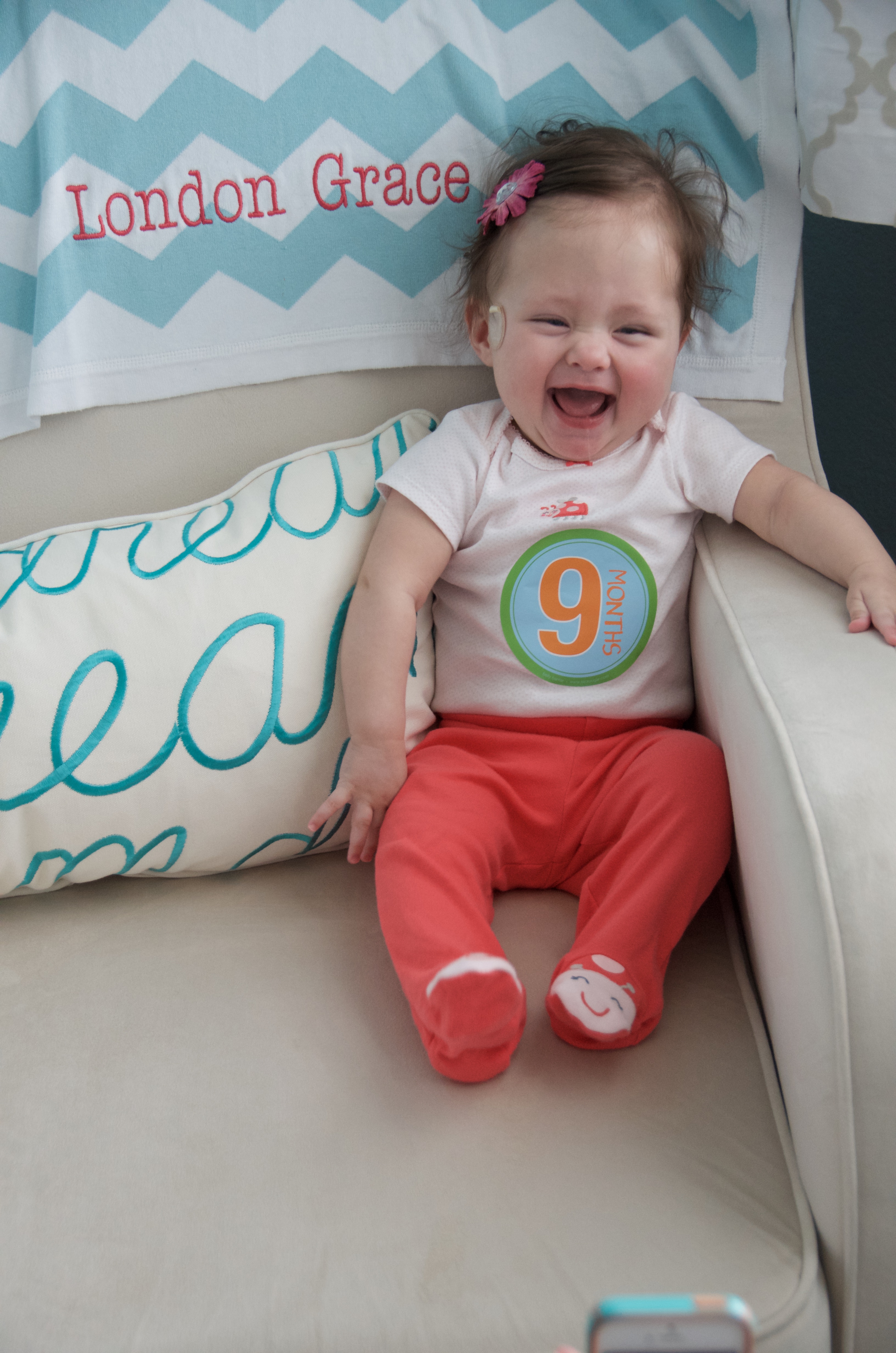
Although I didn’t realize it then, my time as a caretaker started nearly 12 years ago when my daughter was born at 26 weeks. She had, at times, a very rough NICU stay that lasted 109 days. After discharge, we were back at the hospital several times a week for appointments. That lasted months. Years later, we still had a lot of appointments, assessments, and scares. Then after teachers expressed concern, more assessments, a diagnosis of Autism Spectrum Disorder, Level 1, and new, ASD-focused, home therapy for years. Then another diagnosis, this time of ADHD, a common dance partner of ASD. Then individualized education program (IEP) meetings. Then 504 (not quite as accommodating as an IEP) meetings. Then more worry. Then back to an IEP.

All that time, much of my interests were pushed aside, as happens to any present parent, and I let worry for my daughter and her future absolutely break down hope I had for myself, belief that I would get to do anything else. I felt myself disappearing. There were fits and starts with writing, but I have gone years without it. Actually, the only thing that I have consistently practiced for the last 12 years, outside of managing the house and taking care of the kids, is running. That’s the one thing I have held fast to. I guess that’s why it became an obsession of mine, which if you don’t know, we haven’t spent much time together in the last decade. But trust me, if you stick around here for any length now, you’ll know.

Anyway, back to myself disappearing, dissolving into worry and insignificance. I started to hear a voice, my voice, and it has been urging me to make sure this part of me, the one that has always loved the written word, both reading and writing it, to make sure that part does not die like all the other parts. To save that part, that’s the end game, if you will. What will come of it? I am not sure, nor do I want to dwell on that either. I know it’s a big part of me and one worth saving, one that makes me a better person in my other roles of husband, dad, and son. But you’re still gonna get running posts and don’t forget movies. I love movies.

Welcome to the Pump House: Adventures in Fatherhood and Breast Milk Management

A version of this post appeared on my blog years ago when London wasn’t even a year old. But I just tweaked it a bit, slimmed it down , and added here and there. I think it’s better now. Here it is…

Never in my wildest dreams, as I prepared for fatherhood, did I think I was going to spend so much time with lactation nurses, reviewing the intricacies of hand expressing (including motions), analyzing breast milk volumes, discussing engorgement, and just how much breast milk one could fit in a chest freezer.

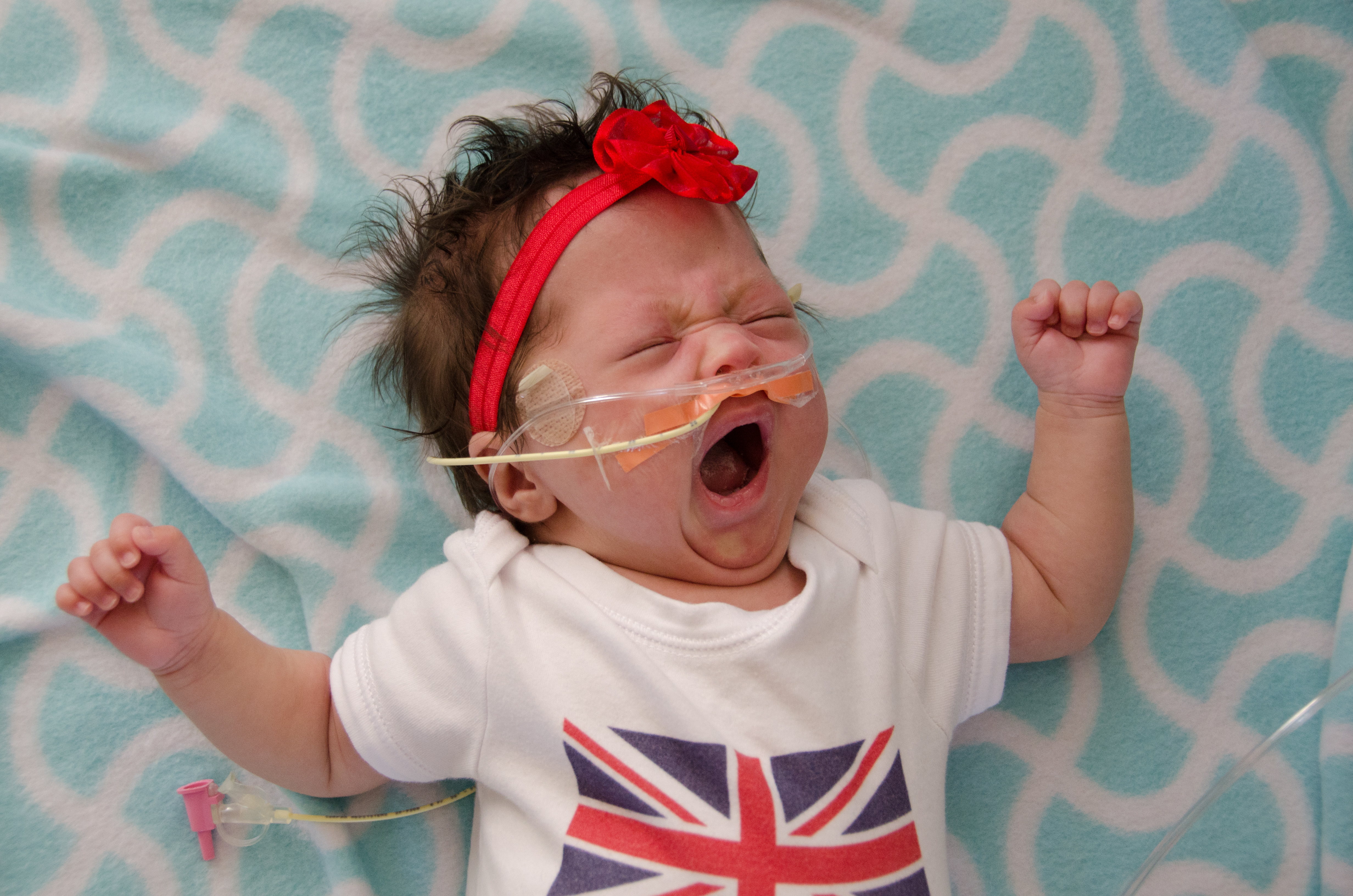
A few hours prior to my meeting with lactation consultants, thinking there were three more months to learn these things, I didn’t even know lactation nurses existed. I knew that some babies were born prematurely, but I didn’t know my wife’s breast milk would still come in just as early as our daughter wanted out at 26 weeks gestation.

So it was that our 109-day stay in the neonatal intensive care unit (NICU) started with a crash course in breast milk. Within those first days of life for my daughter (London), my wife (Kate) and I spoke at great length with not just one lactation nurse, but several of them about breast milk and breasts, starting with a nurse asking my wife if she was going to pump breastmilk. Partly due to the trauma of the last 24 hours, and partly due to my complete lack of knowledge about breastfeeding, I had not thought a bit about breast milk or pumping. Kate was of a similar mindset at that particular moment, but we were both satisfied to know that there was a good chance Kate’s milk would come in. The early drops of colostrum, the nutrient-dense milk first released by the mammary glands, often come in shortly after the placenta detaches from the uterine wall, no matter the gestational age.

A couple of hours later a lactation nurse wheeled into our room something that looked like a medieval torture device. They were calling it the Symphony. They hooked Kate up to it and it hummed and sucked for 18 minutes. At the end of that first session, we could just barely make out two milliliters of colostrum. A few hours later Kate produced 2.6ml and then later that night 3.8ml. The next day, January 31, marked Kate’s first 24 hours of pumping. She produced 32.6ml that day, or 1.1 ounce. The lactation team handed us a log with the direction that we were to write down when Kate pumped, for how long, and the total volume.

We then received a DVD to watch, which would apparently help Kate get more milk by hand expressing and provide tips to alleviate the pain of engorgement. We were to watch it and return it to the NICU team afterwards. That same day, we popped the DVD into my laptop to watch some before going to bed. One minute into this educational video, the biggest breast and nipple either of us had seen appeared on screen. Kate laughed so hard she began to worry she might injure herself being only two days clear of a C-section. Everything hurt. If we continued watching, we put Kate’s health at risk. I slammed the laptop shut. Tears ran down our cheeks from laughing so hard.

Who knows who is responsible for making this particular lactation video, but may I make one small suggestion on behalf of my wife and all women who have recently had C-sections? Great. Do not make the first breasts on the video also be the largest breasts known to mankind. They should not be comically large, needing 3-4 hands to get them under control. In fact, this video is a danger to new mothers everywhere, they might literally bust open their gut laughing from it, like we almost did.

Thus, it fell on me to watch the lactation video alone, gleaning from it any helpful tips and then sharing them with Kate. She was impressed. It wasn’t like Kate’s breast milk volumes needed any help. Not long after London was born, I was spending part of everyday rearranging containers of breast milk in the chest freezer in the basement—the chest freezer we needed to buy solely to store breast milk. Kate and I would joke that I knew more about hand expressing breast milk than she did so I should print up some business cards and walk around the NICU offering my services to anyone who needed them. Hand Expressions by Bryce. Simple and to the point.

By day of life 57 for our little girl, Kate was producing 1,863ml a day, or 63oz of breast milk. To put that in perspective, London was fed a total of 800ml on day 57, the most she had ever consumed in one day. In fact, it took London a long time to drink as much milk in one day as Kate got from one 20-minute pump. A point was reached where no amount of rearranging the breast milk in the freezer would make room for more. I picked up a second chest freezer at Costco and Kate started to fill that, too.

For the months London was in the NICU we rented a Symphony pump, which at the time retailed for $1500-2500, and kept it in our bedroom. We started to call it the pump house. When at home, Kate disappeared every three to four hours to spend some quality time with the Symphony. As all moms know that schedule wreaks havoc on sleep and work responsibilities, but Kate did an excellent job. I did what I could by waking with her every time throughout the night, assisting in bottling of the milk, labeling and recording volumes, washing pump parts, and then delivering milk to the freezers in the basement. So, at our house, at least two times a night, Netflix and chill was swapped out for Netflix and pump.

As Kate tapered off the pump, we were just filling up the second chest freezer and the lactation nurses understood why Kate was putting an end to pumping. She had developed a reputation in the NICU as a super producer. At London’s discharge, on May 19th, 109 days after she was born, the NICU staff wrote messages to us. One of our favorites from the lactation team wrote, “Your mom was a rock star with pumping. She could have fed three babies in the NICU!”

Next week, London will be six-months-old and I can thaw breast milk from three months back. And right now it’s lunch time for the little girl, to the chest freezer I go.

On My 10th Father’s Day

This could be my last summer as a full-time stay-at-home dad. As much as I need and crave time away from my kids, after less than 96 hours without them, I miss them dearly. Their squeals, laughs, pitter patter of small feet, noises from the kitchen as I wonder what they’re helping themselves too. Even sometimes their cries, when the silence without them feels like a suffocating blanket of absence.

Being alone is very nice. More time to catch up on the projects you’ve been meaning to do. A lot more time to read that book catching dust wherever you last set it. And an abundance of time to binge the newest buzzy show. There is just a lot more time to busy yourself with work, entertainment, things. And you can do all of it with minimal interruptions or, if you prefer, in absolute silence.

But after a little bit, after you get a taste of all those things that you were missing and that you have now done, there’s something else. There are questions in the quiet. Is this all there is? If this was life all the time would I get sick of it? Would solitary pursuits give way to success, self-absorption, or both? Would I feel like I am missing out on something? Would I get lonely or would my spouse be enough? Would she get lonely? Even questions about my far flung end arise. Will we arrive graying and wrinkled at the end of our lives wondering what could have been? Who are we missing? Who could be by our side now as we live our last days? What being/s will we never know because we do not have a child? I feel like the what-ifs would continue stacking up and then it would be too late.

What I don’t spend time doing is wondering what I could give to the world or to society if I did not have kids. Sure, it could be something great, but would it be as awe-inspiring, humbling, and as terrifying as having created a life? No. As holding the smallest hand in the pad of your index finger? No. As head-spinning as bearing witness to how fast the early years of life fly by? No. As proud a moment when you see your child shed a bit of your imprint on them to become someone wholly new, someone independent from you, but still your heart? No. As terrifying as the moment you realize they will spend many, many years on this Earth without you and you won’t be able to rush to their side anymore at the first sound of trouble, pain, or loneliness? I mean, the sadness of that thought could be enough to drive you to never have a kid, but it’s only a thought that parents can truly understand. And, by then, it’s too late. That is the risk we take. And there are big risks, but I know the answers to the questions above. Sometimes they get a little hazy and I feel the what-ifs rush in, but then I get a few days away from all their smiles, noises, questions, innocence, and imaginative everythings and the answers crystallize again into a sharp relief against a life without them.

I know I could give nothing to the world more precious and more important than them. I know the questions in the quiet would eat me up, but I know the answers to them and, for that, I am grateful.

Happy Father’s Day.

Going Wireless

Nowadays, everything is going wireless. We have wireless video game controllers (which I still am not used to), wireless watches that answer phone calls (not perfected yet), wireless headphones, hands-free calling, and voice-activated phones. I remember being really impressed with wireless phones in the home.

Here at the Perica household we are going to keep the trend alive.

IMG_2972_91029

We are going to have a wireless baby. It’s true. I hear it is all the rage. We are late to the trend, but we were afraid to be early adopters of this newfangled technology.

Though going wireless will give us a freedom we have never had with a newborn, it will not be without sacrifice. For example, the option of being able to pump a meal into your newborn at just the right time regardless of whether they are awake to eat is truly handy. The food just pumps right out of an IV bag on a hospital rod in your living room and it goes right into your baby’s stomach via a tube that you get to insert yourself and feed down to the stomach.

Also nice, was knowing my baby’s heart rate and oxygen saturation every second of the night by connecting more wires to the baby. If ever there was a slight hiccup, we would be notified in the middle of our sleep by a fire alarm basically.

Lastly, there was the convenience of forcing oxygen into my baby. With oxygen tanks on every floor of my house an_BKP2796d oxygen tanks in the car, in the stroller, in my backpack, I always knew the baby was getting oxygen. In the rare case my baby looked a little winded or was turning blue, all I had to do was walk over to the giant oxygen tank in my living room and let her loose up to 1/4 flow. Baby turns the right color, but falls asleep right before it is dinner time. Not to worry. This is why there is a nasogastric tube, feeding at the right time is always an option.
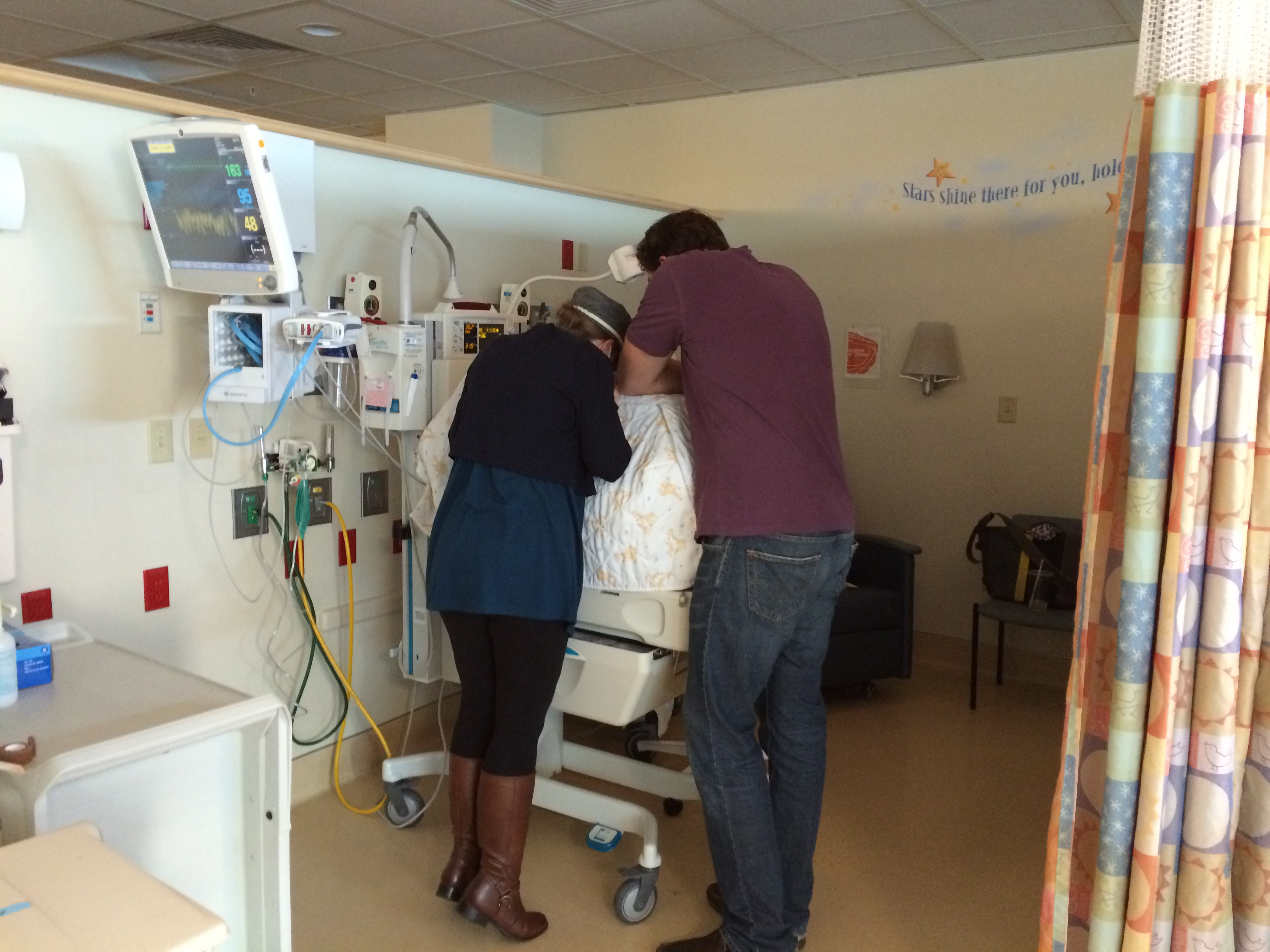
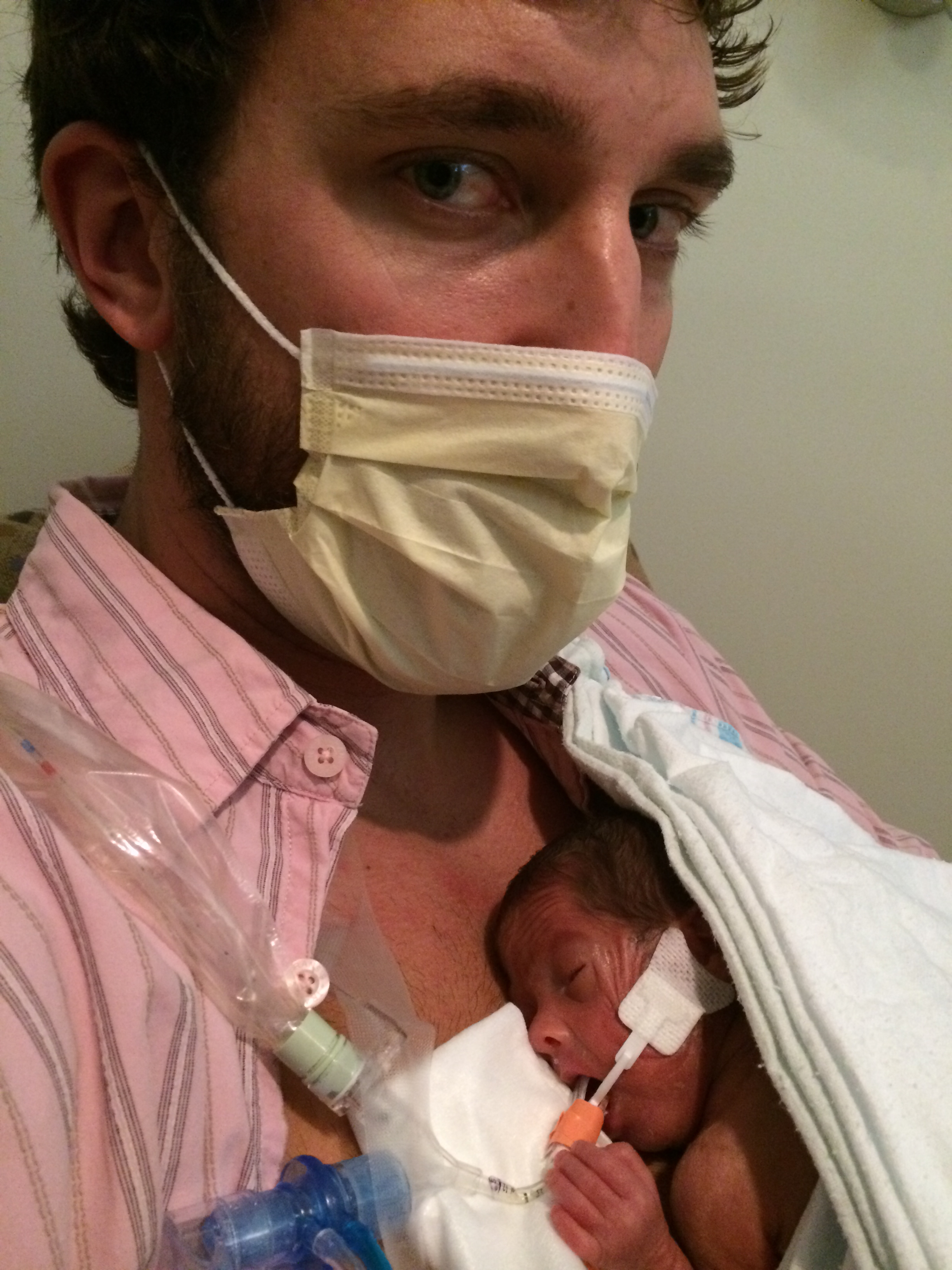
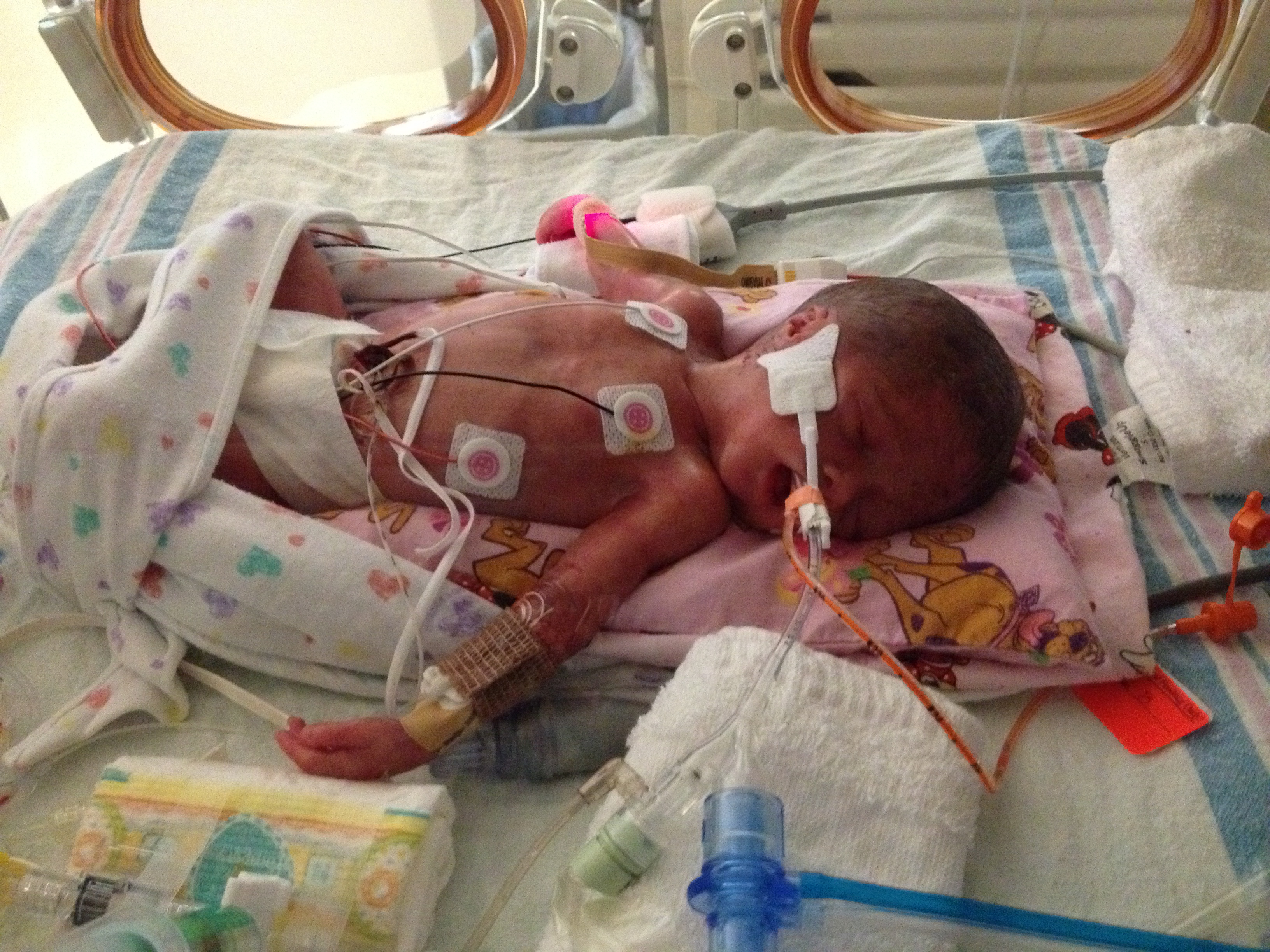
Now that people have been having wireless babies for many years, we feel comfortable moving onto this post-modern way of having a newborn. We are happy, blessed, and excited to welcome a wireless baby into our family in the very near future.

Prayers & the People

While London was in the NICU, I listened to Coldplay’s Ghost Stories religiously. I spent a lot of time meditating on one refrain in a particular song called “Magic.” The lyrics read:

And if you were to ask me
After all that we’ve been through
“Still believe in magic?”
Well yes, I do
Oh yes, I do
Oh yes, I do
Oh yes, I do
Of course I do

Although when I thought about the lyrics, I would replace the word “magic” with the word “prayer.” And I would ask myself over and over again, “Still believe in prayer?” With all my heart I wanted to answer with an earnest, “Yes,” and for a while I did not have an answer.

Why couldn’t I find that earnest “Yes”? I thought about that every day while London was in the hospital and nearly every day since. After all that thinking, I am able to point to a number of reasons.

I have written on here before that not all NICU stories have happy endings. It may come as no surprise, but while we were in the NICU we were witnesses to some sad stories. Within two weeks of London’s birth, the baby in the next pod over died. I remember hearing some of the father’s last words to his daughter and then needing to step behind our curtain because I couldn’t hold back tears.

IMG_3084

Praying over London. What else?

Throughout London’s NICU experience we had a tremendous number of people praying for her. We were praying for her. And when we would receive good news concerning London’s health, people would be quick to thank Jesus.

I know there were people praying for that baby next-door. But when she died, I don’t know if people were talking about how much they prayed for her. When prayers are answered, people are quick to heap praise on God, but all too often God doesn’t enter the conversation when prayers aren’t answered. There is just a deep sense of loss (in the case mentioned above, loss of a child) and betrayal.

It is the absence of God in conversation following something like a loss of a child, whose survival was clearly being prayed for, that really grates across my soul. And as I let it grate more and more on me, doubt about the fate of my own child crept into my thoughts. Doubt about the ability of prayer to reduce swelling in London’s brain. Doubt about the ability of prayer to make one medication work better than the next. Doubt about the ability of prayer to make London’s lungs flourish.

Yet, I prayed, even though what I had seen in the NICU was doing its best to give me a cynical attitude toward God’s ability to give my daughter a fighting chance. But as I stood next to Kate and watched London seize up, turn blue from head to toe, and watched a team of doctors rush over to her bedside, prayer was the only thing I could hold onto despite clinging to Kate. I desperately prayed over and over, “Don’t let my daughter die.”

Again and again, I was exposed to suffering. Much of the time it was parental suffering, the kind you would expect parents to go through when their baby weighs two pounds. And, at times, it was the raw exposure to parents suffering the death of a newborn, as mentioned above.

In a new way, I was becoming aware of the fragility of my own faith. I had reached the bottom of my soul and I had expected to bounce back and come out better than ever, but I had gone crashing through it, revealing new limits to understanding and faith. This surprised me because I had not lost anyone. Many people endure far worse before they reach the point I reached. However we get there though, we often discover the same thing:

…Suffering gives people a more accurate sense of their own limitations, what they can control and cannot control. When people are thrust down into these deeper zones, they are forced to confront the fact they can’t determine what goes on there.

Lack of control. I had felt it before in my life, but not to this degree so it was easy to say, well, if I don’t have control, and the nurses don’t have control, and the doctors with all their tricks and knowledge don’t have control, then nothing can have control over this.

But doubt is a two-way street. As I doubted in prayer’s ability to heal every last weak and broken thing in my daughter’s body, I also doubted my newfound doubt. I didn’t know for sure that prayer didn’t work. I have prayed all my life for all sorts of things. Some prayers were answered. Some were not. A voice in my head kept saying, why stop now? Because I was afraid, afraid of not having this prayer answered exactly the way I wanted it to be answered. That felt really selfish. It is selfish. But I had prayed this long, I wasn’t going to stop when it came to praying for my daughter’s health.

I guess what tragedy does to you, or, in our case, what a really long stay in the NICU can do to you, is to remind you, just in case you have forgotten, that you are not in control. You never were, despite how good things were going for you. And, you never will be. I felt like this left me with two options. One, surrender to God and put my faith in him because I have discovered how little control (read none) all of us have. Or two, abandon the idea of a God who hears our prayers and can intervene to answer them.

Days, weeks, months, and eventually a year passed, during which God eliminated option two. I had just kept praying. I would often express to God that I really don’t know if you (God) can help with this, because there are many more people in this world that need more help than my daughter does, but somewhere along the way, can you do this one thing for my daughter? Again and again, the answer has been yes. I don’t know why, exactly, my prayers have been answered while the prayers of others had clearly not been. That’s part of the mystery. Part of the faith. I don’t have the answers. But for me, one answer had changed.

It was over a year after London came home from the hospital when I was again listening to Coldplay’s “Magic” and thinking about it all–faith, mysterious, confusing faith, love, my daughter, who I know is a miracle, and my little family–when I finally could sing the end of the song and mean it.
After all that we’ve been through
“Still believe in prayer?”
Well yes, I do
Oh yes, I do
Oh yes, I do
Oh yes, I do
Of course I do

*Block quote about suffering is from David Brooks’ column in the NY Times, “What Suffering Does.”

Emails and Poetry

I rely on my parents to send me inspirational emails every so often. Yesterday, on my 33rd birthday, I received such an email. My mom encouraged me to go to a blog she regularly reads, to read a specific poem, and to listen to a hymn.

The blog is Barnstorming.

The poem found in this post is “Sure On This Shining Night” by James Agee

Sure on this shining night
Of star made shadows round,
Kindness must watch for me
This side the ground. 
The late year lies down the north.
All is healed, all is health.
High summer holds the earth. 
Hearts all whole.
Sure on this shining night I weep for wonder wand’ring far alone
Of shadows on the stars.

How to Help a NICU Parent

A friend recently asked me for some advice. She knows someone who just IMG_3089_127883had a preemie at or around 26 weeks gestation and wanted to know how she could help them out, what to say, what not to say, etc. She gave me permission to post my response to her. It follows:

I am happy to share my advice. Some of it will be based on the assumption that you are in the same town as your brother and Erin and their new daughter, Harper.

Well, having a kid in the NICU is the most exhausting thing Kate and I have ever been through. Very important question: is this their first kid? If not, well, it’ll be even more exhausting than our journey. Anyway, exhausting, so the last thing I ever wanted to do when getting home from the hospital every day was cook. It’s sort of become a cliche, but cooking for them would probably be a huge help. I don’t think Kate and I went to the grocery store for 3 weeks after London was born. Without all the meals we received, we couldn’t give London as much attention as we did. We had one less thing to worry about and that was huge because having a 26-weeker is an all-consuming worry.

The first few days of NICU care are possibly the worst. Once the baby makes it a week, things can start to get a little easier. So now could be the most terrifying of days for your brother and his wife. It all sort of depends on Harper’s situation. Was this an emergency c-section? Did they have 24 hour notice so they could get some steroids to Harper before she was born? London did not have the benefit of steroids before she was born, which really set her back for some time. She was on the ventilator for nearly three weeks, if I’m remembering correctly. I’m not sure what I’m getting at here, but maybe it’s just that I know I was very open about London’s health and situation throughout her NICU stay. I sent out near-daily email updates to a large group of people. I would have never been able to tell all those people independently. So if your brother is open to the idea, I’d recommend that. Or if someone in the family wants to keep other family members and friends dialed into the situation by doing email updates then that would be a big help too.

I’ve completely forgot to mention that it’s so great they named her. I know that naming her is a commitment of the heart and soul that you resist when you see such a small and fragile human being. But it’s a big step and it might bring them some hope. I remember when London was just ten minutes old and being transferred from the OR to the NICU while Kate was still on the operating table, the doctor asked me what her name was, and I was just put on the spot and had to say it loudly enough that everyone in the OR could hear it. I didn’t know it then, but in hindsight, that was a pivotal moment of accepting as truth something I still couldn’t believe was happening.

In terms of what not to say, that’s always tough to answer. You know? It depends on the person’s tolerance of the cliche, like, “Everything’s going to be alright.” We heard that a few times and I may have even said it later on in London’s NICU stay, like in month 2 and 3, but I did not like hearing it in the first few days or couple of weeks even. I just wanted to know the specifics of London’s situation and all I wanted to share were the specifics. I didn’t want to speculate with family members and friends. I just tried to avoid the “what ifs”, so maybe help them do that.

I’ll stop writing after this next point. At three months early, Harper is going to be in the NICU for a long time. It’s important for your brother and Erin to get time away from the NICU. That won’t be right now, obviously, but later on it will be. As a NICU parent you feel the urge to be at the NICU as much as possible, but it is essential to get away from time to time. We wanted our health and our sanity while London was in the hospital and I think we may have lost both if we stayed there round the clock for the first month. Our NICU nurses were exceptional in that they all encouraged us to take breaks from being at London’s bedside. Clearly, we still went to the hospital every day for 109 days, but the time away from the hospital was almost as important as the time there. We needed a chance at rest and revival before facing the NICU’s minute by minute ups and downs. So, when it’s time, encourage your brother and Erin to get away, even if it takes you spending some hours by Harper’s side. Perhaps they will be uncomfortable with it at first, but they will appreciate it.

How’s that for a disjointed email? I mean, there are so many things that come to mind. Please, let me know if you have other questions. Sorry they are going through this. I hope Harper is doing well.

*All names in this post have been changed. 

Pictures of Preemies

IMG_2913_89408

London. 8 Hours Old.

A Canadian photographer and father to two preemies, Red Méthot, has a popular project in which he photographs preemies holding their own baby pictures. I first saw this on Facebook and thought I should share it here. Follow this link to the Unworthy post.

This link leads to Red’s Facebook page, where you can view all of his photos in this project.

Particularly of note for me, were the two preemies photographed who are still on oxygen as toddlers. One of them was born at 23 weeks and the other at 26 weeks. Both boys. Kate and I are tremendously blessed that London, born at 26 weeks, is now 21 months old and approaching her one year anniversary of being free of oxygen support. Here’s hoping the two boys pictured with oxygen can lose that cannula for good sometime soon!

That First Goodbye

As I mentioned a couple weeks ago on this blog, I had a trip to DC coming up. It was a birthday gift from Kate. Well, it was an awesome trip and I will share about some of it soon, but I want to write about the day I left for DC.

FullSizeRender-4

A quick snap of London after saying goodbye at the airport.

I had been thinking for over a month about what it would be like to say goodbye to London at the airport. Since she was born almost sixteen months ago, I had never been more than an hour’s drive away from her. I had spent one night away from her, but that taking place in the same city. So, when we got to the airport I was saying goodbye to more than just London.

Since her instant, premature arrival, I have been tied to London like nothing before in my life. She took the breath out of me when I stood up and looked at her being pulled from her mom in the OR. Since then she has had it. I wished time and time again over those first ten months of oxygen support I could have given her more of my breath. Instead, I gave what I could, my constant attention, worry, and commitment to making her as happy as possible with meticulous mental note taking of her every need. For, 469 days, London had been within reach. Was I in control for one of them? No, but at least I was there. I knew I was saying goodbye to that streak, the first, long season of fatherhood.

When I arrived at the airport with my mom and London, I had to face the end of an era, so to speak. I had prepared myself and worried about it as much as possible. I still cried though. I leaned in to kiss her perfectly soft cheeks and could not leave without taking another picture of her. In that picture, she appears to be a little confused, possibly from my tears, but as beautiful as ever. I looked at it more than once while I was in DC. And more than once, I thought of our next hello.

The Story of London’s Birth

IMG_0109

This picture…because it’s Cinco de Mayo!

A few months ago I wrote a post linking back to the story of London’s birth, the first posts on this blog. It had been a while since I had mentioned them and wanted to make sure people were aware of them, especially since they were now buried in the archives.

I have finally done something I should have done months ago. I have posted links to London’s birth story in the About the Author tab of this blog. I encourage you to read those posts if you have not.

In the meantime, happy Cinco de Mayo! I made a margarita last night following this recipe. It was delicious, but to make more tonight I had to raid the limes at the grocery store today. You will need a lot of limes. Enjoy!

She Sneezes Into Her Hand As Well

She sneezed into her hand five minutes after it happened. I shook my head in disgust and in further disappointment in myself for not stopping her five minutes earlier.

We were all out at one of my favorite restaurants, the Bull and Bush, having an excellent weekend dinner. London was in a high chair eating off of the disinfected table. She wasn’t too enthralled with the food. It was great, but there was so much to look at so sometimes she just wouldn’t eat what we were offering her. When that happens we always set the food in front of her.

London is finicky about when she wants to feed herself versus when she wants us to give her food on a spoon or with our fingers. Right before our server walked up to the table London turned away from a piece of food Kate was offering her. Kate placed it on the table in front of London, knowing that London would pick it up eventually and feed herself. But there would be no time for that. The server picked up the piece of food and fed London right off her finger.

I was so freaking surprised I froze, didn’t say anything, and looked at Kate. Did that just happen?

Kate’s eyes answered back, yes, yes it did. 

Okay, I thought. It’s probably not that bad. Wait, who am I kidding here? That server just fed London like she was her grandkid (interestingly enough, she was plenty old to have a few) without any knowledge of London’s past. And we have no knowledge of where her hands have been. Does she wash them as much as she should? Not sure, but I found out she prefers to sneeze directly into her palm.

BKP_0466

Our old lofty perch, from where the Bull and Bush was within walking distance.

I thought about saying something to her or writing on the receipt, but the damage had been done. If she had some disgusting bacteria on her hand she had already gifted London with it. I know very well that at some point I will transfer a bug to London, but that’s the right of the parent to do. Plus, I know I have big pump action bottles of hand sanitizer on both floors of the house. I know my hands get dry and cracked from using so much of that stuff. I have the cleanest hands I have ever had in my life.

Yes, I was mad at the server, but I let it go. I was mostly disappointed in myself. We were both trying to be so nice that we didn’t say anything at all when it happened. And it happened so fast. If we were going to say anything at all it would have needed to be pretty blunt like, “Stop! What in the hell do you think you’re doing?”

I vow to never let this happen again, but I also don’t expect to come across too many servers who feel like they can hand feed my baby. If they do, I’ll throw being polite right out the window.

March for Babies

IMG_6104

Denver’s City Park during the 2015 March for Babies.

This last weekend we walked with London in our family’s first March of Dimes event. Last year we were still in the NICU when it took place and prior to that, I had no clue what March of Dimes supports. The organization exists to help moms have a full-term pregnancy. And if that doesn’t happen, then they provide help, support, and resources to preemies and their parents.

We had a hectic week so we actually thought about not going to Denver’s City Park to participate in the walk this year, but we were both thankful we did. We even got to walk with one of London’s primary NICU nurses. In addition to seeing some other nurses who took care of London, just being in the presence of more than a thousand other preemies and their parents was empowering…even if we didn’t strike up a conversation with any of them.

IMG_6096

London and Kate wearing purple in support of preemies and ending premature birth.

The 5k walk meandered through City Park. We started behind many slower walkers and passed most of them by off-roading it in the grass. Toward the end, we were out in front with other fast walkers scattered about. We slowed down a bit as we neared the stage of the walk where posters were placed in the grass showing pictures of preemies at their birth and then a few years later, strong, energetic, and healthy. The posters shared the gestational age at birth and sometimes the weight. As we walked by I glanced from poster to poster noting the gestational ages, “Born at 38 weeks…..Born at 25 weeks….Born at 40 weeks….Born at 33 weeks….Born too soon.” And then, a little later on, “Born at 19 weeks,” with a picture of impossibly small feet and a message of why the parents support March of Dimes, because no parents should have to suffer losing a baby.

When I saw the first “Born too soon,” I think I had a sharp intake of breath. It was a stark reminder that we were walking for the preemies who didn’t make it as well as those who have. We came scarily close to having a “Born too soon” baby. Whatever it was that set things in motion for Kate’s premature delivery, we will never know, but I am so glad things happened when they did and not 2+ weeks earlier. I usually don’t dwell on this what if?, but the walk made me think about it a little more than usual. To change my train of thought was easy this time. I just had to look up. I was surrounded by hope, happy endings, and amazingly supportive parents.

Early Smiles

London’s early smiles were one of the first signs of how happy a baby she would become. At first I thought the flashes of a smile I saw were just the typical baby imitating the adult’s facial expressions, but by the time this video was taken on her two-month birthday I had changed my mind.

You can see London try to look up at me. The comfort of knowing that dad is holding her breaks through those hiccups and appears as a smile on her face. And then, back to hiccuping. Kate says, “She smiles a lot…”

She did then and she still does. She is constantly reminding me to be happy and then to stay happy. Even in those most frustrating moments of parenthood when I am in grumpy land and want to stay there, her joy cracks the scowl on my face and I surrender to her smile.

We are blessed and spoiled with such a happy baby, who continues to amaze the most weathered parents, grandparents, and great grandparents by her no-fuss, ebullient temperament.

A 1 ml Bottle

A long way from a full feeding, but a good start.

There were about two months of training from the day (February 27, 2014) I took this video of London until she could take a crack at an actual bottle. What an amazing step for her this was. A 1 ml syringe holds quite a bit more milk than that cotton swab we used to put in her mouth. We were thrilled in this moment.

I have posted very few videos on this blog so far, but I have so many I would eventually like to share and perhaps write about. Plus, on days I don’t have a chunk of time to write at length about raising London, sharing a video is a great option.

The Complicated Age of Preemies

_BKP2827

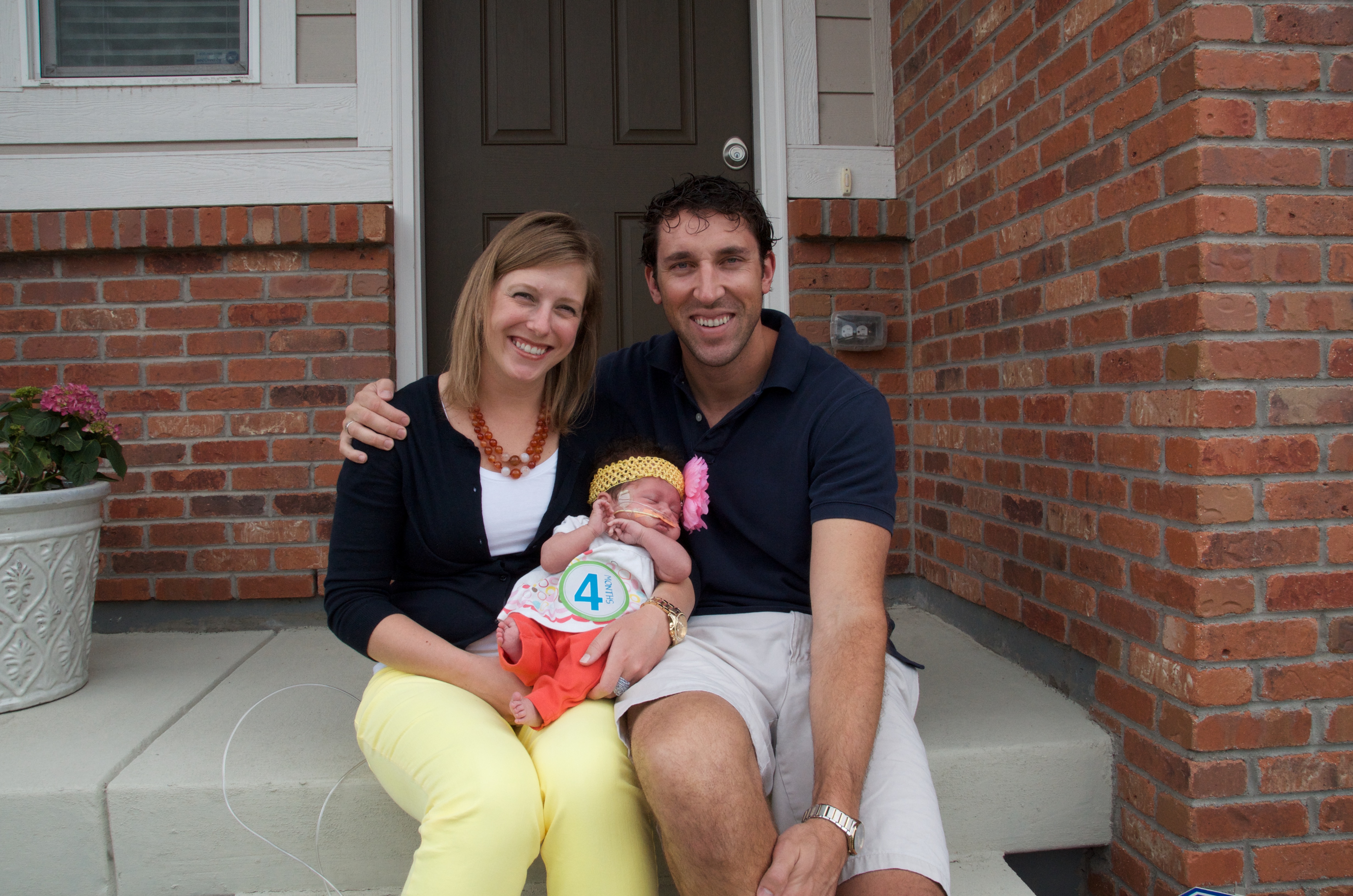
Home at last. London’s 4-month and 1-month birthday.

“How old is she?” The simplest of questions for parents of full-term babies to answer, but not so for parents of preemies because there are two answers for this one question.

At some point, a baby arrives so early that their actual age is going to be different from their developmental age. For example, my daughter, London, was born at 26 weeks gestational age, three months early. Her birthday is January 30, 2014. Her developmental birthday is May 4, 2014. This means London’s adjusted age is 11.5 months, even though she’s been with us for 14.5 months.

So how do I answer the question, “How old is she?” Well, sometimes I lie. If the person asking is asking because they are wondering why London is not walking and or talking because she’s the size of some two-year-olds, I lie and give them the adjusted age. By doing so, I direct the conversation toward the obvious and usually hear something like this: “My God, what a big baby.” I would much rather talk about how big my baby girl is than tell the person the truth and then have the conversation inevitably slide toward how London is, developmentally speaking, three months behind.

That said, I think most of the time I tell the truth and answer, “Almost 15 months,” because most people, whether they dwell on my answer or not, just aren’t going to say anything else. But I know, because I’ve seen it in their eyes, that when I say London’s real age some people look a little confused. I don’t know what they are thinking exactly, but it’s something along the lines of:

“Shouldn’t she look older?”

“She should be crawling by now.”

“She should be walking by now.”

“She should be talking more by now.”

IMG_2714

At seven and four-months old.

When I feel this reaction in people I know I could take the time and explain London’s two ages, but somehow just saying, “She was born three months early,” sounds cheap because I’m taking this huge, scary part of our lives and trivializing it in six words. Plus, the majority of people will not be able to comprehend what those six words truly mean. Getting stranger after stranger to comprehend that over and over again can be exhausting. I know, because I would make a casual effort to explain London’s prematurity to nearly everyone that asked. This was right after she came home from the NICU. Still on oxygen. Still rocking cheek patches. NG tube still snaking across her face. Understandably, those people who asked how old she was back then knew they were probably going to get something more than, “3 months.” But after a while, parents of preemies tire of going into the explanation thing. So, like parents of full-term babies we get back to basics with a simple, short answer, “Fourteen and a half months.”

Or am I going to say, “Eleven and a half months,” this time?

Oh hell, maybe I’ll just split the difference.

“Thirteen months.”

Nana Remembers London’s Birth

I’ve been meaning to share this comment since it was left on January 29th, when I wrote this post. The comment is from my mom, recalling the night and early morning of January 30, 2014.

I have been thinking all day about the phone ringing this night a year ago when we were sound asleep. Groggy and confused we listened to you tell us Kate was in distress, the docs were monitoring her and you would keep us posted. We hung up the phone, prayed through our tears thinking how can a baby live at 26 weeks? And we called her Grace not knowing you’d give her that moniker as her middle name. Your next call came to say Kate was about to undergo an emergency C-section. More tears and ongoing prayer. I remember my heart was beating so hard for what seemed like hours but you called again less than two hours later to say “London Grace” was here. Dozens of doctors and nurses were looking after her and Kate was in recovery. Then you asked, “Do you want to see a picture of her?” And so it began.

Still, I can’t read this without fighting back some tears. I had sort of forgotten that I asked my parents if they wanted to see a picture of their granddaughter. Such a question seems a little odd, but in the moment it was not an unusual precaution. The one picture I had of London at that point was graphic, for lack of a better word. She was vulnerable and the picture succeeded in showing that. I must have thought that maybe they would not want to see a picture of her until she stabilized some. Had they felt that way it would not have bothered me. Obviously, I was still protecting myself, but I also thought about protecting others and this was a way I tried.

I have known for a long time now that there was no protecting me or anyone else if things had gone horribly wrong during those first days. I was in shock and still under the illusion that I had any control over what happened next.

Baby in the NICU, Phone Always On

I love having my phone on silent. Even though my phone is consistently within reach, having it on silent makes me feel a little more free of it and maybe even a little disconnected. So when my grandma called me this morning it was only by chance that I noticed the iPhone’s screen light up, catching it out of the corner of my eye.

Of course, when your phone is on silent there are missed phone calls and missed texts. You sacrifice a little instant communication, but you gain some uninterrupted down time from the phone. It has become habit for me to switch my phone to silent while I am winding down for the night. At some point the next day, usually, mid-morning, I’ll turn the ringer back on.

Switching my phone’s ringer on this morning after my talk with my grandma made me think of that first night Kate and I were back from the hospital after London’s birth. I had reached over to my phone on the nightstand and switched it to silent. That immediately felt like a dumb thing to do and it slowly dawned on me that as long as London is in the NICU, my phone will never be on silent. It will rarely be anywhere other than my pocket. Its volume will always be at least 3/4 of max.

For 109 days, I did not want my phone to ring because a call, I assumed, would be bad news. But for 109 days, it was also imperative that I never miss a call or a single text message. If it was the NICU calling, then I could not afford to miss whatever breaking news they had to tell me, no matter how dire it may have been. Nowadays, the smartphone is a natural accessory to our everyday lives and, while we were living out a hyper-alert and worried stage of our lives, it made sense to make sure all avenues of communication stayed open.

When London did come home, I vividly remember taking great pleasure in muting the ringer on my iPhone that first night. It was ceremonial. A little victory. And in the morning, a big victory, not having to hop in the car and drive to the hospital in order to see my daughter.

Have Preemie, Will Not Travel

Screen Shot 2015-03-29 at 9.08.48 AM

Oh, the places we’ve been since London was born.

From January 30, 2014 to May 19, 2014 I left Denver once, for a quick trip north to Fort Collins. I was there for six hours. Since London was born I have spent three days outside of the state, not too far away, in Green River, WY. It took me two minutes to draw on a map where I have been in the last 14 months.

Having a baby will naturally limit your geographical existence. Having a 26-weeker will completely shut your travel down. From what I have heard about other parents who had a very early baby, we have been ambitious in our reach across this relatively small map. I have heard of parents who will not take their baby outside the house but for walks. These parents have decided that taking their preemie to the grocery store, the shopping mall, or to Target, puts their preemie at too great a risk of getting seriously sick and going right back to the hospital. My family did not make it out of the NICU without receiving such advice, from a nurse nonetheless. We were blown away by the severity of such restrictions and quickly conferred with other nurses that we did not have to stay under house arrest with our preemie until flu season was over.

We have followed certain recommendations such as, do not fly anywhere with your baby until flu season ends. Locking baby inside an incredibly small area for two hours with 140 other strangers sounded like a really bad idea to us as well. Not flying anywhere for such a long time (our last flight was in mid-December 2013) has been incredibly weird and challenging, but also much better than having a very sick daughter back in the hospital.

The feeling has been similar to putting travel and adventure on probation for over a year. Localized adventure has still been possible and we have taken advantage of that with trips to Wyoming, Breckenridge (twice), Steamboat Springs, and Estes Park. If it wasn’t for weddings, I am not sure we would have made all those trips, but thank God for weddings because these short getaways have quenched at least a little bit of our thirst for travel.

Flu season is almost over. Besides the obvious, this means as a family we are free to move about the country. And again, weddings will be the catalyst of much of that travel, but instead of weekends in the Colorado mountains we will get a weekend in southern California and Nashville, with some excursions in between. The destinations are exciting. The process of getting there, i.e. flying with London and bringing all the baby stuff along with us, does not excite. However, if London’s behavior as a baby can be a predictor for how she’ll be on a flight, I can say she probably won’t put up much of a fight. It’s her 40 lb. car seat that will.

The Troubling Loss of the Car Seat

IMG_4900

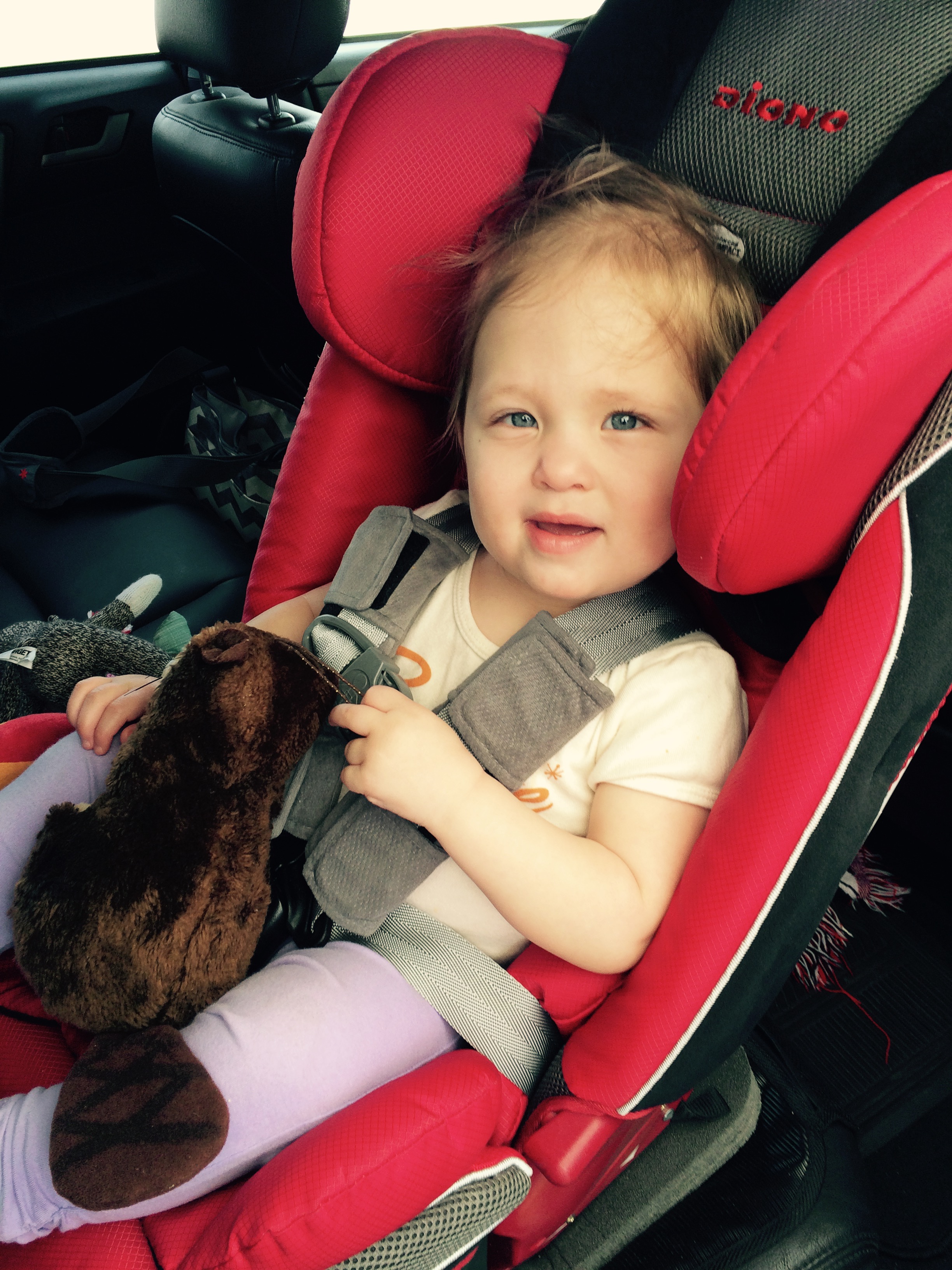
Fully functioning baby in the now retired car seat.

I felt the familiar bite of envy today when I saw a dad walking into a bookstore carrying his baby in a car seat. Oh, those were the days. Yes, they were.

But wait, you might say. Aren’t you excited for your baby to grow up? To walk? To be freer? Of course I am. She is crawling right now, but all she wants to do is stand at the coffee table and cruise around. In a little more time she will be walking with me, but right now we are in a cumbersome interregnum between the too-big-for-the-car-seat size and the not-yet-walking stage.

Benefits of the car seat era include easily carrying baby during any errand, including, but certainly not limited to, a stroll through the bookstore, a coffee run, and going to pick up a book at the library. Also, easily transferring baby from house to car, to inside bookstore, back inside car, back to house, and up to room if baby has fallen asleep in car seat. All this used to be done with one convenient baby bucket (receptacle or repository I like much better, but it just sounded weird, “baby repository”).

But now upon arrival anywhere we must transfer baby from big, new, giant booster-type seat for extra-tall babies to the stroller, also great for extra-tall daddies.

IMG_5816

Fully functioning much bigger baby in the new, custom-built-for-huge-people, booster seat.

The other option, and this is a big ask, is to carry her sans stroller. Since she’s 25 lbs and 31 inches, one better hope the errand does not take longer than expected if you spring for this non-stroller option, especially if you have already lifted weights that day.

This might be the first of many posts in which I sort of (or jokingly) mourn losing the conveniences of the infant, but also recognize the perks of getting older and growing bigger, like her booster seat (which is one indestructible gadget) and her current obsession with pulling to stand. These are great things.

But the other point of this post is that I cannot shake the memory of the days when I could carry London around in her car seat, sometimes with just a few fingers wrapped around the handle and the other two fingers carrying a six-pack. The ease. The comfort. The convenience. Oh my.


Generous Ventricles

The hardest day to get through was Wednesday, the day after we got the news that London would need an MRI and a neurosurgery consult. Though we knew that the challenges of having a preemie were not over, we did not expect to encounter an obstacle quite as scary as this. But, with some prayer and time we reacquainted ourselves with the frame of mind necessary to get through the NICU days. That frame of mind is a place where you never forget that you’re not in control. The NICU does not allow for you to believe you are in control of anything. It is like you have been dropped into a boxing ring and all you can do is roll with the punches, no telling how awfully painful the next one is going to be, nor from where it will be coming. We got pretty good at that last winter and by Thursday I think we both felt better in a way. I even made a joke about it. After Kate asked me what I had decided to give up for Lent I said, “Hope.”

_BKP3714

London at 9 months.

We waited until the following Tuesday for the MRI. We were told it was a rapid MRI, a brain shunt series, which would take about five minutes and London would not have to be sedated for it. The consult would follow right afterward so there would be instant results.

At Children’s we were taken to an MRI waiting room. There were no small gowns for London to wear so she wore pants half a foot longer than her legs and a top that looked like a Snuggie. Kate and I chose to be in the room for the MRI so we had to get rid of all metal we had on. Zippers were okay. After a few minutes we were ushered down a very long hallway into the MRI room, where the door was lined with a metal detector, ready to catch any metal on or in our bodies that we forgot to mention in the screening process.

This MRI room was out of a Sci-Fi movie. It would have looked right at home in Stanley Kubrick’s 2001: A Space Odyssey. The walls were of white gloss and the lighting made the room glow an interesting mix of blue and white. London was placed on the MRI bed, which had a blue pad on it that the nurses kept calling a “blue snuggly.” They warned us that once London was on the bed, they would fold up the sides, buckle them together, and suck all the air out of the snuggly to vacuum pack London. They added, kids don’t like this very much and they start to squirm and cry.

We folded up the sides of the snuggly, snapped the four buckles up from London’s feet to her upper chest. Her head was braced with many cushions, but first earplugs were added to protect her from the noises of the MRI. And then a nice lady sucked all the air out of the blue snuggly. By all measures London seemed to enjoy the whole experience. She did not make a peep and was even smiley. The bed slid into the MRI and the scanning began. London could look toward her feet and see us standing there waving and smiling back. She made two noises of distress, but quickly calmed down when she saw us. Five minutes later, she was done, and free from the blue snuggly.

We then had to go upstairs and check in for the neurosurgery consult. Within ten minutes we were sitting with a very nice lady who did not cut to the chase right away, but by the way she spoke and by the words she chose, I had a good feeling. She gave us a complete rundown on hydrocephalus and brain shunts. We looked at images of London’s head. In one image we got to see all of her teeth, although she only has three that have broken through. The rest of them were floating at various heights above and below the mouth. We went over the symptoms of hydrocephalus. There was a lot of talk about the size of my head. This was not news, but to prove the point the lady measured my head to confirm. 63cm. She said anything above 59cm is huge. And hey, it turns out Kate’s head is sort of big too.

London, we were told, has generous ventricles, but shows no signs of hydrocephalus. Of course, we should still monitor her head size and maybe at age 2 another MRI. Apparently, the MRI images told the doctors that there was nothing to be “excited” about, an interesting choice of words. If there was an issue, excitement would not be the feeling I would have. I found myself excited because there was not an issue.

We spent a very long time talking about London’s head and why it looks like London has adjusted nicely to her generous ventricles. As soon as we were out, Kate returned to work and I called my parents who, I know, were anxiously waiting for news and probably not expecting to have waited this long.

I returned home with London, relieved to an extent I cannot describe. I spent a lot of that afternoon and evening looking at London even more than usual, admiring her strength and attitude, and imagining the day I would tell London about the first year of her life. What would I tell her about a day like today? And what about the days far scarier and more exhausting than this one? I don’t know, but I know she will love the ending.