What Lies Beneath

London had just peed out her diaper. I thought it was odd since London had not peed out of her diaper in months. It could have just been that whoever changed her diaper last did not get a good seal.

I couldn’t quite believe it so I dabbed my hand on the big wet spot on London’s right pant leg. This was not some ordinary pee. This was some extremely sour-smelling stuff. As I brought my hand to my nose I finally realized it wasn’t pee.

Let me back up thirty minutes. We were all finishing dinner when London tooted. And by tooted, I mean it lasted five whole seconds. Then a few seconds later, another long toot. A few seconds after that, one more small blast. Kate and I looked at each other and sort of laughed, but London’s toot was not too extraordinary. She had done this before, but it had been a very long time.

We moved into the kitchen. Tonight, we kept London in the high chair as we cleaned the dishes. She kept snacking some, but seemed particularly moody so we decided to get her out of her high chair. And now, we are all caught up to the moment when it dawned on us that London, for only the second time since we brought her home from the NICU, had a poop blowout.

Luckily, we could tag team this. Kate grabbed some plastic bags. I carried London a good two feet out in front of me as we went upstairs to the bathroom. Once there we did a cursory examination of what was in front of us, deciding on how we were going to approach this horribly smelly and pasty mess.

To our benefit, London was wearing a onesie, which she just barely fit in, one that we weren’t particularly attached to. Scissors it is, but first we had to peel her pants off. As we did so little pieces of poo fell to the tiled floor. I could feel the extra weight of the pants as I moved them aside.

Once I returned to the bathroom with scissors, I held London and Kate cut down the back of the onesie and it fell to the ground inside the plastic bag London was standing on. Next, the diaper. A new bag for London to stand on. We just loosened the velcro-like straps of the diaper and let it fall off London. Pushing that mess aside, I grabbed the bathmat for London to lay on while Kate cleaned London up a little bit. She was not nearly clean enough to sit in a tub.

Kate asked, “What about the pants?”

“Oh, I’ll clean out what’s in there and I think they’ll be fine.” I picked them up, started to turn the oozy side inside out and immediately gave up. “They’re done for,” I said, as I plopped them into the plastic bag with London’s onesie.

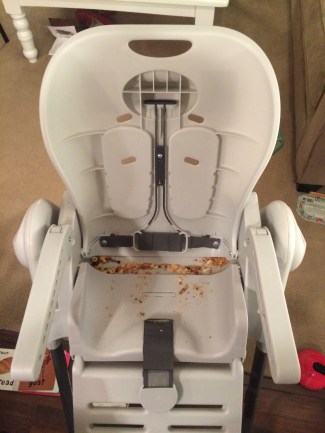
Kate got to giving London a bath. I thought I’d check out the high chair because I knew it was going to be messy. I had seen some remnants in the seat before we went upstairs, but I didn’t really know how bad it was. First, I attacked it with bleach wipes, a lot of them. It looked good to me after that. Hold on, what’s beneath on the reverse side of the high chair cushion? Well, it was a brown stain bleeding out from the hole in the cushion, which part of the buckle slips through.
IMG_7840

Breakfast cereal, quesadilla, and a little bit of everything else.

I took the cushion off, flipped it over, and hit it with some more bleach wipes. The tag of the cushion read, “Do Not Wash. Hand Clean Only.” Throwing it in the washer seemed necessary at this point. Costco bleach wipes can only do so much. I scrubbed and scrubbed, but that sour smell was still there.

London was out of the tub by now and getting dressed, so I took the cushion upstairs, filled the tub with scalding water, and put in enough laundry detergent for several loads. I threw the cushion in the tub and made sure it was waterlogged before I left it there.

Back downstairs there was one last mess to clean up. I hadn’t fully cleaned London’s high chair in months so when I took the cushion off I discovered a pretty thick strip of food. I saw fossilized quesadilla, Crispix, Cheerios, and other food ground down to unrecognizable particles. I was going to vacuum it, but Kate told me to just dump it in the backyard. I lifted the chair up and out the backdoor and flipped it upside down once I was over the grass. Success. No vacuuming necessary and the lawn got fertilized with breakfast cereal.

The high chair cushion took two days to dry out in the backyard, but now London’s high chair is as clean as it was when we first got it. And, we only lost a onesie and some pants.
The Derailing of a New Year’s Resolution

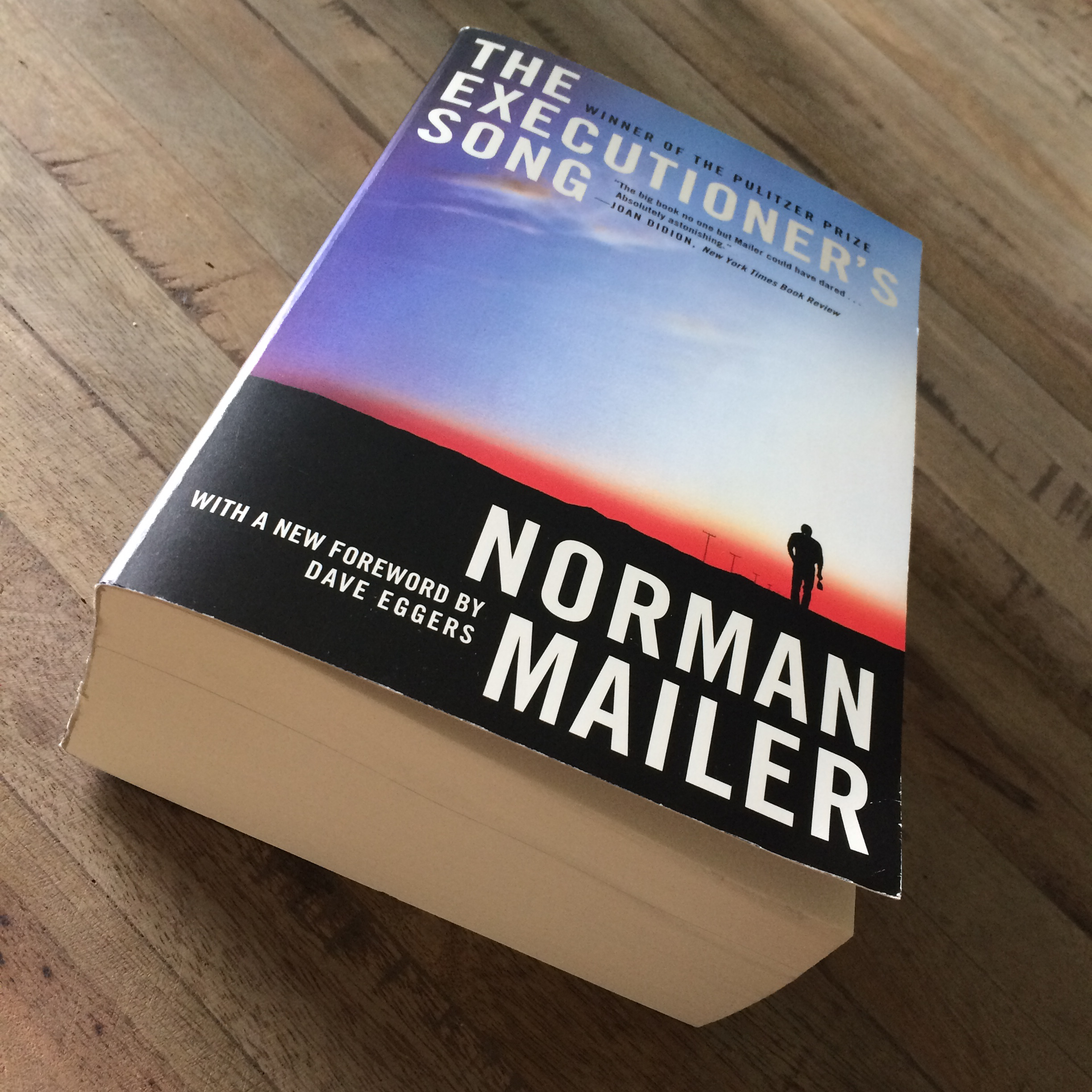
Things were going well. I was on track to read 12 classics in 2015, but then I set my IMG_6671eyes on The Executioner’s Song. Heck, Dave Eggers said it would be the fastest 1000 pages I would ever read. He wrote it on the back of this book. He was wrong, but that does not mean the book isn’t any good. It’s excellent. Every time I pick it up I am instantly drawn into Gary Gilmore’s story.

But the book is still 1000+ pages. No matter how excellent it is, I still have a baby at home who is sleeping less during the day than she used to and it’s the holidays so, naturally, there are more domestic duties to undertake in the short breaks I get while London is sleeping. There’s Christmas shopping (online), Christmas card and calendar building, and I’ve also spent the last few days frantically clearing the basement so our remodel can start this week.

I think I realized about two months ago that 12 classics in 2015 was not going to happen. I am pretty sure I won’t finish The Executioner’s Song in 2015, but I will finish it. I am enjoying it and it’s the first work by Norman Mailer that I have read. I just wanted to publicly confess to not achieving one goal for 2015. I am already thinking about a 2016 reading goal: No New Books. I have to finish all the books I have started, set down, and never gone back to. And when I’m done with those, I can start on books I already own, but have never read, which are quite a few.

Millennial Parenting

Yesterday, I sat down to read Time‘s cover story about millennial parents. Before starting out I made a few predictions. One, I would bring my palm to my face on more than one occasion. Two, I would read about a kid with a ridiculous name. And three, I would hear the same old stuff about one generation thinking the way they parented was the best and younger people parenting differently are just wrong.

Well, prediction one and two came true in the first paragraph. First facepalm, when I saw the vegan dad who is raising his kids vegan wearing a t-shirt, which simply said, “VEGAN.” This reminded me of the best joke I have ever heard about vegans. File this one away: How do you know someone is vegan? Don’t worry, they’ll tell you.

As for prediction number two, let’s just say that right away there was a name that, in my opinion, seems like a classic case of millennial desperation to make everything about their kid unique starting right away with the name.

Prediction number three was also accurate, although there was not as much worrying about millennial parents as I expected there to be. The article mostly detailed the differences among parents from three generations: millennial,  gen x, and baby boomers.

The author made a few lazy assumptions about millennials. One was right there on the first page, “And they continue to build vast archives of selfies.” Not true in my case. Maybe that is because I am just barely a millennial parent, but it is mostly true because I strongly dislike selfies. I take them, when no one else is around to take a picture of London and I, but that is out of necessity, not because I need to Instagram a selfie right now. Another prediction: if your Instagram profile is chock full of selfies we probably won’t be good friends.

One of the best points in this article was that, due to nearly universal use of social media among millennial parents, it is far easier for us to compare our parenting or family to some other family. The Facebook and Instagram posts often present “impossibly pristine, accomplished version[s] of their family lives on the web.” That is one of the more accurate statements about parents all across social media. We are highly selective about what we share. I am guilty of this so in the margins of the article I wrote, “write about the dirty, time-consuming tasks…Instagram them too.” A couple of nights ago I had the best opportunity to do this. London had vomited all over the couch, Kate, and the floor. Next time, that is going on Instagram.

The author later writes that “millennials say infighting over topics like breast-feeding and vaccines has driven them from online groups.” I haven’t experienced too much of this, but in some cases I have encountered parents of preemies who almost advertise the complications of their kid’s prematurity in their IG profile, Facebook page, or Twitter account. I have certainly shied away from groups or users like that, much in the same way I unfollow people on Facebook whose posts are always political.

A teacher interviewed in the articles makes the point that social media “is leading the children of millennials to form stronger social bonds than previous generations, because they’re in contact with one another more outside of school.” Is this a good thing though? Doesn’t it breed traits into our children such as the need to always be connected to the internet or to always have a smartphone nearby? Are these kids able to be alone? Will they be able to enjoy silence?

The last scrawl in the margins of this article I made was about kids being unique. A mom is quoted as saying, “I just want them to be unique.” Aren’t they unique in your own eyes? That should be enough. My kid or kids will always be unique to me and that is all that matters. Most importantly, I want them to be happy. I know that if they are happy, they will encounter people in their lives who consider them unique. These people will become their friends.

I think there is some urge in millennial parents for their kid to be unique in the eyes of the world, not just their eyes, like we are all trying to raise the next prodigy, celebrity, or savant. If there is a concerning theme in this article, that would be it for me.

A discovery about millennial parents that is particularly promising and hopeful to me is that parents in this generation favor more unstructured playtime and are more encouraging of kids to explore on their own, to be on their own. This, according to the article, is a move away from the helicopter parenting of Gen X. In my experience, this is pretty accurate.

If you are interested at all about Time’s take on millennial parents, then I encourage you to check this article out. I just tried to link to it, but was told that the page is only available to subscribers of the magazine. So it might necessitate a trip to the library or a little more sleuth work on the internet. The title of the article: Help! My Parents Are Millennials.

Becoming a Playground Aficionado

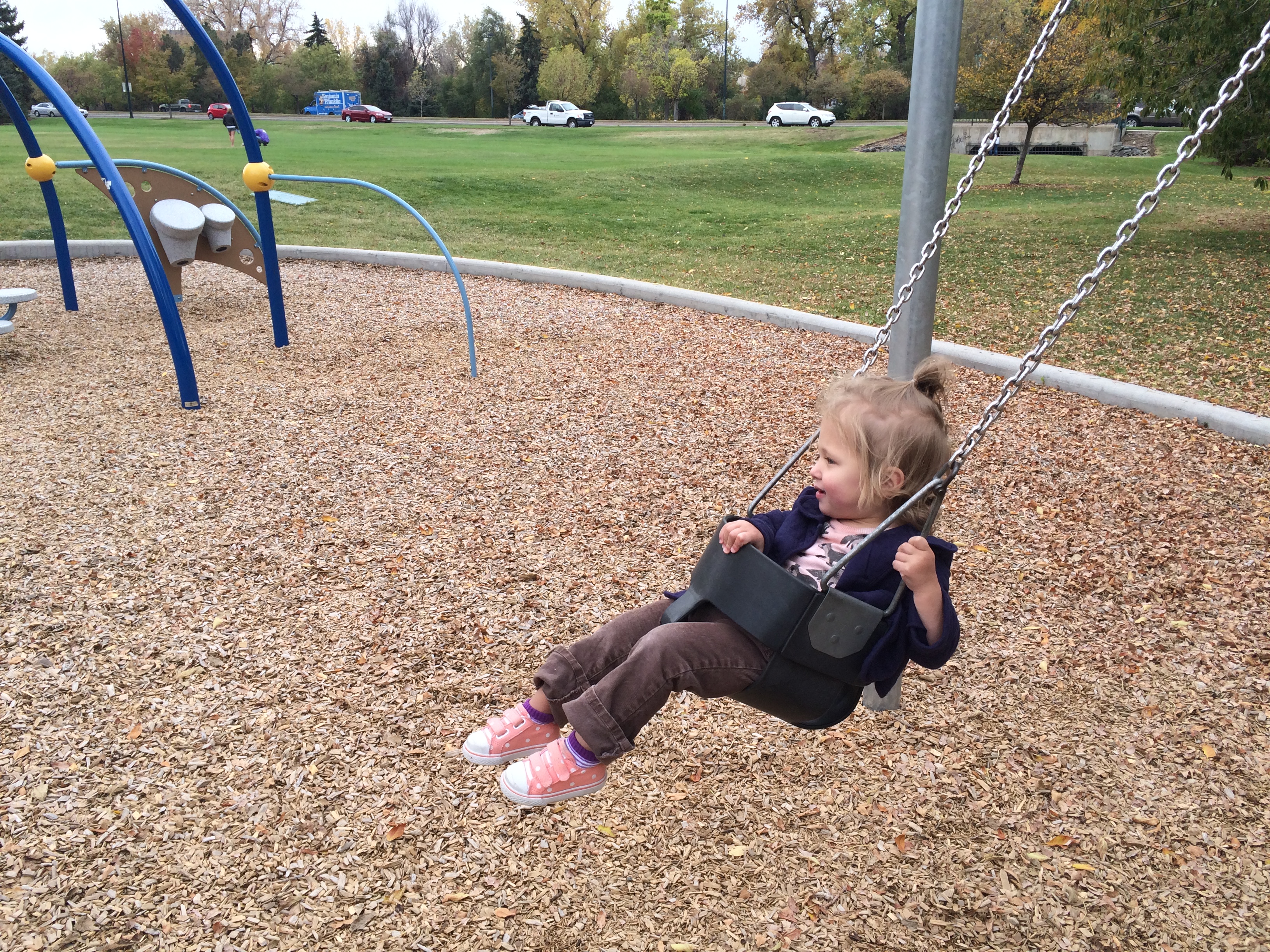
London has discovered playgrounds. The closest one is just up the street. We went IMG_7500there months ago. I have the exact date written down somewhere, but since then, we have had to expand our known playground universe. Throughout the process, London has seemed to enjoy every playground we have been to, but I quickly developed preferences and discovered things about playgrounds that are quite different since I was last climbing around one.

And, of course, some things about playgrounds are still the same. For example, I am still too big for them just like I was too big for them when I was 12.

IMG_7504But the differences are many. Sand is often isolated to a small area of the playground or simply nonexistent. As a parent, I absolutely love this. London would probably prefer more sand, but she has tried to eat it and it has the potential to get places I’d rather not find sand in later in the day. Thus, I love it.

However, the common sand replacement is wood chips. In my opinion, better than sand, but not the best surface. There is a potential for slivers and, apparently, spiders. Spiders like wood chips. London likes the wood chips. Like sand, she has tasted them, but it is loads easier to get wood chips out of a baby’s mouth than sand.

So far, my preferred playground surface almost looks like concrete, but it’s soft and coated in rubber. It’s springy enough to ease a fall, but firm enough to support easy walking and running.

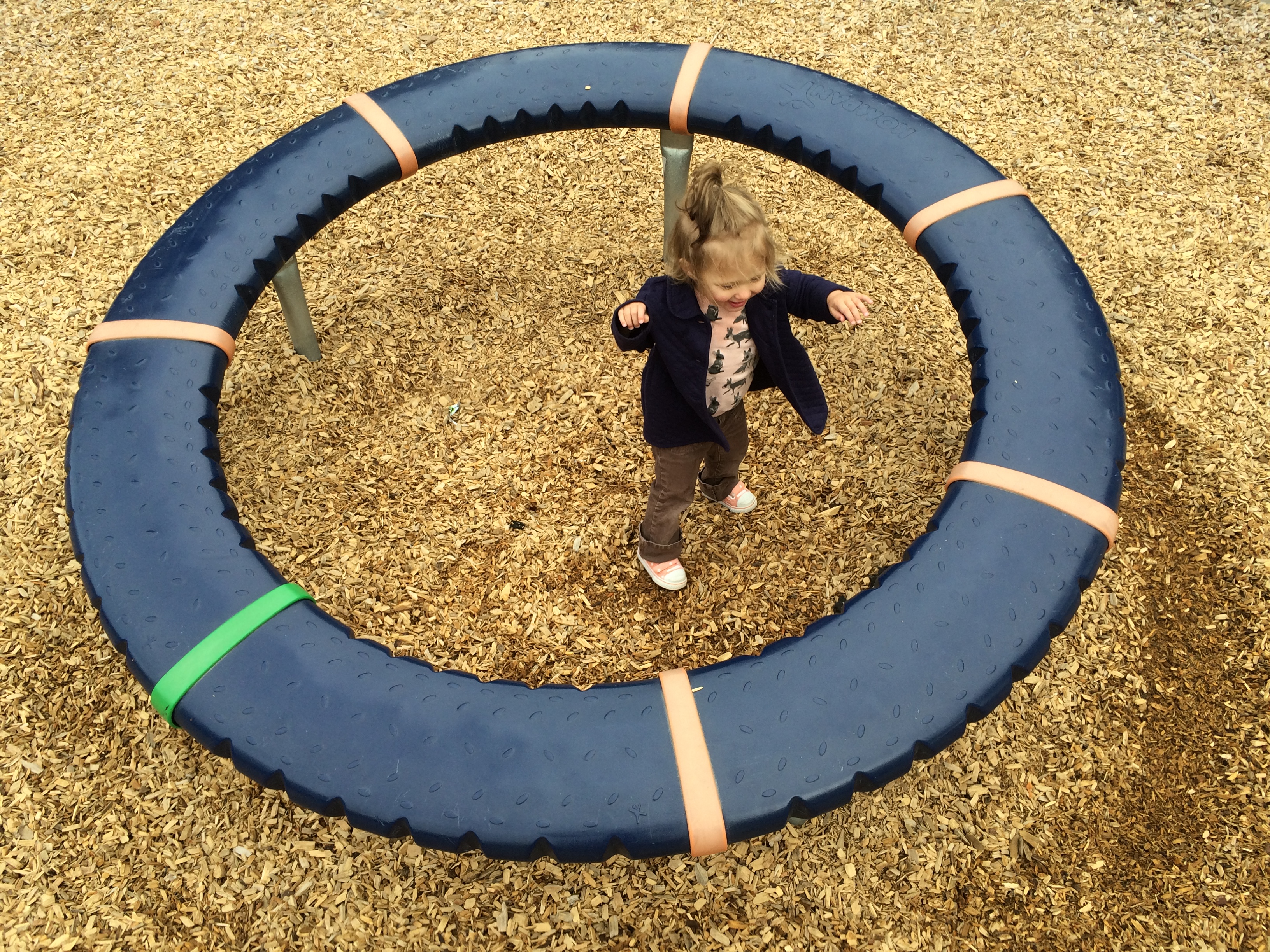
I think it is safe to say that London and I prefer Kompan playgrounds. They build some really sweet playgrounds. They aren’t the playgrounds of my late elementary years, which were starting to be too safe as our society became more litigious. Kompan playgrounds seem to have taken steps back from that fun-sapping trend. So far, our time on Kompan playgrounds has been plenty safe, but I love that they incorporate a lot of ropes and tall playground equipment. I love the potential for injury and risk, even if I still don’t fit well on most of their contraptions. That’s okay! London fits just fine and  every week we are trying out new playgrounds across Denver and finding out that our favorites consistently have Kompan printed all over the playground, a welcome site for this playground duo.

Those First 20 Months

Don’t run. Don’t run from this. I know, you had these grand plans. Fatherhood doesn’t mean those plans have to be scrapped. Modified, perhaps. Delayed, most likely. But scrapped? No.

Impending fatherhood can do some crazy things to you. A part of you might want to tuck tail and run. We are selfish beings after all. In the moment, it is all too easy to see the coming changes as the way you are going to lose your freedoms.

I won’t lie. Some freedoms disappear. Some just temporarily. Some other freedoms for a little while longer. But as you wade deeper and deeper into fatherhood, those freedoms will come back. Normal will be erased, redefined, and can slowly return to something resembling a healthy, balanced lifestyle.

IMG_3237_164854

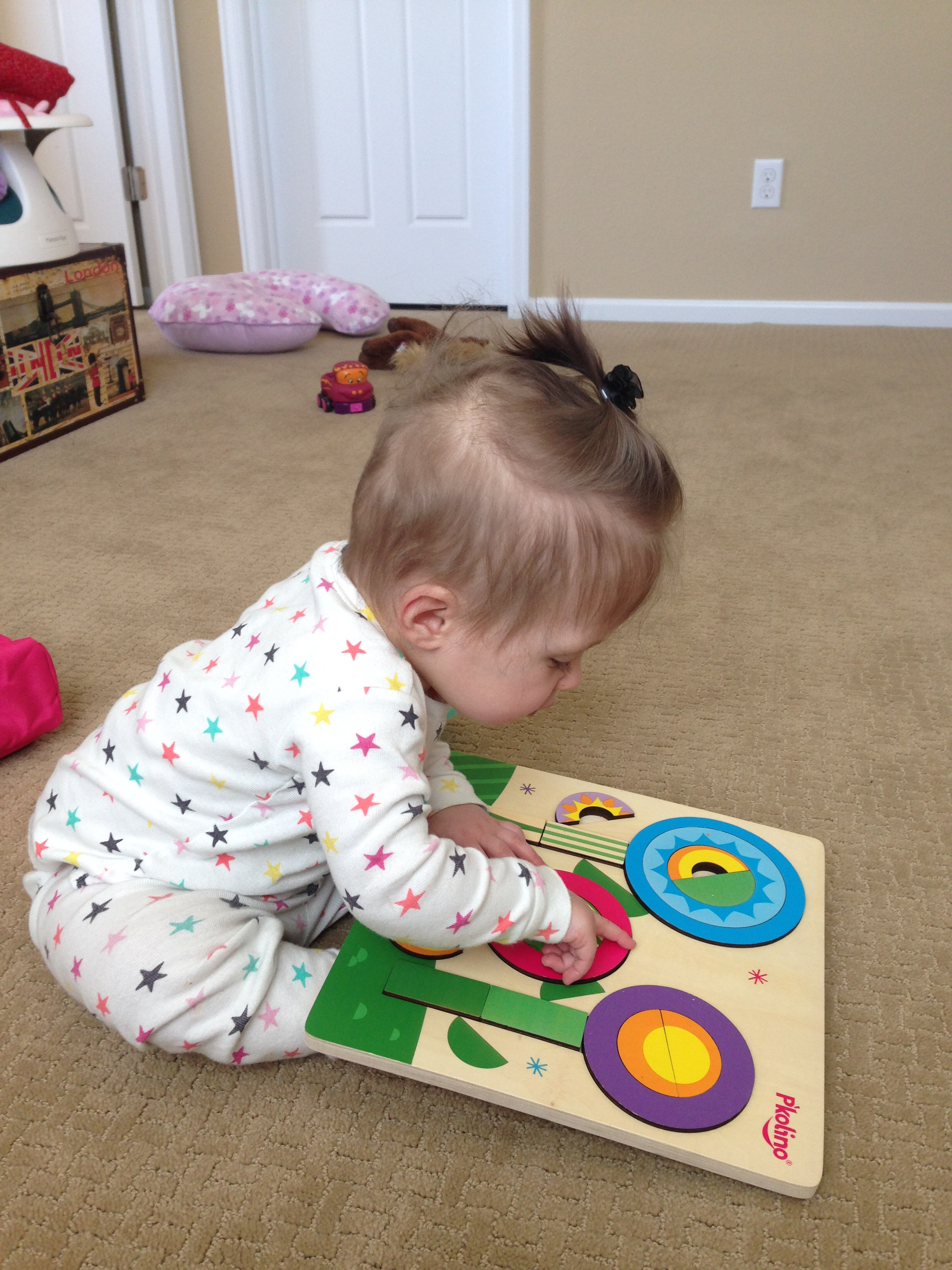
You won’t get to help complete her first puzzle.

But first there will be dirty diapers, lots of them. Also, there won’t be sleep, at least not restful sleep. Your life will be interrupted by a baby and within that interruption, there are hundreds more interruptions, coming at the worst moments after just two hours of sleep, or at 4 am, or in the middle of a book, or in the middle of a job when you are facing a deadline. And your checking account will take a hit. Even if you get a ton of gifts at multiple baby showers, you will think there is a leak in your bank. And in the toughest moments, you might mourn the old you. Where did that carefree you go? You thought you had to be responsible before? Huh, you will say out loud, I wish I could talk to that old me and let him know how easy he has got it.

You could just remain that person. After all, many people shirk the mantle of fatherhood. I don’t recommend it though. I have only been a father for 20 months, but just in case you decide to take even just the first 20 months off, here is some of what you will miss.

Your daughter’s first smile. Her very first laugh. Her. First. Laugh. Isn’t that amazing?

IMG_3226_164846

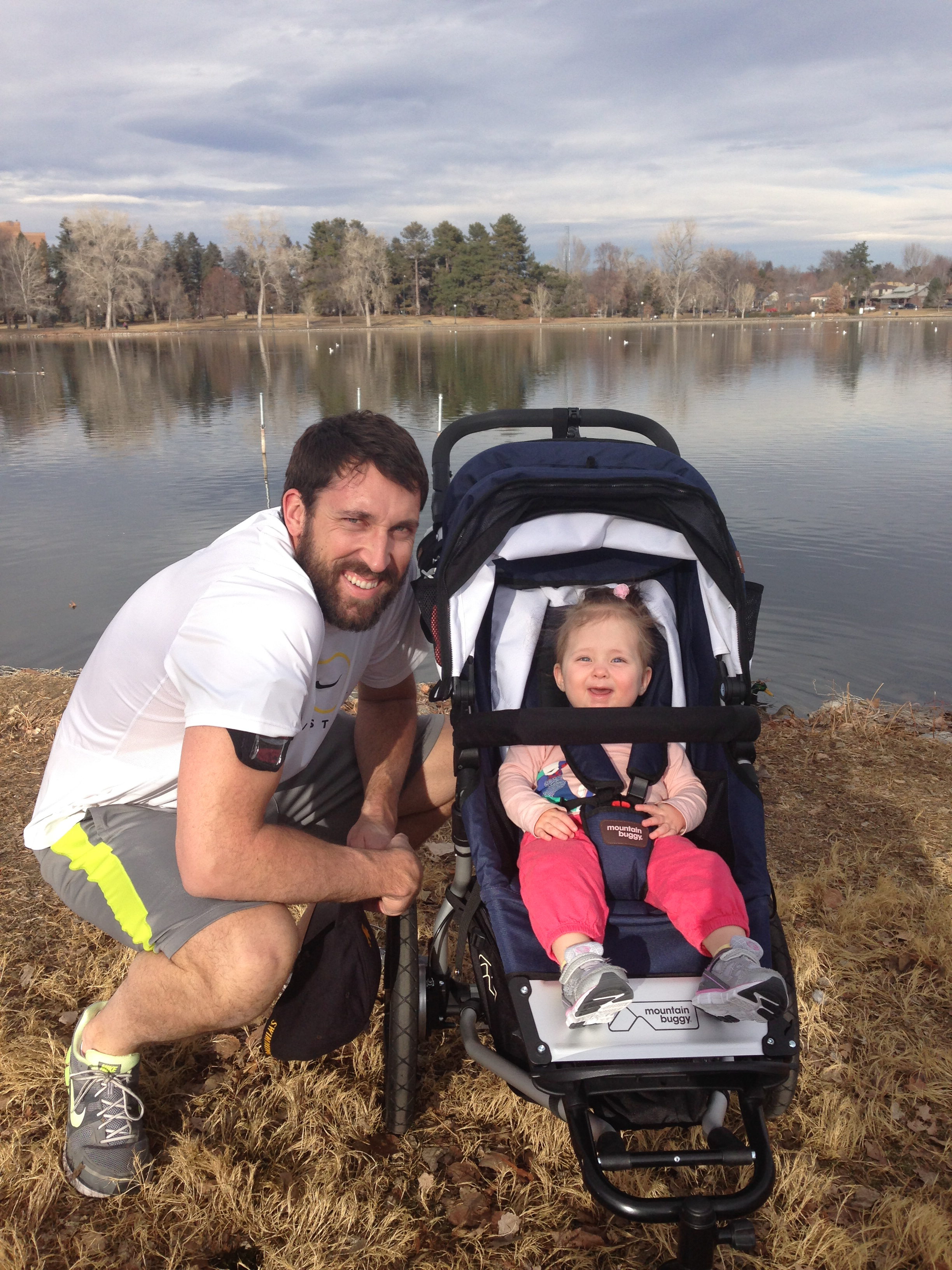
You won’t get pictures like this.

You won’t get to teach her one of her first words. You won’t get to cheer her on as she makes her very first army crawl across the living room.

You won’t get to pick clothes out for her. You won’t get to dress her in a new outfit for the very first time.

You won’t get to look at her in awe and start to see her become something that resembles a little of you and a little of the woman you loved long before your daughter was even in your imagination.

You won’t get to hear her say dada for the first time. You won’t get to hear her say your actual name for the first time, like I did today.

You won’t be able to scoop her off the ground after her first fall. You won’t get to have a hug from her. Those hugs, well, there is nothing like them.

The firsts don’t end at 20 months. They keep on going and going and going. Never in my life have I heard someone speak highly of a father who skipped out on those firsts. Can you even be a father if you skip this? Maybe. Eventually. But that road back is going to be a lot more challenging than just sticking this out.

If you could talk to your future self, say twenty years down the road, regardless of that person’s decision, I am confident he would say the same thing. You should be a father and a husband first. You will find out that all the other titles, adventures, and stories out there, although great they can be, will fade away once you embrace the most important role you will ever have. Father.

Dads Saving the Day

I saw these videos of dads who have saved the day and had to share them on here. It’s hard to pick a favorite, but number 5 is a very solid effort. The first time I watched it I thought the dad was sprinting after the girls on the Little Tikes car, because putting two girls on a car like that and pushing it down a hill just seems like a bad idea. But the dad is actually saving another kid from being run over by those girls. Another great video, number 2, which is the most casual, but still quite impressive, save on the list.

Watch the videos from Buzzfeed here.

I saw these videos a while back, but I thought of them again on Saturday. We had just arrived for brunch at a restaurant. I was standing and holding London on my left arm/hip waiting for the high chair to arrive at our table. I was looking to my right, when I felt London’s weight shift in my arms. She had started to lunge out of my hold, head first. My right arm swooped around and saved her from sailor-diving into our brunch table. There is no video of it, but there was definitely some daddy-pride in the aftermath of that moment.

SAHD Convention

I found this good recap of the Annual At-Home Dads Convention, recently held in Raleigh (last year it was in Denver). I agree with nearly everything in the article except for this:

“Minivans are cool now. They’re all tricked out.”

Read the whole article here. 

Music Class in my Active Wear

After music class this morning, this video is absolutely spot-on.

SAHD Guidelines for Music Class

Yesterday was my first music class with London. I need to write some things down so I remember them for the next nine classes to come…

Try as hard as you can to act like there is another dad in the room. You are the only one, but be as comfortable as if there were three other SAHDs present.

Try not to sweat when you’re feeling like all eyes are on you because all eyes aren’t on you. It just feels that way because you’re the only SAHD there. IMG_7217

Just in case you do sweat a lot like yesterday, wear a darker shirt. Yesterday you wore a light blue shirt and within ten minutes you had a band of belly sweat visible on your shirt and by the end of the class it was impossible to hide the fact that you were pitting out.

Don’t drink a venti iced coffee from Starbucks right before music class. Trying to pee while holding London is not as easy as it once was. And yesterday you had to do it twice, right before class and immediately afterward.

Take pride in the fact that the first toddler on toddler assault yesterday was not London’s doing, but don’t forget to corral her if she starts winding up for a nice slap across the face, her customary greeting for babies.

If the opportunity arises, share London’s age. From past experience, I know there has to be someone there wondering why there is a three-year-old acting like a sixteen-month-old. Well, let them down gently, it’s because she is sixteen months old.

Also, be kind to anyone if they assume I am babysitting. Just because I am a dad and I am here with my daughter does not mean I am babysitting. I am parenting. No parent should feel like they are babysitting their own kid.

Do not assume a child’s age. Yes, he or she might be significantly smaller than London, but they might be six months to a a year older.

Just try to fit in. Try not to think of yourself as the pariah. You won’t be if you remember these things you’ve written down here. Oh yeah, and don’t sweat as much.

Ten Insults SAHDs Hear

I read this great article yesterday. A stay-at-home dad writes about the ten insults he hears as a SAHD.

All of them are so accurate and pretty universal. I think I have heard eight out of ten. I have yet to hear, “It must be nice not to work” and “Seriously, you change diapers?”

Great read. Here’s the link.

What Makes You Happy?

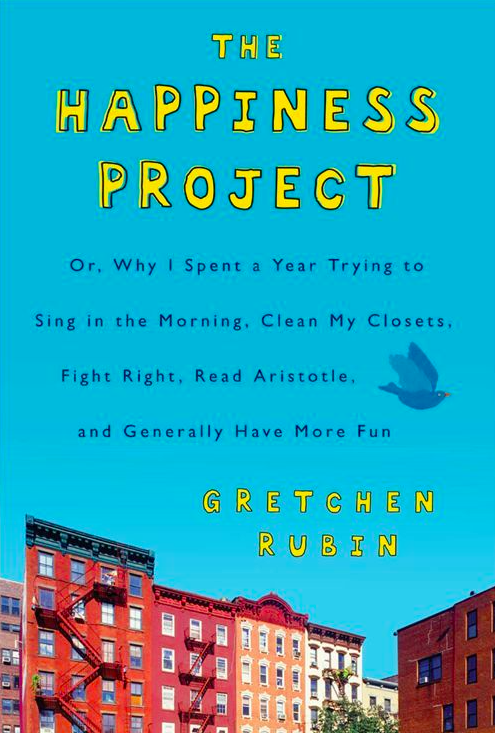
With encouragement from my wife, I am very slowly reading The Happiness Project by Gretchen Rubin. I have enjoyed reading about Rubin’s year-long journey to a happier life.

The book includes a nice mix of practical and philosophical advice for a happier life. In Screen Shot 2015-09-06 at 11.59.48 AMthe last chapter I read, Rubin spent a fair amount of time writing about what makes her happy. She kept asking herself, am I happy doing this? She asked her readers, what makes you happy? In response, Rubin and her blog readers concluded that what truly makes them happy is not always what they wish made them happy. For example, Rubin might be happiest being at home reading a book without interruption, but in her mind she is tormented by the thought that she might be happier on a hike even though she knows perfectly well that is not going to make her as happy.

Since reading the chapter I have been thinking about what sort of activities make me happy. At this point in my life, being able to do something without interruption makes me happiest. It does not really matter what that something is. If I can sit down and watch a movie without interruption, I am thrilled. Read a chapter of a book without being interrupted? So refreshing and invigorating. Refinishing an end table for our living room without an interruption? This actually give me a strong sense of accomplishment, which combined with the effort it takes to refinish furniture, gives me a lasting happiness that helps me through the menial tasks of SAHD duty: diaper changes, bottle service, dishes, laundry, house-cleaning, etc.

So, today, I set out to do a few things without interruption. One, go to Novo Coffee and read a couple of articles in Vanity Fair without interruption (done). Two, write a blog without interruption (currently in progress). Three, go home and eat lunch while watching an hour of television without interruption (coming soon). Four, work on refinishing an end table without the worry of being interrupted (also, coming soon).

Time for number three.

Buy Me A Beer

No one knows what it is like to be a stay-at-home parent unless they have
done it themselves.

Maybe you watched your kids for a long weekend so your spouse could get a break. Maybe you watched your kids for a week while your spouse was away. Maybe you actually used all your paternity or maternity leave after your child was born. These are all great things to do. Necessary, in my view.

IMG_1018_43927But doing all of those stints with your kid doesn’t give you enough experience to know what being a stay-at-home parent (SAHP) is like.
There is an end you can see in all three scenarios mentioned above. Of course,  for SAHDs or SAHMs, there is also an end, but well beyond the horizon and out of sight. As a SAHD, I’m not yearning for the end of this job, but until you grasp the permanence of staying at home, you haven’t gotten a taste for the real thing.

And then you must prepare yourself because that’s the tip of the iceberg. There are so many challenging aspects of stay-at-home parenting. I have mentioned some of them in previous posts: limited adult-to-adult communication, a decent dose of isolation, the fact that you’re not making money, and facing the stigma associated with being a SAHD, which is certainly one thing SAHDs have to deal with a little more than SAHMs.

So why am I writing about this? Well, it’s long overdue. I have talked to too many people since becoming a SAHD who have never been a SAHD or SAHM themselves who imply that they know what it is like. Yet, we don’t do this in conversations with other professionals (and yes, I’m implying that I’m a professional and, once again, if you don’t get that, you’ve never been a stay-at-home parent) like doctors, accountants, or teachers. We don’t assume to know what daily challenges they face because we once used an epipen, did our own taxes using TurboTax, or completed a math problem on a chalkboard for an audience, respectively. So why do so many people assume they know the day-to-day ups and downs of SAHDs and SAHMs because they spend the weekend around their kids?

Because they assume it is easy. They assume it just must be like the weekend over and over again. How hard can that be?

I think the real problem is that being a stay-at-home parent is not viewed and talked about as a real job by enough people. Too many people talk about it as a hobby. I cannot tell you how far from the truth calling this a hobby is. Hopefully, I’ve conveyed that from time to time on this blog.

Next time you find yourself talking to a SAHP, treat them like a professional, understand that they work 80 hours a week, and buy them a beer because they don’t have a paycheck.

“Do you get to stay home with mommy?”

For over a year now I have been telling people that I stay at home with my daughter. Response to this news falls into two categories.

First response: dismay, followed by an awkward pause in the conversation while IMG_6356recipient of the news digests what I have told them. Their inability to register that there are such people as stay-at-home dads (SAHDs) is obvious on their face and the direction in which the conversation now moves. They typically switch the topic, pointing out London’s cute outfit or smile, etc.

I get this response mostly from older generations. Just the other night after a meal out, I was standing outside of the restaurant holding London. An older woman started talking to us. She was admiring London. The conversation was going well. I love talking with strangers who want to hear about London. Staring at London, the woman asked her, “Do you get to stay home with mommy?”

“No, she gets to stay home with me,” I said it as proudly and happily as possible and looked at her for a reaction. I saw it. A band of confusion moved across her face like a TVs signal being interrupted. God bless her, she tried to recover, but it sure seemed like she had never met a stay-at-home dad before. I also get the feeling that these people assume my role as a SAHD is strictly temporary.

Second response: surprise (but not as much as the people in the first response), excitement, support, and curiosity about meeting a SAHD. Usually these people immediately tell me how awesome it is that I stay at home with my daughter. They tell me that I am doing a great thing. Unlike the first group, people who give me the second response do not assume I dislike this job or am just doing it for a short period of time. Not surprisingly, people in this group are younger and, because of their response, much better to talk to after the SAHD genie is out of the bottle.

Consider this a public service announcement. When you meet a SAHD today, next week, next year, or whenever, give them the second response. You might make their day and make a new friend.

The Next Book For London

The next book I read to London has impossibly big shoes to fill. What can knock Screen Shot 2015-08-11 at 4.39.35 PM4,100 pages of Harry Potter off the top? Well, it isn’t Bill Bryson’s A Short History of Nearly Everything or ASHONE for short. That’s right, I went full nonfiction science writing for the next book. I needed a change of pace and I am quite sure London won’t notice, except for the expanded vocabulary in Bryson’s work compared to HP.

I love Bill Bryson’s writing. Somehow I had owned ASHONE for ten years and had never read it. London and I cracked open the book a couple of weeks ago, validating my purchase of this book in a Borders (remember them?) in Longmont, Colorado all those years ago. We are only a hundred pages in, but I’ve found that I am not enjoying this as much as his travel writing. There just aren’t as many opportunities in science writing for Bryson to add his signature humor. That said, it’s still an excellent book. Bryson makes the hardest of subjects accessible by writing about them in the common tongue.

One of my favorite passages early on in the book is from chapter two:

…it isn’t possible, in any practical terms, to draw the solar system to scale. Even if you added lots of fold-out pages to your textbooks or used a really long sheet of poster paper, you wouldn’t come close. On a diagram of the solar system to scale, with Earth reduced to about the diameter of a pea, Jupiter would be over a thousand feet away and Pluto would be a mile and a half distant (and about the size of a bacterium, so you wouldn’t be able to see it anyway). On the same scale, Proxima Centauri, our nearest star, would be almost ten thousand miles away. Even if you shrank down everything so that Jupiter was as small as the period at the end of this sentence, and Pluto was no bigger than a molecule, Pluto would still be over thirty-five feet away.

I absolutely love reading about how huge space is. And this is just our solar system.

I always think about God when I think of space, its scale, its never-ending mysteries, because for me, space has always been one of those things in which I see the presence and power of God. Pure awe.

I’m looking forward to the rest of this no-longer-dusty Bryson book.

4,100 Pages of Harry Potter

On July 16th, I read the last page of the Harry Potter books to London. It had taken me one year, two months, and four days to read that page and the previous 4,099 to her. Before May 12, 2014, I had never made an earnest attempt at even reading the first book. I had made more of an attempt at watching the movies, but had only made it through the first two and started and failed to finish the third movie on several occasions.

By the time I got to page 759 of Harry Potter and the Deathly Hallows, I felt I was finishing more than a book, but a saga of both literature and life. The obvious saga, that of Harry Potter’s journey from Four Privet Drive to the climactic duel with Lord Voldemort, and the less obvious saga, of London’s journey from her 102nd day in the NICU (the day I started the first book) to her fourteenth month at home, and her seventeenth month of life.

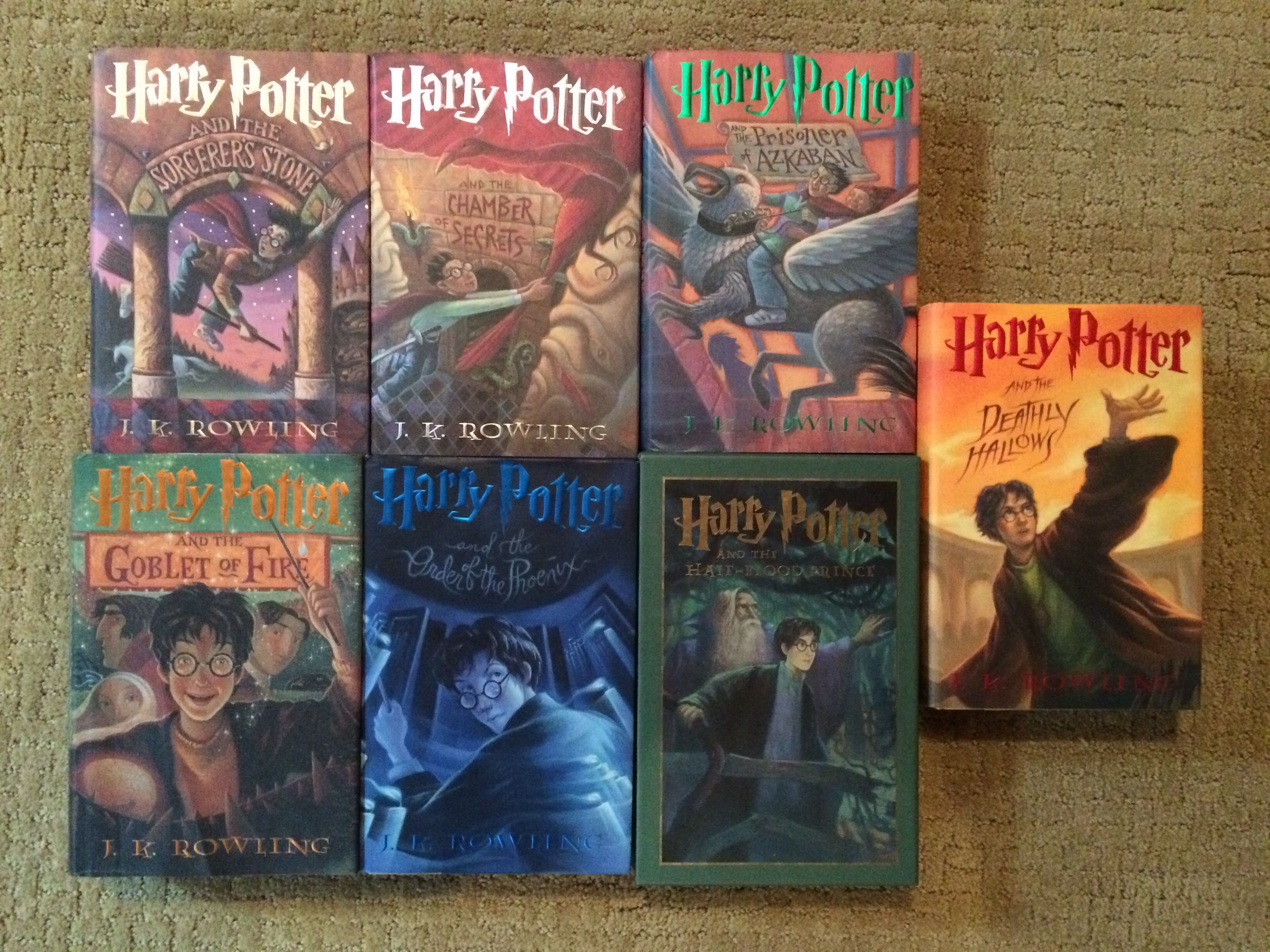
HP Books

Beautiful artwork on all the covers of these increasingly heavy books.

When I cracked open Harry Potter and the Sorcerer’s Stone it was an act of therapy. I did not know if I would finish all the books. I did not know if I would be able to read all of them to London. However, as time went by, it became clearer and clearer to me that I would finish the books, that London would hear every page of these books, and that just because we got out of the NICU did not mean the reading of the books ceased to be therapeutic.

In the beginning, it was easy to find time to read Harry Potter to London. I would place her on a pillow in my lap and could read for as long as I like really, assuming she was oxygenating well and in a comfortable position. When she left the NICU, I read several times a day to her, while she was on the floor making cooing noises, while she was falling asleep, and while she was taking a feeding from her NG tube. Later on, I only read to her as she fell asleep for naps. And a little later on from that, she stopped falling asleep if I was by her side reading Harry Potter. This coincided with her ability to pull to a standing position, so she would stand inside her crib and reach out for the pages of the book and get frustrated that she couldn’t grab them.

Eventually, I had to start reading Harry Potter to her when she was in the living room playing with toys. By this last stage, I knew that my voice comforted her. I could read a whole chapter and sometimes two while she played. I may have pushed the limit on July 16, when I read the last sixty pages to her in one sitting as she drained all the fun out of one toy to the next until she was clearly wondering why I had been reading to her for so long without any breaks.

On more than one occasion during the last several days of reading Harry Potter I choked up because it would dawn on me that I am almost done with the books, or I would remember in a flash how far London has come over these 4,100 pages, so incredibly far as you may know.

I take great joy in knowing that I will be able to read these books once again to London when she is older and able to follow the plot. Perhaps I won’t read every word aloud to her. She might take over. That is fine with me. I know I will always be reading with London.

*Special thanks to my wife’s family who let me borrow all of their pristine, hard cover, first edition Harry Potter books.

12 Classics in 2015: The Stranger

I enjoyed picking up another slim volume, knowing I would finish this next book in two or three sittings. The Stranger, by Albert Camus, is a study of the absurd arc of all lives. It focuses on one man, Meursault, who kills a man on the beach in the first part of the book. Meursault’s trial constitutes the second part of the book.

Meursault, to me, felt very little emotion other than his lust for Maria, his girlfriend and, possibly, future wife. And although I saw some justification of him shooting the man on the beach, Meursault seemed to hold none of the same justification. He seemed only to defend his atheistic beliefs, and nothing else. He is a sad figure, not because I am a believer and he is an atheist, but because he seems utterly defeated by the absurdity of life. He refuses to use religion or the legal system to comfort or free himself because he recognizes the futility in prolonging the truth: that we will be born, we will die, and then no longer matter. All of us.

Meursault is a Debbie Downer, but Camus channels his philosophy quite well through Meursault’s actions and words. Interestingly, Meursault becomes happiest when he gives up all hope of a life, long or short, and accepts that any path he goes down ends the same.

I certainly don’t see eye to eye with Camus on this. I recognize that life can indeed be absurd and it will yell at us again and again, “resistance is futile,” but resisting is one of the hardest and most rewarding parts of life. It amplifies everything, the valleys, the peaks, the springs, and the winters of our lives. I believe it makes for a richer life, which looks better to me than Meursault’s fate of a jail cell and decapitation.

12 Classics in 2015: The Jungle

The Jungle is widely known as the book that turned the public’s gaze upon the meat industry. Months after the novel’s publication, the Food and Drug Act went into effect. The public was disturbed to find out that their chances of eating rotten and diseased food were quite good, as the condition of the slaughterhouses was revolting and what oversight existed at the time was a farce.

This was a positive reaction from the public, but Upton Sinclair did not mean to turn the people’s fervor toward the meat industry alone. Sinclair’s primary protestations regarded the labor conditions and complete lack of workers’ rights. Indeed, that is what struck me about the book. Sure, the descriptions of the making of sausage with scraps of meat and innards from the floor and the drains, and the tubercular cows passing right by the “screener”, are disturbing. But the human suffering detailed in the book is far more painful to endure. It lasts from shortly after the first chapter to the very last (357th) page.

The book’s main character is Jurgis Rudkus. You get the impression that the lion’s share of his life is lived out on these pages. What life Jurgis does have plays out like a train wreck. You see everything coming before he does. Blow after blow Jurgis is dealt with no means to protect himself or to save his family from abject poverty. My heart ached for Jurgis and every member of his family and for all those wasting away in Packingtown, the meat-packing area of Chicago.

I am thankful that workers’ rights are a thing now. No one spoke of them in The Jungle until the very last pages of the book, which is a screed in support of Socialism, one of Sinclair’s great causes.

The struggle of the working class is still very real. More than once I thought of fast-food workers, who are campaigning for greater pay because of the poverty they are forced into by trying to support a family on the current minimum wage, and I recognized that they are a group of people who would be at the heart of The Jungle if it were written today. Sinclair would be pleased to know that these workers don’t have to work 7-5:30 Monday thru Saturday just to keep their job, but many still work those hours because one job is not enough. A second is needed to scrape by.

The Jungle is a serious book with an intensely dark and sad narrative, but also a book with a surprising appeal to the reader to read just one more page. I found it enticing, even though with every new page Jurgis encountered his next setback or you could make out the train wreck on the horizon a little better. Out of the six classic books I have read this year, The Jungle has surprised me the most with its novel subject matter and its desperate plea for help from the immigrant masses who are still growing, tending, picking, and packing our food.

Parents on the NICU and their PTSD

Over a month ago, I read and posted about an article in the New York Times about 22 weeks gestational age being the new definition of viability (for some doctors). In the sidebar I noticed another article under “related.” Its title: For Parents on NICU, Trauma May Last. As soon as I was done reading about the viability of 22 weekers I clicked over and read about PTSD in NICU parents, which I had blogged about once already.

I have not read a more accurate article about parents dealing with the NICU. The first parent’s story is more stressful and scary than ours was. For example, I never got to the point where I was sleeping with my shoes on, but on more than one occasion I expected the hospital to call with horrible news. And I was and can still be easy to anger as a direct result from our NICU experience. I mentioned that back in October as well.

This NY Times article was first published in 2009, citing a new (for then) study about PTSD in NICU parents:

A new study from Stanford University School of Medicine, published in the journal Psychosomatics, followed 18 such parents, both men and women. After four months, three had diagnoses of P.T.S.D. and seven were considered at high risk for the disorder.

In another study, researchers from Duke University interviewed parents six months after their baby’s due date and scored them on three post-traumatic stress symptoms: avoidance, hyperarousal, and flashbacks or nightmares. Of the 30 parents, 29 had two or three of the symptoms, and 16 had all three.

One of the NICU parents quoted in the article hits the nail on the head:

“The NICU was very much like a war zone, with the alarms, the noises, and death and sickness,” Ms. Roscoe said. “You don’t know who’s going to die and who will go home healthy.”

I haven’t said it better myself. As a parent, even after months in the NICU, I would find myself wondering if we were ever going to make it out whole, meaning all three of us. Perhaps the most revealing statistic shared in the article is this:

The Stanford study found that although none of the fathers experienced acute stress symptoms while their child was in the NICU, they actually had higher rates of post-traumatic stress than the mothers when they were followed up later. “At four months, 33 percent of fathers and 9 percent of mothers had P.T.S.D.,” Dr. Shaw said.

It’s easy to picture stoic fathers in the NICU, but what most of them are really doing is repressing so much intense fear and anguish that once the drawn-out trauma of their child’s NICU stay is over they burst. I was stoic from time to time, but I certainly was not afraid to show emotion during London’s stay in the hospital. Crying in front of nurses was not something I was above. This helped.

One NICU survivor shares this in the NYT article:

In her book, Ms. Forman wrote: “From the moment my twins were born, I saw potential for tragedy wherever I turned. It would be years before I stopped thinking that way.”

This is probably what I struggle with the most now. It’s beyond worrying, it’s an all-consuming conviction that something horrible is going to happen. Prior to my trip to DC, I had a really hard time shaking the feeling that I wasn’t going to see my family again, I wasn’t going to make it back from DC, or maybe I was never going to make it there in the first place. Before the NICU, I was not wired to think this way, but now a part of me is. The other part is fighting for balance. Like Ms. Forman, maybe it will be years before hope and the safety I knew become my heading once again.

That Wasn’t So Bad

FullSizeRender-5

A view of Roxborough Park as we flew over Littleton yesterday.

We just got back from our first plane trip with London. Going into the weekend getaway in California, I was not that nervous about London’s behavior on the plane. I was mostly concerned with the technicalities of traveling with a stroller and our decision to lug her Radian RXT booster seat with us (this seat weighs 40 lbs, maybe more). I spent more time looking up travel tips last weekend than writing any blogs, hence the complete lack of posts for a week or so.

Flying truly has become more of a hassle in the post-9/11 days. Then you throw a baby in the mix and my head hurts. One tip that we followed, that probably most parents follow, is to arrive at the airport earlier than you would if you were flying sans baby. This is a great decision if you stress out over having to rush through everything at the airport like I do. I actually enjoy being able to be as slow as I want once I arrive at the airport. I feel less stressed and I am way more prepared if anything goes wrong, like if baby has a blowout, or if I forget to lock the stroller wheels in place and she goes rolling off toward security by herself.

I would rather be over prepared for something like flying with a baby. And I think I was, because it seemed almost easier. If it weren’t for having to sit on the plane with a baby in your lap, flying with a baby would be easier than flying without one, based on our sole experience. At both airports we checked bags at the curb, immediately freeing ourselves of some tremendous weight and time waiting in line. At security, we were selected for the fast line, and at DIA for the TSA Precheck line. We didn’t have to stand in the stupid X-ray machine either. Maybe we looked absolutely clueless the entire time because we just seemed to be given preferential treatment wherever we walked. Little did everyone know that I spent a week studying for this like it was a final.

The part about traveling with a baby that is a drag is the actual plane ride itself. Even if your baby is very well behaved, like mine, you can’t really relax while holding him or her. One thing I love about flying is turning my phone off, being disconnected from the world for a few hours, and really getting into a book or reading a magazine from cover to cover. That won’t be an option for quite a few years, but I’ll get it back. In the meantime, I feel like a slightly more accomplished parent now that I have run the TSA gauntlet with London in tow and have not lost her or slowed any other traveler down due to a lack of preparedness.

That First Goodbye

As I mentioned a couple weeks ago on this blog, I had a trip to DC coming up. It was a birthday gift from Kate. Well, it was an awesome trip and I will share about some of it soon, but I want to write about the day I left for DC.

FullSizeRender-4

A quick snap of London after saying goodbye at the airport.

I had been thinking for over a month about what it would be like to say goodbye to London at the airport. Since she was born almost sixteen months ago, I had never been more than an hour’s drive away from her. I had spent one night away from her, but that taking place in the same city. So, when we got to the airport I was saying goodbye to more than just London.

Since her instant, premature arrival, I have been tied to London like nothing before in my life. She took the breath out of me when I stood up and looked at her being pulled from her mom in the OR. Since then she has had it. I wished time and time again over those first ten months of oxygen support I could have given her more of my breath. Instead, I gave what I could, my constant attention, worry, and commitment to making her as happy as possible with meticulous mental note taking of her every need. For, 469 days, London had been within reach. Was I in control for one of them? No, but at least I was there. I knew I was saying goodbye to that streak, the first, long season of fatherhood.

When I arrived at the airport with my mom and London, I had to face the end of an era, so to speak. I had prepared myself and worried about it as much as possible. I still cried though. I leaned in to kiss her perfectly soft cheeks and could not leave without taking another picture of her. In that picture, she appears to be a little confused, possibly from my tears, but as beautiful as ever. I looked at it more than once while I was in DC. And more than once, I thought of our next hello.